Introduction :-
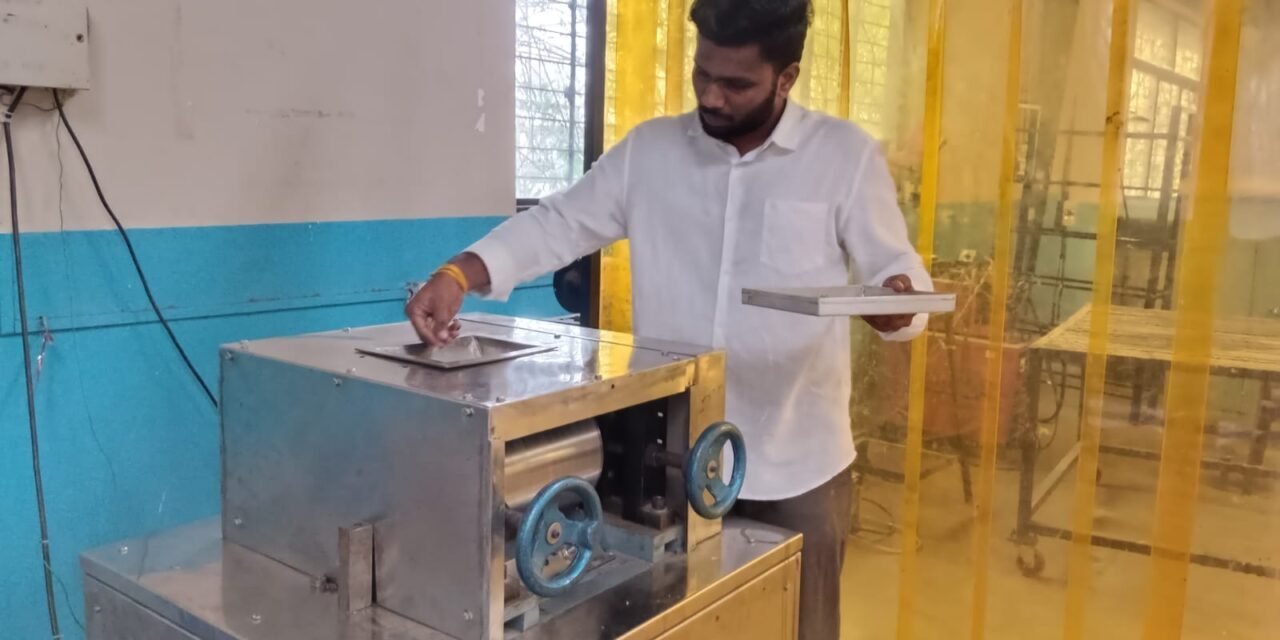
In recent years, there has been a growing demand for nutritious and convenient ready-to-eat cereal products. Among the various grains available, jowar (sorghum) stands out as a valuable crop due to its gluten-free nature, high fiber content, and rich nutritional profile. Despite its health benefits, jowar remains underutilized in processed food segments. To promote the consumption and market potential of jowar, efforts are being made to convert it into value-added products such as flakes, which can serve as a healthy alternative to conventional breakfast cereals. The present study focuses on conducting trials of jowar flakes using the Multigrain Flaker Machine for the client Agrozee Solutions Millets Now Pvt. Ltd.
The aim is to optimize processing parameters such as grain conditioning, roller pressure, and moisture content to achieve uniform, crisp, and high quality jowar flakes suitable for commercial applications.
Objectives :-
1. To study the flaking behavior of jowar grains on the Multigrain Flaker Machine.
2. To determine the optimum pre-treatment and processing parameters such as moisture level, steaming time, and roller gap for producing quality flakes.
3. To evaluate the final product characteristics including texture, expansion, thickness and overall quality of jowar flakes.
4. To smoothness and texture of the flaked sorghum still need improvement. This can be improved by improving the quality of gelatinization during the steaming process and by further modifying the SOP.
Methodology :-
Taking reference from the previous trials conducted by fellow researcher Yashwant Sir the study was initiated with similar processing parameters.
The first trial began by conditioning the cleaned jowar grains to achieve 25% moisture content, which was considered suitable for initial flaking tests and the flake machine and the gap between rollers was adjusted between 0.05 and 0.1 mm.
TRIAL 1 :- JOWAR SOAKING PROCESS AND ITS RESULT
For the initial trial, 100 g of raw jowar grains were taken as the base sample. The grains were soaked in water for 6 hours to achieve proper hydration.
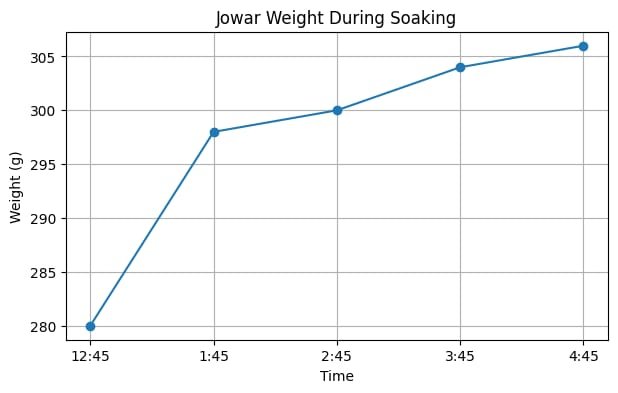
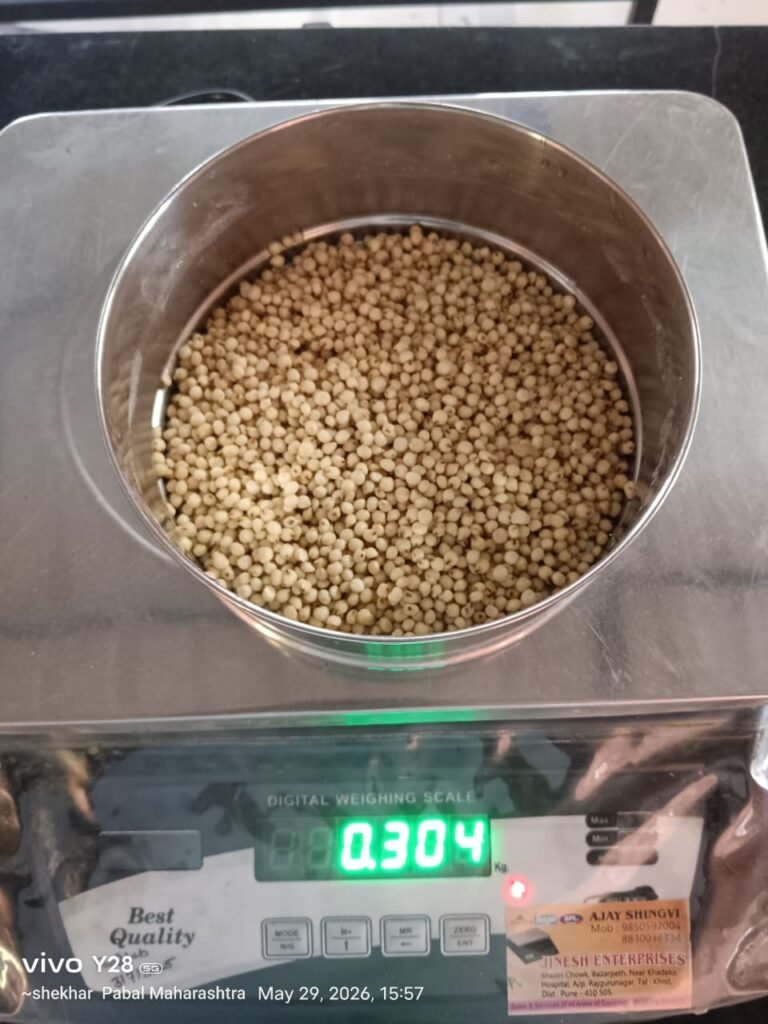
The weight of Soaking jowar is following
| TIME | JOWAR WEIGHT AFTER SOAKING |
| 12:45 | 280 |
| 1:45 | 298 |
| 2:45 | 300 |
| 3:45 | 304 |
| 4:45 | 306 |
DISCUSSION AND FURTHER PLAN
Based on the result of the first trial, it was observed that sorghum has soaking in the water is 6 hours but the most water absorb in jowar is 1st 2 hours and then decided next batch trial jowar soaking time is only 2 hours is sufficient
TRIAL 2 :- JOWAR FLAKING PROCESS AND RESULT WITH 25% MOISture
BATCH 1-
For the initial trial, 100 g of raw jowar grains were taken as the base sample. The grains were soaked in water for 2 hours to achieve proper hydration, followed by steaming 95°C for 20 minutes to soften the endosperm and make the grains suitable for flaking.
After steaming, the sample weight increased to 230 g due to moisture absorption. The steamed grains were then dried at 55 °C for 25 minutes, resulting in a final pre-flaking weight of 120 g, with an approximate moisture content of 25%.
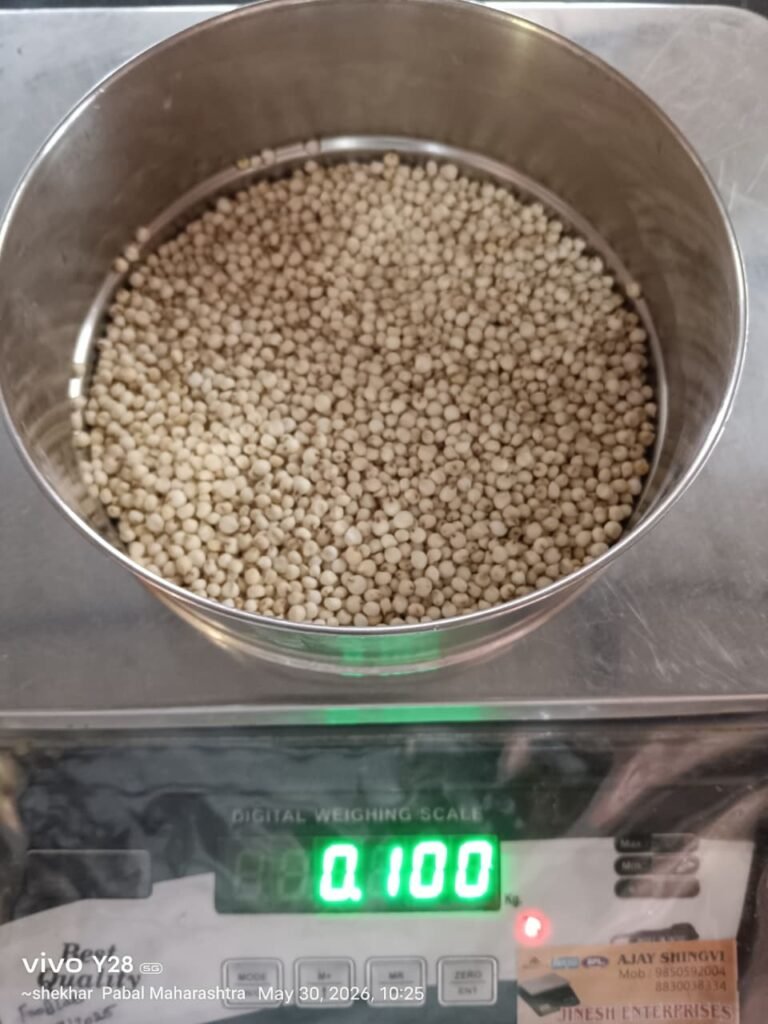
The conditioned sample was passed through the Multigrain Flaker Machine to observe flaking performance and product yield. The results are summarized below:
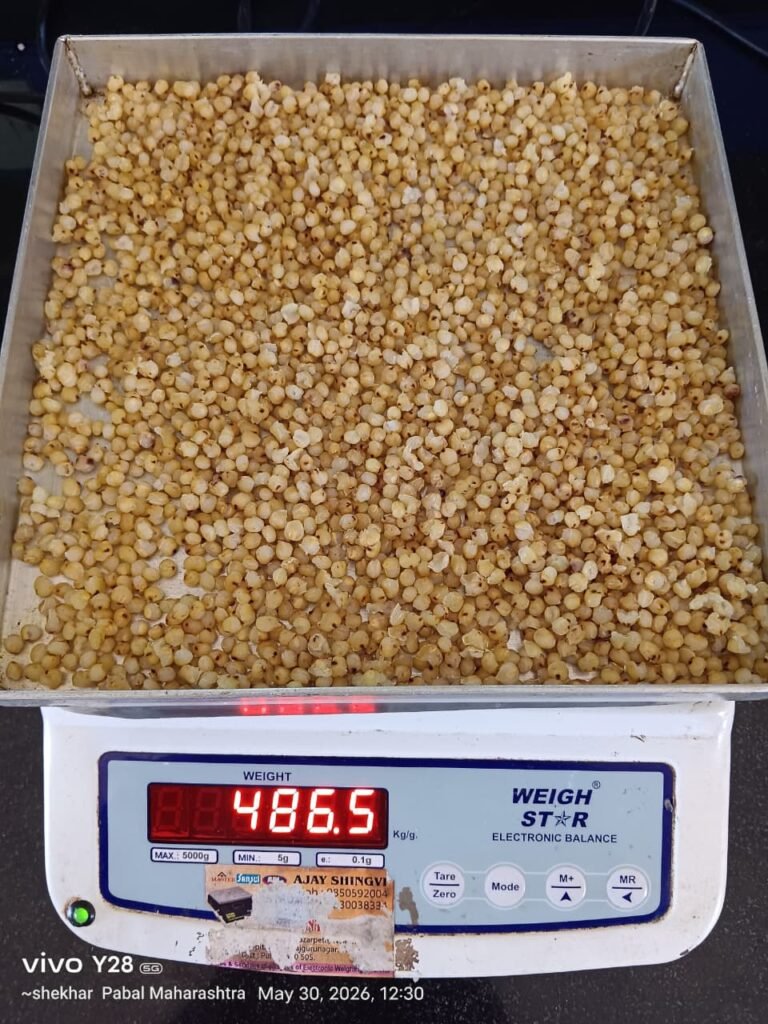
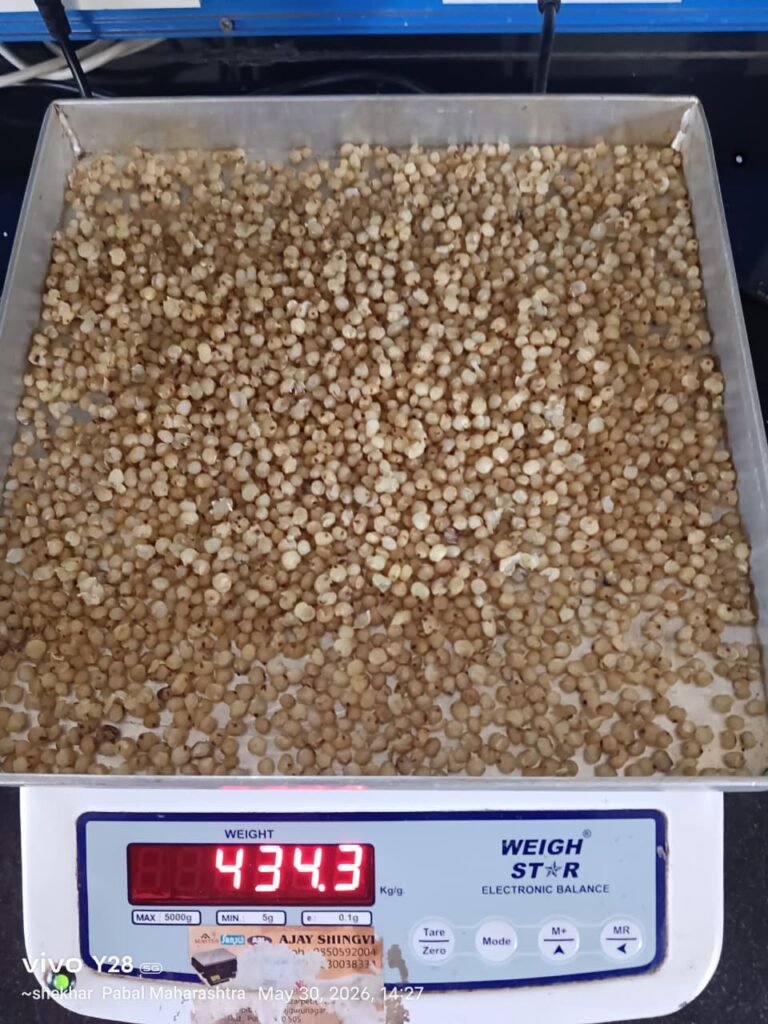
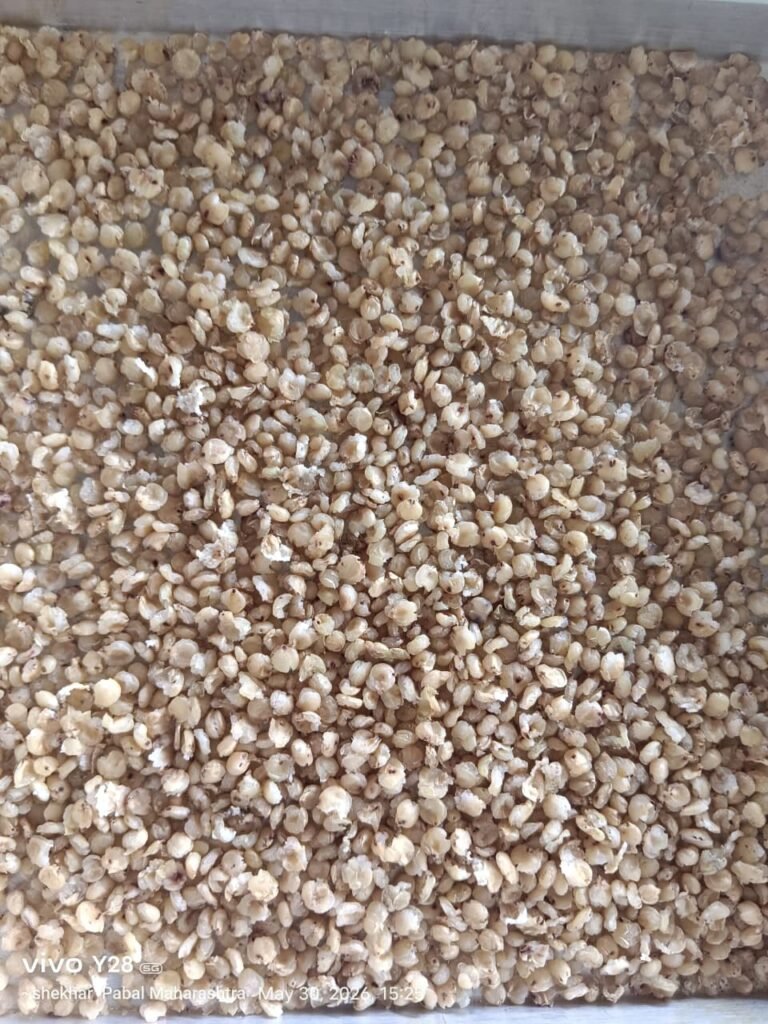
REASULT AND ANALYSIS
The flakes are not good because the flakes machine in the gap between the rollers is more than 1mm then its reduce to 0.5mm
30/05/2026
BATCH 2-
Soaked 100gm of sorghum for 2 hours the weight of sorghum after soaking was 140gm . removed the water and kept it for 10 min in at plate. then steaming at 95 °C for 20 min
Then drying at 70 degree celcius for 25 minutes and then flaking 0.20 mm
Result :- Flakes are not good
31/05//2026
BATCH 3
Sorghum: 100 g
The sorghum grains were soaked in water, and the weight was recorded every hour to monitor water absorption.
Soaking Time Grain Weight
Initial 100 g
1 hour 292 g
2 hours 304 g
3 hours 312 g
4 hours 320 g
After 4 hours of soaking, the grains reached a final weight of 320 g, indicating adequate water absorption for further processing.
Boillng :-
The soaked sorghum was Boilled at 95°C for 25 minutes to soften the grains and improve their suitability for flaking.
Drying ;-
After boilling the grains were dried at 70°C for 30 minutes. During drying, the moisture content was reduced by approximately 27% to achieve a suitable level for flaking.
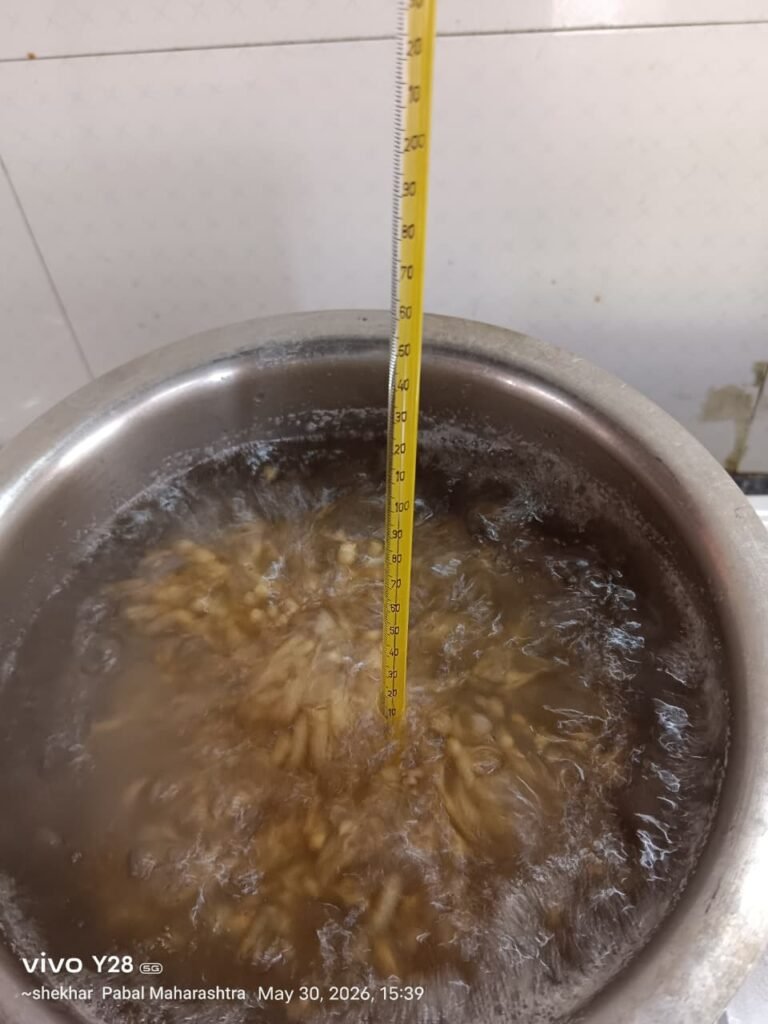
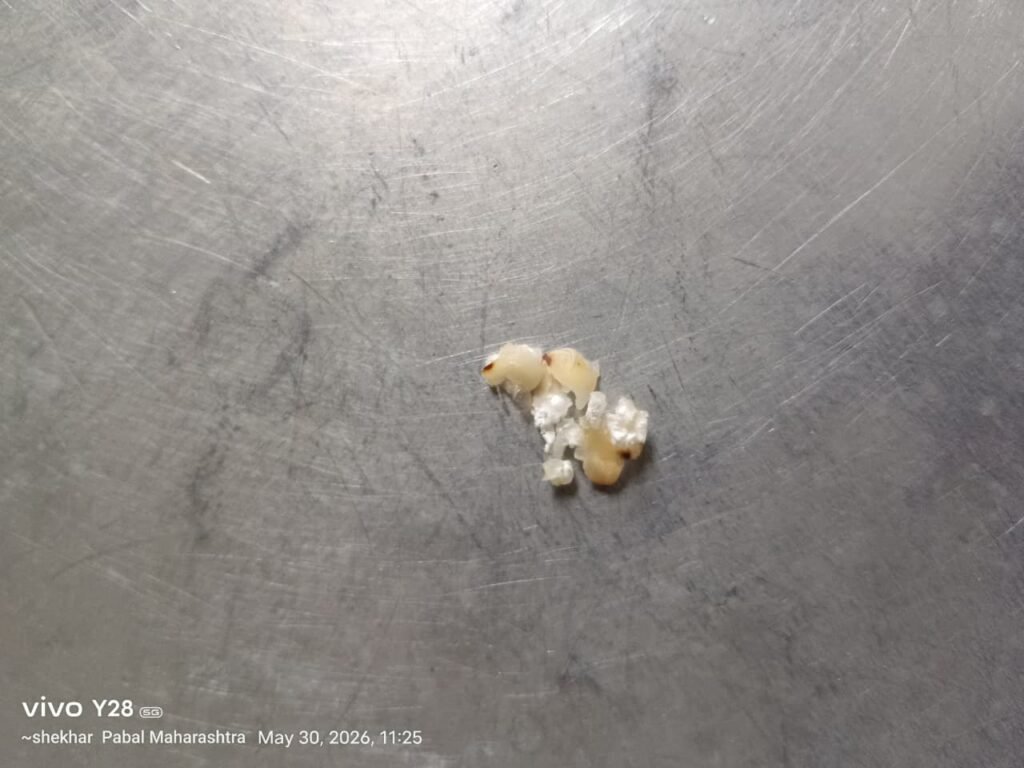
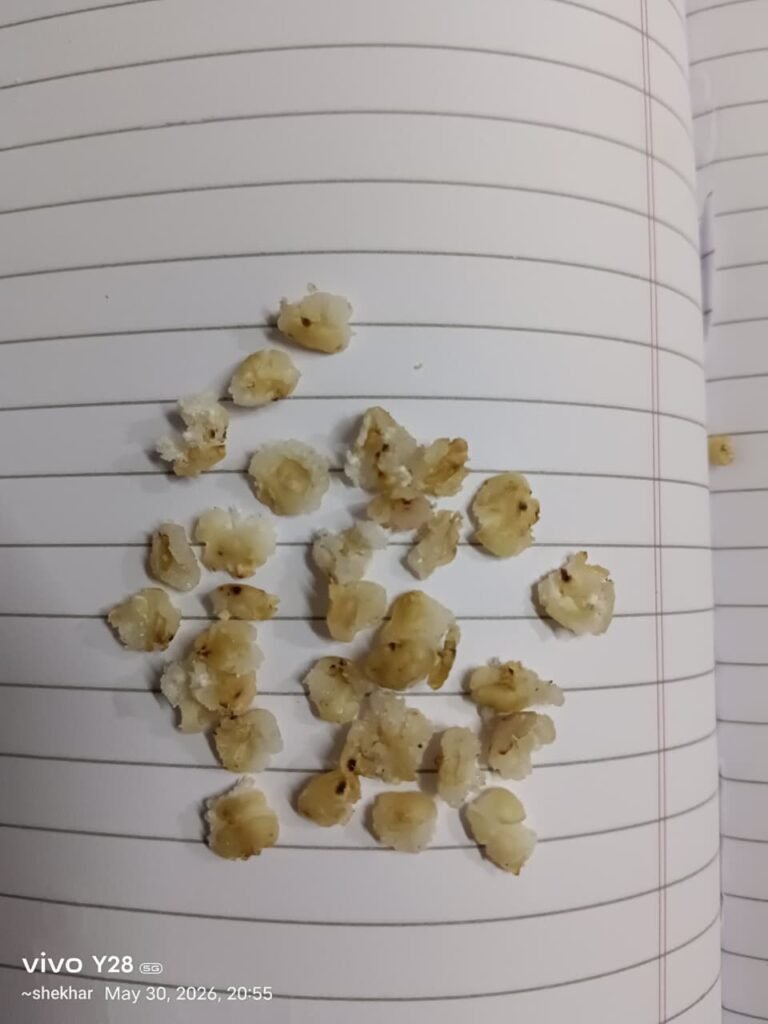
Flaking :-
The dried grains were passed through a multigrain flaker machine with a roller gap of 0.15 mm.
Observation :-
The sorghum flakes were sticky and adhered to the rollers during flaking. This indicates that the grains likely retained excess surface moisture or were still too soft. Further optimization of the drying step, moisture content, or roller gap may be required to obtain free-flowing, well-separated flakes with smooth machine operation.
Conclusion :-
This trial demonstrated that sorghum can be processed into flakes through soaking, steaming, drying, and flaking. However, the sticking of flakes to the rollers suggests that the processing conditions need further optimization, particularly the final grain moisture before flaking.
01/06/2026
BATCH 4
Sorghum: 100 g
- Soaking
The sorghum grains were soaked in water for 4 hours to allow sufficient moisture absorption before heat treatment.
- Steaming
The soaked grains were steamed at 100°C for 25 minutes to soften the kernels and promote starch gelatinization.
- Drying
After steaming, the grains were dried at 70°C for 30 minutes. The drying process reduced the moisture content by approximately 29%, making the grains suitable for flaking.
- Flaking
The dried grains were processed using a multigrain flaker machine with a roller gap of 0.10 mm.
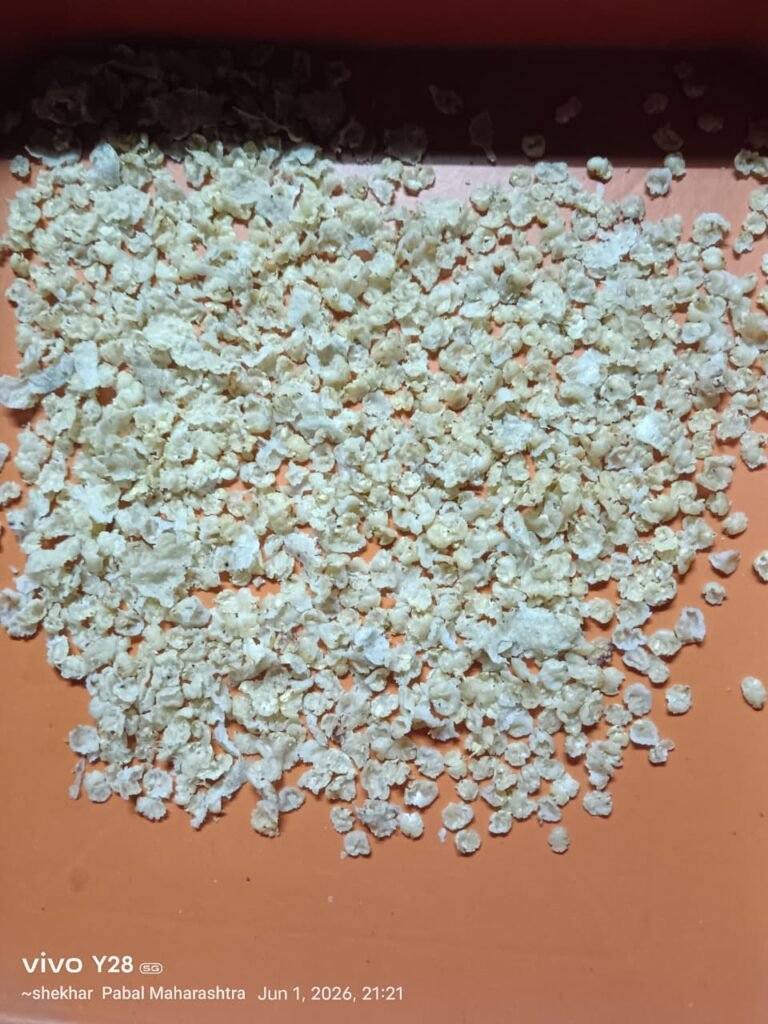
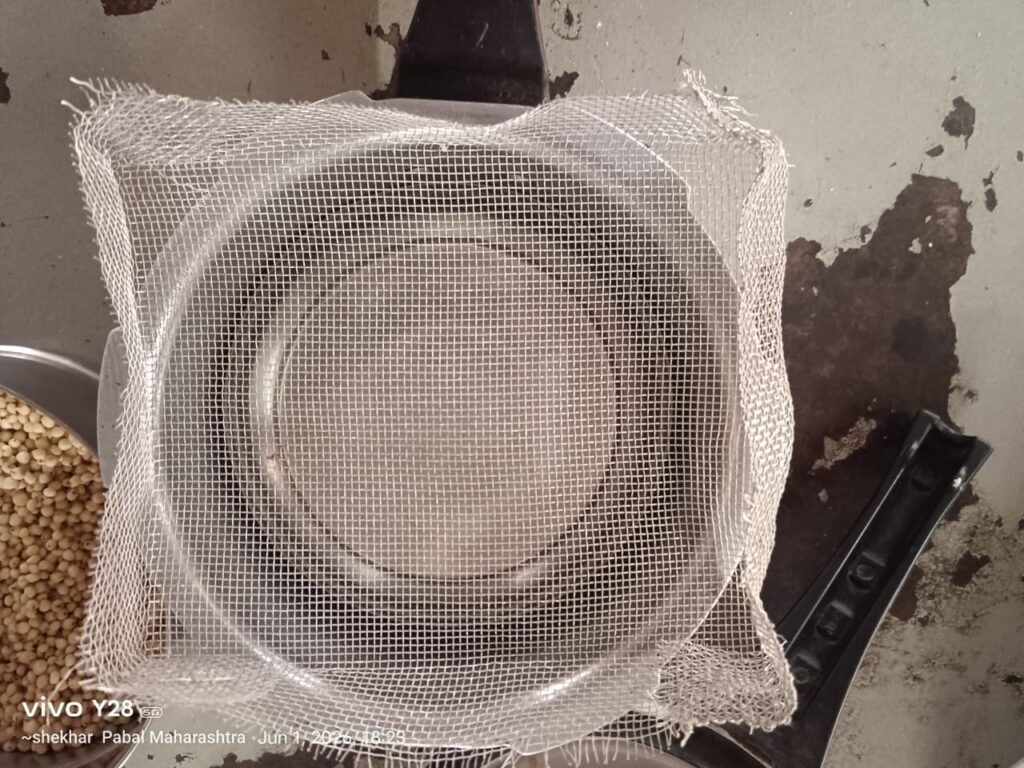
Observations
- The sorghum flakes were sticky and adhered to the rollers during flaking.
- Starch gelatinization was not complete, indicating that the grains were not sufficiently cooked or conditioned before flaking.
- Due to incomplete gelatinization and unsuitable moisture condition, the flakes did not separate cleanly and the flaking performance was unsatisfactory.
Conclusion
Under the conditions of 4 hours soaking, steaming at 100°C for 25 minutes, drying at 70°C for 30 minutes, and flaking at a 0.10 mm roller gap, satisfactory sorghum flakes were not obtained. The sticking of flakes to the rollers and incomplete starch gelatinization indicate that further optimization of steaming time, grain moisture before flaking, and roller settings is required to produce high-quality sorghum flakes.
02/06/2026
BATCH 5
Sorghum: 100 g
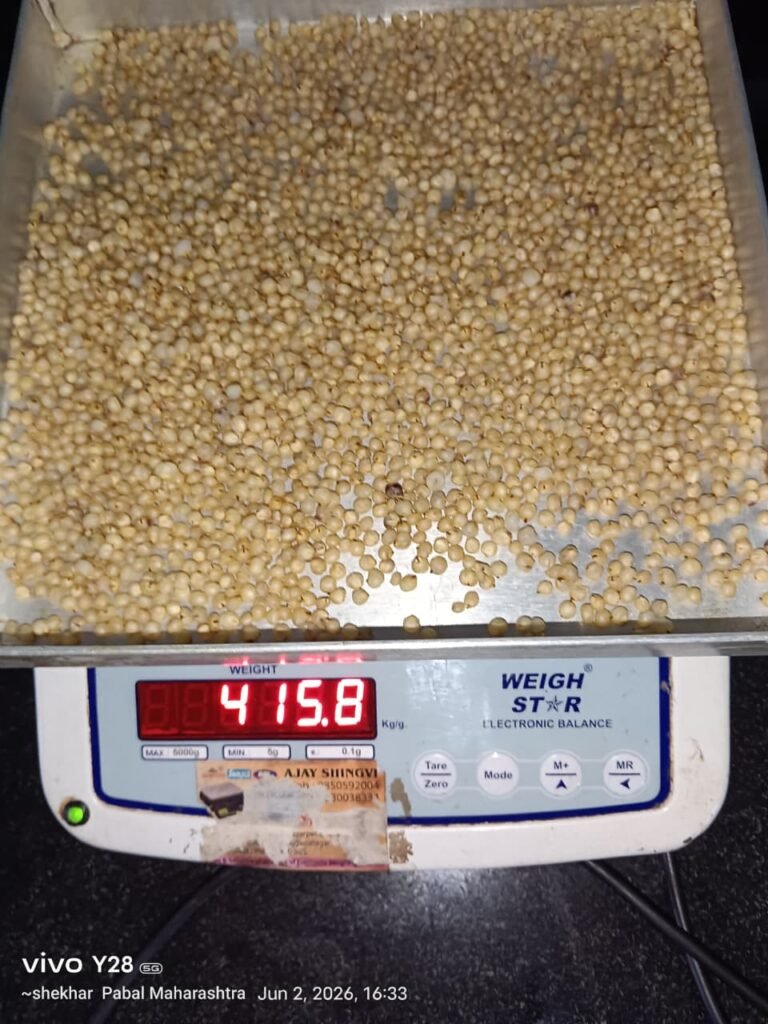
- Soaking :-The sorghum grains were soaked in water for 4 hours to increase their moisture content and prepare them for thermal processing.
- Steaming :-The soaked grains were steamed at 100°C for 25 minutes to soften the kernels and initiate starch gelatinization.
- Drying ;-After steaming, the grains were dried at 100°C for 25 minutes. During drying, the moisture content was reduced by approximately 29%.
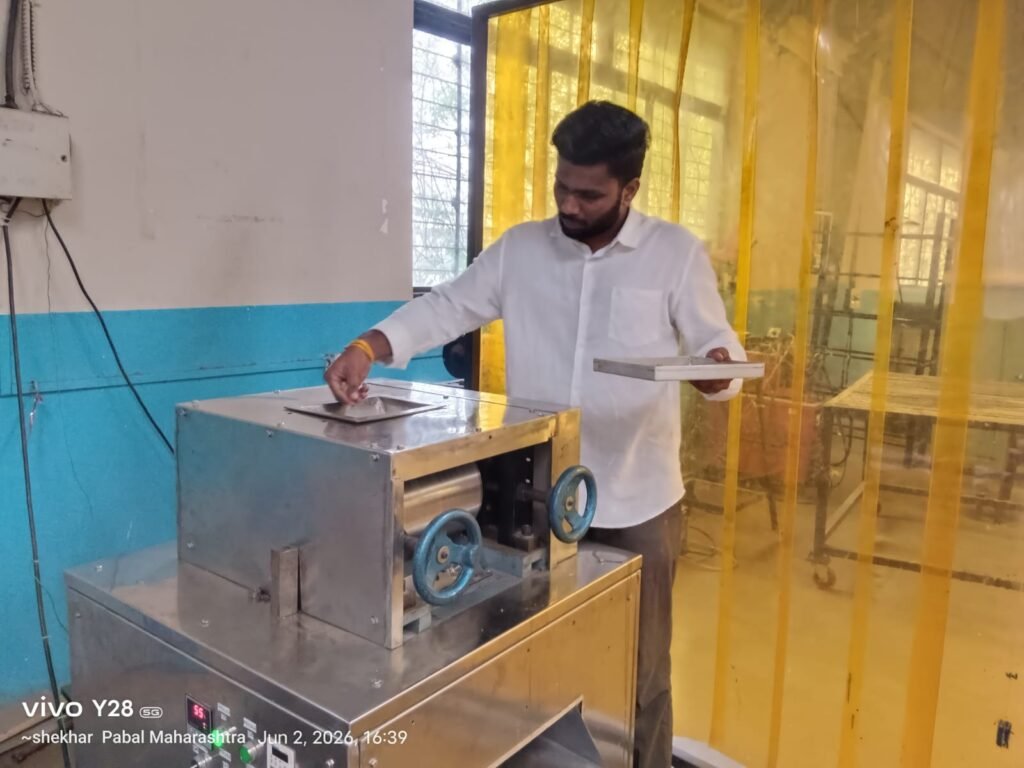
- Flaking :-The conditioned grains were passed through a multigrain flaker machine using a roller gap of 0.10 mm.
Observations :-
- The flakes were sticky and adhered to the rollers during the flaking process.
- Starch gelatinization was incomplete, indicating that the grains were not adequately conditioned before flaking.
- The flakes did not separate cleanly, resulting in poor flaking efficiency and reduced product quality.
Conclusion :-The processing conditions used in this trial—4 hours of soaking, steaming at 100°C for 25 minutes, drying at 100°C for 25 minutes, and flaking at a 0.10 mm roller gap—did not produce satisfactory sorghum flakes. The sticking of flakes to the rollers and incomplete starch gelatinization suggest that the processing parameters require further optimization, particularly the thermal treatment, final grain moisture, and flaker roller settings, to achieve good-quality flakes.
03/06/2026
BATCH 6
Sorghum: 100 g
- Soaking :-The sorghum grains were soaked in water for 4 hours to allow adequate moisture absorption before heat treatment.
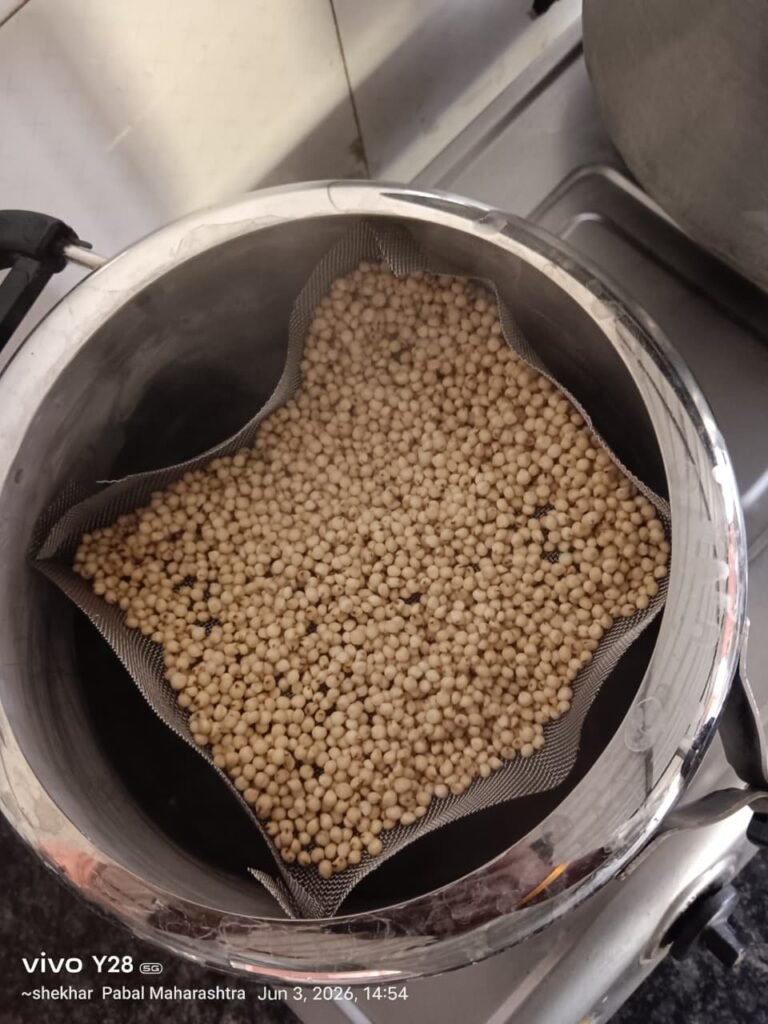
- Steaming :-The soaked grains were steamed at 100°C for 25 minutes to soften the kernels and promote starch gelatinization.
- Drying :- After steaming, the grains were dried at 100°C for 25 minutes. The drying process reduced the grain moisture by approximately 30%, preparing the grains for flaking. :-
- Flaking :-The dried grains were processed using a multigrain flaker machine with a roller gap of 0.10 mm.
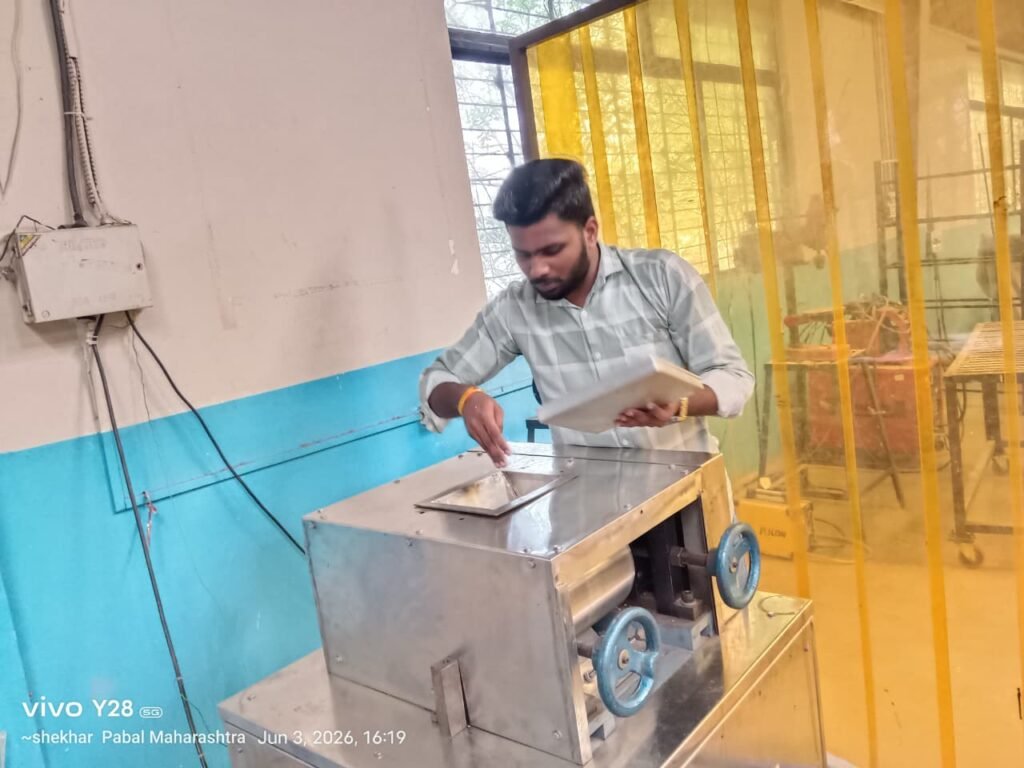
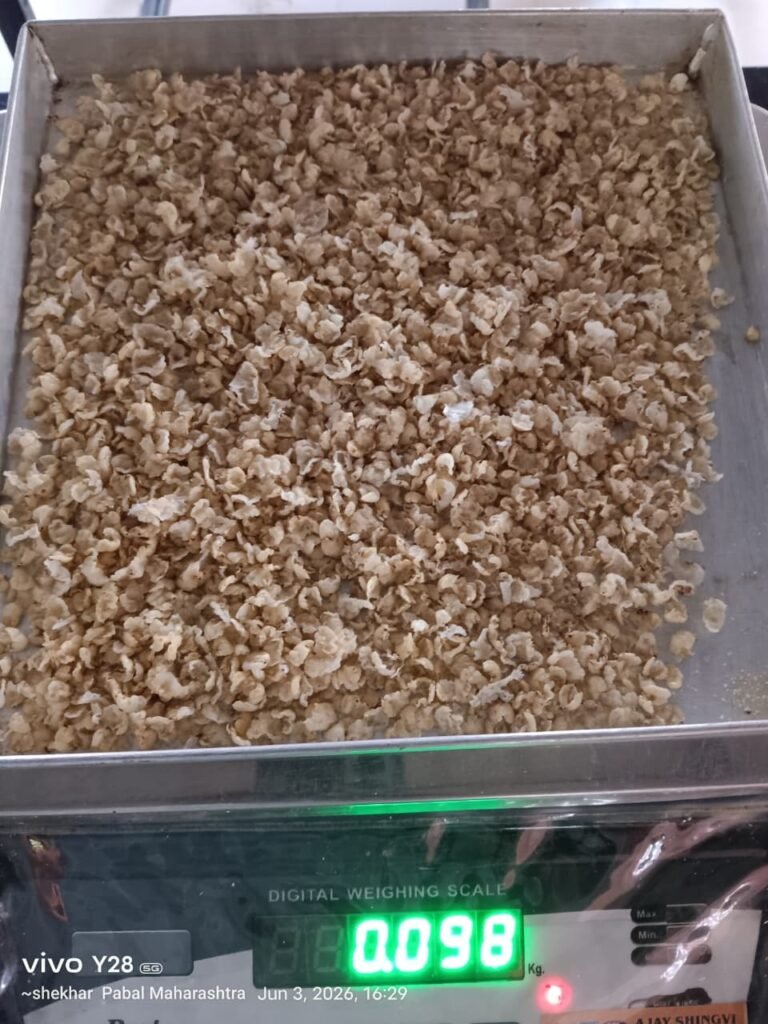
Observations :-
- The flakes were sticky and adhered to the rollers during the flaking process.
- Starch gelatinization was incomplete, indicating that the grains were not sufficiently conditioned before flaking.
- The flake width was very small, resulting in narrow flakes instead of broad, uniform flakes.
- Many flakes were folded inward rather than remaining flat after passing through the rollers.
- Overall, the flakes were non-uniform in size and shape, indicating poor flaking performance under the selected processing conditions.
Conclusion :-The processing conditions of 4 hours soaking, steaming at 100°C for 25 minutes, drying at 100°C for 25 minutes, and flaking at a roller gap of 0.10 mm did not produce satisfactory sorghum flakes. The sticking of flakes to the rollers, incomplete starch gelatinization, narrow flake width, and inward folding of the flakes indicate that the process requires further optimization. Improvements in grain conditioning, moisture adjustment before flaking, steaming conditions, and roller settings may help produce wider, flatter, and more uniform sorghum flakes.
05/06/2026
BATCH 7
Sorghum: 100 g
- Soaking :-The sorghum grains were soaked in water for 4 hours to achieve adequate moisture absorption before heat treatment.
- Steaming :-The soaked grains were steamed at 100°C for 30 minutes to ensure proper starch gelatinization and soften the kernels for flaking.
- Drying :- After steaming, the grains were dried at 100°C for 25 minutes. The drying process reduced the grain moisture by approximately 30%, making the grains suitable for flaking.
- Flaking :-The conditioned grains were passed through a multigrain flaker machine with a roller gap of 0.10 mm.
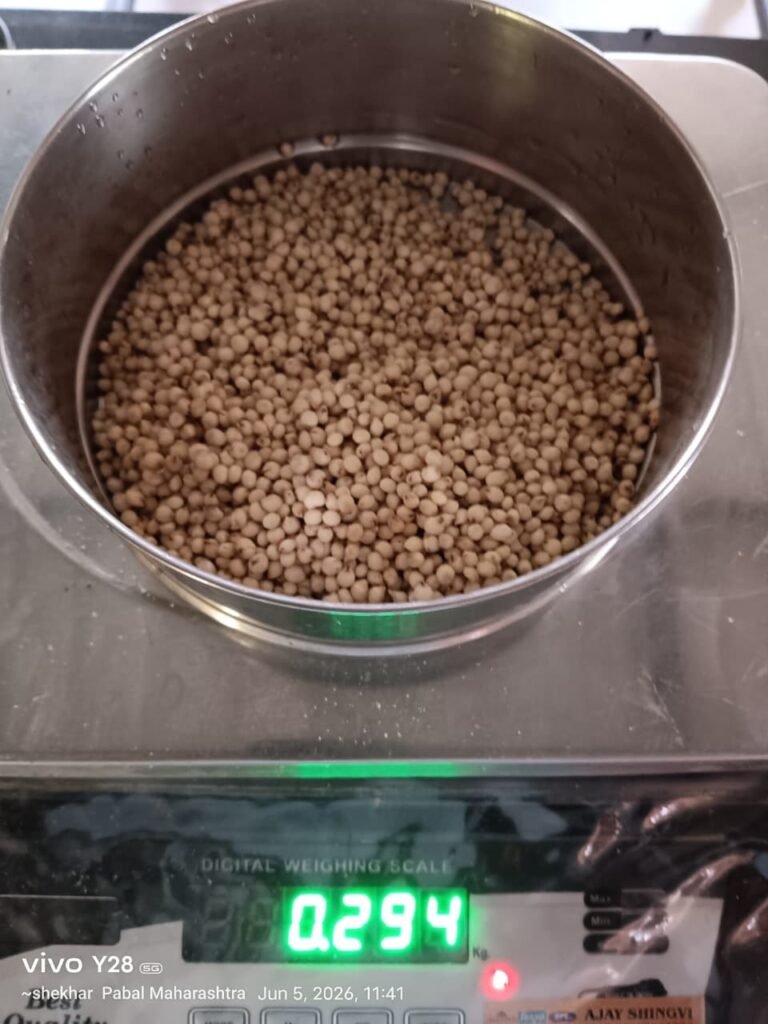
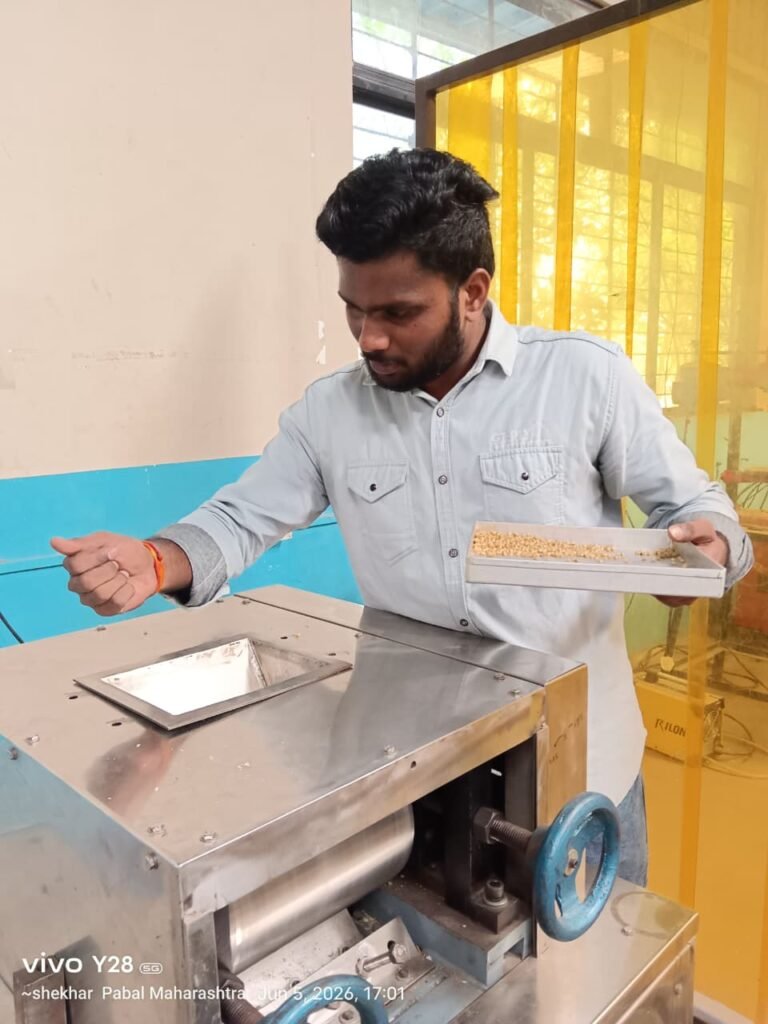
Observations :-
- Starch gelatinization was satisfactory, indicating that the steaming conditions were adequate.
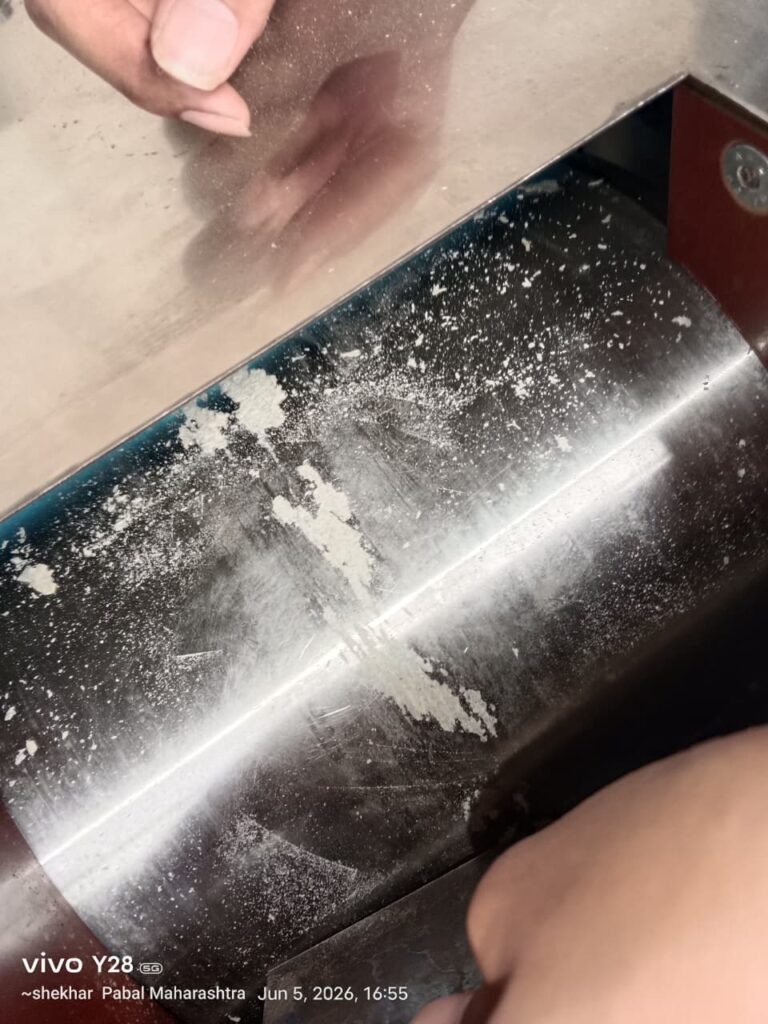
- During flaking, the flakes were sticky and adhered to the rollers.
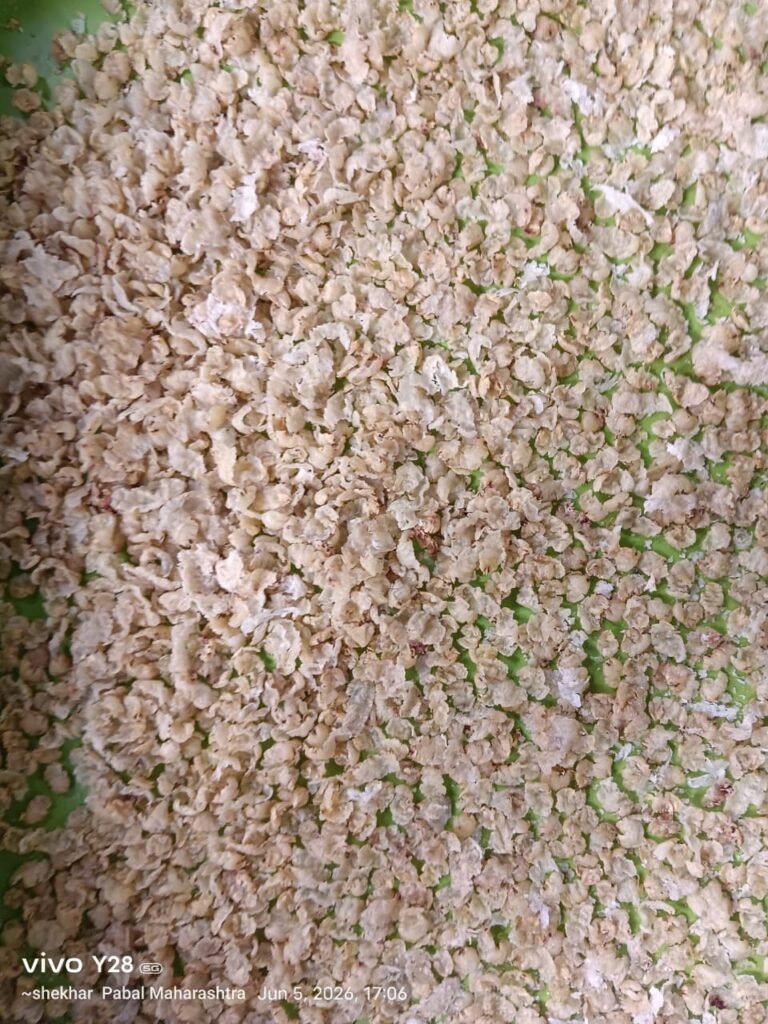
- The flake width was very small, resulting in narrow flakes instead of broad, uniform flakes.
- Many flakes were folded inward after passing through the rollers rather than remaining flat.
- Although gelatinization was achieved, the overall flake quality was not satisfactory because of sticking, narrow width, and folding.
Conclusion :Steaming the sorghum at 100°C for 30 minutes resulted in proper starch gelatinization. However, under the processing conditions of drying at 100°C for 25 minutes and flaking with a 0.10 mm roller gap, the flakes remained sticky, were narrow in width, and tended to fold inward. These observations indicate that while the steaming conditions were appropriate, further optimization of the grain moisture before flaking and the roller gap is required to produce wider, flatter, and more uniform sorghum flakes.
06/06/2026
BATCH 8
Sorghum: 100 g
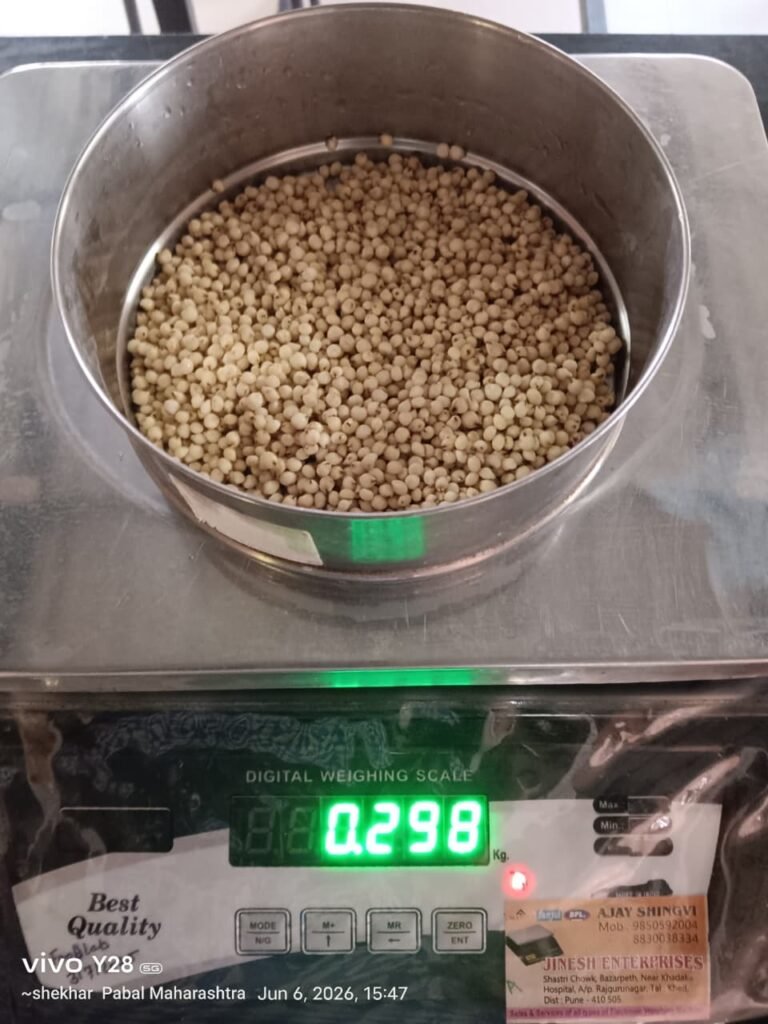
- Soaking :- The sorghum grains were soaked in water for 4 hours to achieve adequate moisture absorption before thermal processing.
- Steaming :- The soaked grains were steamed at 100°C for 30 minutes to ensure proper starch gelatinization and soften the kernels for flaking.
- Drying :- The steamed grains were dried at 100°C for 25 minutes, resulting in a 31% reduction in moisture before flaking.
- Flaking :– The conditioned grains were flaked using a multigrain flaker machine with a roller gap of 0.10 mm.
Observations :-
- Starch gelatinization was satisfactory, indicating that the steaming conditions were adequate.
- The flakes were sticky and adhered to the rollers during the flaking process.
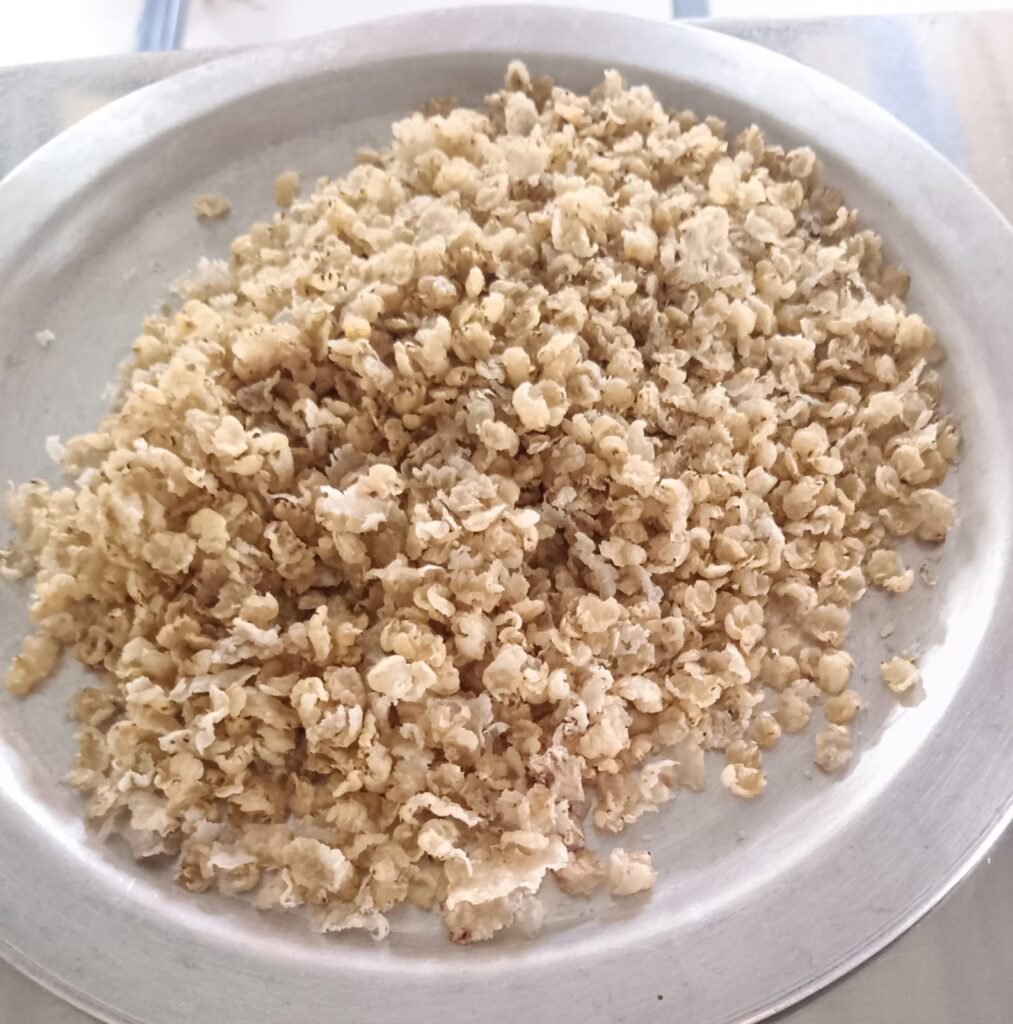
- The flake width was good, producing broader flakes than in previous trials.
- However, many flakes were folded inward instead of remaining flat after passing through the rollers.
- Although flake width improved, the sticking and folding reduced the overall quality and uniformity of the final product.
Conclusion :-The combination of 4 hours of soaking, steaming at 100°C for 30 minutes, drying at 100°C for 25 minutes, and flaking at a roller gap of 0.10 mm produced grains with proper starch gelatinization and improved flake width. However, the flakes remained sticky and tended to fold inward during flaking. These results indicate that while the steaming conditions were appropriate, further optimization of the grain moisture before flaking and the roller settin
09/06/2026
BATCH 9
Sorghum: 100 g
- Soaking :- The sorghum grains were soaked in water for 4 hours to achieve adequate moisture absorption before thermal processing.
- Steaming :- The soaked grains were steamed at 100°C for 30 minutes to ensure proper starch gelatinization and soften the kernels for flaking.
- Drying :- The steamed grains were dried at 100°C for 25 minutes, resulting in a 31% reduction in moisture before flaking.
- Flaking :– The conditioned grains were flaked using a multigrain flaker machine with a roller gap of 0.10 mm.
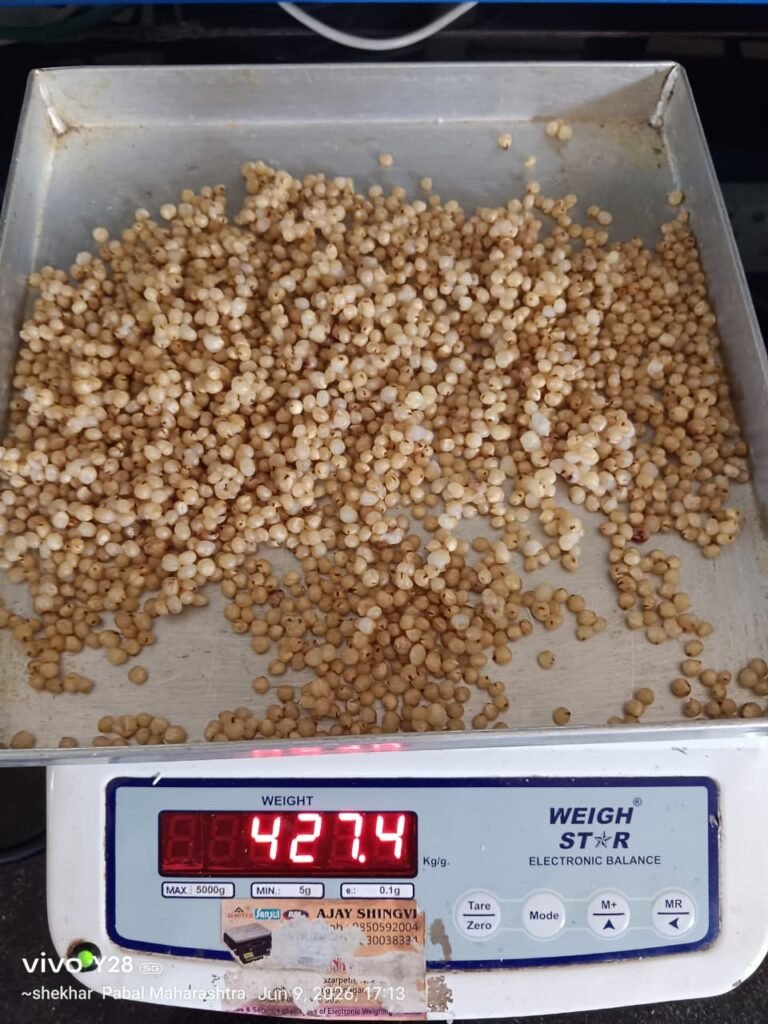
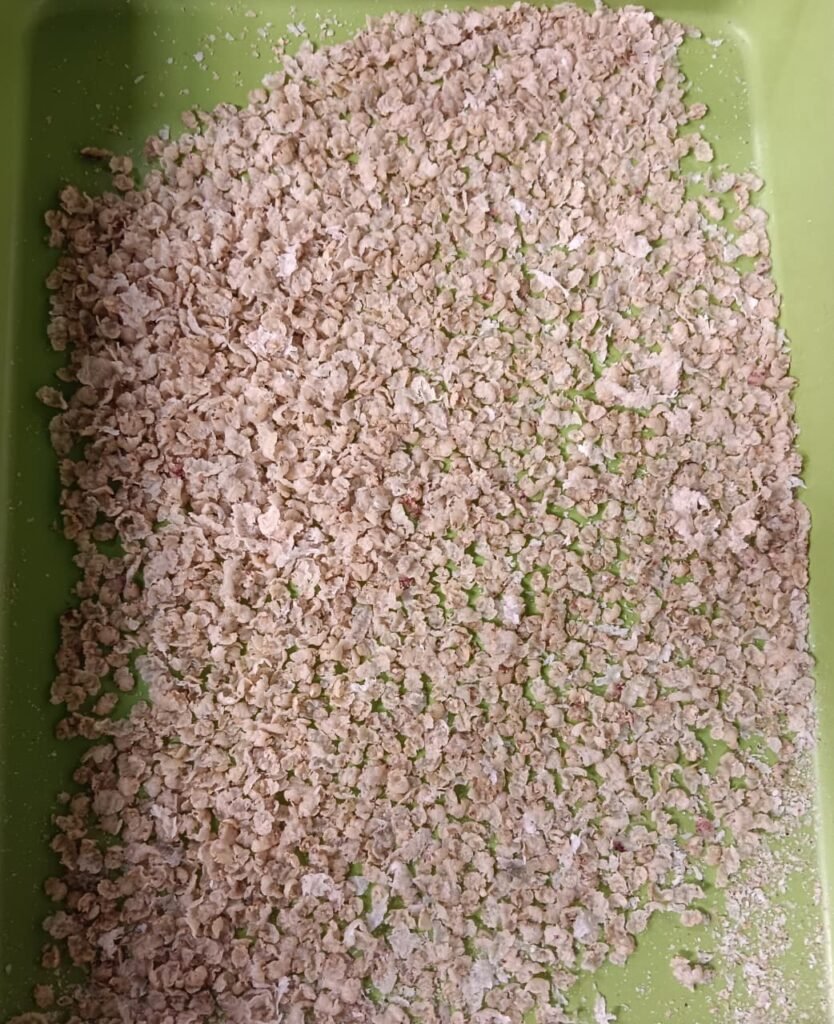
Observations :-
- Starch gelatinization was satisfactory, indicating that the steaming conditions were adequate.
- The flakes were sticky and adhered to the rollers during the flaking process.
- The flake width was good, producing broader flakes than in previous trials.
- However, many flakes were folded inward instead of remaining flat after passing through the rollers.
- Although flake width improved, the sticking and folding reduced the overall quality and uniformity of the final product.
Conclusion :-The combination of 4 hours of soaking, steaming at 100°C for 30 minutes, drying at 100°C for 25 minutes, and flaking at a roller gap of 0.10 mm produced grains with proper starch gelatinization and improved flake width. However, the flakes remained sticky and tended to fold inward during flaking. These results indicate that while the steaming conditions were appropriate, further optimization of the grain moisture before flaking and the roller settings is required to obtain flat, uniform, and free-flowing sorghum flakes.
26/06/2026
TRIAL 1
A discussion was held with Archana Kulkarni Ma’am regarding the development of value-added pulse products. Based on the discussion, it was decided to conduct processing trials for Chana Jor Gram and Moong Jor Gram to optimize the processing parameters and evaluate the quality of the final products.
Trial 1: Chana Jor Gram Preparation
Objective :-To optimize the processing conditions for the preparation of Chana Jor Gram using a multigrain flaker machine.
Raw Material :-
- Whole chana: 100 g
- Empty dish weight: 150 g
- Initial weight (dish + sample): 250 g
Soaking :The whole chana was soaked in water for 4 hours. The weight of the sample was recorded at hourly intervals to monitor water absorption.
Soaking Time Total Weight (Dish + Sample)| Water Absorbed
Initial | 250 g| –
1 hour |306 g| +56 g
2 hours |348 g| +42 g
3 hours |372 g| +24 g
4 hours | 385 g|+13 g
The gradual reduction in water absorption during soaking indicated that the grains were approaching moisture equilibrium.
Steaming :The soaked chana was steamed at 100°C for 35 minutes. A longer steaming time was selected because whole chana is harder and denser than most cereal grains, requiring additional heat treatment to soften the kernels and promote adequate starch gelatinization.
Drying :-After steaming, the grains were dried at 100°C for 30 minutes, resulting in an approximate 40% reduction in moisture. This conditioning step prepared the grains for efficient flaking.
Flaking :The dried grains were processed using a multigrain flaker machine with a roller gap of 0.80 mm.
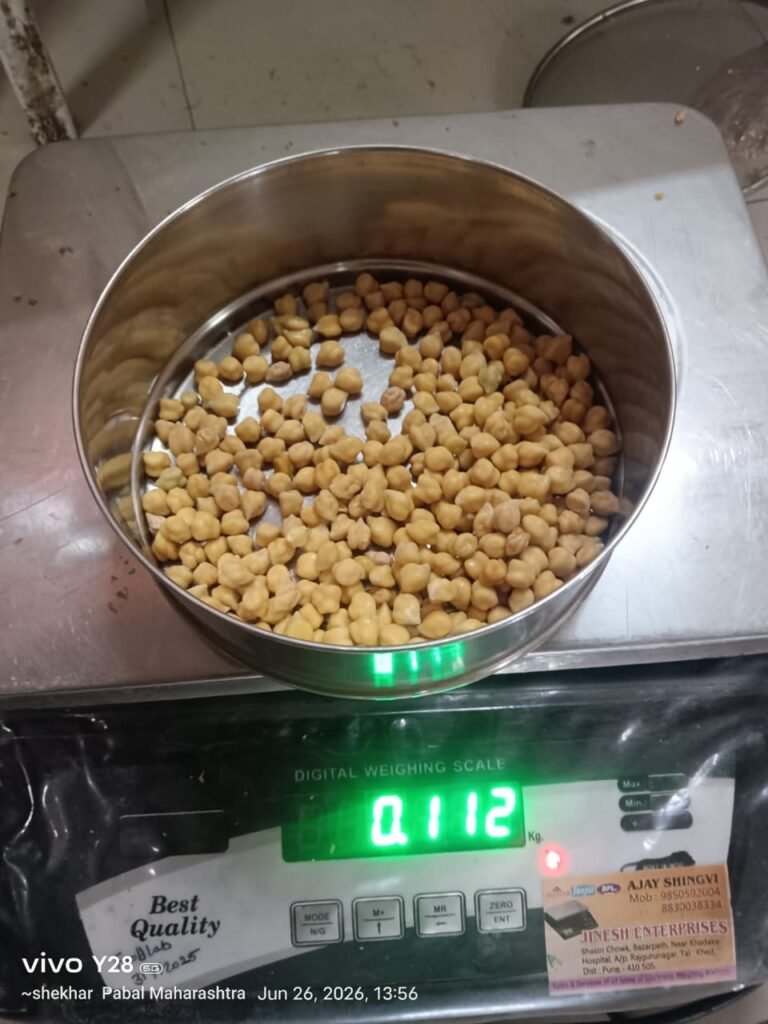
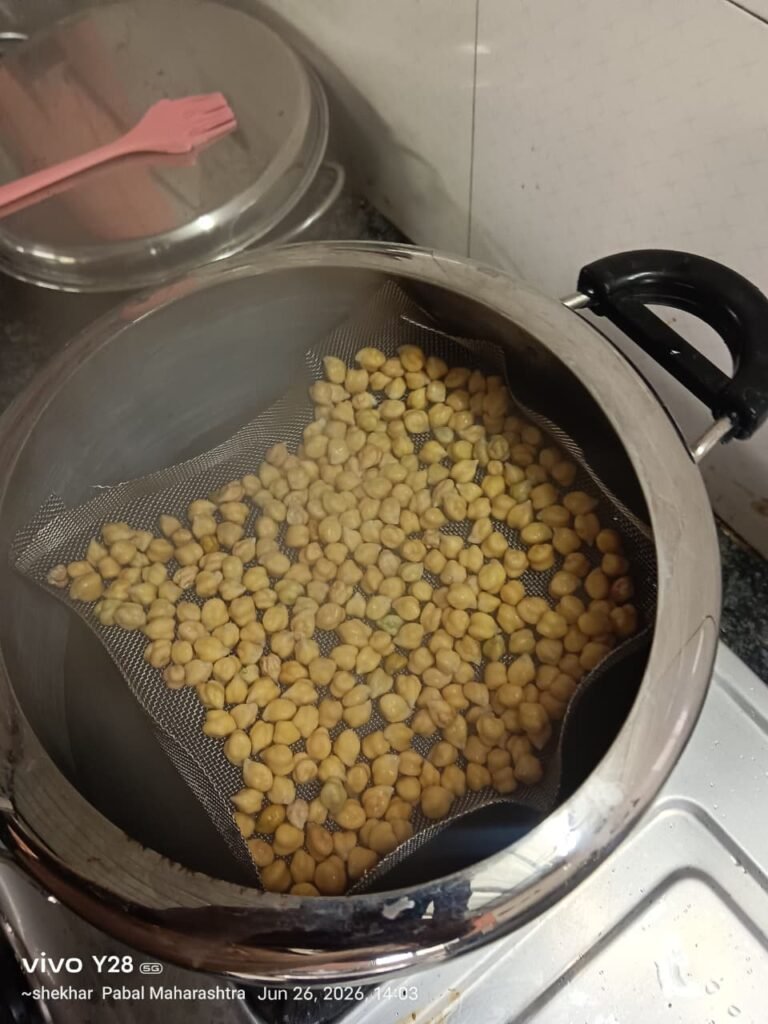
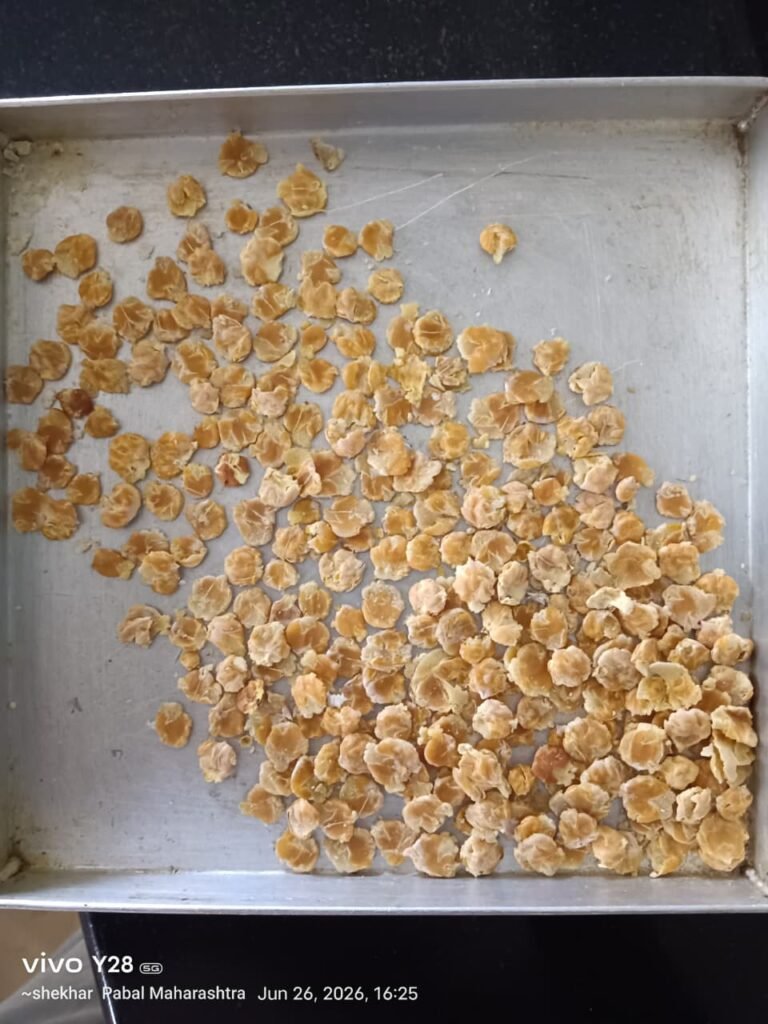
Observations :_
- The grains were adequately softened after steaming.
- The moisture reduction was sufficient for smooth flaking.
- The roller gap of 0.80 mm produced well-formed and uniform Chana Jor Gram flakes.
- The flakes showed good shape, thickness, and overall appearance without major processing defects.
- 50 gm chana gets 42 gm chana jor gram then give 84 % efficiency.
Conclusion :The processing conditions of 4 hours soaking, steaming at 100°C for 35 minutes, drying at 100°C for 30 minutes, and flaking at a roller gap of 0.80 mm produced good-quality Chana Jor Gram flakes. These parameters can be considered suitable for further trials and process standardization.
27/06/2026
TRIAL 2
Whole chana: 50 g
- Soaking :- The whole chana was soaked in water for 4 hours to allow sufficient moisture absorption and prepare the grains for thermal processing.
- Steaming :_ The soaked chana was steamed at 100°C for 35 minutes. A longer steaming time was selected because whole chana is harder and denser, requiring additional heat treatment to soften the grains and achieve proper starch gelatinization.
- Drying :-The steamed grains were dried at 70°C for 35 minutes, resulting in an approximate 40% reduction in moisture. This conditioning step provided an appropriate moisture level for flaking.
- Flaking :-The conditioned grains were processed using a multigrain flaker machine with the roller gap set to 0.80 mm.
Observations :-
- The grains were adequately softened after steaming.
- Drying at 70°C for 35 minutes produced a suitable moisture level for flaking.
- The flaking process was smooth without significant sticking.
- The flakes were well-formed, uniform, and of good quality, with satisfactory size and appearance.
Conclusion :-
The combination of 4 hours of soaking, steaming at 100°C for 35 minutes, drying at 70°C for 35 minutes, and flaking at a roller gap of 0.80 mm successfully produced good-quality Chana Jor Gram flakes. These processing conditions are suitable for further standardization and scale-up of the product.
28/06/2026
TRIAL 1
Whole moong: 50 g
- Soaking :_ The whole moong was soaked in water for 3 hours to allow adequate moisture absorption before heat treatment.
- Steaming :-The soaked moong was steamed at 100°C for 20 minutes to soften the grains and promote starch gelatinization, making them suitable for flaking.
- Drying :-The steamed grains were dried at 70°C for 25 minutes, resulting in an approximate 40% reduction in moisture. This conditioning step provided the desired moisture level for flaking.
- Flaking :-The conditioned grains were processed using a multigrain flaker machine with the roller gap set to 0.50 mm.
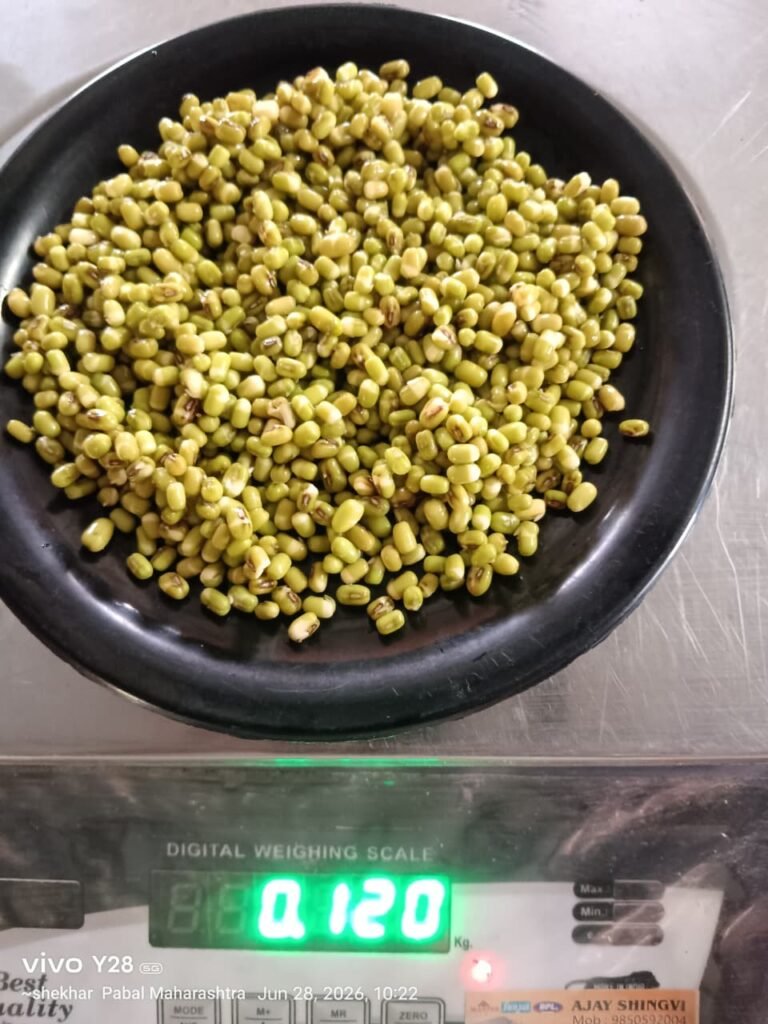
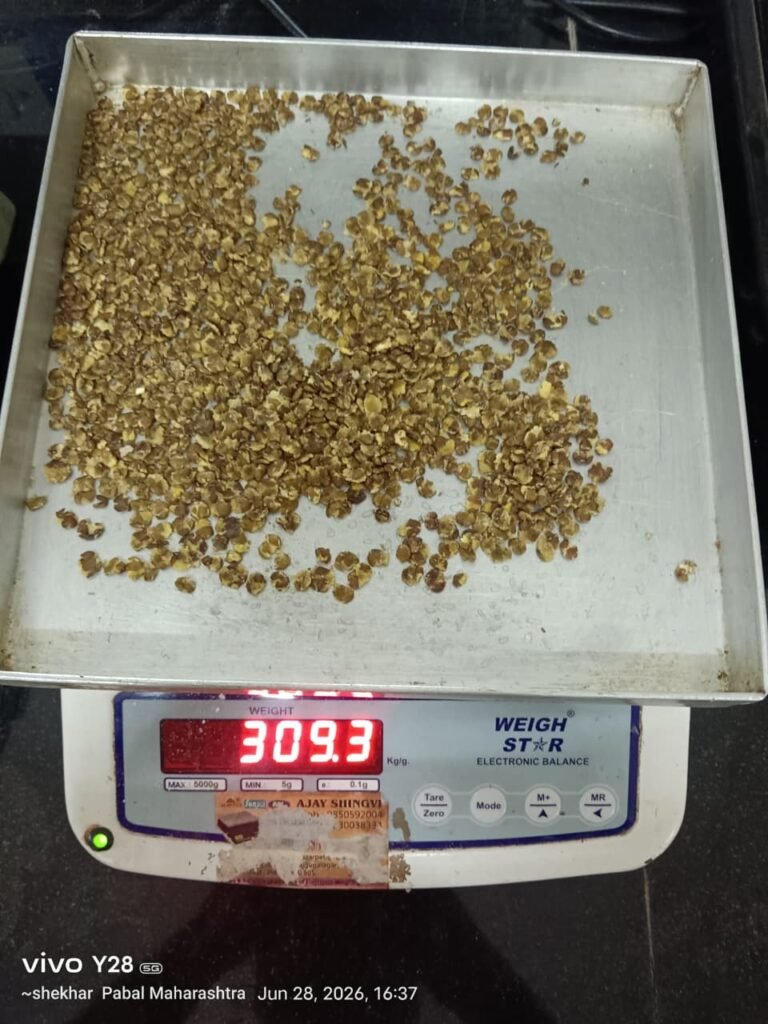
Observations :-
- The grains were adequately softened after steaming.
- Drying at 70°C for 25 minutes provided suitable moisture for flaking.
- The flaking process was smooth, and the grains were flattened uniformly.
- 50 g of whole moong produced 39 g of Moong Jor Gram flakes, indicating a processing yield of approximately 78%.
Conclusion :-The processing conditions of 3 hours soaking, steaming at 100°C for 20 minutes, drying at 70°C for 25 minutes, and flaking at a roller gap of 0.50 mm successfully produced good-quality Moong Jor Gram flakes. The final product yield was 39 g from 50 g of whole moong, demonstrating that these conditions are suitable for further process standardization and product development.
30/06/2026
BATCH 10
- Sorghum: 50 gm
- Soaking :-The sorghum grains were soaked in water for 4 hours to ensure adequate moisture absorption before thermal processing.
- Steaming :-The soaked grains were steamed at 100°C for 30 minutes to achieve proper starch gelatinization and soften the kernels for flaking.
- Drying :-The steamed grains were dried at 100°C for 25 minutes, resulting in an approximate 31% reduction in moisture.
- Flaking :- The conditioned grains were processed using a multigrain flaker machine with the roller gap set to 0.10 mm.
Observations :-
- The grains showed proper starch gelatinization after steaming.
- During flaking, the grains stuck to the rollers, affecting smooth machine operation.
- The flake width was good, indicating effective compression by the rollers.
- However, many flakes were folded inward instead of remaining flat.
- To improve flaking performance, the moisture content was reduced further before conducting additional processing.
Conclusion :The processing conditions of 4 hours soaking, steaming at 100°C for 30 minutes, drying at 100°C for 25 minutes, and flaking at a 0.10 mm roller gap resulted in proper starch gelatinization and good flake width. However, sticking of the grains to the rollers and inward folding of the flakes indicated that the moisture content was still higher than optimal for flaking. Therefore, the grain moisture was reduced further to improve flaking efficiency and produce flatter, non-sticky sorghum flakes in subsequent trials.
01/07/2026
BATCH 11
A processing trial was conducted using 40 g of sorghum grains to evaluate the effect of soaking, steaming, drying, and flaking conditions on the quality of sorghum flakes.
The sorghum grains were first soaked for 4 hours to ensure adequate water absorption. After soaking, the grains were steam–cooked at 100°C for 30 minutes to achieve proper starch gelatinization, which is essential for producing good-quality flakes.
Following steaming, the grains were dried at 100°C for 25 minutes. After drying, the moisture content of the grains was reduced to approximately 50% before flaking.
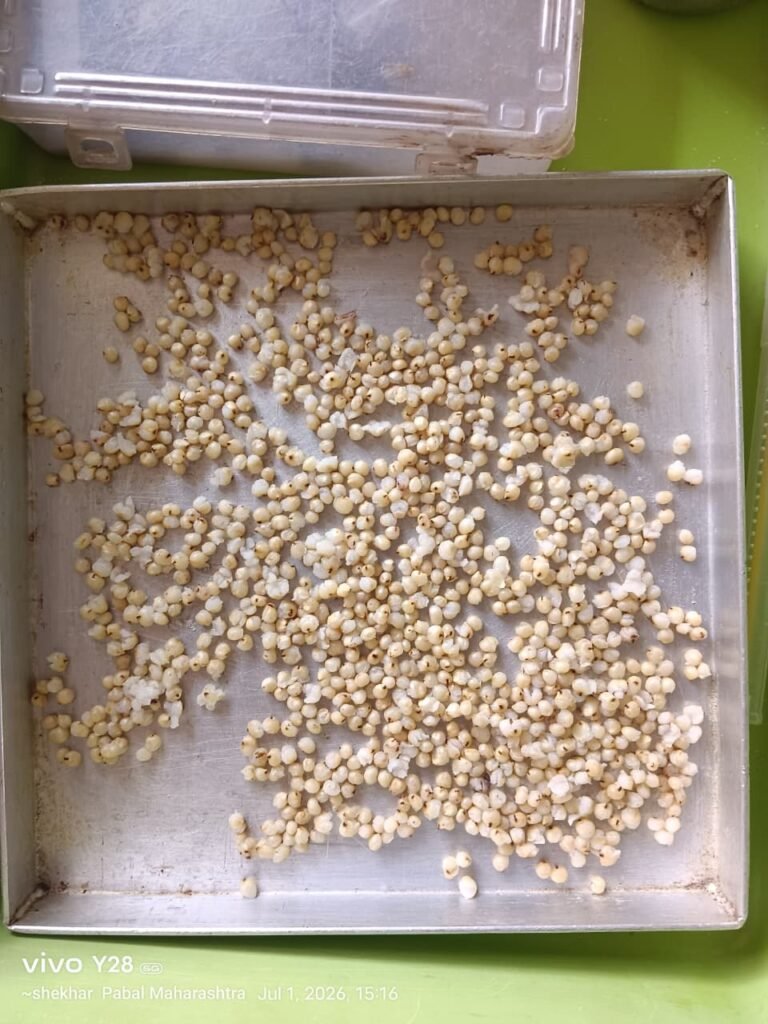
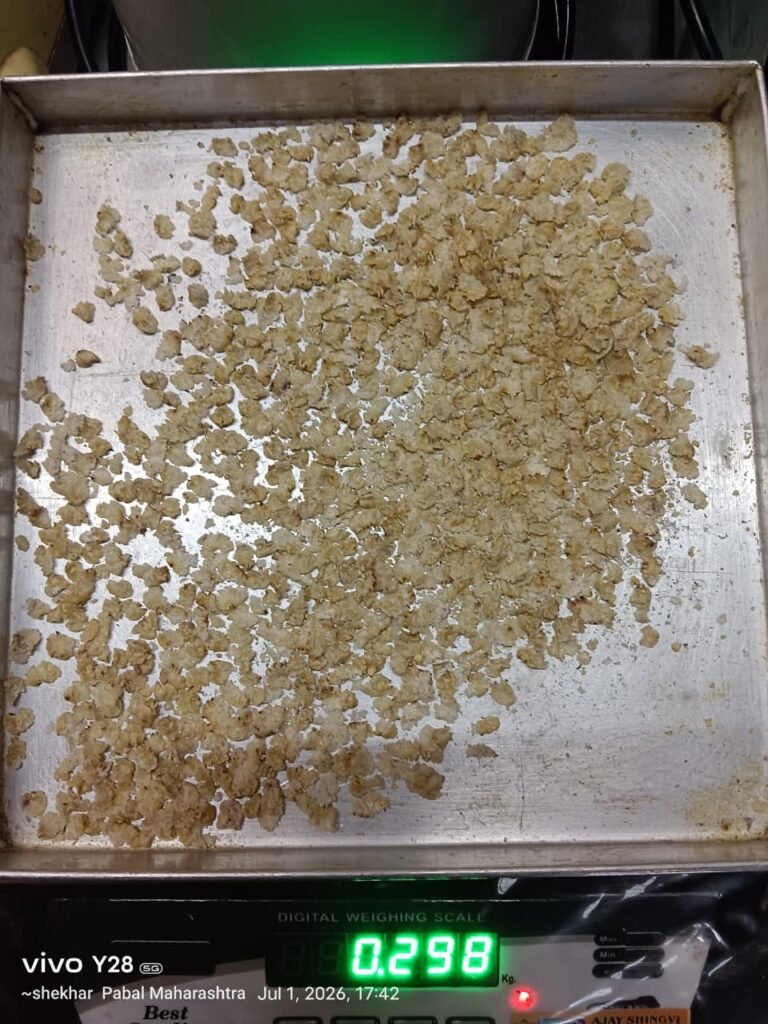
The conditioned grains were then processed in a multigrain flaker machine with the roller gap set at 0.05 mm. During flaking, it was observed that the grains were falling from both sides of the rollers instead of passing smoothly through the roller gap. It was also noted that excessive moisture reduction affected the feeding behaviour of the grains. Therefore, in the next trial, the moisture content will be adjusted and optimized before flaking to improve grain flow and obtain uniform sorghum flakes.
This trial indicates that proper moisture conditioning before flaking is a critical factor for successful flake production, and further optimization of drying conditions is required
03/07/2026
BATCH 12
A trial was conducted to develop sorghum flakes using a multigrain flaker machine and to optimize the processing parameters for obtaining good-quality flakes.
Initially, 40 g of sorghum grains were soaked in water for 4 hours to ensure adequate moisture absorption. The soaked grains were then steamed at 100°C for 30 minutes to achieve proper starch gelatinization, which is essential for producing flakes with good texture and structural integrity.
After steaming, the grains were dried at 100°C for 25 minutes. The drying process reduced the moisture content to approximately 42%, making the grains suitable for flaking.
The conditioned grains were then passed through a multigrain flaker machine with a roller gap of 0.05 mm. The flaking operation was successful, and the resulting flakes exhibited good thickness, uniform width, and an acceptable overall appearance. The flakes were well-formed and showed desirable physical characteristics.
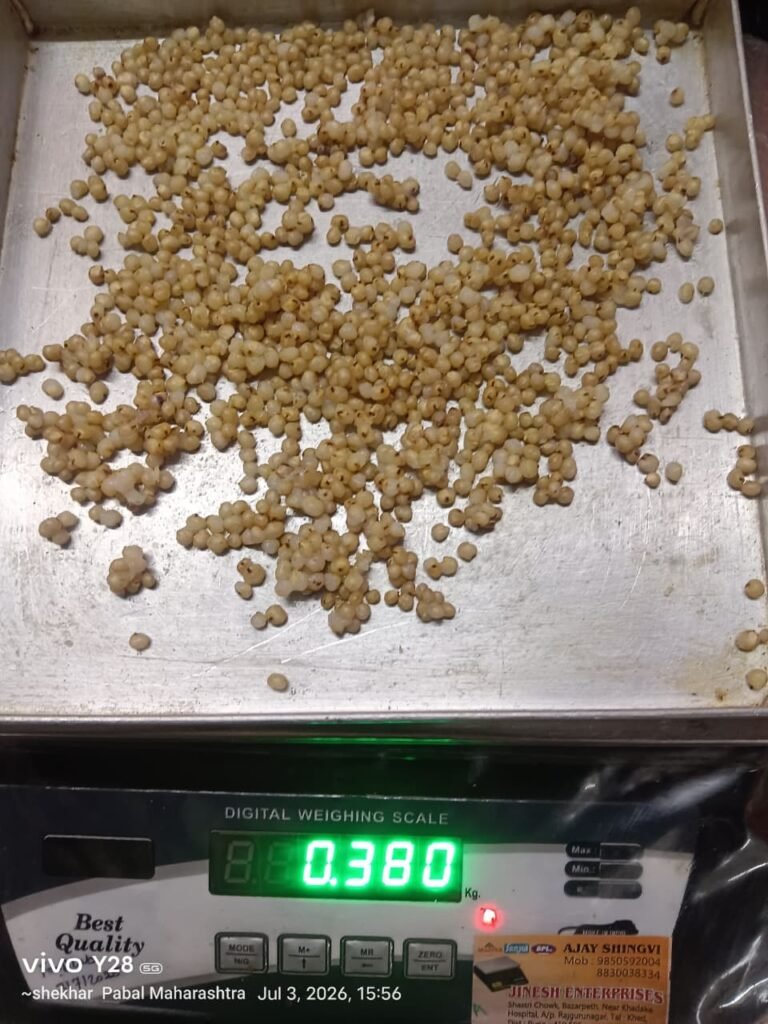
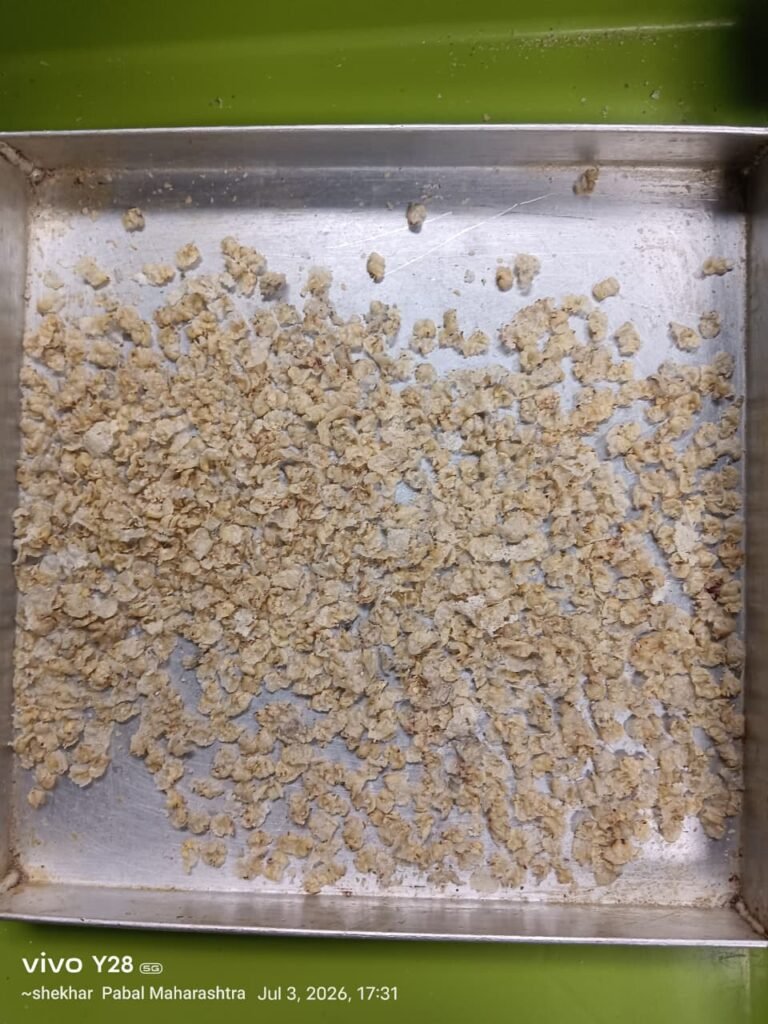
Based on these encouraging results, the process will be scaled up for larger batch trials. Further work will focus on optimizing the steaming process and large-scale production parameters to improve process efficiency and ensure consistent flake quality.
Observations :-
- The grains showed proper starch gelatinization after steaming.
- During flaking, the grains stuck to the rollers, affecting smooth machine operation.
- The flake width was good, indicating effective compression by the rollers.
- Efficiency of flakes is good 40 gm jowar gets 32 gm flakes of jowar
07/07/2026
BATCH 13
50 g of sorghum grains were soaked in water for 4 hours, resulting in an increase in grain weight to 89 g due to moisture absorption. The soaked grains were then steamed at 100°C for 30 minutes to ensure proper starch gelatinization, which is essential for obtaining high-quality flakes.
Following steaming, the grains were dried at 100°C for 25 minutes until the moisture content was reduced to approximately 40%. The conditioned grains were subsequently processed using a multigrain flaker machine with the roller gap set at 0.05 mm.
The flaking process was successful, producing well-formed sorghum flakes with uniform thickness and width
09/07/2026
Discussion and Future Work
Following a detailed discussion with Arun Dixit Sir and Neeraj Dixit Sir, the results of the sorghum flake processing trials were reviewed. During the evaluation, it was observed that the steam distribution in the pressure cooker was not uniform, resulting in inconsistent heat transfer and uneven processing of the sorghum grains. This non-uniform steaming may affect starch gelatinization and, consequently, the quality and consistency of the final flakes.
Based on these observations, it was decided to undertake a small-scale research project to study and optimize the steaming system. The objective of this work is to achieve uniform steam distribution and consistent grain processing, thereby improving the overall quality and reproducibility of sorghum flakes.
The design and development of the improved steamer system is currently in progress, and further trials will be conducted after its completion to evaluate its performance under controlled processing conditions.
13/07/2026
Development of a Steam Box for Sorghum Grain Gelatinization
Objective
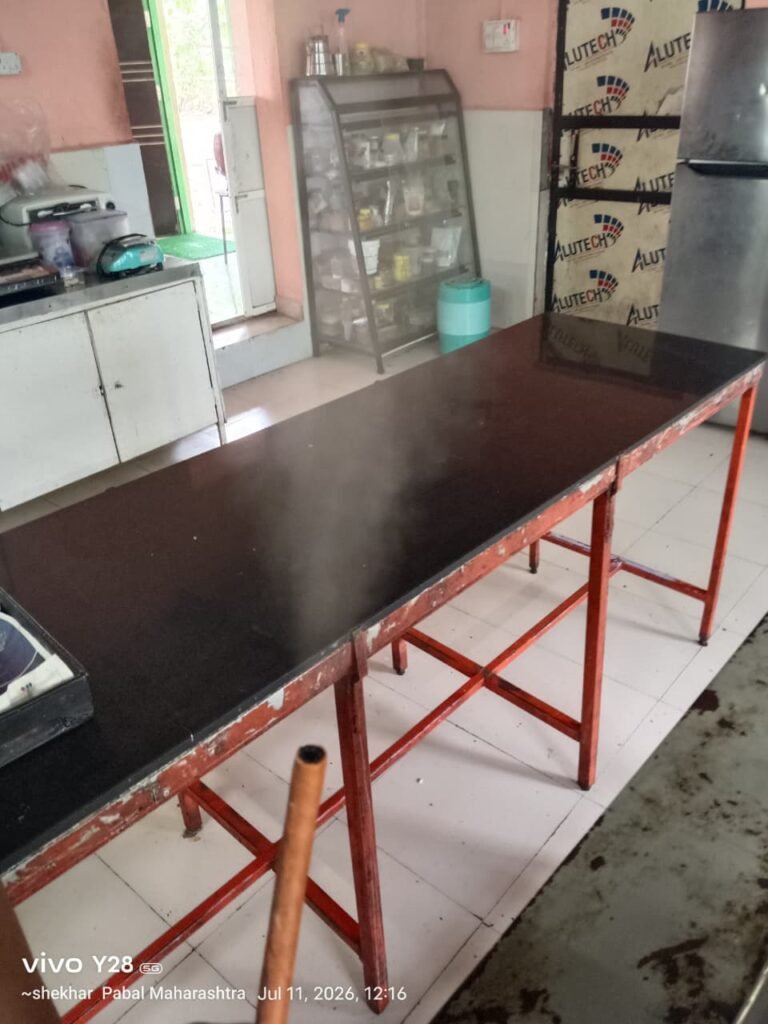
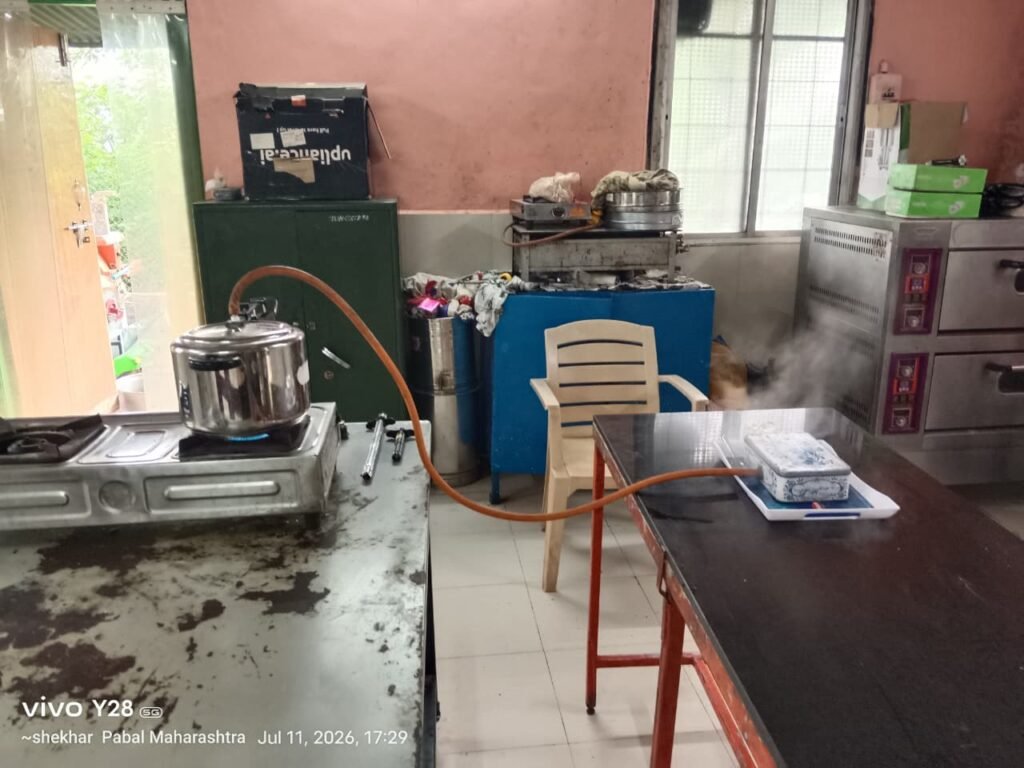
The objective of this trial was to develop a simple steam chamber for the gelatinization of sorghum grains before the flaking process. A metal box was fabricated and connected to a pressure cooker to utilize steam as the heating medium.
Experimental Setup
A rectangular metal box was fabricated for steaming the grains. A 10 mm hole was drilled at the center of the bottom of the metal box. This hole was connected to a rubber hose and a metal pipe, which served as the steam inlet.
Inside the metal box, an iron wire mesh was installed above the bottom surface to support the sorghum grains and allow uniform steam circulation beneath them.
A pressure cooker was placed on a gas stove and filled with water. After closing the cooker lid securely, the pressure regulator (weight) was removed. A rubber hose connected to a metal pipe was fitted to the cooker vent, and the other end was connected to the steam inlet of the fabricated metal box.
Once the gas burner was turned on, steam generated inside the pressure cooker flowed through the pipe into the metal box. Sorghum grains were spread uniformly on the wire mesh inside the chamber, and the metal box was closed with its lid to begin the steaming process.
Observation
During the experiment, it was observed that the sorghum grains did not achieve proper gelatinization. The major reason was that the lid of the metal box was loose, allowing approximately 70–90% of the generated steam to escape instead of remaining inside the chamber. Due to this significant steam loss, sufficient temperature and moisture could not be maintained for complete starch gelatinization.
Conclusion
The preliminary steam chamber design demonstrated that steam generated from a pressure cooker can be successfully directed into a separate steaming chamber. However, the effectiveness of the system was limited by excessive steam leakage from the metal box lid.
Future Work
The next stage of the project will focus on:
Designing and fitting an airtight lid for the metal box.
Reducing steam leakage to improve steam retention.
Achieving uniform steam distribution within the chamber.
Optimizing steaming time and temperature for complete gelatinization of sorghum grains before flaking.
CONCLUSION :-
The project on development and standardization of Jowar Flakes using a Multigrain Flaker Machine was successfully completed through systematic trials of soaking, steaming, drying, moisture conditioning, and flaking parameters. The trials helped identify the suitable processing conditions for obtaining well-formed and uniform jowar flakes.
Based on the optimized trials, an SOP was prepared and standardized for the process. The Multigrain Flaker Machine was also provided to the client, Agrozee Solutions Millets Now Pvt. Ltd., along with the developed process guidelines. Thus, the project successfully achieved its objective of process optimization, SOP development, and technology transfer to the client.