Aim
To restart, integrate, and improve the performance of an idle biomass gasifier system for sustainable and efficient renewable energy generation using biomass fuel.
Introduction
Biomass gasification is an important renewable energy technology that converts agricultural waste and biomass materials into combustible gas through a thermo-chemical process. This producer gas can be used for heating, electricity generation, and other industrial applications. Biomass gasifiers help reduce dependence on fossil fuels and promote eco-friendly energy production.
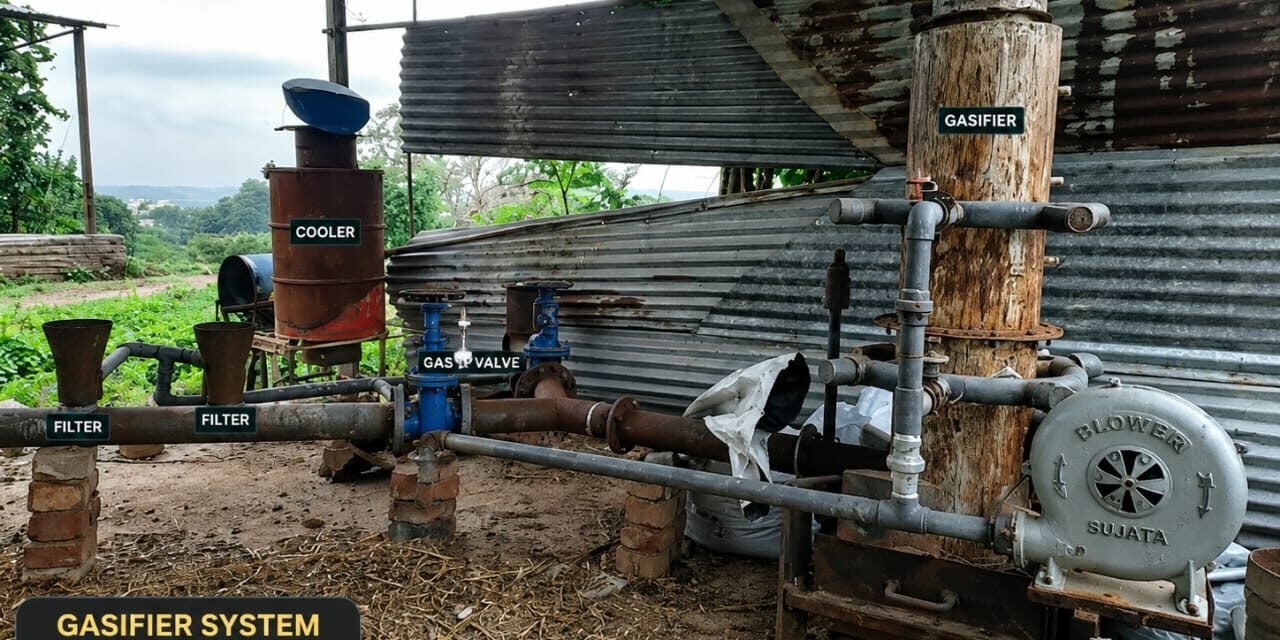
The present project focuses on the revival and recommissioning of a biomass gasifier system that was developed four years ago but remained non-operational for a long period. The project includes inspection, repair, integration of system components, testing, and performance evaluation to restore the gasifier into working condition. This initiative supports sustainable energy utilization and waste-to-energy conversion.
Background
Due to increasing energy demand and environmental concerns, renewable energy technologies are becoming essential for sustainable development. Biomass gasification is one such technology that utilizes agricultural residues, wood waste, and organic biomass for clean energy production.
The existing biomass gasifier system was previously designed and installed for experimental and energy generation purposes. However, because of technical issues, maintenance limitations, or prolonged inactivity, the system stopped functioning. Reviving the gasifier provides an opportunity to reuse existing infrastructure, minimize project costs, and improve system efficiency through modifications and integration.
Objective
study the design and working principle of the existing biomass gasifier system.
- Biomass wood collected from the vicinity of the campus.
- A three phase power supply point for the cutting machine was arranged.
- Start of biomass gasifier system.
- Standard sop preparation for gasifier.
DATE 03/06/2026
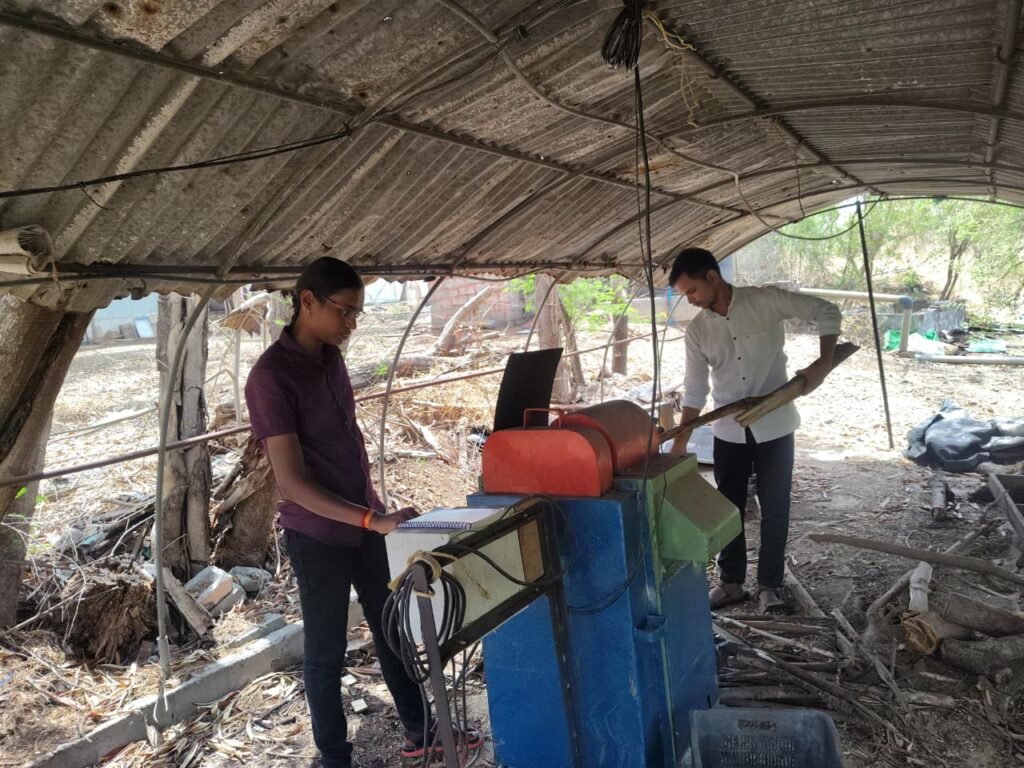
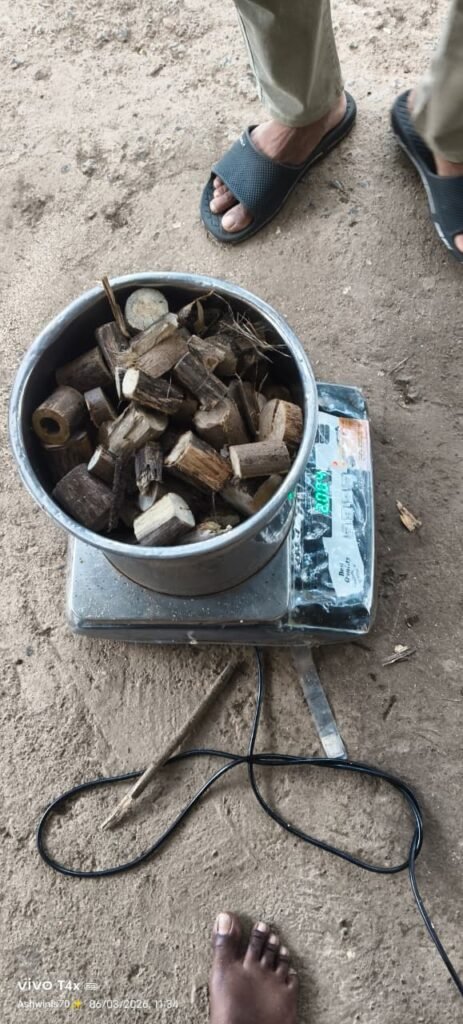
Collection of wood and cutting the wood using of wood cutting machine. Total wood chips=5.5kg
DATE 04/06/2026
Calculation of moisture content of wood chips using of LOD method as two samples.
moisture content of wood chips-
At 105 Degree celcious Temp. for 2 hrs
Sample 1: (w1-w2)/w1= (18.8-17.4)/18.8=0.074*100=7.4%
Sample 2: (w1-w2)/w1=(20.1-19.0)/20.1=0.054*100=5.4%
Average moisture content in this wood =6.5%
DATE 06/06/2026–
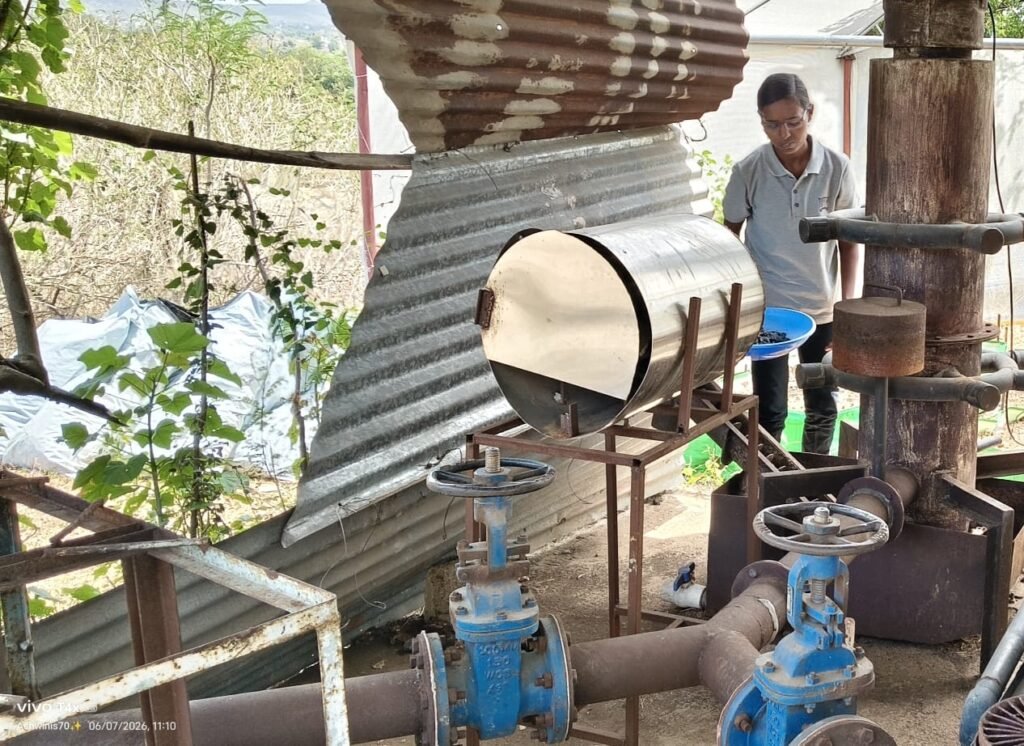
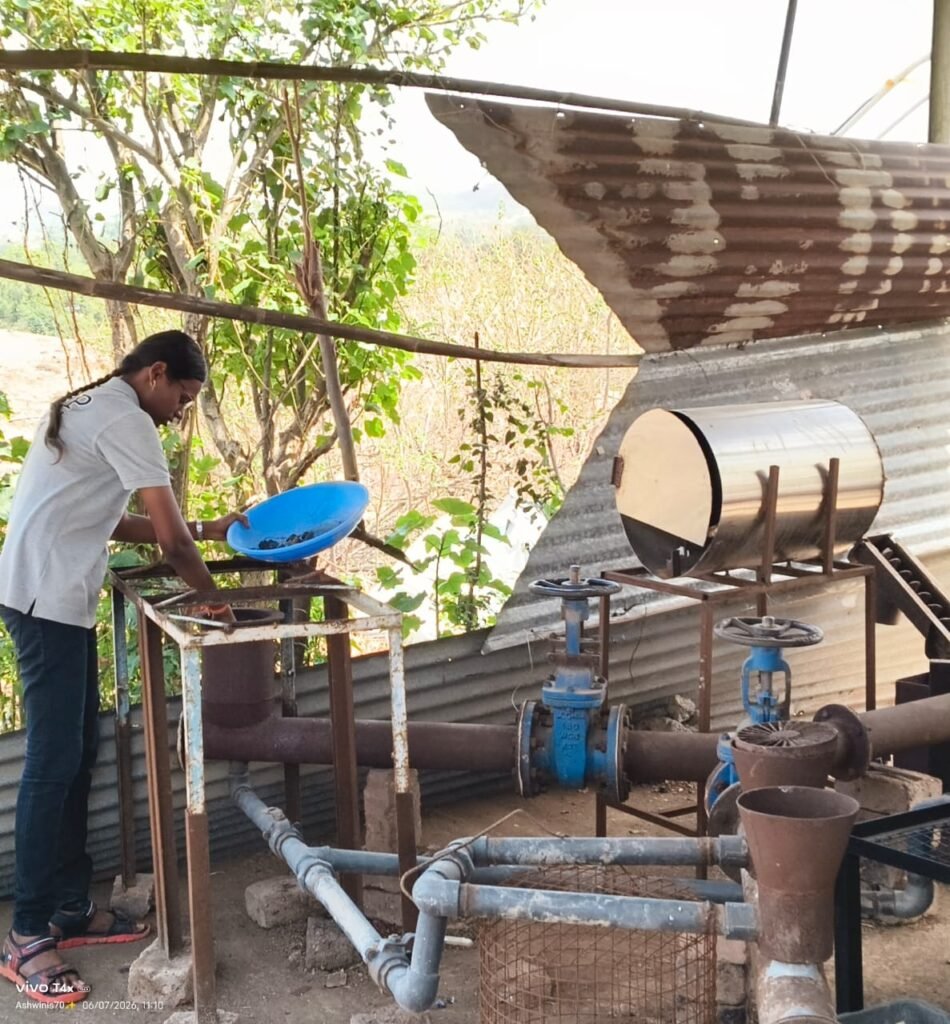
- Cleaning of unit of biomass gasifier.as per following parts
1) Burner
2)Ash container
3)Inlet of gasifier and whole cylinder of gasifier
4) cleaning area surrounds of gasifier.
DATE 08/06/2026
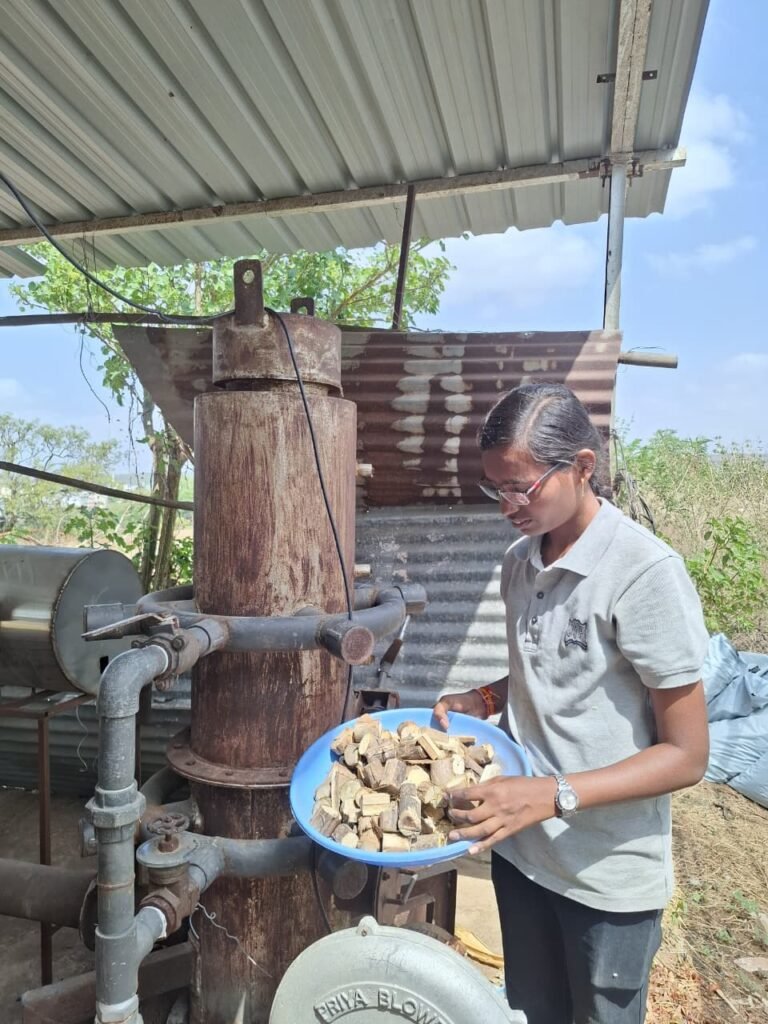
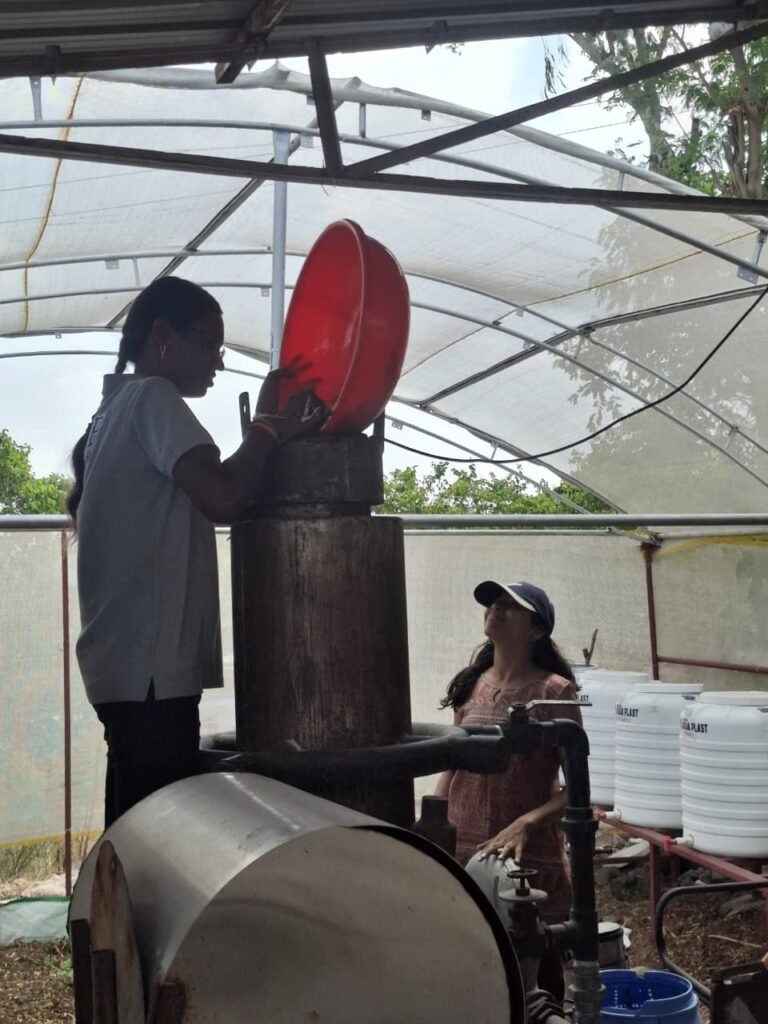
- Filling wood fuel in gasifier. fuel as first layer of charcoal and wood bricks.
Feeding of wood chips in GASIFIER
step for filling fuel in the gasifier
- first layer of charcoal
- paper waste layer for fast ignition
- wood chips and small agriculture dry waste.
- wood blocks.
DATE 13/06/2026
Sucussesfully ignition of biomass gasifier With help harshad sir.
FIRST TRIAL OBSERVATIONS
After resolving the ignition and air suction issues, the biomass gasifier was started successfully. The system operated continuously for around 20 minutes, and syngas generation was observed nearly half an hour after start-up. This confirmed the successful initiation of the gasification process.
The biomass gasifier was successfully ignited and operated for approximately 20 minutes.
Syngas generation was observed nearly 30 minutes after start-up.
However, the flame was extinguished after 20 minutes of operation, indicating that stable gasification could not be sustained continuously.
Further investigation is required to identify the possible causes, such as insufficient air supply, fuel feeding issues, or blockage in the system.
Gasification with limited supply of air and sealing the bottom of gasifier with water to reduce leakage of gas.
Result:-
Gas not formed properly because flame frequently closed.
White smoke come out from burner.
CHALLENGES FACED-
- Starting ignition are not easily.
- lack of knowledge of air circulation in to the system.
- Lack of SOP information due to lossed fuel before burning.
Wood specification
Wood — Albezia lebbeck (siris)
Type of wood — hardwood
Density of wood — 550 kg/m^3 ( wikipedia)
Moisture content (wet basis) — less than 10 % (dried condition)
Colour — light brown
Texture — slightly rough
Second method using we produce high effective syngas for energy.
DATE 26/06/26
PROCEDURE-
The biomass gasification experiment began with the collection of dry wooden logs from the campus area. These logs were cut into small, uniform pieces using a wood cutter to ensure proper fuel sizing for the gasifier. The moisture content of the wood was measured and found to be less than 10%, indicating that the feedstock was sufficiently dry for efficient gasification. A total of 25 kg of wood was prepared for the experiment.
Since charcoal was not available for ignition, an alternative method was adopted. Approximately 5 kg of small wood pieces were coated with used motor oil and utilized as a substitute for charcoal to facilitate the ignition process.
Before loading the fuel, the top lid of the gasifier was opened and the reactor was carefully inspected. It was confirmed that no residual material from previous operations remained inside the reactor. The reduction zone was clearly visible, indicating that the gasifier was clean and ready for operation.
Fuel loading was carried out in layers. Initially, small wood chips were placed at the bottom of the reactor to act as the primary ignition fuel. A few waste paper pieces were added to promote quick ignition. Next, a layer of the used oil-coated wood pieces was introduced through the ignition port to function as the ignition bed.
Finally, the remaining 15 kg of prepared wood was loaded into the gasifier, ensuring uniform filling of the reactor. After completing the fuel loading process, the top lid was securely closed, and the gasifier was made ready for the ignition stage.
Initiation of Air Circulation
The blower was switched on to establish a continuous air supply through the gasifier. This airflow was essential for initiating and sustaining the gasification process.
Valve Configuration
Valve No. 1 and Valve No. 2 were fully opened, while the gas control valve was kept completely closed. This arrangement ensured proper air circulation inside the reactor before gas production.
Initial Ignition

After allowing air circulation for approximately 10–15 minutes, ignition was attempted through the ignition port. Several attempts were required before successful ignition was achieved, as adequate air suction inside the reactor was necessary to initiate combustion.
Observation During Gasification
Once ignition was established, smoke gradually started emerging from both the bottom outlet and the burner. After nearly 5 minutes, the blower speed was increased, which enhanced the airflow and increased the rate of gas and smoke discharge from the burner.
Gas Quality Improvement
As the gasification process continued, noticeable changes were observed in both the colour and odour of the smoke, indicating an improvement in the quality of the producer gas. Burner ignition was attempted at this stage; however, the gas did not ignite immediately.
Successful Burner Ignition
After approximately 30 minutes of continuous operation, the producer gas ignited successfully at the burner. Initially, the flame produced was considerably large due to the high gas flow rate.
Flame Adjustment
The flame intensity was regulated using the gas control valve, reducing it to a stable and controlled flame suitable for cooking applications.
Cooking Demonstration
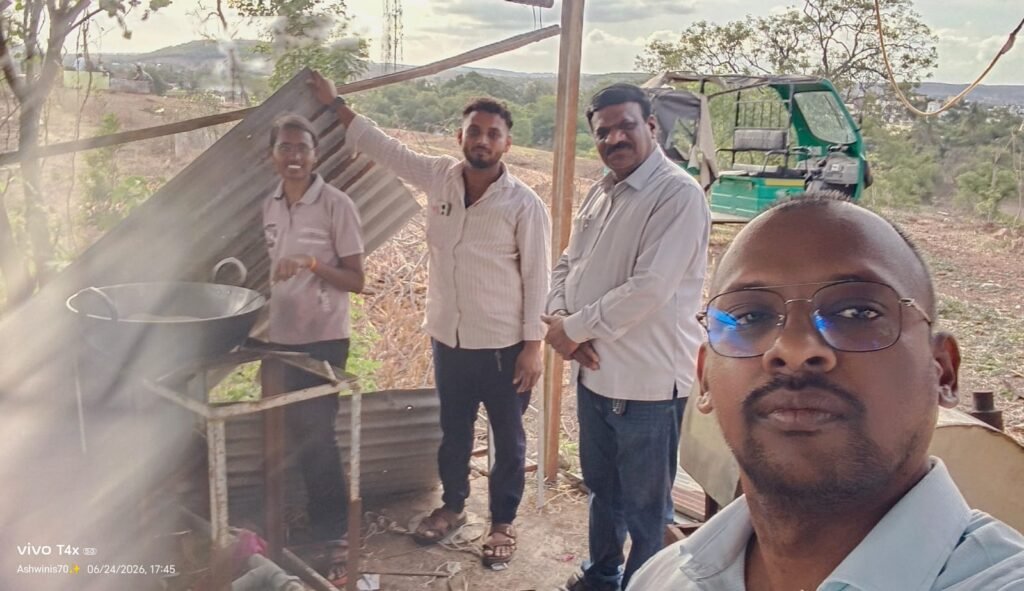
CALCULATION FOR GASIFICATION EFFICEINCY-
Input energy = total weight of wood*calorific value
Amount of total used wood- 15 kg
calorific value of siris wood- 18.5MJ/KG
Caloric value with 10% moisture-
NCV = CV(dry)*(1-mc/100)-(mc/100*L)
CV (dry)= dry calorific value =18.5
L= Latent heat of rava -1.6 KJ/kg.k
NCV = Net Calorific Value,
18.5*(1-0.16)-(0.16*1.6)
=15.28MJ/kg
Total input energy of wood =15*15.28
=229.25MJ/kg
DATE- 29/06/2026-
Today, Shekhar and I conducted a trial of the biomass gasifier. However, the wood used during the trial had a relatively high moisture content, due to which the initial burning/ignition process took approximately one hour. Subsequently, incomplete combustion was observed, and therefore, the trial was discontinued at that stage.
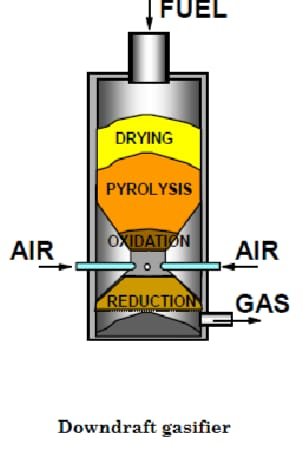
15/07/2026-
SOP FOR STARTING GASIFIER-
START
│
Inspect Gasifier
(Check ash chamber, valves, blower, pipelines, water level and leaks)
│
Prepare Biomass Feedstock
(Cut to uniform size, moisture content <10%)
│
Load Biomass into Reactor
(Wood chips → Ignition material → Remaining biomass)
│
Close and Secure Top Lid
│
Start Blower
│
Open Valve 1 & Valve 2
Keep valve no. 3 and Gas Control Valve Closed for 2 min. air circulation inside the gasifier.
│
After 2 min. close the valve no.1 (near by the ignition port.) and Open valve no.-2 & valve no. 3, with Gas control valve .
│
Ignite Through Ignition Port
│
Observe Smoke and Air Suction
│
Increase Blower Speed Gradually
│
Check Producer Gas Quality
(Smoke colour changes, odour reduces)
│
Ignite Burner
│
Adjust Flame Using Gas Control Valve
│
Perform Cooking/Heating Test
│
Close Gas Supply
│
Stop Blower
│
Allow Gasifier to Cool
│
Remove Ash and Clean System
│
END
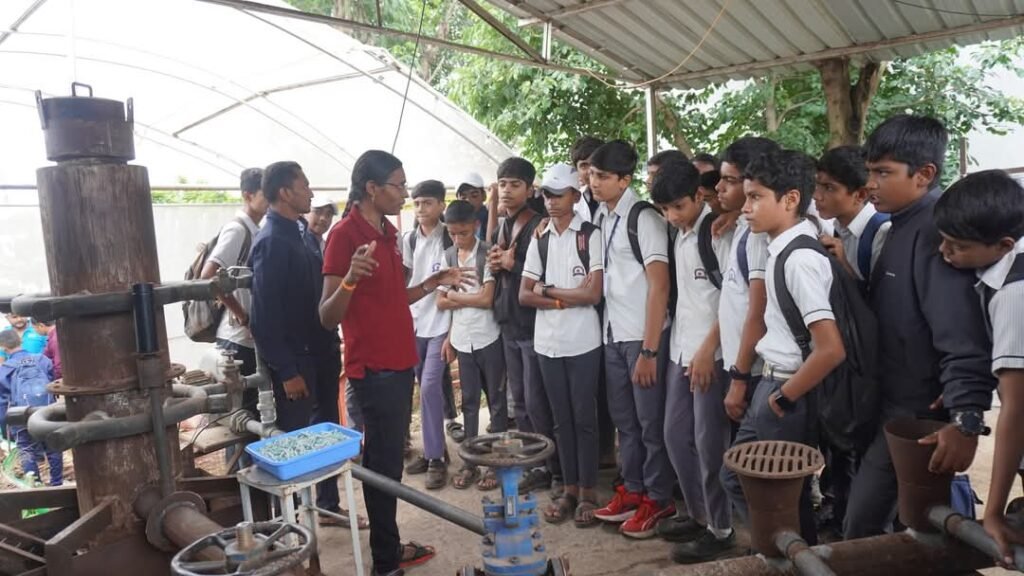
DATE 29 &30 JULY Vigyan Ashram Exhibition-
CONCLUSION
The biomass gasifier system was successfully inspected, cleaned, integrated, and recommissioned after remaining non-operational for a long period. Biomass wood collected from the campus was processed into suitable fuel, and its moisture content was determined using the Loss on Drying (LOD) method. The average moisture content of the tested wood was found to be approximately 6.5%, which was suitable for the gasification trial.
During the initial trials, difficulties related to ignition, air circulation, gas leakage, and stable operation were observed. After addressing the air-supply and ignition-related issues, the gasifier was successfully ignited and producer gas generation was observed. The trial demonstrated that proper control of the air-to-fuel ratio is an important factor for obtaining effective gasification and maintaining stable operation.
Two operating approaches were considered: higher air supply with lower fuel feed and lower air supply with higher fuel feed. The trial indicated that the lower-air and higher-fuel approach was more effective for producing combustible producer gas under the tested conditions. However, further trials are required to optimize the air-to-fuel ratio, fuel feeding rate, gas quality, and operating duration.
Overall, the project demonstrated the feasibility of reviving an existing biomass gasifier for renewable energy generation. The successful recommissioning of the system can help utilize locally available biomass resources, reduce dependence on conventional fuels, and promote sustainable waste-to-energy practices. Further performance optimization and systematic testing can improve the efficiency, stability, and practical applicability of the gasifier system.