
Principle
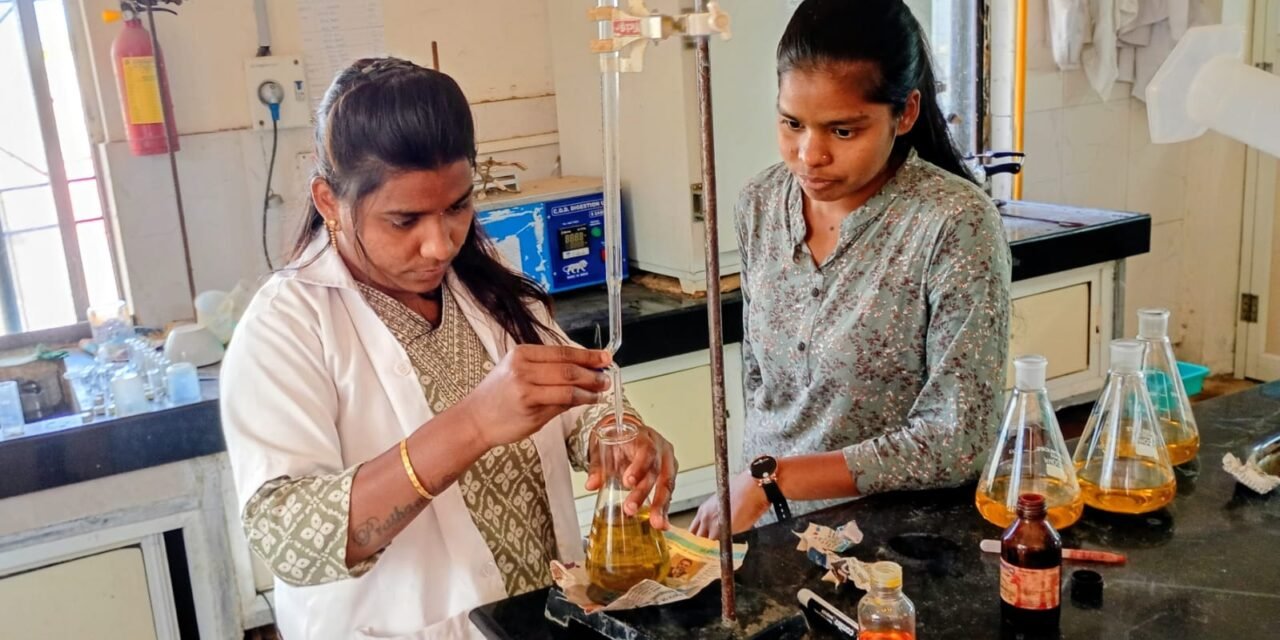
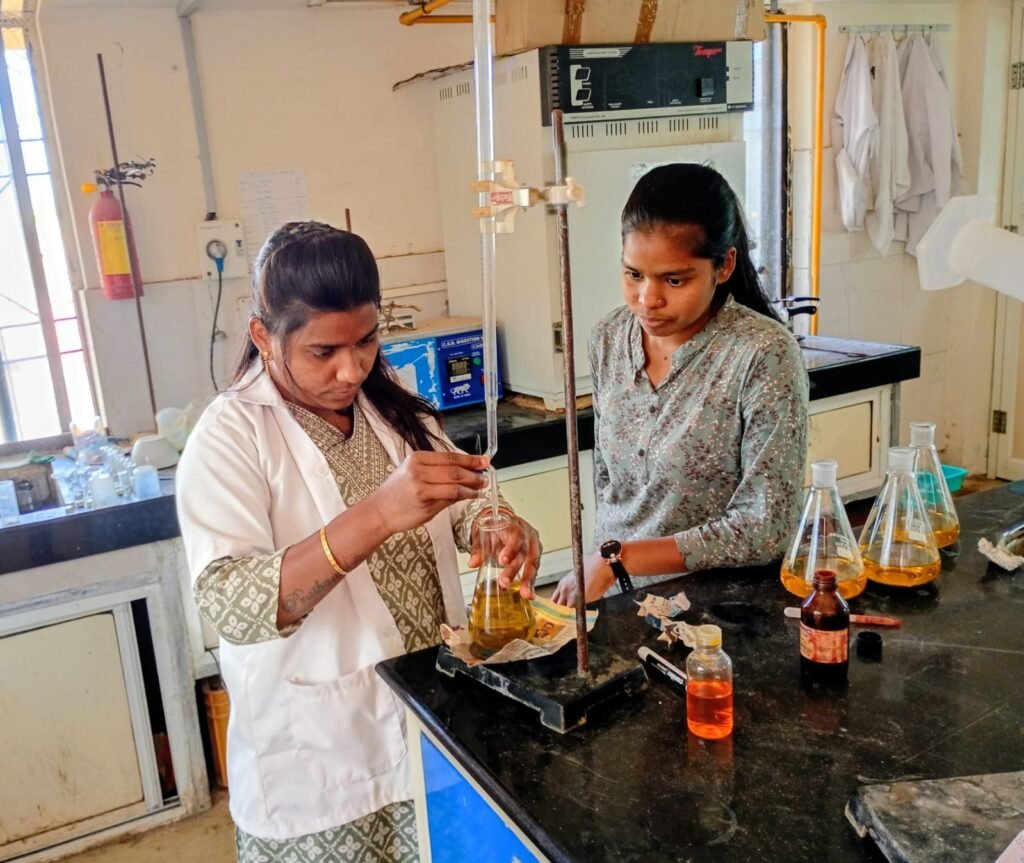
Soil organic carbon is oxidized by potassium dichromate (K₂Cr₂O₇) in the presence of concentrated sulphuric acid (H₂SO₄).The excess (unreacted) dichromate is titrated against ferrous ammonium sulphate (FAS) using diphenylamine indicator.The amount of dichromate reduced is proportional to the organic carbon present in the soil.
Requirements
Chemicals :
- 1 N Potassium dichromate (K₂Cr₂O₇)
- Concentrated sulphuric acid (H₂SO₄)
- 0.5 N Ferrous ammonium
- sulphate(FAS)Diphenylamine indicator
- Distilled water
Preparation of Solutions
1) Preparation of 1 N Potassium Dichromate (K₂Cr₂O₇)
Equivalent weight of K₂Cr₂O₇ = 49 gFor 1 N, 1 litre
2) Preparation of 0.5 N Ferrous Ammonium Sulphate (FAS)
Equivalent weight of FAS = 392 g For 500 ml: 98 gm
Apparatus
- Burette
- Pipette (10 ml)
- Conical flask (500 ml)
- Electronic balance
- Sieve (0.5 mm)
Procedure
- Take 1 g of air-dried, sieved soil in a 500 ml conical flask.
- Add 10 ml of 1 N K₂Cr₂O₇ solution.
- Add 20 ml concentrated H₂SO₄ carefully and swirl gently.
- Allow the mixture to stand for 30 minutes.Add 200 ml distilled water.
- Add 2–3 drops of diphenylamine indicator.
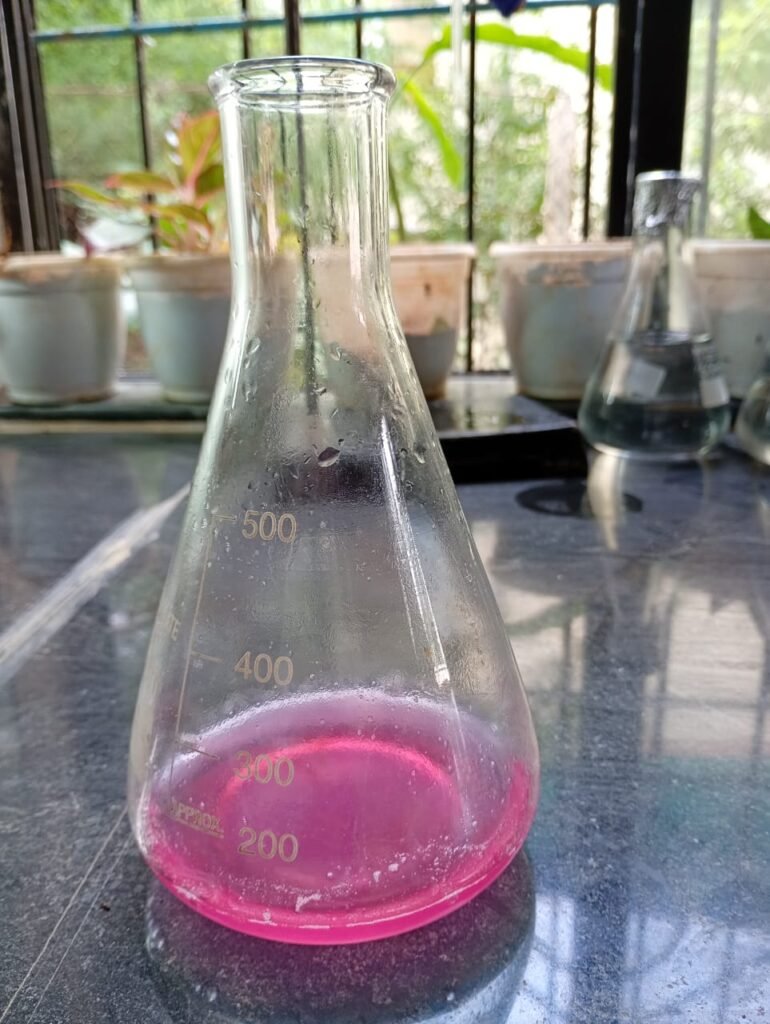
- Titrate with 0.5 N FAS until the colour changes from violet to green.
- (Ferroin indicator colour change: blue-green → wine red / reddish brown)
- Run a blank titration without soil.
Calculation :
Organic Carbon = (B-S)× N×0.003×1.33×100/Wt.Of Soil
Where,
B = Volume of FAS used in blank (ml)
S = Volume of FAS used in sample (ml)
N = Normality of FAS 0.5 N
- 0.003 = Carbon equivalent (gm)
- 1.33 = Correction Factor
- Blank Reading (B) = 26.1ml
- Sample Reading = 23.8 ml
- Weight Of Soil = 1 gm
Organic Carbon = (B-S)× N×0.003×1.33×100/Wt.Of Soil
= (26.1- 23.8)×0.5×0.003×1.33×100/1
=2.3×0.5×0.003×1.33×100/1
=1.15×0.003×1.33×100/1
=0.00345×1.33×100/1
=0.0045885×100/1
=0.458/1
=0.458%
Conclusion (Organic Carbon)
The given soil sample contains 0.458% organic carbon. Since this value is below 0.5%, the soil is classified as having low organic carbon content.
Low organic carbon indicates reduced soil fertility, lower microbial activity, poor soil structure, and limited availability of nutrients to plants. Such soil may also have a lower water-holding capacity.
Therefore, to improve soil health and fertility, the application of farmyard manure, compost, vermicompost, green manuring, and incorporation of crop residues is recommended. These practices will help increase the organic carbon content and improve sustainable crop productivity.
Based on the laboratory analysis, the organic carbon status of the soil can be concluded as follows:
- Low organic carbon (< 0.5%) indicates poor soil fertility, low microbial activity, and reduced nutrient availability. Such soils require the addition of organic manures, compost, crop residues, or green manuring.
- Medium organic carbon (0.5–0.75%) reflects moderate soil fertility and satisfactory physical and biological properties.
- High organic carbon (> 0.75%) signifies good soil health with better nutrient supply, improved soil structure, and higher productivity.
Sr No Farmer Name
1. Tanaji Nanasa Dhumal
2 Nikhil Eknath Chore
3 Subhash Dnynoba Dhumal
4 Ashok Bappu Novote
5 Ramdas Kisan Yelbhar
6 Mahesh Pandurang Gawade
7 Bhau Asaram Gade
8 Devram Babu Shelke
9 Anil Baburao Godse
10 Prabhakar Vaman Mohite
11 Ramesh Shankar Daphal
12 Sangita Vilas Punde
13 Balasaheb Sitaram Vidhate
14 Swapnil Rajendra Shinalkar
15
Kisan Anandrav Parhad
16
Madhukar Baburav Dhumal
17
Abhijit Kulkarni
18
Vilas Jayshing Dhumal
19
Baburao Kisan Chore
20
Subhash Namdev Dhumal
21
Pandurang Prabhakar Jadhav
22
Shahuraj Vithal Thite
23
Sampat Kantilal Dhumal
24
Kailas Vishnu Khaire
25
Pappu Tukaram Kardile
26
Dushant Sukhdev Parhad
27
Amol Alkabai Jinturkar
28
Anil Jayashing Yewale
29
Pradip Sahebrao Jadhav
30
Chandrabhaga Ganpat Shelke
31
Avinash Laxman Daphal
32
Phulabai Pandit Bhosale
33
Ganesh Narayan Dhumal
34
Santosh Sudam Madake
35
Somnath Sayaji Kudekar
36
Popat Shakar Gaiwad
37
Dnyneshower Jonku Midgule
38
Gurudev Shankar Rajgurav
39
Pandurang Dashrat Bhujbal
40
Dattatroy Nanabou Bavale
41
Jainuddin Kamubhai Mulani
42
Baburav Gajaba Khaire
43
Rajendra Vithal Dhumal
44
Rohini Pralhad Khaire
45
Sambhaji Shankar Dhumal
46
Kaluram Baban Sakore
47
Ramdas Balaji Thorat
48
Amrut Kaluram Mohite
49
Eknath Sadashiv Khaire
50
Gorak Kondiba Bhor
13/07/2026
Gulab Doke
N – 140
P -21
K – 300
OC – 0.2
PH – 8.5
EC – 123
2/8/2026
Chetan Sir
Sample No. 1
N – 280
P – 14
k-300
OC- 0.4
PH – 6
EC -109
Sample No – 2
N- 140
p- 14
k-300
OC – 0.4
PH – 6.5
EC – 112
3/8/2026
Navnath Nichit
N – 140
p- 35
k- 300
OC – 0.6
EC – 177
PH – 8
4/9/2026
Kanchan Shirke – 3 soil samples tested.
5/9/2026
Kamtila Nalge – 1 soil sample tested
Popat Baban Gunjal – 1 soil sample tested
13/9/2026
Rasni Ratnaparkhi – 2 soil samples tested.
19/9/2026
Abhijit Shukre – 2 soil sample
23/9/2026
Ranjeet Sir – 1 soil sample Tested .
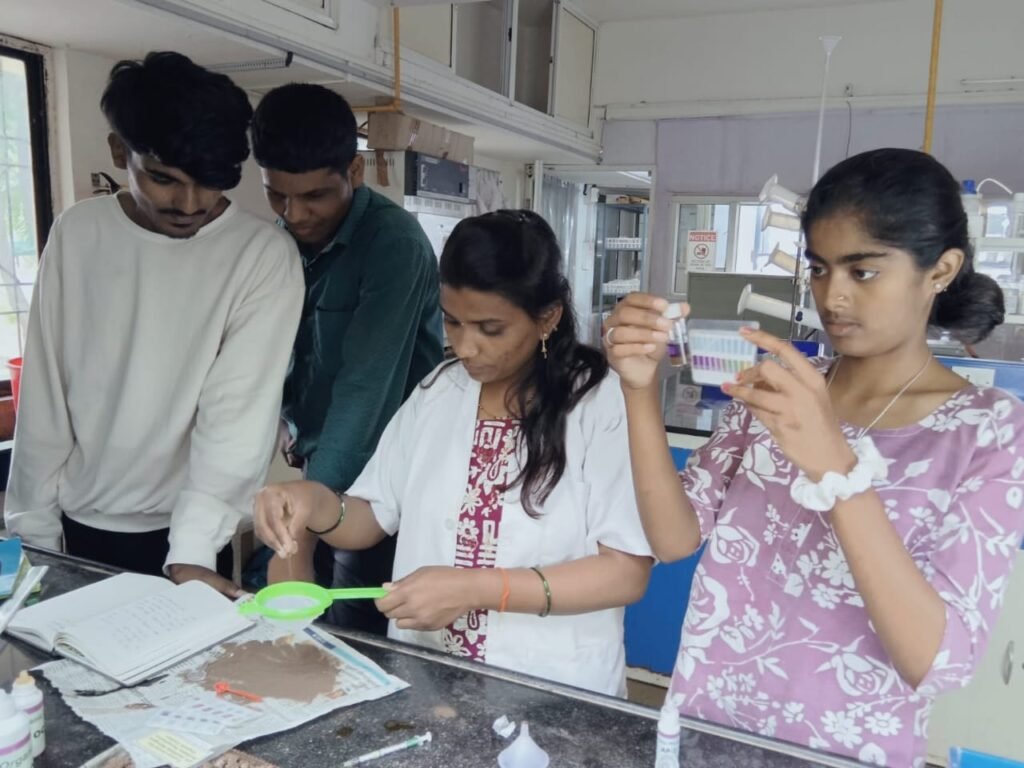
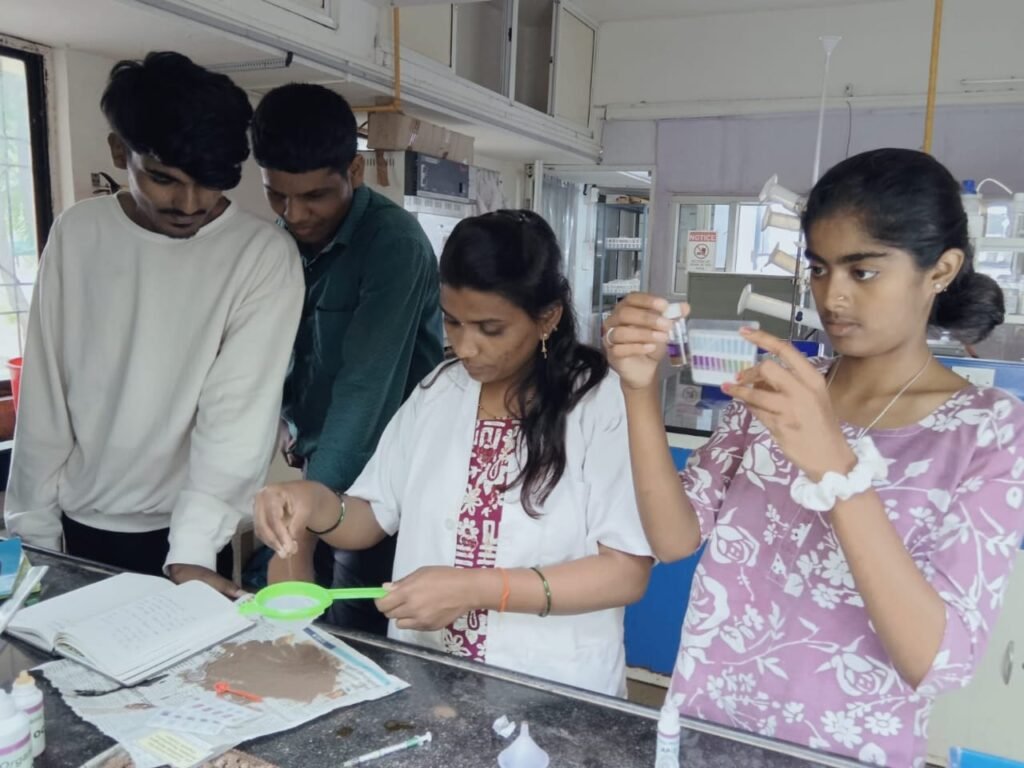
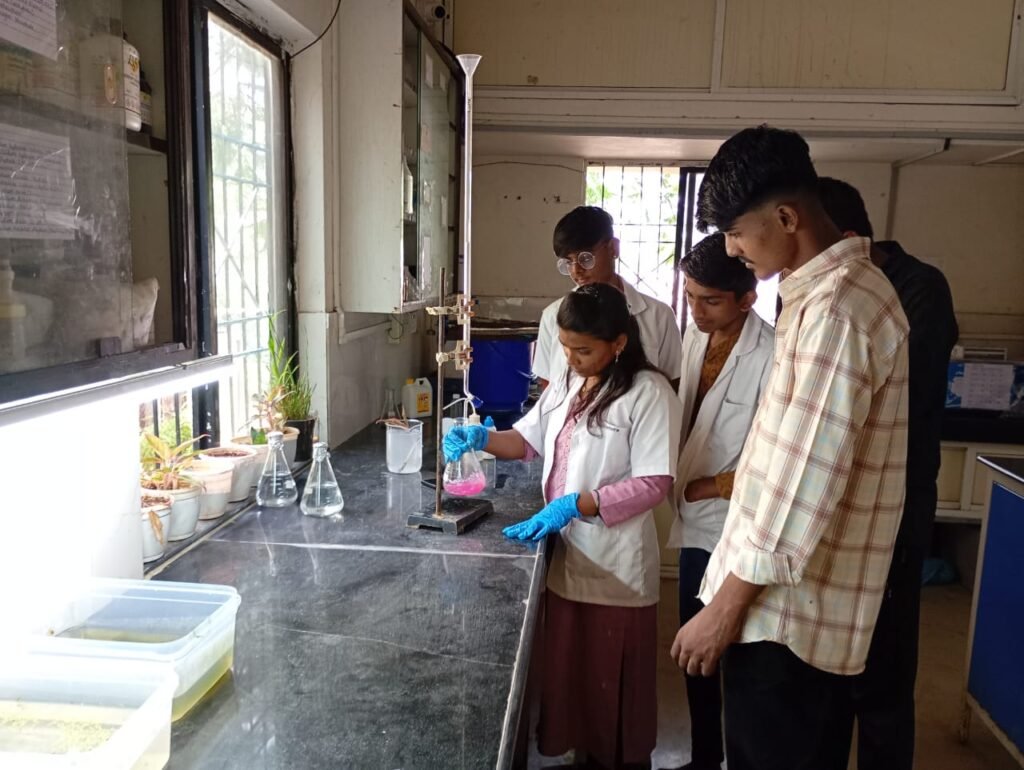
DBRT विद्यार्थ्यांना माती परीक्षणाचे प्रशिक्षण देण्यात आले. विद्यार्थ्यांना मातीचा नमुना कसा घ्यायचा, माती परीक्षण कसे करायचे आणि परीक्षणाच्या आधारे जमिनीची स्थिती कशी समजून घ्यायची याबद्दल माहिती देण्यात आली. तसेच जमिनीसाठी आवश्यक असलेल्या चुन्याचे (Lime) प्रमाण कसे ठरवायचे याचेही प्रात्यक्षिक विद्यार्थ्यांना करून दाखवण्यात आले.
l
DBRT विद्यार्थ्यांना Soil Testing शिकवले. तसेच मातीसाठी लागणारा Lime कसा काढायचा, हेही सोप्या पद्धतीने शिकवले.
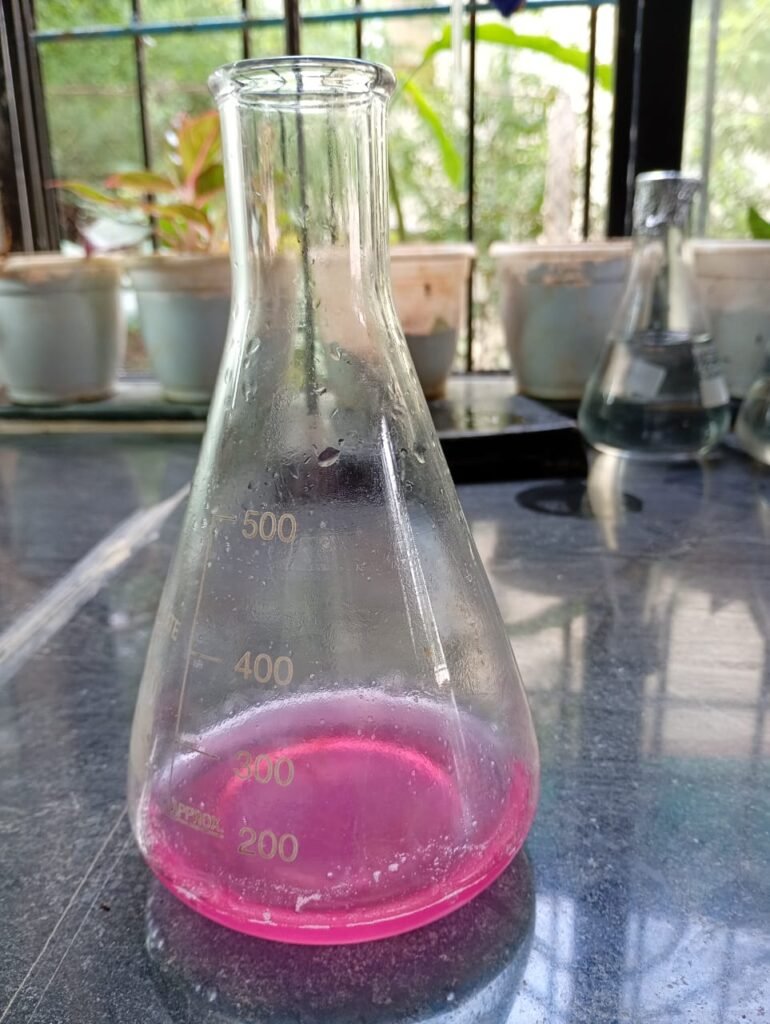
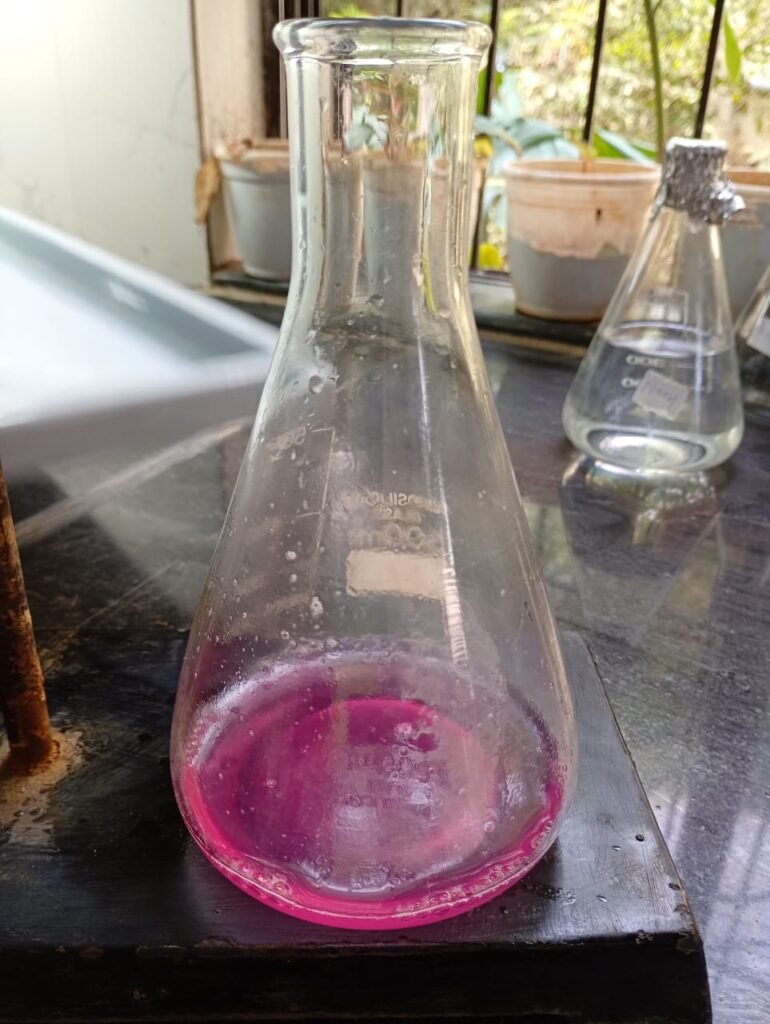
Soil weight = 5 g
HCl = 50 ml (0.5 N)
NaOH = 1 N
Blank Titration Reading = 35.5 ml
Sample Titration Reading = 26 ml
Formula:
CaCO3 % = (Blank – Sample) x N of NaOH x 50 / (10 x Soil weight)
Calculation:
= (35.5 – 26) x 1 x 50 / (10 x 5)
= 9.5 x 50 / 50
= 475 / 50
= 9.5%
Result = 9.5% Lime
—
6/10/2026
Suryabhan Gund – 1 soil sample
N – 140
P – 14
K – 300
PH – 7.5
OC – 0.4
EC – 141
7/10/2026
Hanumant Shinde – 1 soil sample
N – 285
P – 35
K – 300
PH – 7
OC – 0.4
EC – 108


