
This project focuses on planning EV charging infrastructure in Pabal village by considering current EV use and future growth. An important part of this work is understanding how the number of EVs has increased over the past few years and using this information to estimate future demand. This helps in deciding the type and size of charging infrastructure required.
12 – 13 May, 2026
The project started with understanding the problem statement, along with its objectives and expected outcomes. Based on this, a literature review was carried out. This included reports on EV charging infrastructure from NITI Aayog, research papers, guidelines from the Ministry of Power (MoP), and case studies from Karnataka and Pune.
The case studies helped in understanding the steps involved in planning charging infrastructure. Using this information, a questionnaire was prepared to collect data from people in Pabal. The aim of this was to estimate the possible EV load and understand user needs, which are important for deciding the size of the charging station.
14 – 15 May, 2026
After discussing with Mr. Omkar, the approach for the project was finalized. So far, two people from Pabal have been interviewed. Work is still in progress to improve the way of approaching more people so that better and more accurate information can be collected.
16 May, 2026
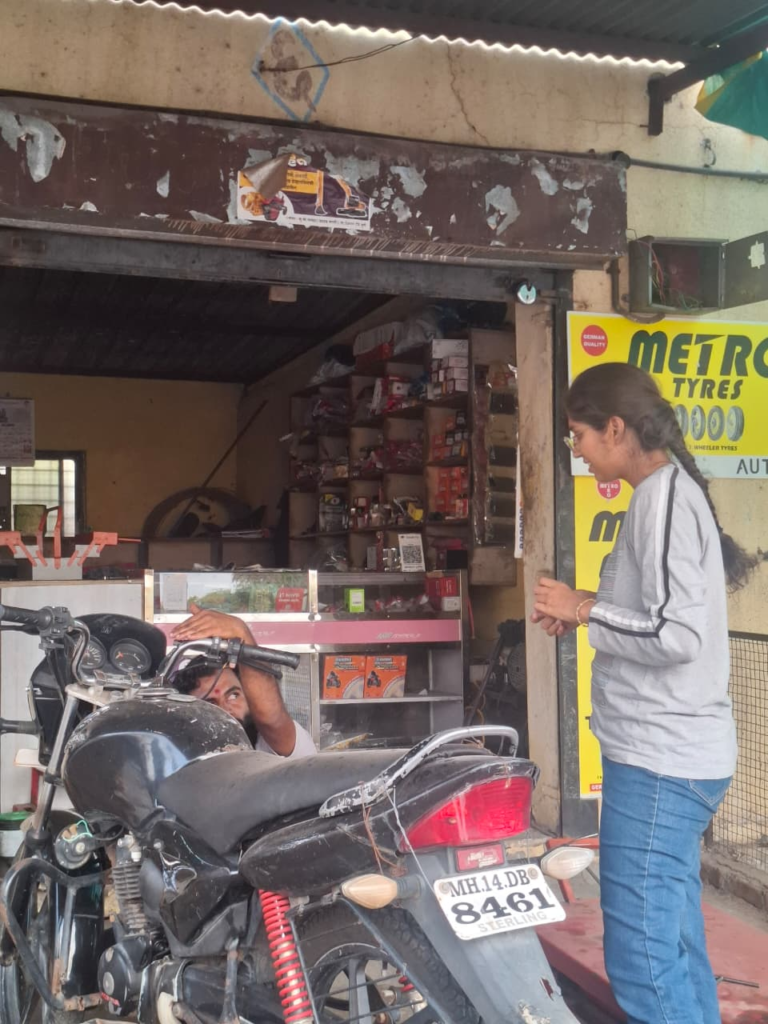
Interviews were conducted with two residents of Pabal, both of whom owned automobile repair shops.
One of the respondents owned a two-wheeler EV and believed that installing a charging station in Pabal would be beneficial. According to him, it would provide fast charging facilities for EV users and would especially help people travelling long distances. He also pointed out that electric four-wheelers passing through the village could use the charging station. In his opinion, the use of the charging station is likely to increase in the future as the number of electric four-wheelers grows.
The second respondent did not own an EV and had a different opinion. He felt that a charging station is not required in Pabal at present because most of the EVs in the village are two-wheelers that can be charged at home and therefore EV owners may not be willing to use a public charging station. According to him, the charging station would mainly be used by electric four-wheelers passing through the village, but the number of such users would be low.
17 May, 2026
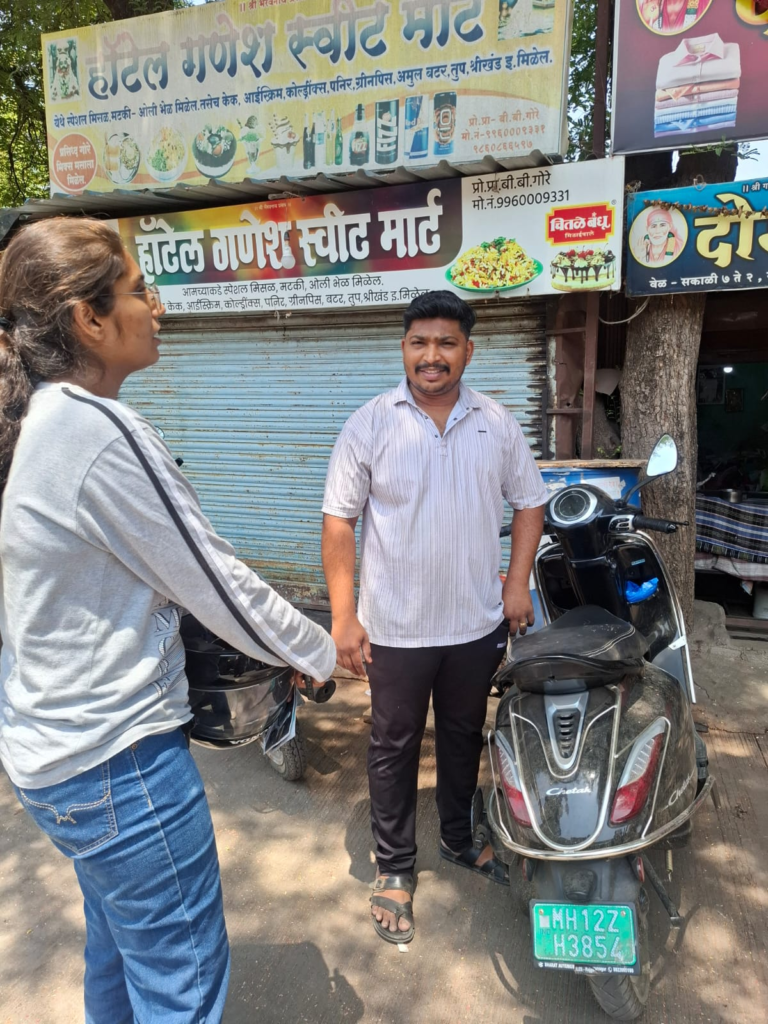
Four people were interviewed.
- Tea stall owner (owns 2-wheeler EV)
- Travels around 50 km three times a week.
- Is in the process of installing a rooftop solar system at home.
- Believes that a charging station will not be very useful at present because most EVs in the village are two-wheelers that can be charged at home.
- Mentioned that electricity theft may reduce the use of a public charging station.
- Feels that a charging station could be useful in the future for electric four-wheelers and buses.
- Laundry and ironing shop owner (owns a 2-wheeler EV)
- Travels around 100 km once a week.
- Feels that a charging station would be helpful for people travelling long distances.
- Is planning to purchase an electric four-wheeler in the future.
- Feels that fast-charging facilities would be useful.
- General store (owns 2-wheeler EV)
- Believes that a charging station would be useful for people travelling long distances.
- Feels that it could support EV users passing through the village.
- General store (does not own an EV)
- Electricity theft could limit the use of a public charging station.
20 May, 2026
Further work includes visits to the TVS and Chetak showrooms in Pabal to understand the present EV market in the village. Discussions were held regarding the number and types of EVs sold every month, the common problems or complaints reported by customers after purchasing EVs, and whether the installation of a charging station in the village could influence EV sales in the future.
Following information was gained
- Around 8 to 10 TVS iQube electric scooters and 6 to 7 Chetak electric scooters are sold every month.In comparison, around 15 to 20 petrol two-wheelers are sold every month.
- Among electric two-wheelers, TVS iQube has recorded the highest sales in the last five years.
- A public charging station for two-wheelers may not be very useful because most users can charge their vehicles at home.
- Electricity theft was also identified as a factor that could reduce the use of public charging stations.
- A charging station for electric four-wheelers could be useful, but the number of electric cars in the area is currently low.
- EV sales have increased in recent years due to the rise in petrol prices.
- The battery of an electric two-wheeler generally needs replacement after about three years. Since the replacement cost is more than half the cost of the vehicle, many users prefer to use the vehicle for three to four years and then replace it rather than investing in a new battery.
22 May, 2026
In addition, a visit was made to the nearby substation and data was gathered on the load profile of the village as well as the electricity usage patterns of a few homes that already own EVs. Information was also collected about government schemes that encourage the installation of rooftop solar systems, along with details of Time of Use (ToU) tariffs and electricity tariff structures for different types of consumers.
25 May, 2026
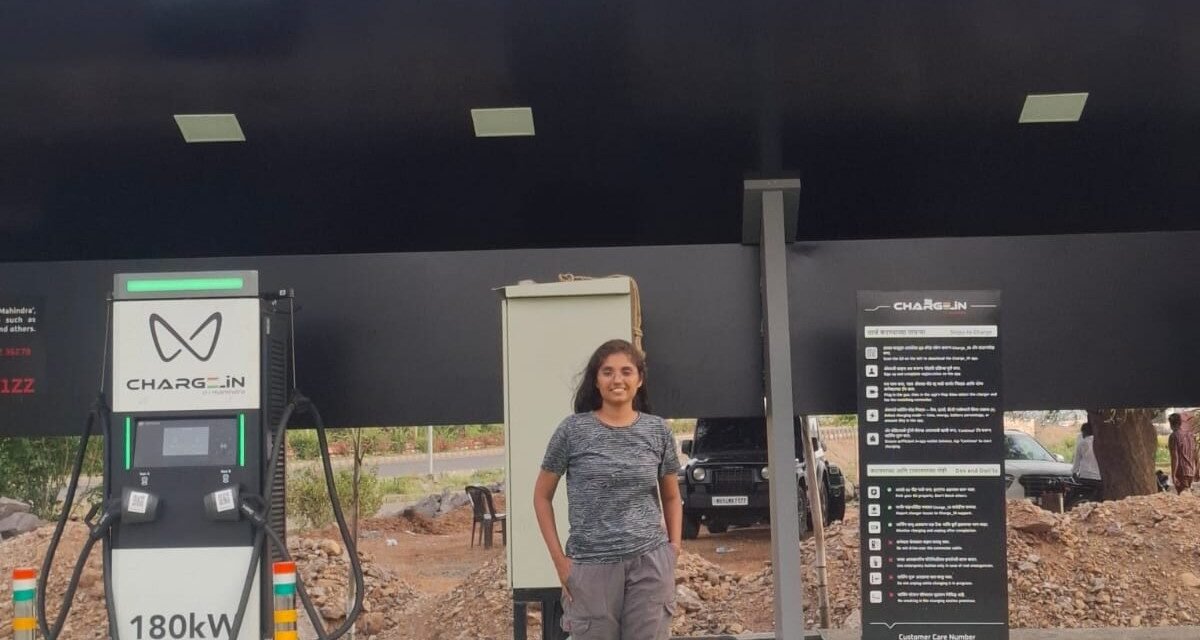
Visit to Rajgurunagar EV charging station
- The charging station is located at a restaurant beside the highway.
- The installed charging capacity is 180 kW.
- On average, 60 to 70 electric cars are charged daily.
- The charging cost is approximately ₹20 per unit of electricity.
- The station uses CCS charging connectors for DC fast charging.
- The installation cost of the charging station was approximately ₹1.3 crore.
- The reported profit from the charging station is around ₹25,000 per month.
27 May, 2026
Charging station Pabal
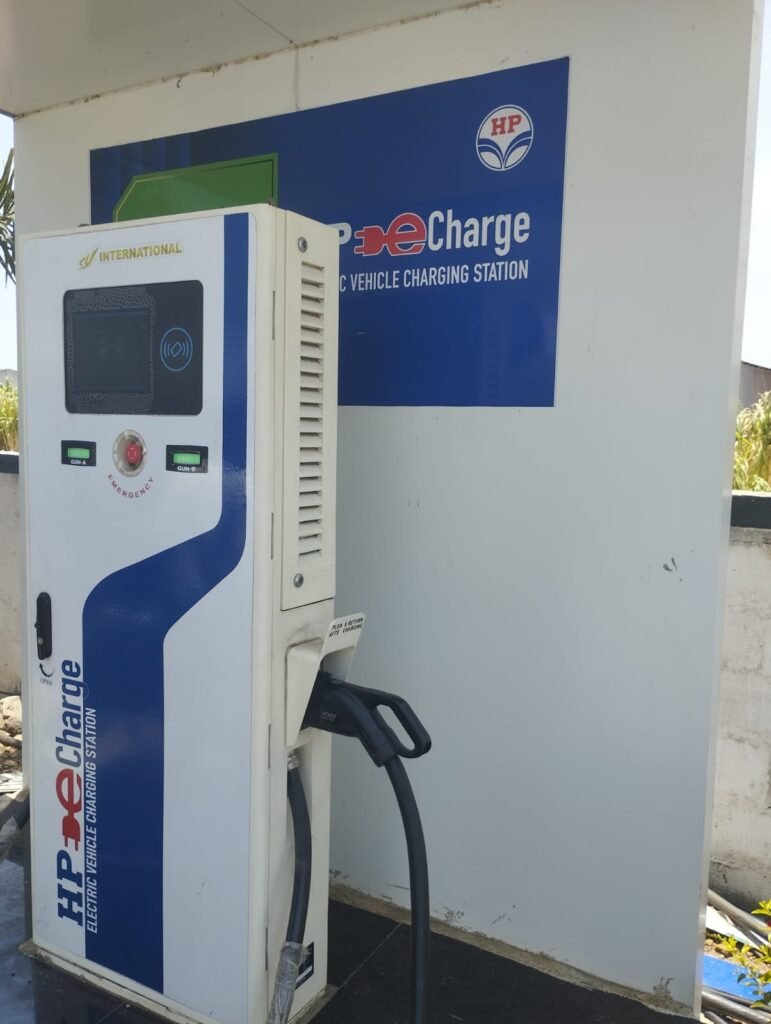
- Charging cost: ₹16 per unit of electricity
- Number of charging units: 2
- Available connector types: CCS, CHAdeMO, AC Type 2
- Average daily usage: 4 to 7 electric cars
The charging station is currently used by only a few vehicles because the road through this area has little traffic, so the number of EV users travelling along the route is relatively low.
30 May, 2026
Three people were interviewed on this day, out of which two owned EVs and one did not. All three respondents shared similar views regarding electricity theft and felt that it could reduce the use of a public charging station. One of the respondents suggested that a charging station could be installed near the new bypass road that will be built near Pabal. It will likely carry more traffic, and the charging station may attract a larger number of EV users.
2 May, 2026 to 16 May, 2026
Further, 25 interviews were conducted in two residential colonies and the market area of Pabal to understand EV ownership, charging practices, and public opinion regarding EV charging infrastructure. Based on these interviews, along with visits to EV showrooms, charging stations, the local substation, and discussions with residents who do not own EVs, the following observations were made:
- Most EV owners in the village own electric two-wheelers, while a few are planning to purchase electric four-wheelers in the future.
- Two to three people own a small-sized EV truck
- The oldest EV in the village was purchased around five years ago.
- Most EV users charge their vehicles at night. Charging in the day time is done only when required; otherwise, petrol vehicles are used.
- Many respondents stated that electric two-wheelers are purchased with the intention of charging them through electricity theft, allowing them to use the vehicle at very low running cost for a few years. Since the cost of battery replacement is more than half the cost of the vehicle, many users prefer to discard the vehicle when the battery reaches the end of its life rather than replacing the battery.
- EV repairs are mostly carried out at authorised service centres because local repair shops and trained technicians are not available.
- EV sales have increased in recent years due to the rise in petrol prices.
- Changes are being made to the village electricity distribution system to reduce electricity theft. It is difficult to predict how these changes will affect the charging behaviour of EV users.
- The battery of an electric two-wheeler generally needs replacement after three to five years. Since the replacement cost is more than half the cost of the vehicle, many users prefer to use the vehicle for a few years and then scrap it instead of replacing the battery. This may lead to increased battery waste and reduce the overall environmental benefits of EV adoption.
20 May, 2026 to 25 May, 2026
Information related to battery capacity, charging time, energy required for a full charge, vehicle cost, and battery replacement cost was collected from the official websites of EV manufacturers. This data was used to compare the total investment required for an electric two-wheeler with that of a comparable petrol two-wheeler.
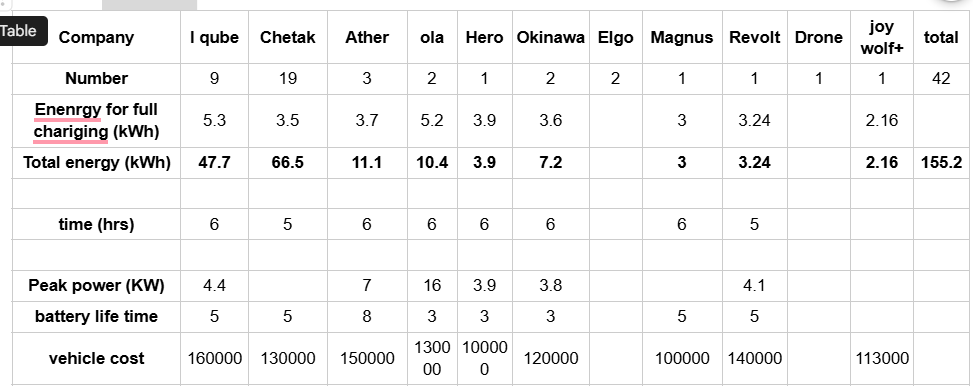
Since the most commonly used electric two-wheelers in Pabal are the Chetak and TVS iQube, they were compared with similar petrol scooters such as the Honda Activa, Suzuki Access, and TVS Jupiter. The comparison was carried out for a period of five years, considering that the battery of an electric two-wheeler generally requires replacement after about five years. This analysis will help evaluate the economic feasibility of EV adoption over the vehicle’s operating life.