1. Introduction
Polyhouses are controlled agricultural structures designed to improve crop productivity by regulating environmental conditions such as temperature, humidity, airflow, irrigation, and solar exposure. Traditional polyhouse construction often depends on generic designs that may not be optimized for local climate, soil conditions, crop requirements, or budget constraints.
This project proposes the development of an intelligent engineering tool that collects environmental and structural parameters affecting polyhouse performance and automatically generates optimized design parameters required for efficient polyhouse construction.
The system acts as a decision-support and design-assistance platform for farmers, agricultural engineers, greenhouse designers, researchers, and educational institutions.
2. Project Objective
The primary objective of this project is to develop a computational tool capable of:
- Collecting environmental and engineering parameters affecting polyhouse design.
- Analysing local climate and soil conditions.
- Estimating cooling, ventilation, and structural requirements.
- Generating optimized polyhouse design parameters.
- Reducing trial-and-error during greenhouse planning.
- Improving energy efficiency and crop productivity.
- Supporting low-cost and scalable protected cultivation systems.
3. Work Flow
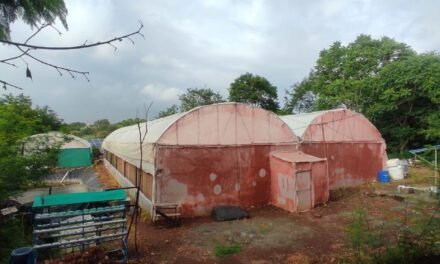
For the experimental study, a polyhouse was constructed at Vigyan Ashram with dimensions of 9 m in length, 4 m in breadth, and 4.75 m in height. The supporting structure of the polyhouse was fabricated using Galvanized Iron (GI) pipes. A single-layer UV-stabilized LDPE polysheet of 200-micron thickness was used as the covering material for both the roof and side walls, with a total covering area of approximately 150 m².
To maintain and control the internal temperature of the polyhouse, three different cooling systems were installed:
- Exhaust fan system
- Cooling pad system
- Fogger system
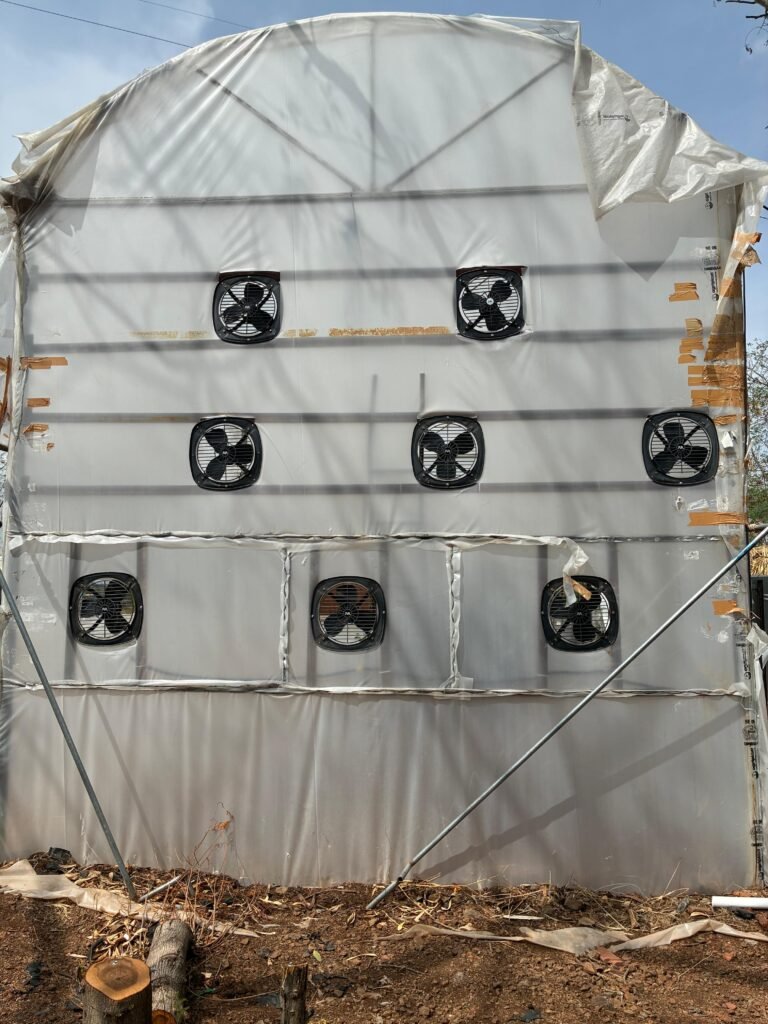
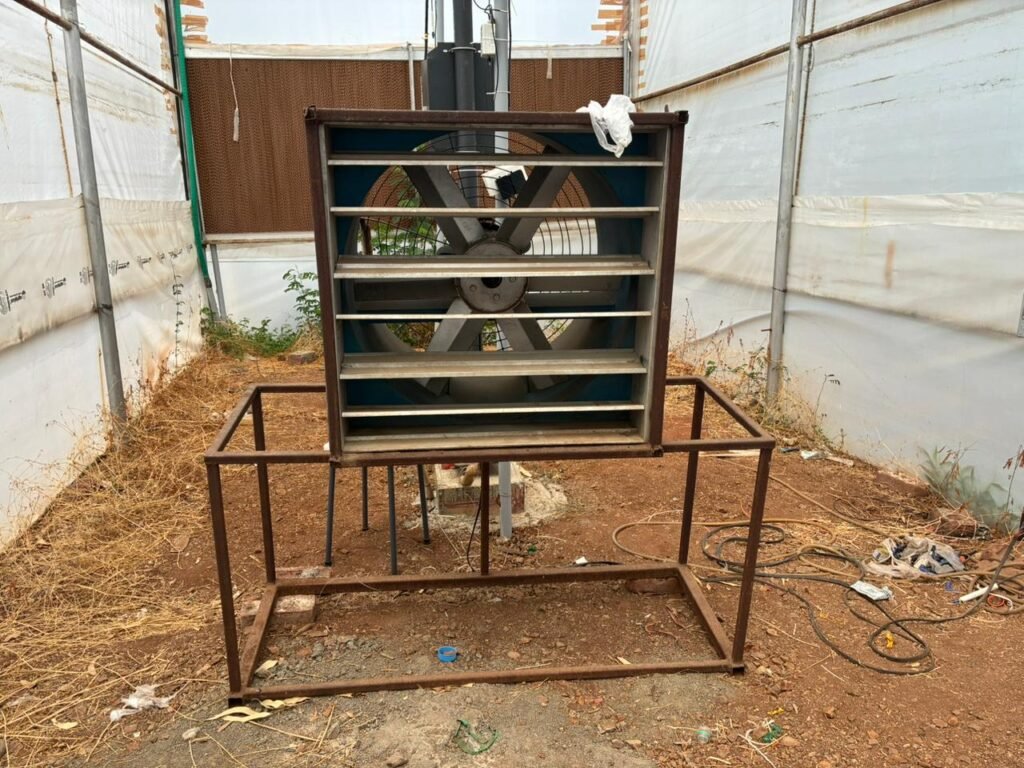
The exhaust fans were installed on the opposite side of the polyhouse according to the layout shown in the figure. A total of eight exhaust fans were used, each having a rated capacity of 1000 CFM as specified in the manufacturer’s datasheet. The fans were arranged in multiple rows to improve air circulation and remove hot air effectively from inside the polyhouse.
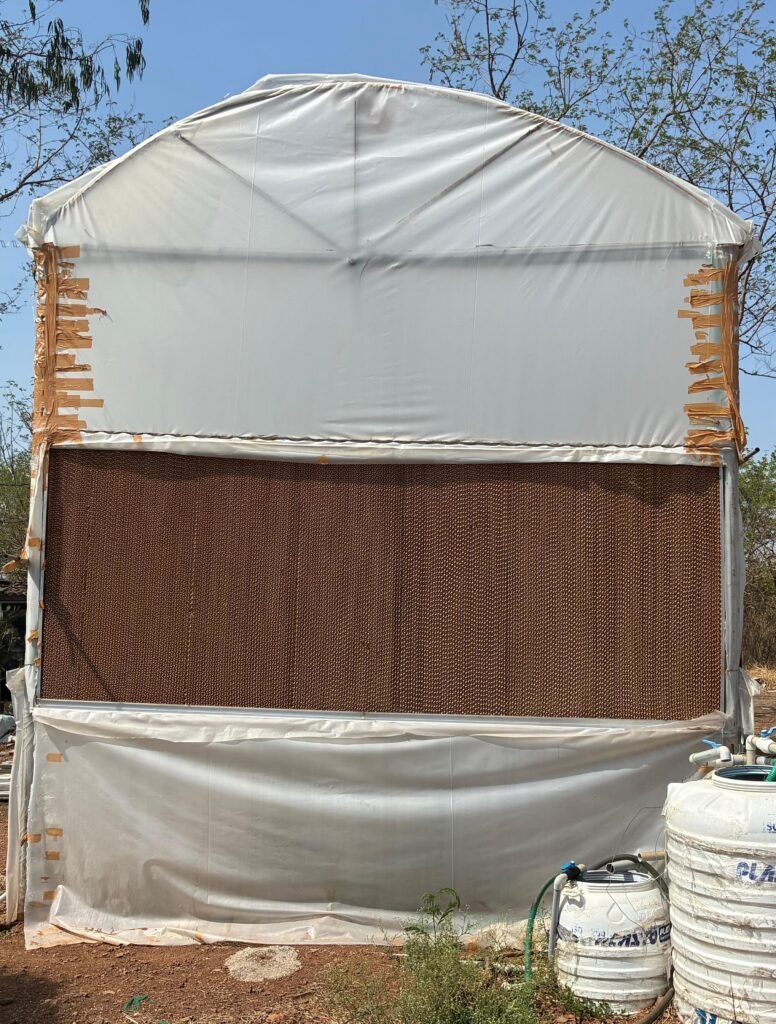
In addition to the exhaust fans, a fogger system was installed to reduce the internal temperature through evaporative cooling. A cooling pad system was also integrated into the setup. The cooling pad used in the experiment was 10 cm thick, 4 m long, and 140 cm high. The cooling pad operates by allowing outside air to pass through the wet pad surface, thereby lowering the air temperature before it enters the polyhouse. The combined operation of exhaust fans, cooling pads, and foggers was intended to improve the cooling performance and maintain suitable environmental conditions inside the polyhouse for experimental analysis.
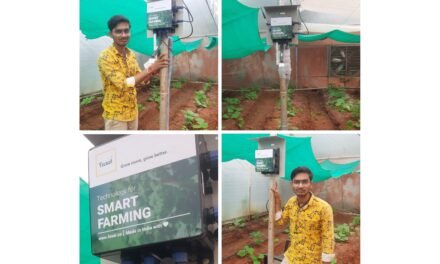
For continuous monitoring of environmental conditions, temperature and humidity sensors were installed using automated data loggers. These data loggers continuously recorded and uploaded measurements to a web-based platform developed using Firebase projects, ensuring real-time accessibility and storage of experimental data.
The sensor integrated into the monitoring system was:
• AHT2415C00 for temperature and humidity measurement.
The use of automated data loggers was essential for this project, as they provided several important advantages:
- Accurate and time-stamped data collection without manual intervention.
- Continuous monitoring of environmental parameters, helping capture dynamic changes in the polyhouse microclimate.
- Cloud-based data accessibility and storage, enabling remote monitoring and long-term analysis.
- Objective evaluation of system performance, such as cooling efficiency of foggers and effectiveness of air circulation inside the polyhouse.
Thus, the automated data logging system formed the backbone of experimentation and analysis in this study, enabling scientific validation of the observed cooling phenomena and supporting optimization of the polyhouse cooling systems.The target environmental conditions inside the polyhouse were maintained within a temperature range of 30–32 °C and relative humidity between 60–65%.
To achieve the desired temperature and humidity conditions, several experiments were conducted to determine which combination of cooling systems provided the best performance. The experiments were carried out between 11:00 AM and 2:00 PM, as this period represents the most critical operating condition due to maximum solar radiation and peak ambient temperature during the daytime.
The experimental procedure was conducted in sequential stages. Initially, the temperature and humidity inside the polyhouse were measured without operating any cooling system in order to establish the baseline environmental conditions. After recording the initial data, the exhaust fan system was turned on and observations were recorded. Subsequently, the cooling pad system was activated along with the exhaust fans, and finally, the fogger system was also switched on. Temperature and humidity data were continuously recorded at each stage of operation to evaluate the effectiveness of different cooling system combinations in maintaining the desired polyhouse microclimate conditions.
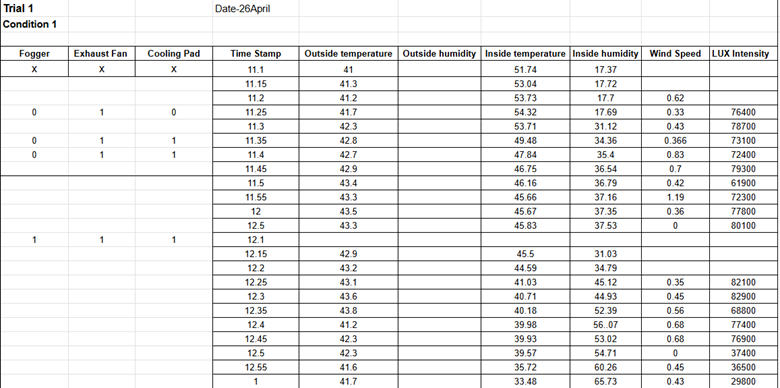
During the first experiment, it was observed that environmental conditions outside the polyhouse had a significant effect on the internal temperature. When clouds covered the sun, the solar radiation and light intensity decreased suddenly, which resulted in an immediate reduction in the temperature inside the polyhouse. This observation indicated that solar radiation was the primary source of heat gain inside the structure, and variations in sunlight intensity directly influenced the internal microclimate conditions during the experiment.
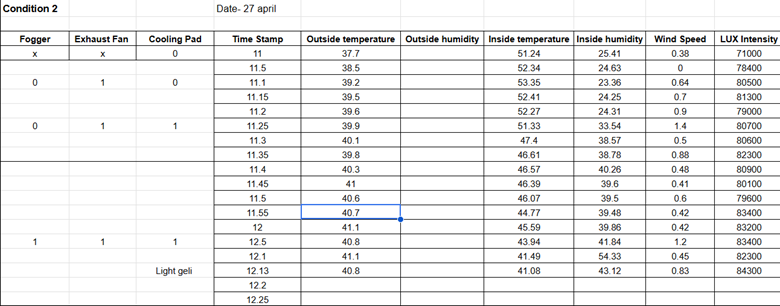
At the end of the second experiment, because of the combined effect of all the cooling systems, the inside temperature of the polyhouse was maintained at nearly the same level as the outside temperature, approximately 41 °C, while the relative humidity inside the polyhouse reached around 43%. This observation showed that the combined operation of exhaust fans, cooling pads, and foggers improved air circulation and enhanced evaporative cooling inside the polyhouse. However, the achieved temperature and humidity conditions were still outside the desired target range for effective polyhouse climate control.
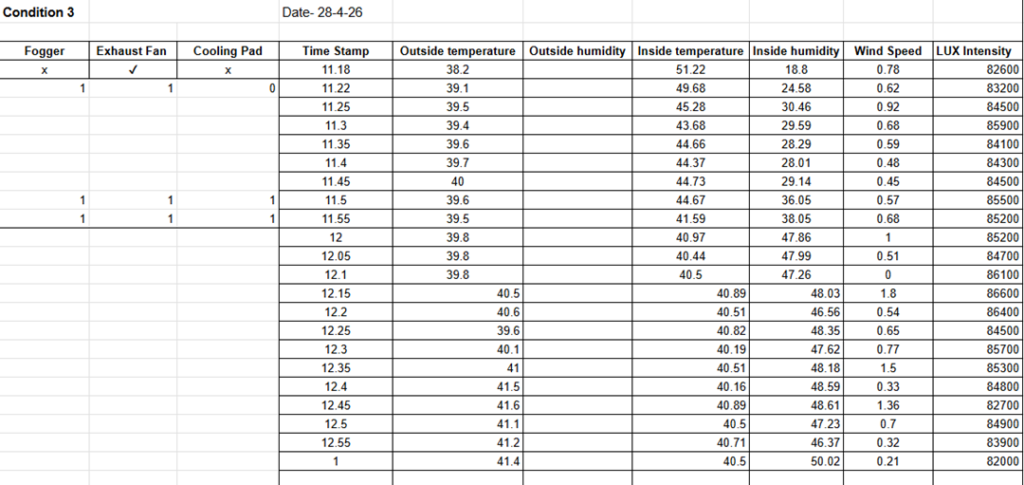
During the third experiment on the polyhouse data collection system, a slight change was made in the operating combination of the cooling systems. In the previous experiment, the exhaust fan system was operated first and the fogger system was activated later. However, it was observed that operating only the exhaust fans did not produce any significant change in the atmospheric conditions inside the polyhouse.
Therefore, in the third experiment, the exhaust fan system and fogger system were started simultaneously from the beginning of the experiment. This combined operation was intended to achieve faster cooling and improved humidity control inside the polyhouse by enhancing evaporative cooling along with continuous air circulation. The combined operation of the exhaust fan system and fogger system helped in reducing the temperature inside the polyhouse more effectively compared to operating the exhaust fans alone. The foggers increased evaporative cooling, while the exhaust fans improved air circulation and removal of hot air from the structure.
After achieving a lower temperature using the fan and fogger combination, the cooling pad system was turned on. With the combined effect of all three cooling systems, the inside temperature of the polyhouse was reduced to nearly the same level as the outside ambient temperature. This observation indicated that the cooling pad system further enhanced the cooling performance by supplying cooled air into the polyhouse through evaporative cooling.
As mentioned previously, eight exhaust fans, each having a capacity of 1000 CFM, were installed in the polyhouse to remove the accumulated hot air and provide ventilation. The total ventilation capacity of the system was therefore 8000 CFM. The polyhouse dimensions were such that a large volume of air could accumulate inside the structure, making efficient air exchange essential for temperature control.
Experimental observations showed that operating only the exhaust fan system did not result in any significant reduction in the internal temperature of the polyhouse. Despite continuous operation of all eight fans, the inside temperature remained substantially higher than the desired range. Based on these observations, it was concluded that the polyhouse cooling system was affected by insufficient exhaust fan capacity.
For further investigation of the airflow pattern inside the polyhouse, a smoke flow experiment was conducted to determine whether uniform air circulation was occurring throughout the structure. Smoke was released at different locations inside the polyhouse, and its movement was carefully observed to study the direction and distribution of airflow.
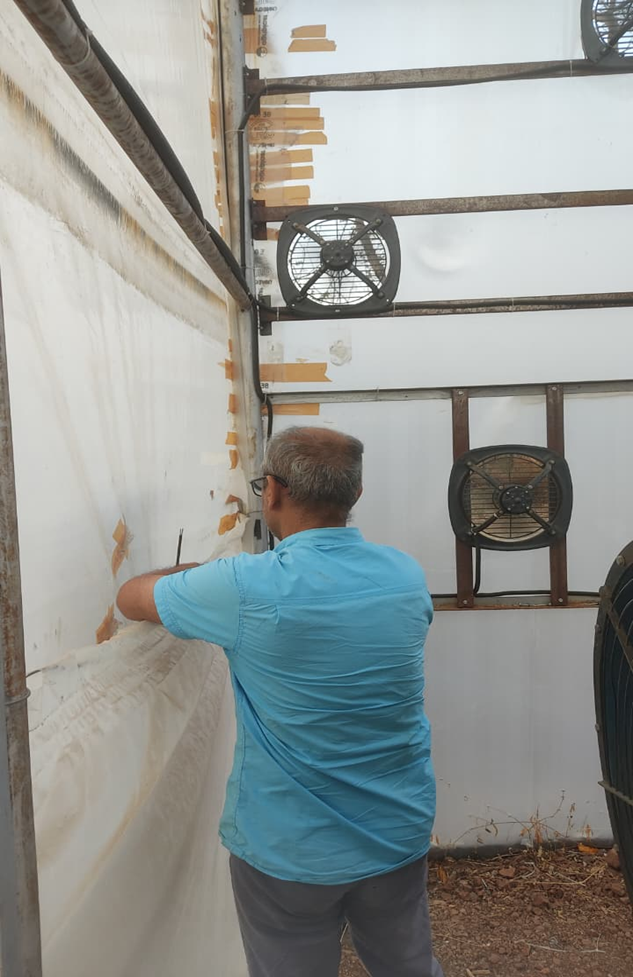
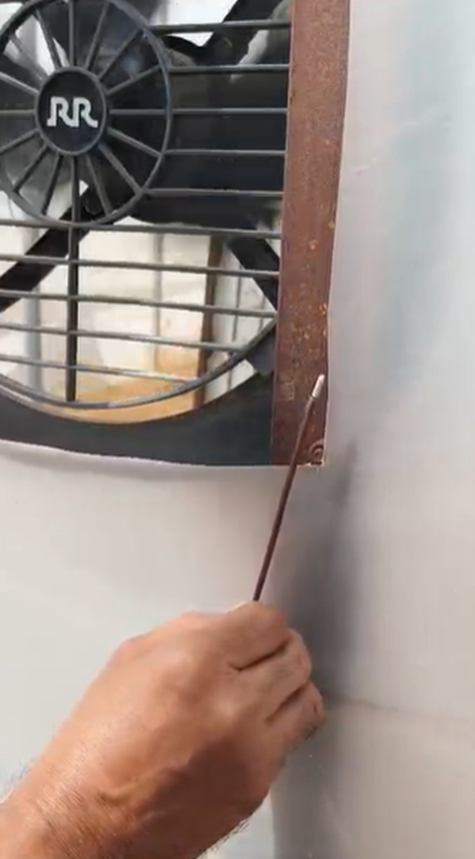
The observations revealed that, at most locations, the smoke moved predominantly in the upward direction rather than horizontally toward the exhaust fans. This indicated that the airflow was not being distributed uniformly across the polyhouse. Furthermore, near the exhaust fans, it was observed that the smoke was circulating around the fan region and, in some cases, was being drawn back into the polyhouse instead of being completely exhausted outside.
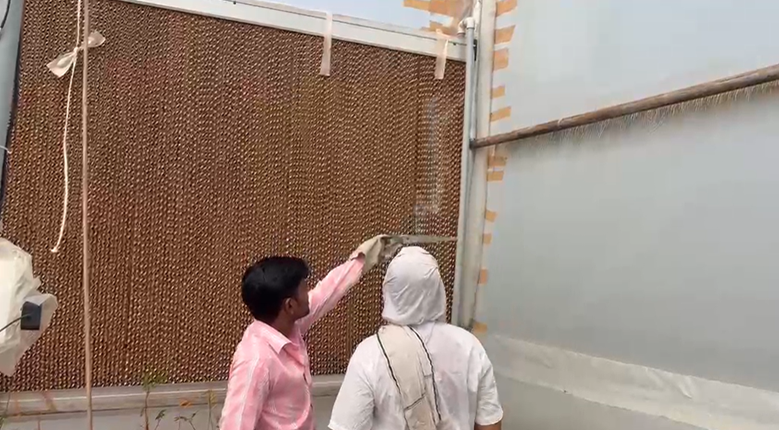
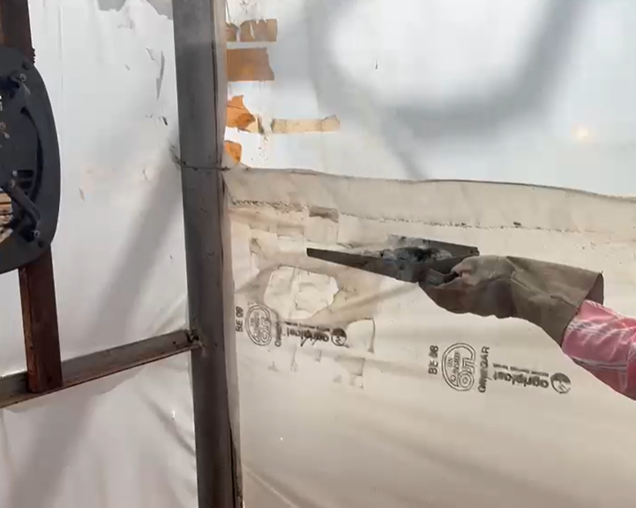
These observations confirmed that a uniform airflow pattern was not established within the polyhouse. The results suggested the presence of airflow short-circuiting, where air followed localized circulation paths rather than sweeping through the entire volume of the structure. Additionally, the high air velocity generated near the exhaust fans may have created a localized low-pressure region, resulting in a Venturi-like effect. This phenomenon caused some of the surrounding air to recirculate near the fan outlets, reducing the effective air exhaust rate and overall ventilation efficiency.
Based on the smoke flow experiment and temperature measurements, it was concluded that the polyhouse suffered from non-uniform airflow distribution, airflow short-circuiting, and inadequate effective ventilation. These factors significantly reduced the performance of the cooling systems and contributed to the inability of the polyhouse to achieve the target environmental conditions of 30–32 °C temperature and 60–65% relative humidity during peak daytime conditions.
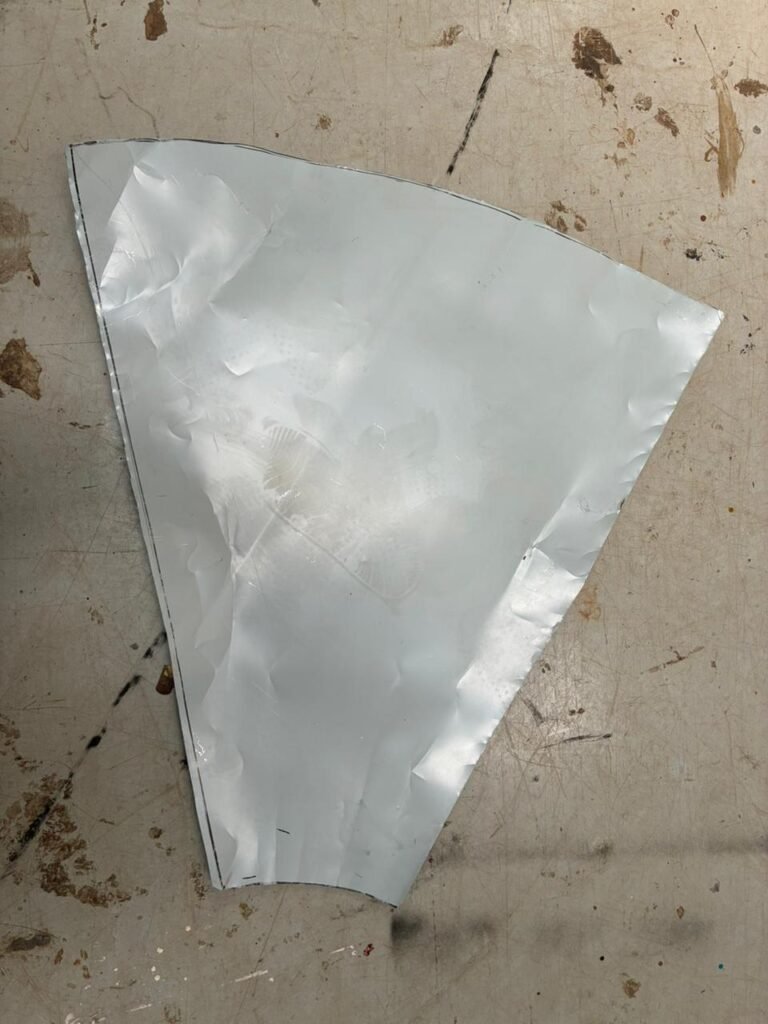
To solve the first problem, we developed a device to measure the effective CFM (Cubic Feet per Minute) of the exhaust fans. Before fabricating the final device using a thin metal sheet, we first created a prototype using paper cardboard based on the prepared schematic. This helped us test the concept at a low cost and make improvements before moving to the final design.
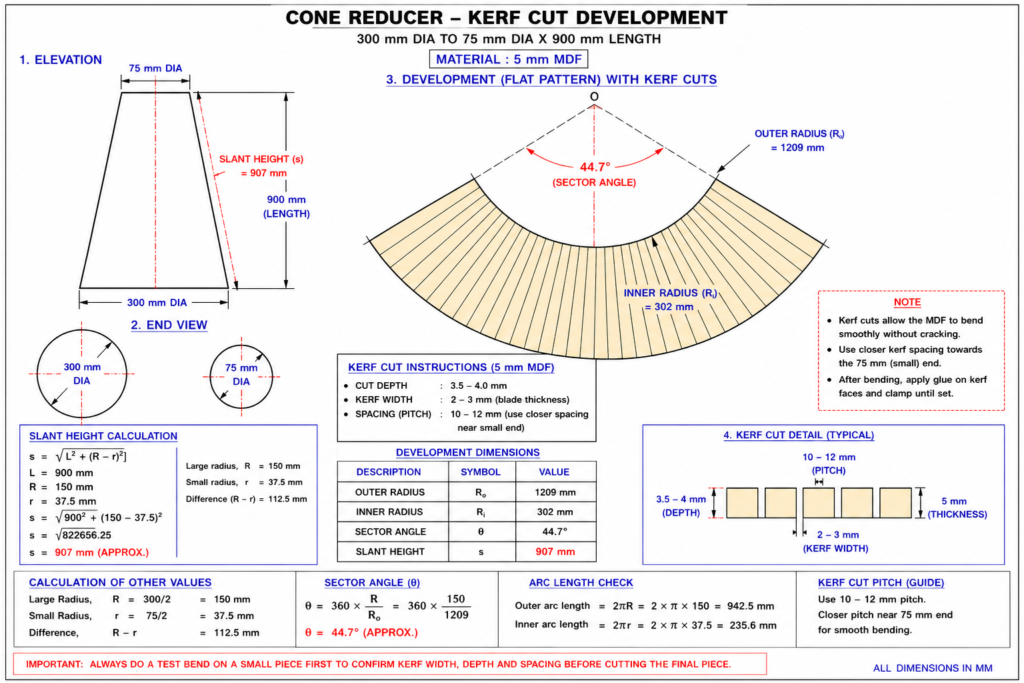
Using the cardboard prototype, we measured the airflow of the exhaust fan and obtained an approximate airflow rate of 1000 CFM. We also used another method to verify the fan performance by measuring the air velocity at different points coming out of the exhaust fan using an anemometer. Based on these velocity measurements, the calculated airflow was approximately 500 CFM.
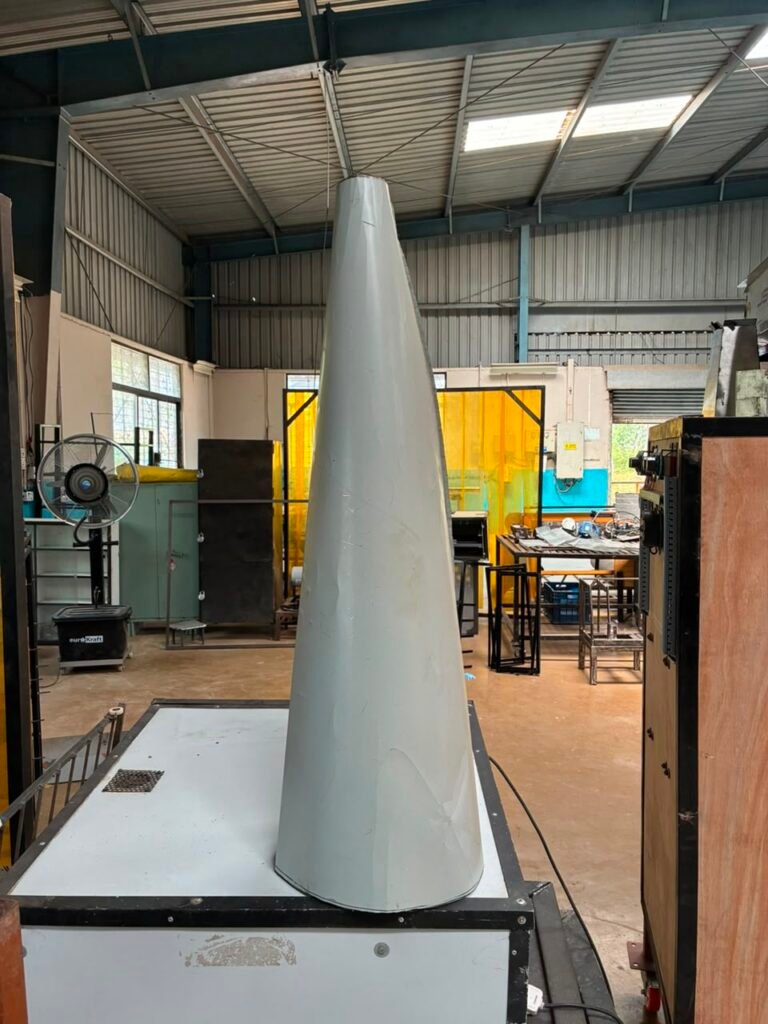
The second method gave results much closer to the airflow rating mentioned in the fan manual. Because of this, we considered the second method more reliable and decided to proceed with fabrication of the measurement tool using a metal sheet for better durability and accuracy.we measure the CFM with this metal cone and we get approx 1000 CFM for each fan.we also considering adding more fan.
To address the second problem of airflow short-circuiting inside the polyhouse, we decided to relocate the exhaust fans from inside the polyhouse structure to the outside. This modification is expected to improve the airflow path, reduce recirculation of hot air, and increase the overall ventilation efficiency of the polyhouse.
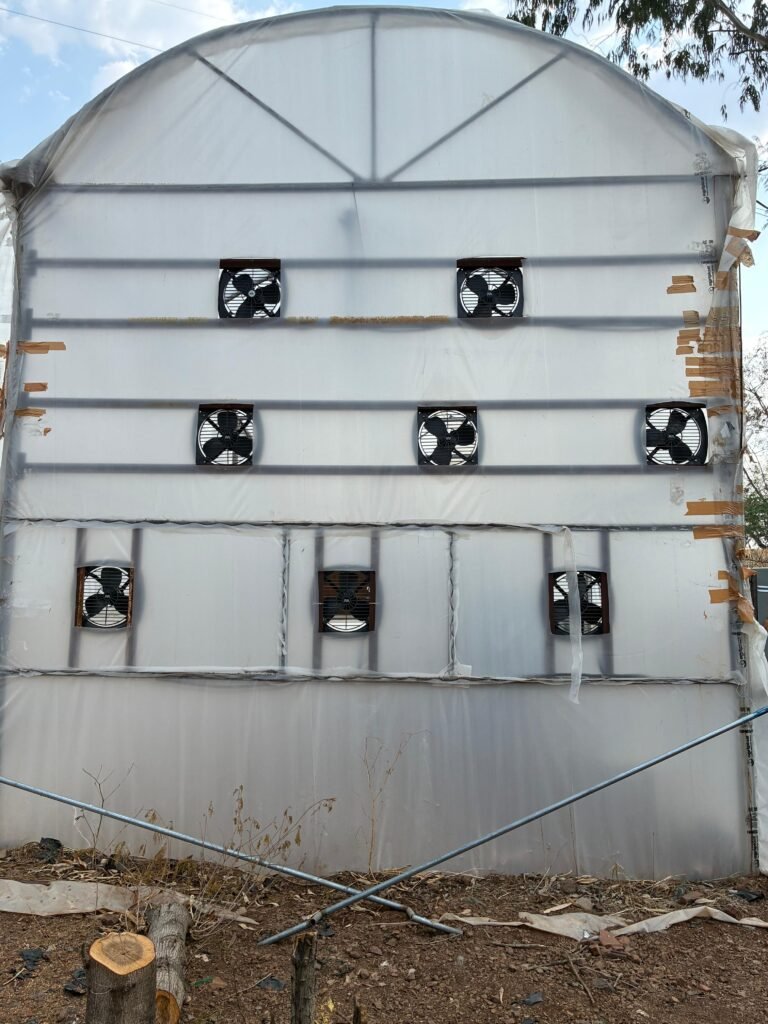
Another important observation from the smoke flow experiment was that a significant portion of the incoming air was directly reaching the exhaust fans through nearby openings, such as the sliding door gaps and other unintended openings in the polyhouse structure. As a result, the air was bypassing the main cultivation area and was being exhausted without effectively circulating throughout the entire polyhouse volume.
This behavior further confirmed the presence of airflow short-circuiting within the structure. Instead of following the desired airflow path from the cooling pad side through the polyhouse and then toward the exhaust fans, the air was taking the path of least resistance through the nearby openings. Consequently, uniform airflow distribution was not achieved, reducing the effectiveness of both the ventilation and cooling systems.
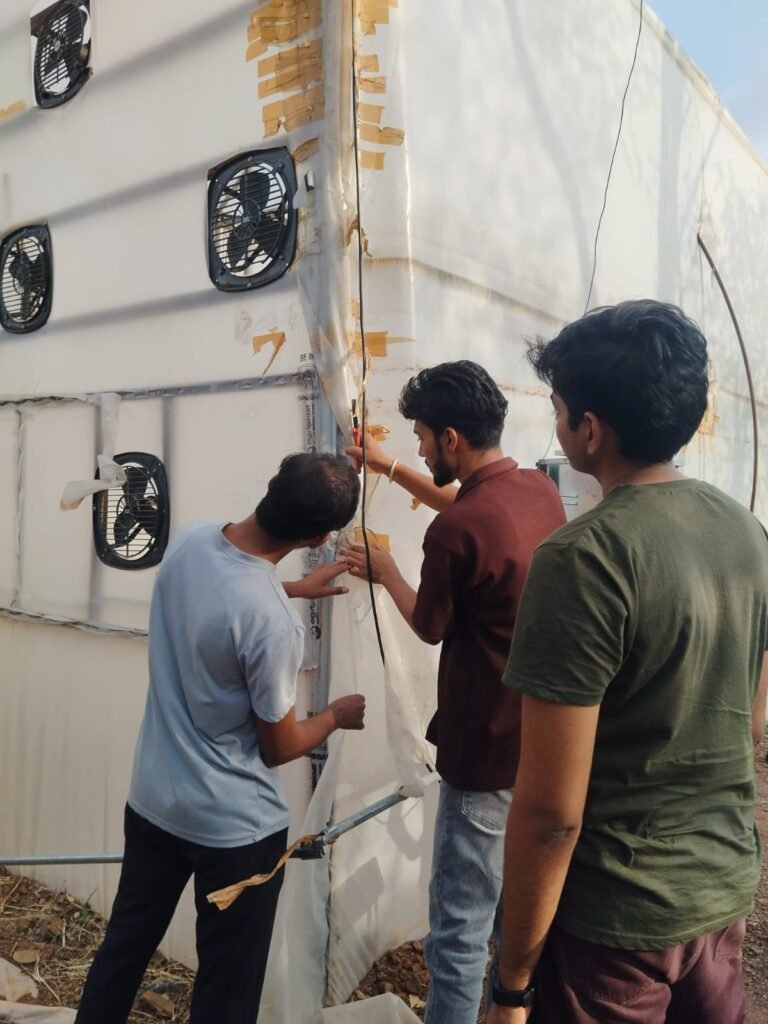
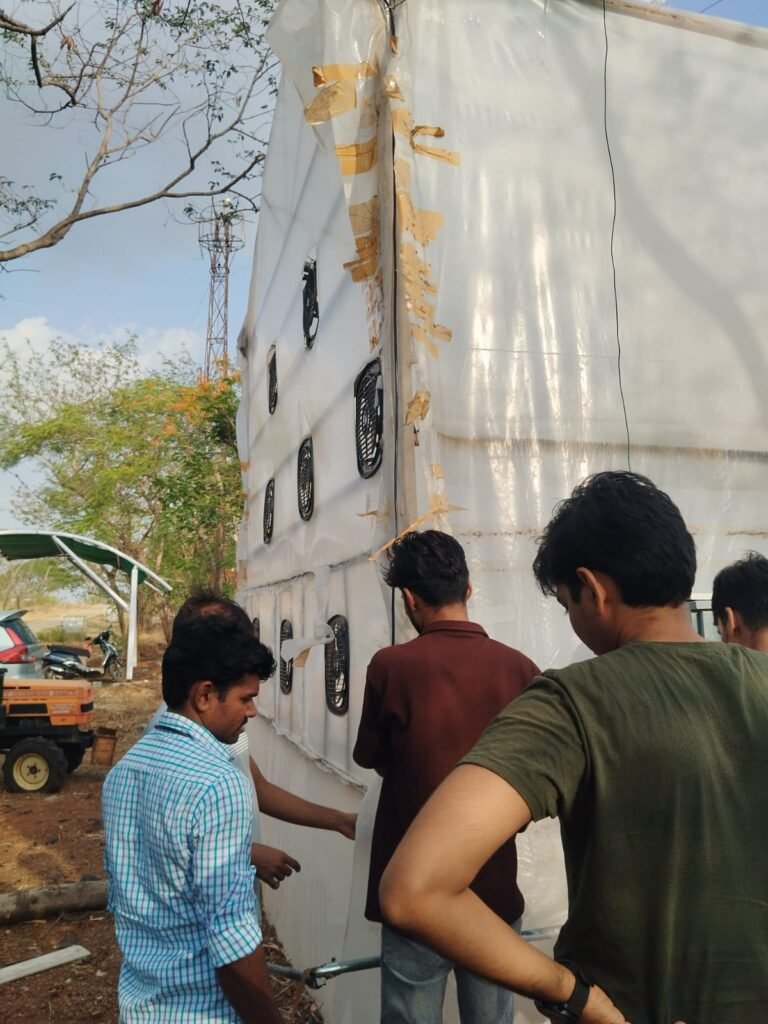
During the airflow analysis, it was also observed that the main entrance door of the polyhouse was a significant source of air leakage. The gaps around the sliding door allowed outside air to enter directly, causing uncontrolled airflow into the structure. This leakage contributed to airflow short-circuiting, as a considerable portion of the incoming air was drawn directly toward the exhaust fans instead of flowing uniformly through the polyhouse.
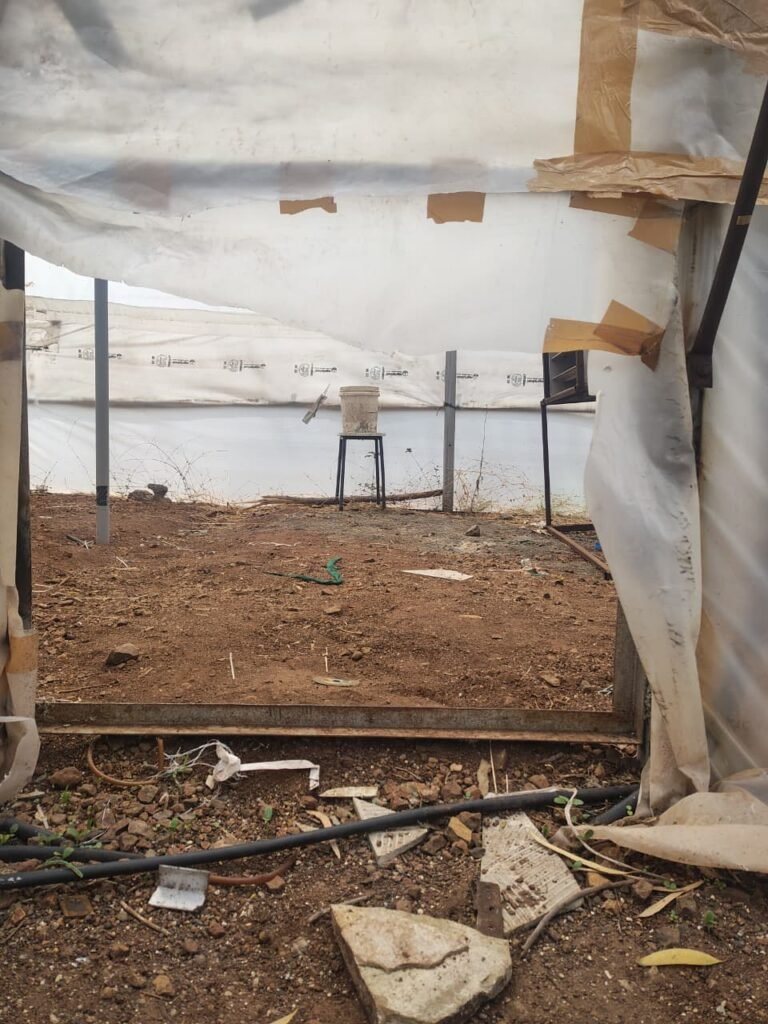
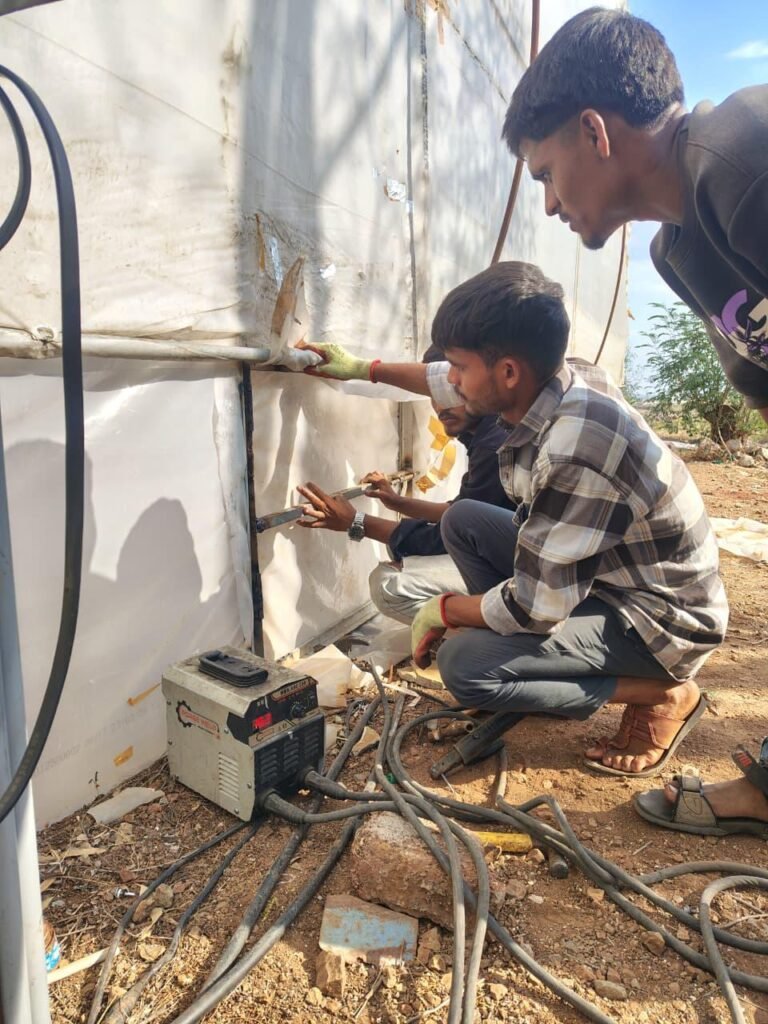
To minimize this air leakage, an additional external door was installed outside the existing entrance, creating a double-door arrangement. Furthermore, a curtain was installed between the two doors to provide an additional air barrier. This modification significantly reduced unwanted air infiltration through the entrance and improved the airtightness of the polyhouse. As a result, the airflow followed the intended path more effectively, leading to more uniform air distribution and improved overall ventilation and cooling performance.
To address this issue, the sliding door gaps and other unnecessary openings were sealed during subsequent experiments. After closing these openings, the incoming air was forced to travel through the intended airflow path, resulting in improved air distribution and more uniform circulation throughout the polyhouse. This modification helped reduce airflow short-circuiting and increased the effective utilization of the exhaust fan system, thereby improving the overall cooling performance of the polyhouse.
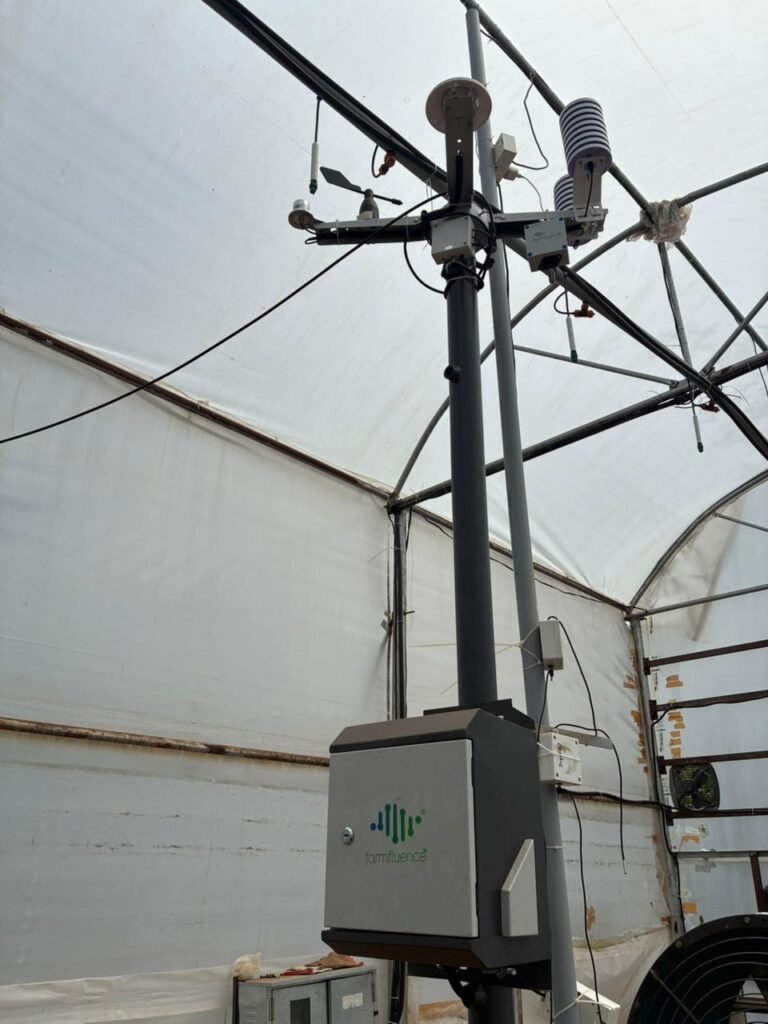
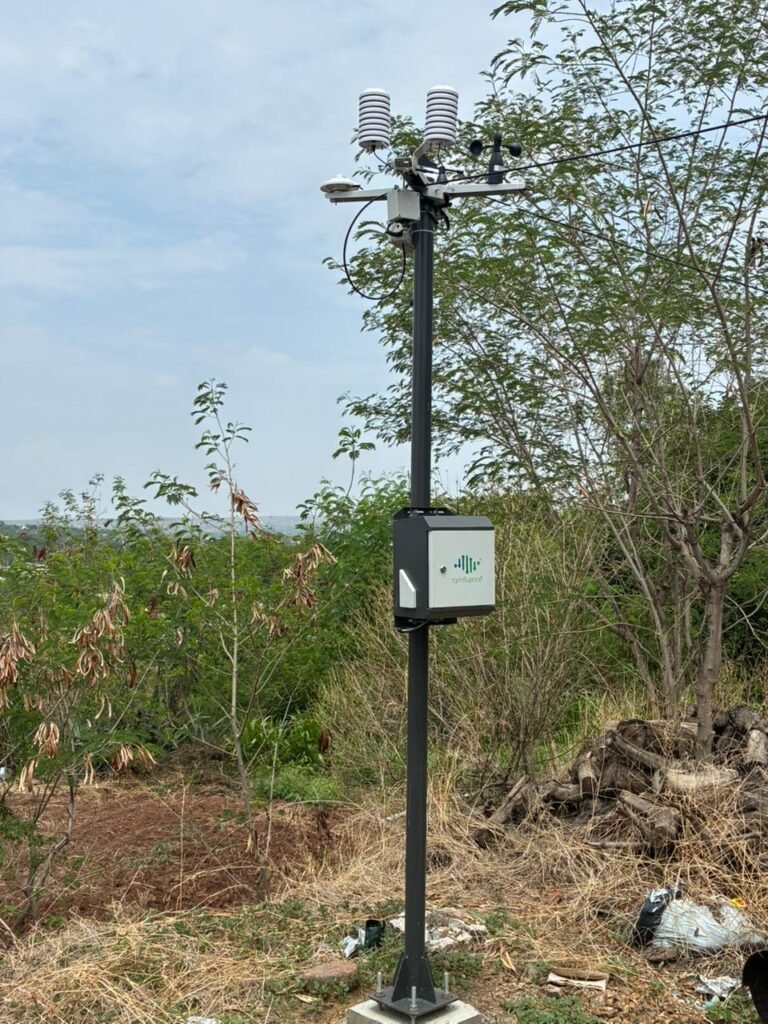
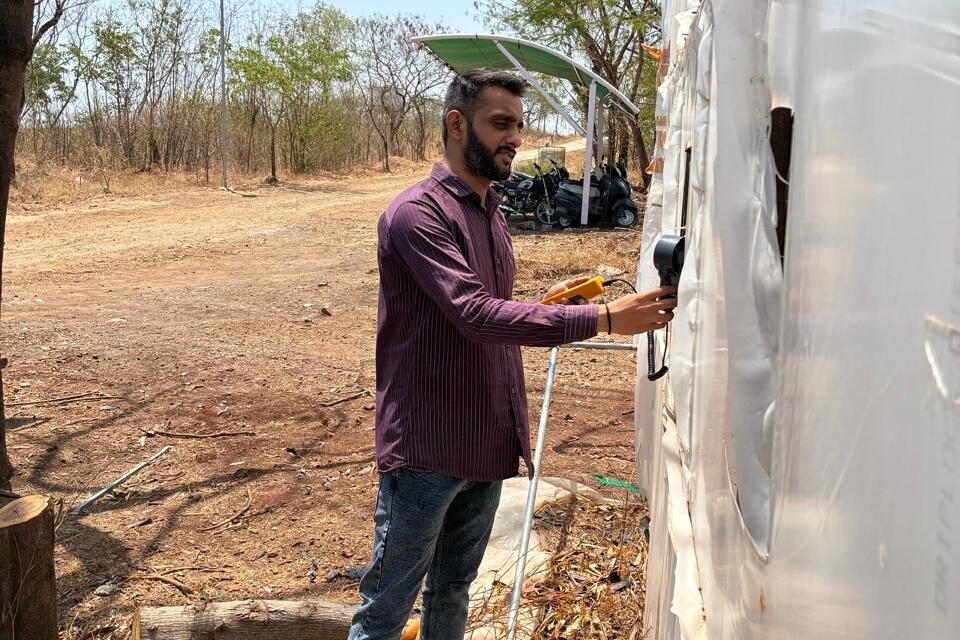
To accurately monitor and compare the environmental conditions, two weather stations were installed for data collection. One weather station was placed inside the polyhouse to continuously record the internal temperature and relative humidity, while the second weather station was installed outside the polyhouse to measure the ambient environmental conditions. This arrangement enabled simultaneous measurement of inside and outside climatic parameters, allowing direct comparison of the polyhouse microclimate with the surrounding environment.
The data collected from both weather stations were used to evaluate the performance of the cooling systems by analyzing the temperature reduction and humidity variation achieved inside the polyhouse under different operating conditions. The use of separate indoor and outdoor weather stations ensured accurate assessment of the cooling efficiency and provided reliable data for experimental analysis.
Another important observation we made during our study was that, while calculating the heat inside the polyhouse, we initially considered only the direct solar radiation entering through the polyethylene sheet. However, later we realized that the air inside the polyhouse is also heated by other heat transfer mechanisms.
The polyethylene sheet itself absorbs solar energy and becomes hot. This heated sheet transfers heat to the surrounding air through convection. Similarly, the soil inside the polyhouse absorbs solar radiation during the day and transfers heat to the air through convection and thermal radiation. These effects contribute significantly to the rise in internal temperature and cannot be neglected for accurate thermal analysis.
To better understand these heat transfer effects, we decided to collect real-time temperature data of the polyethylene sheet and the soil surface. By measuring these temperatures, we aim to improve our heat transfer calculations and develop a more accurate thermal model of the polyhouse environment.
This data will help us identify the major sources of heat gain inside the polyhouse and make necessary modifications in the cooling and ventilation system to improve temperature control and overall efficiency of the polyhouse.
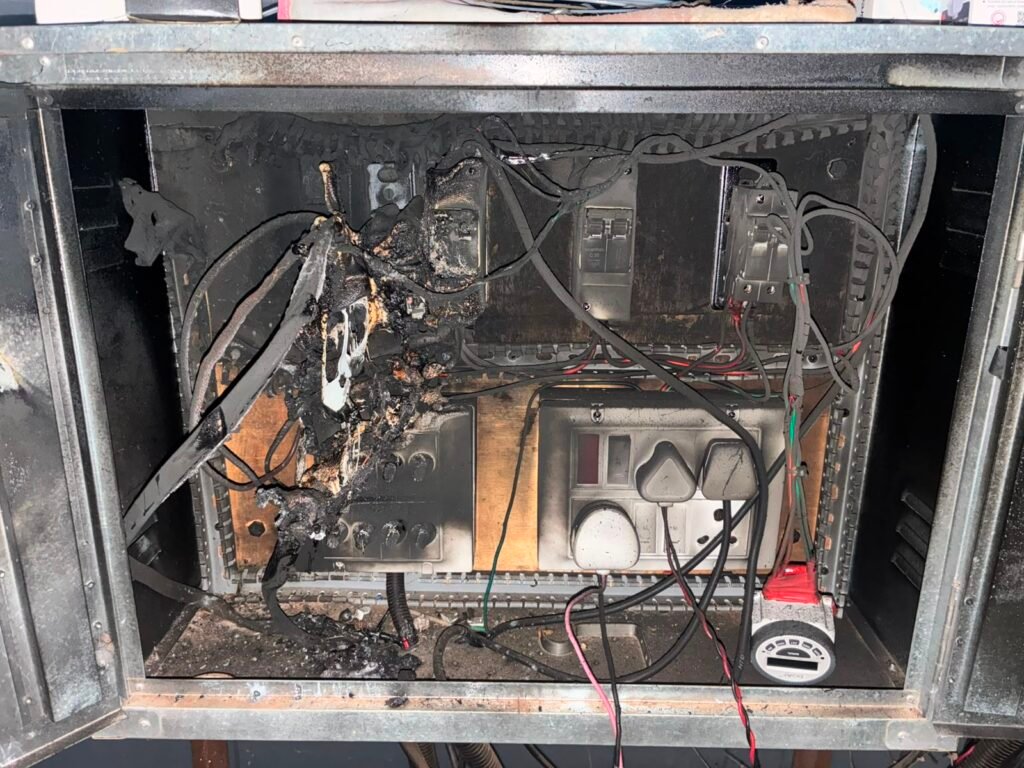
During the operation and testing of the polyhouse system, we also encountered an electrical failure in the control panel. The failure resulted in severe damage to some of the wiring and electrical components, highlighting the importance of proper electrical protection, component selection, wiring, and enclosure design in an automated agricultural system.
Rather than treating this only as a component failure, we used it as an opportunity to review the electrical architecture of the system. The wiring, protection devices, load connections, and arrangement of components were examined to identify possible causes and areas for improvement. Based on this evaluation, necessary modifications were planned to make the system safer, more reliable, and easier to maintain.
11/08/2026 – 17/08/2026
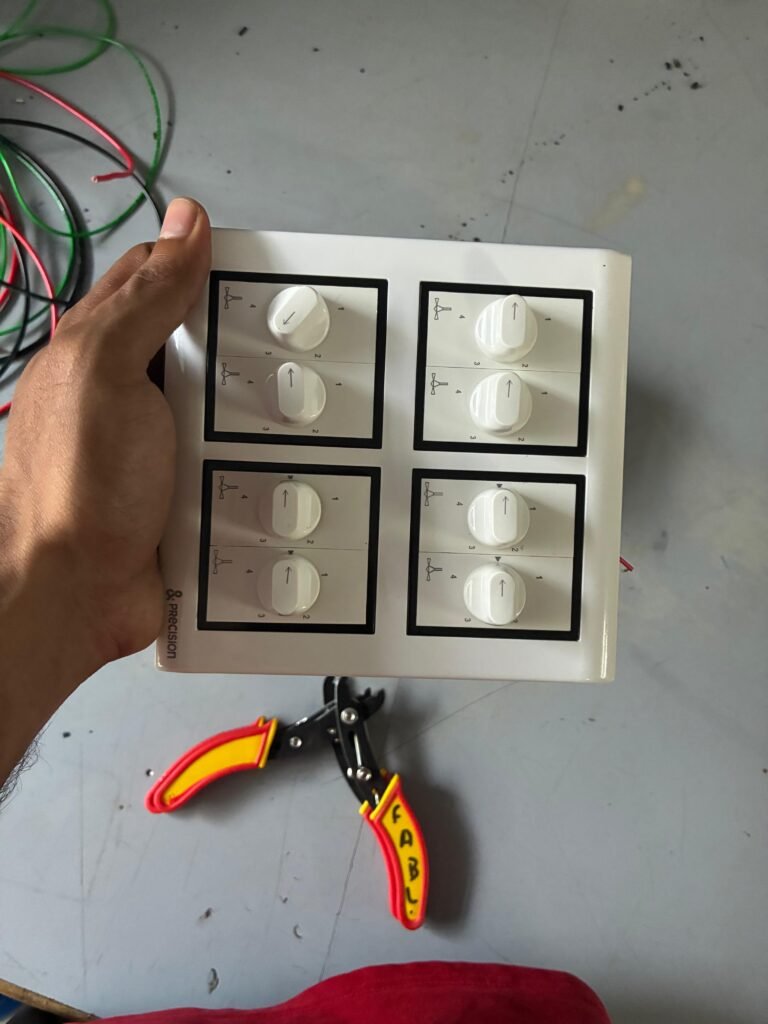
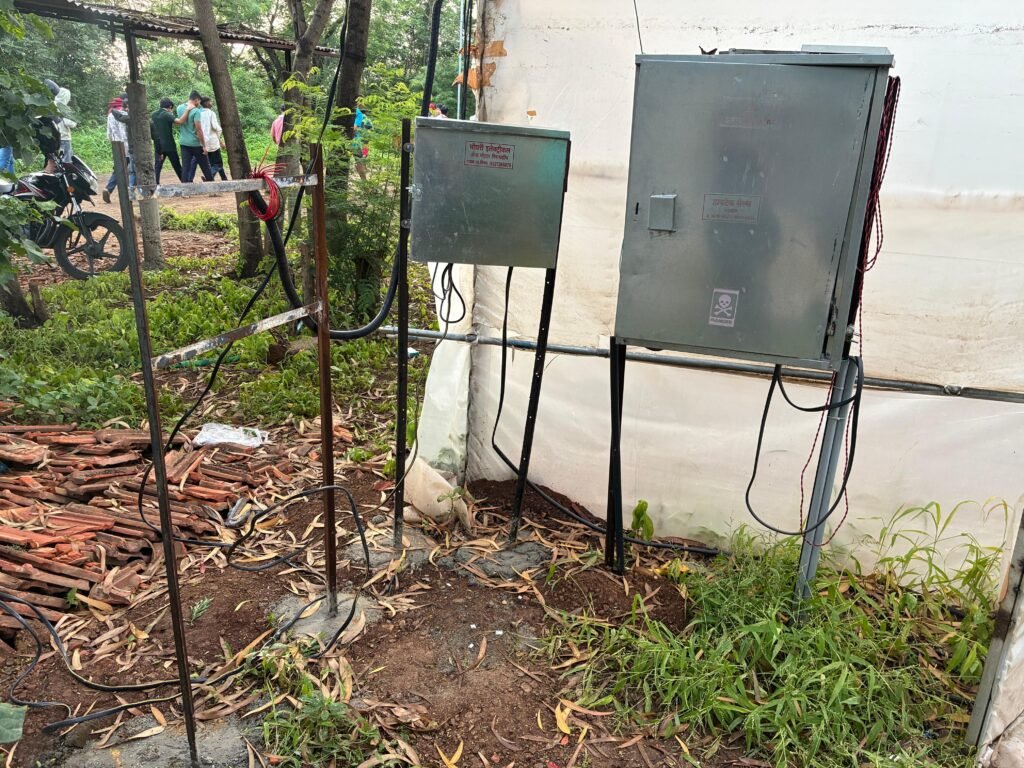
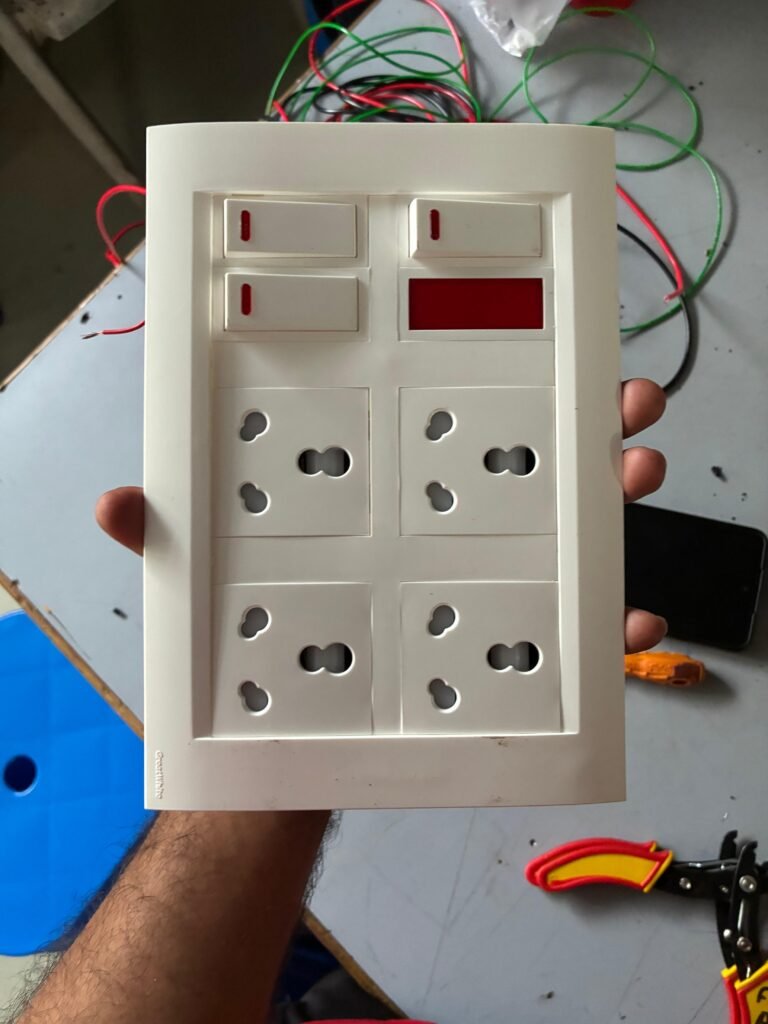
we decided to redesign the electrical system. A new control panel was installed outside the polyhouse instead of inside it. This arrangement helps reduce the risk of damage to the polyhouse structure, crops, and the operator in case of an electrical fault or fire.
The cable arrangement was also redesigned to improve safety, accessibility, and maintenance. By properly routing and organizing the cables and separating different electrical connections where necessary, the new system is expected to reduce the possibility of similar incidents in the future.
The redesigned system is currently being implemented and tested, and some of the work is still in progress. Further observations and testing will help us evaluate the performance and safety of the new arrangement.
18/08/2026 -24/08/2026
Final System Installation, Testing and Handover
After completing the necessary modifications, the new control system was fully installed and tested. The revised electrical arrangement, including the relocation of the control panel outside the polyhouse and improved cable routing, was implemented to enhance the safety, reliability, and maintainability of the system.
Following installation, the complete system was tested under operating conditions to verify its functionality. The system operated as expected, and the modifications made during the different stages of development successfully addressed the major issues identified during previous testing.
Based on the final testing results and subsequent discussion, it was decided that the polyhouse was ready for regular operation. The completed polyhouse system was therefore handed over to the Agriculture Department for further use and operation.
With this handover, the current development and experimental phase of the project is considered complete. However, the system will remain open to further improvement. If any new requirements, operational issues, or opportunities for performance enhancement are identified during regular use, additional experiments and necessary modifications can be carried out accordingly.
The project has thus progressed from identifying problems in the existing polyhouse, through systematic experimentation and modification, to the successful installation, testing, and handover of the improved system.