Introduction –
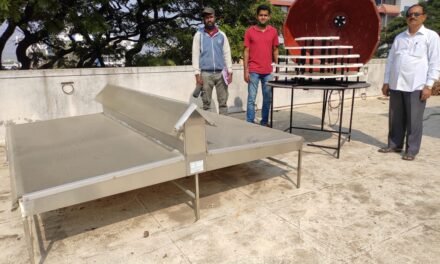
Chemical Oxygen Demand (COD) is a measure of the amount of oxygen needed to chemically break down pollutants present in water. It is an important indicator of water pollution and is widely used to evaluate wastewater quality and treatment efficiency. In short, it tells us how much junk is in this water that will suck the oxygen out of the environment.
Principle of COD –
COD is based on the oxidation of pollutants present in water by a strong oxidizing agent in acidic medium. The oxygen required for the oxidation is measured as Chemical Oxygen Demand
Chemicals used –
- Sulphuric Acid (H2SO4)- (provides acidic medium)
- Distilled water
- Potassium dichromate (K2Cr2O7)- (oxidizes organic matter)
- Ferroin indicator- (shows endpoint)
- Silver sulphate (Agso4)- (acts as catalyst)
- Stone- (ensures smooth boiling)
- Mercuric Sulfate — (Removes chloride interference during COD analysis)
- Ferrous Ammonium Sulphate (FAS) – (for titration)
Preparation of stock solution –
1. 0.1 N FAS (ferrous Ammonium Sulphate) –
Ferrous Ammonium Sulfate gives one equivalent from one mole hence, its equivalent weight is 392.14 g/equivalent
To prepare 0.1N FAS solution of 500ml
Wt. of FAS = N*Equivalent weight*Vol (L)
= 0.1*392.14*0.5
= 19.6gm
- Take 19.6gm of FAS and dissolved it in about 200ml distilled water
- Add 10ml of conc. H2SO4
- stir well and add distilled water up to the 500ml mark (Solution to be added in the burette)
2. 0.25 N K2Cr2O7 (potassium dichromate) –
To prepare 0.25N K2Cr2O7 solution of 200ml
Wt. of K2Cr2O7 = N*Equivalent weight*Vol (L)
= 0.25*49.04*0.2
= 2.451gm
- Take 2.451gm of K2Cr2O7 and dissolved it in about 100ml distilled water
- stir well and add distilled water up to the 200ml mark
3. To prepare KHP Solution –
1mg KHP = 1.176 mg of O2
425 mg of KHP = 500 mg/L COD
For 100ml we need (425mg/1000ml)*100ml = 42.5mg
1.Wt. 42.5 mg KHP
2. Add 100ml distilled water and mix well
Procedure –
- Four waste water samples were collected from Dixit Sir’s House, Boys Hostel, Nageswara Mandir, and Maruti Mandir for COD analysis, along with the preparation of KHP standard and blank solutions.
- Chemicals to be added in the COD flask
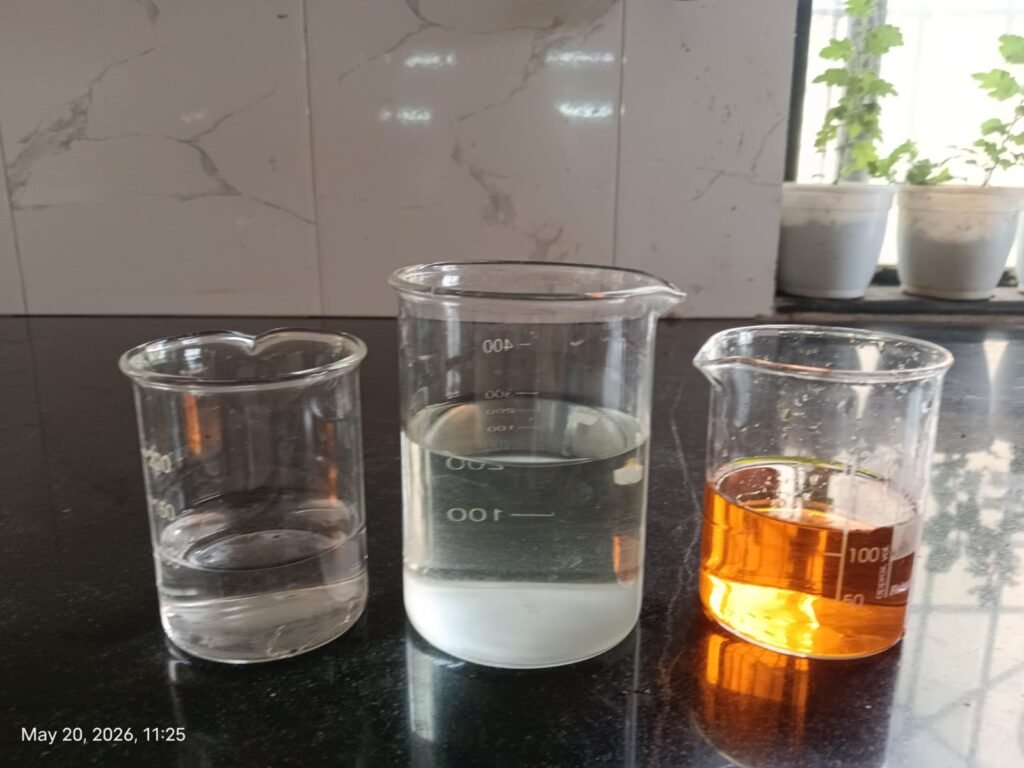
- 20ml of water sample (Add distilled water for blank sample)
- 10ml of K2Cr2O7 Solution
- 0.4gm Silver Sulphate
- 30ml of conc. H2SO4
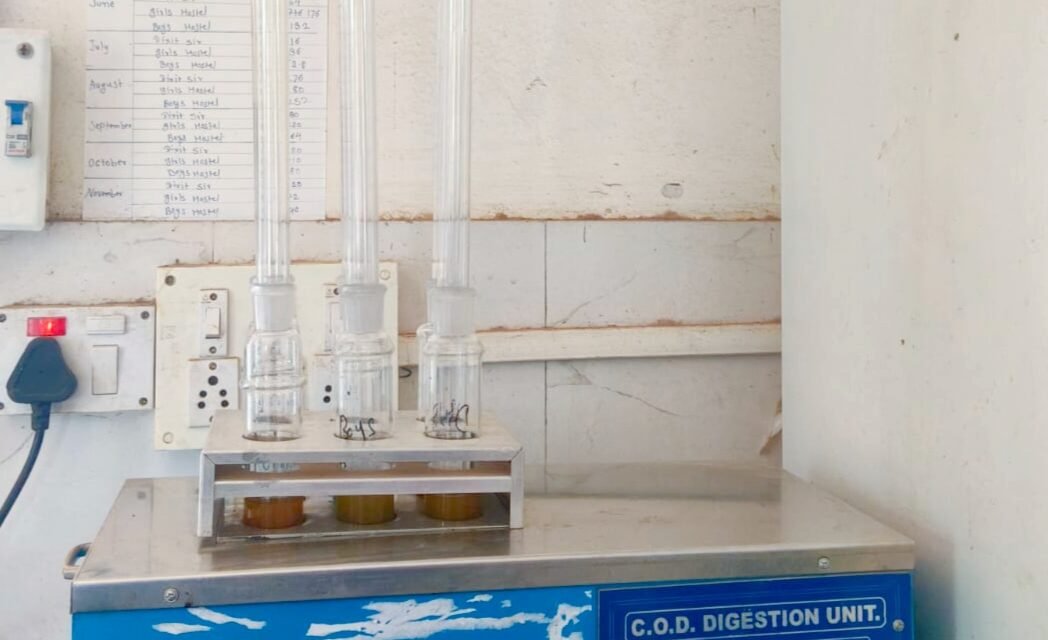
- Place the flask in the digester, connect it to the condenser, and heat at 150 °C for 2 hours.
- let it cool completely
- Add 3-4 drops of Ferroin Indicator in the cooled sample
- Fill the Burette with the 0.1FAS Solution and titrate the sample with it.
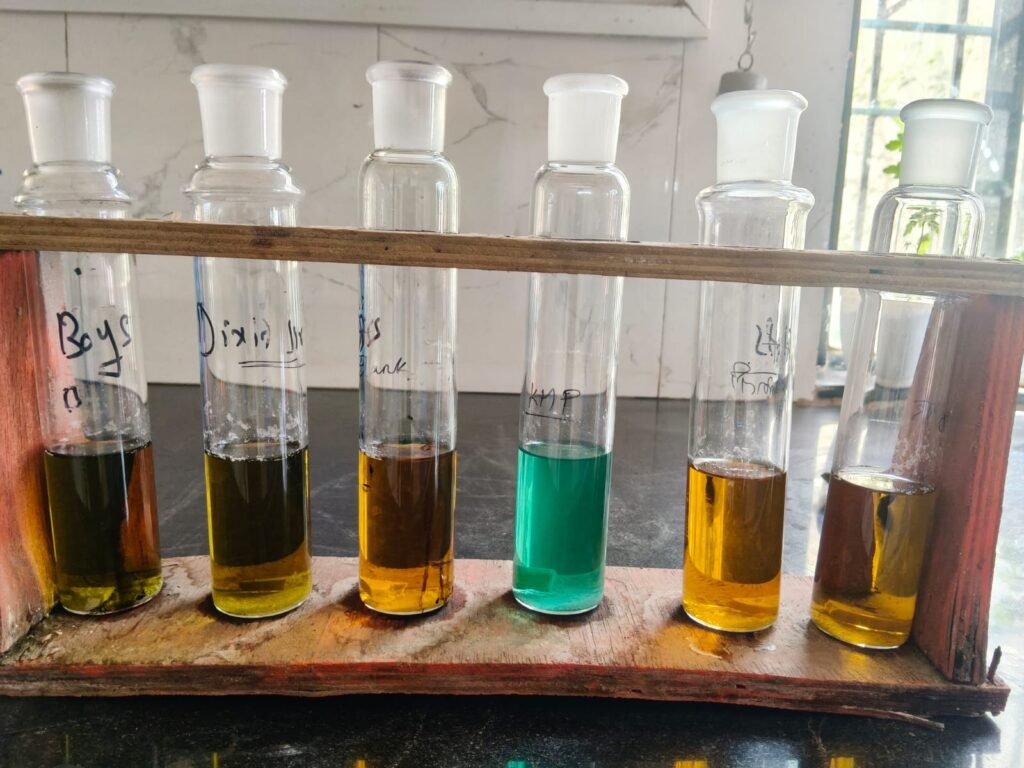
Silver sulphate catalyzes the oxidation of organic matter by potassium dichromate in acidic medium. During the reaction, dichromate ions are reduced to chromium ions
Cr2O72−+Organic Matter +H+→Cr3++CO2+H2O
Colour change: Orange → Blue green (Cr3+)
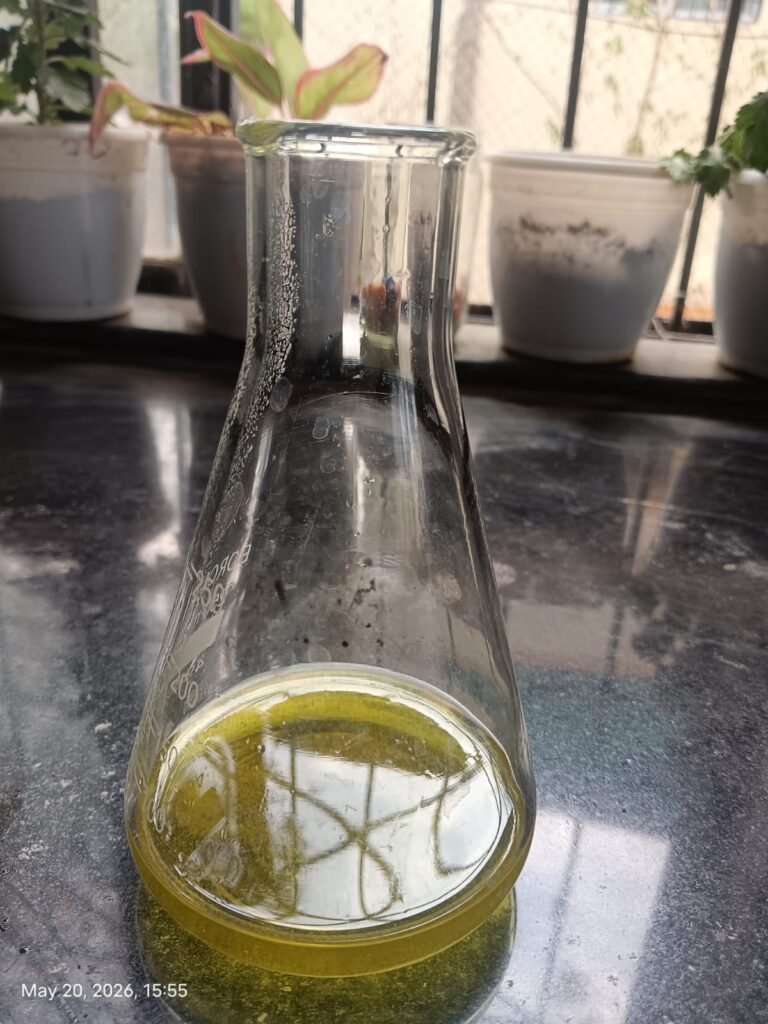
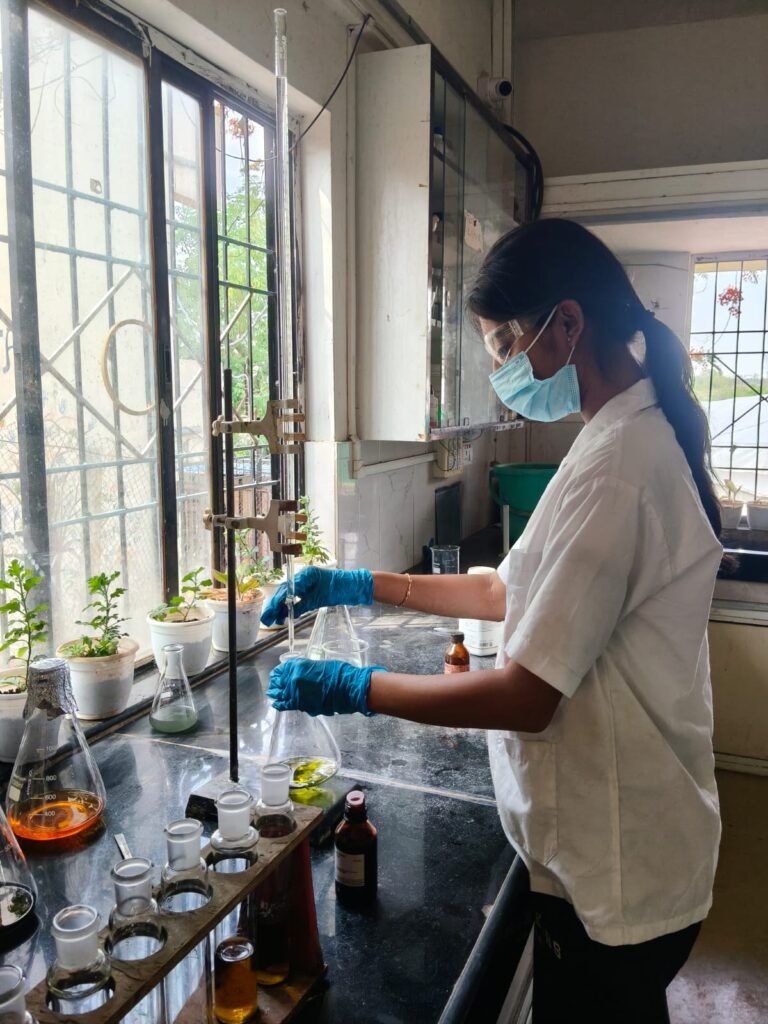
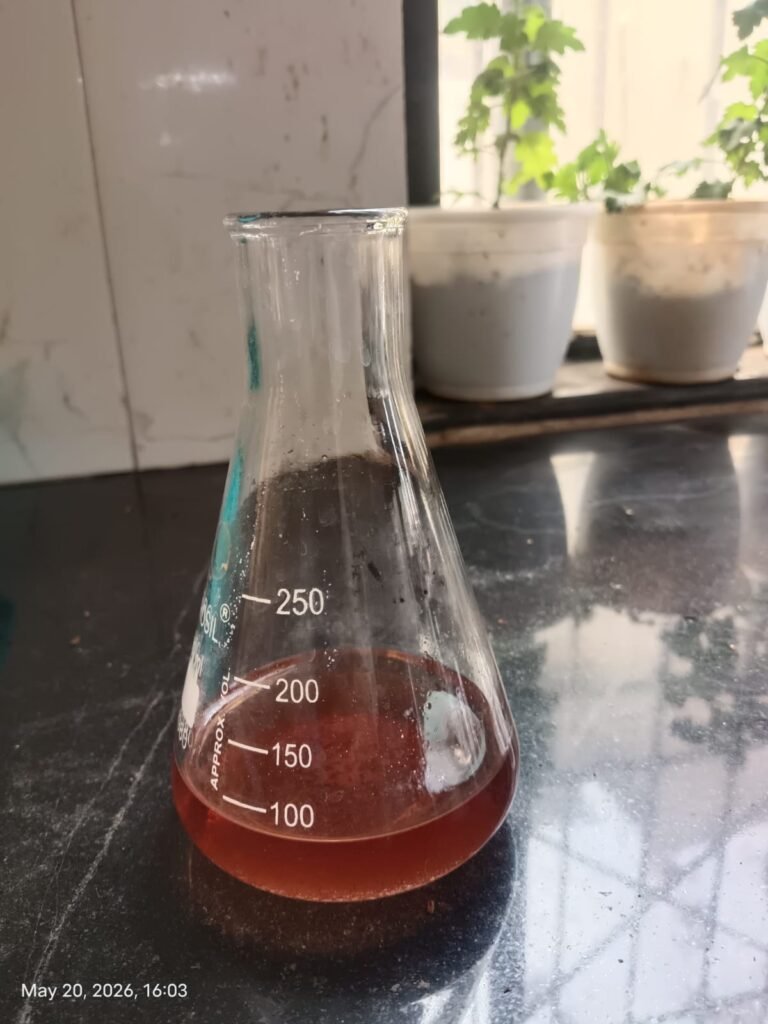
FAS reduces the remaining dichromate after digestion. When all dichromate is consumed, the ferroin indicator changes from blue Green to reddish-brown, showing the end point.
Calculations –
COD = ((A-B) *N*8000)/V
Where, A= Reading of blank sample
B = Reading of KHP sample
V = Sample Volume (In ml)
N = FAS Normality
Sample Calculations –
Lets take reading for Boys hostel
A= 23.5 , B= 15.5, V= 20ml, N= 0.1
= ((23.5-15.5) *0.1*8000)/20
= 320 mg/L
Final COD Table –
| SAMPLE | READING | COD (mg/L) |
| Blank | 23.5 | – |
| KHP | 11 | 500 |
| Dixit Sir’s House | 20 | 140 |
| Boys Hostel | 15.5 | 320 |
| Maruti Mandir | 16.7 | 272 |
| Nageshwar Mandir | 16 | 300 |
Factors Affecting COD-
- Amount of organic pollutants
- Presence of oxidizable substances
- Temperature
- pH of sample
- Chloride interference
- Digestion time
- Reagent concentration
Conclusion –
High COD indicates highly polluted water, while low COD indicates cleaner water. KHP is used as a standard because it is pure, stable, and has a known COD value
From the obtained data, it was observed that the Boys Hostel water sample was more polluted, while the water sample from Dixit Sir’s house was less polluted.
NOTE: This experiment was performed by me and Gayatri as a part of comparative study on COD reduction in wastewater using natural and aeration- based treatment techniques.