Introduction
Aeration techniques are wastewater treatment methods in which air or oxygen is brought into contact with water to increase the dissolved oxygen content. The supplied oxygen helps in the oxidation of organic pollutants, thereby reducing the Chemical Oxygen Demand (COD) of wastewater. Aeration also improves mixing, removes unpleasant gases and odors, and enhances biological activity. Common aeration techniques include bubble aeration and sprinkler aeration, which differ in their method of oxygen transfer and treatment efficiency.
Aim
- To determine initial and final COD values.
- To perform COD reduction using natural and aeration methods.
- To compare treatment efficiencies.
- To identify the most effective method for wastewater treatment.
Methods to be studied
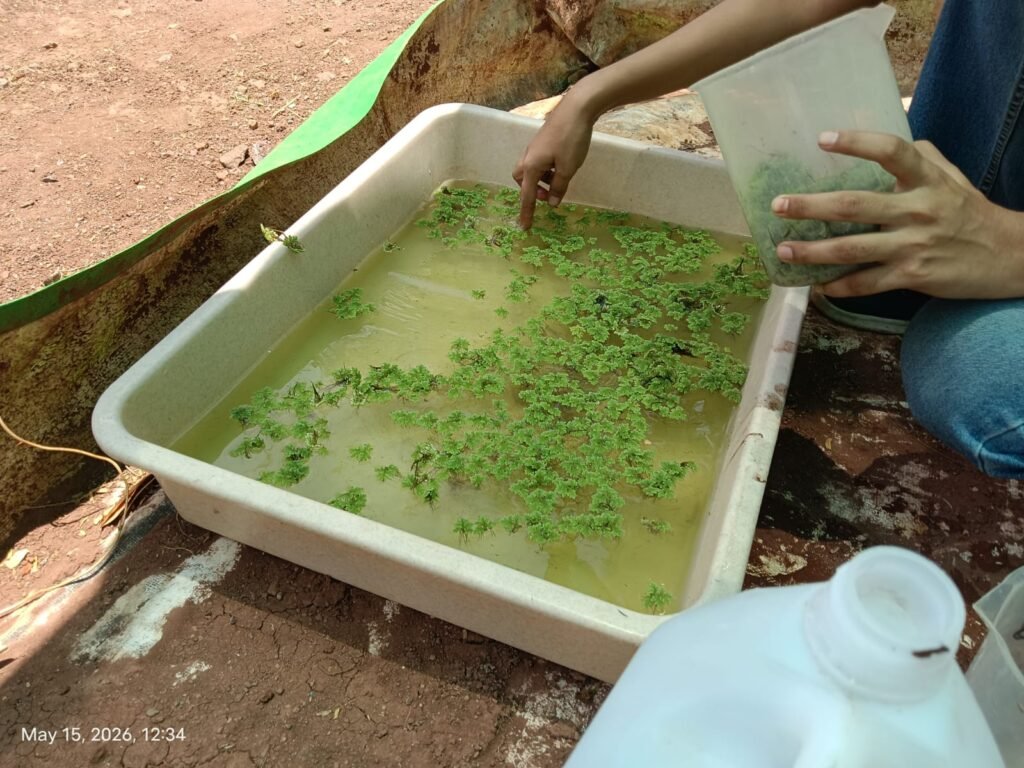
- Aeration using Azolla (Photosynthesis).
- Sedimentation using polyelectrolytes and alum.
- Aeration due to Bubbling.
- Aeration due to sprinkler mechanism.
- Aeration due to venturi effect
Before applying methods, Take initial reading of COD for different types of sample and select one sample for applying aeration methods. I have performed experiment to find out COD and my readings are as below.
| Sr. No. | Sample Name | Titration Reading | COD Value |
|---|---|---|---|
| 1 | Blank | 23.5 | – |
| 2 | KHP | 11 | 500 |
| 3 | Dixit sir’s House | 20 | 140 |
| 4 | Boys Hostel | 15.5 | 320 |
| 5 | Maruti Mandir | 16.7 | 272 |
| 6 | Nageshwar Mandir | 16 | 300 |
For more Information regarding COD refer following link :
https://vadic.vigyanashram.blog/2026/05/15/chemical-oxygen-demand/
We have selected the sample of well near nageshwar temple in pabal whose initial COD is 300 mg/L. Selection is based on most polluted i.e sample with high value of COD and availability of sample.Now let us see the materials required and procedure for each of the above method.
1. Aeration using Azolla (Photosynthesis)
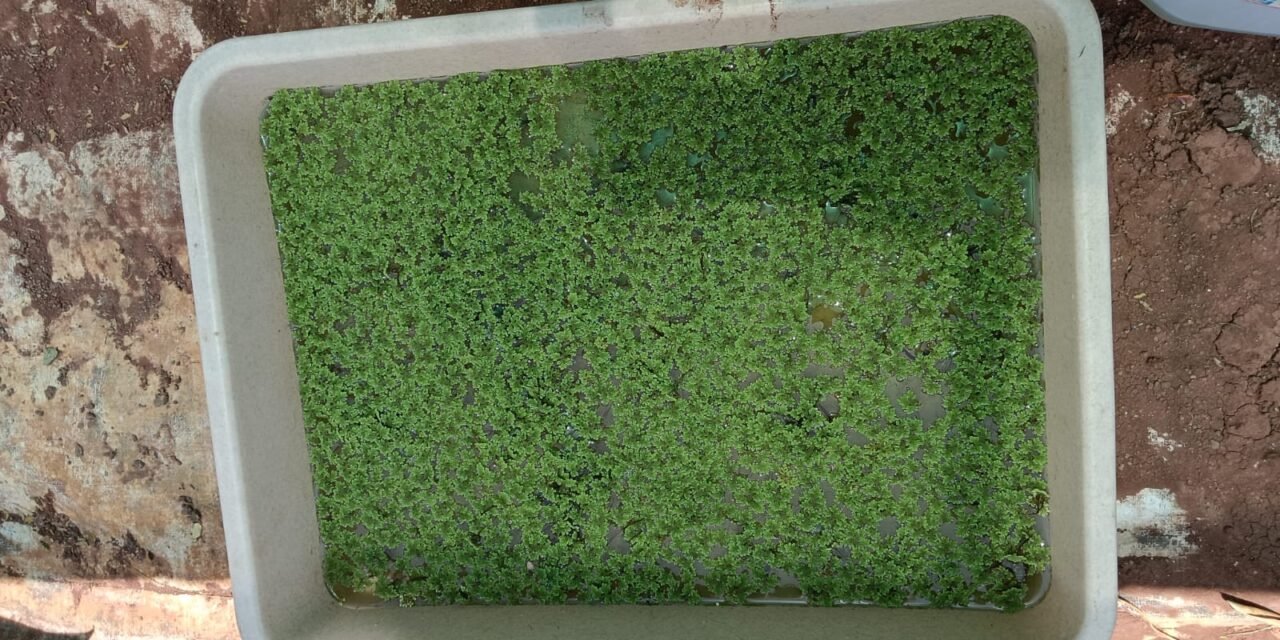
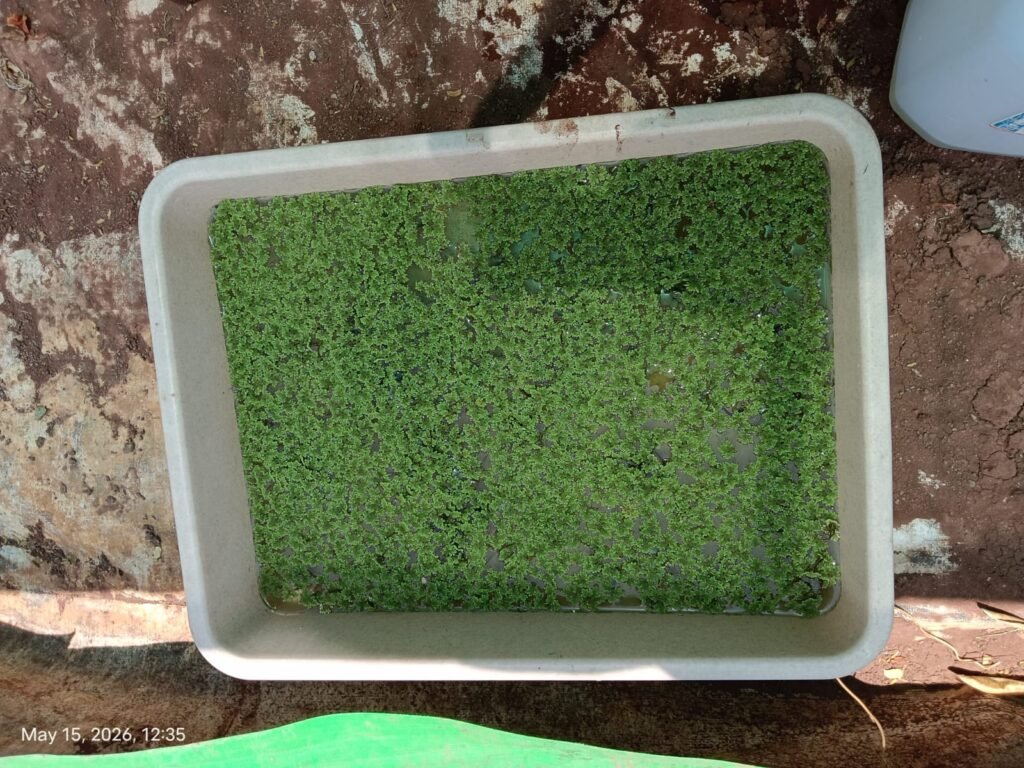
Basic Knowledge – Azolla reduces COD by releasing oxygen during photosynthesis, which helps aerobic microorganisms decompose organic pollutants in wastewater. It also absorbs nutrients and supports microbial activity, thereby lowering the organic load and COD level.
Materials Required – Tray, Water sample (10L), Azolla
Procedure –
- Place a tray in such a place where it recieves daylight.
- Pour 10L of water sample in tray.
- Weigh about 140 grams of Azolla. (You can take azolla about 100-200 grams)
- Place the azolla on surface of the tray as it performs photosynthesis when it floats.
- After 5-6 days, collect 20 ml sample from photosynthesis setup and determine COD.
2. Sedimentation using Alum and Polyelectrolytes
Basic Knowledge – When water is kept undisturbed, heavier particles settle at the bottom due to gravity. As the organic solids settle as sludge, the amount of oxidizable material in the water decreases, thereby reducing COD. Sedimentation is especially effective for removing particulate COD, while dissolved COD usually requires biological or chemical treatment.
Materials Required – 5 L tank, Alum, Polyelectrolyte
Dosage-
Typical dosage of Alum = 200-300 mg/L, Polyelectrolyte = 4 – 8 mg/L
Chemical Required (mg) = Dosage (mg/L) * Volume (L)
- For alum , D = 250 mg/L , Alum required = 250*5 = 1250 mg = 1.25 g
- For polyelectrolyte, D = 5 mg/L, Polyelectrolyte required = 5*5 = 25 mg = 0.025 g
Procedure –
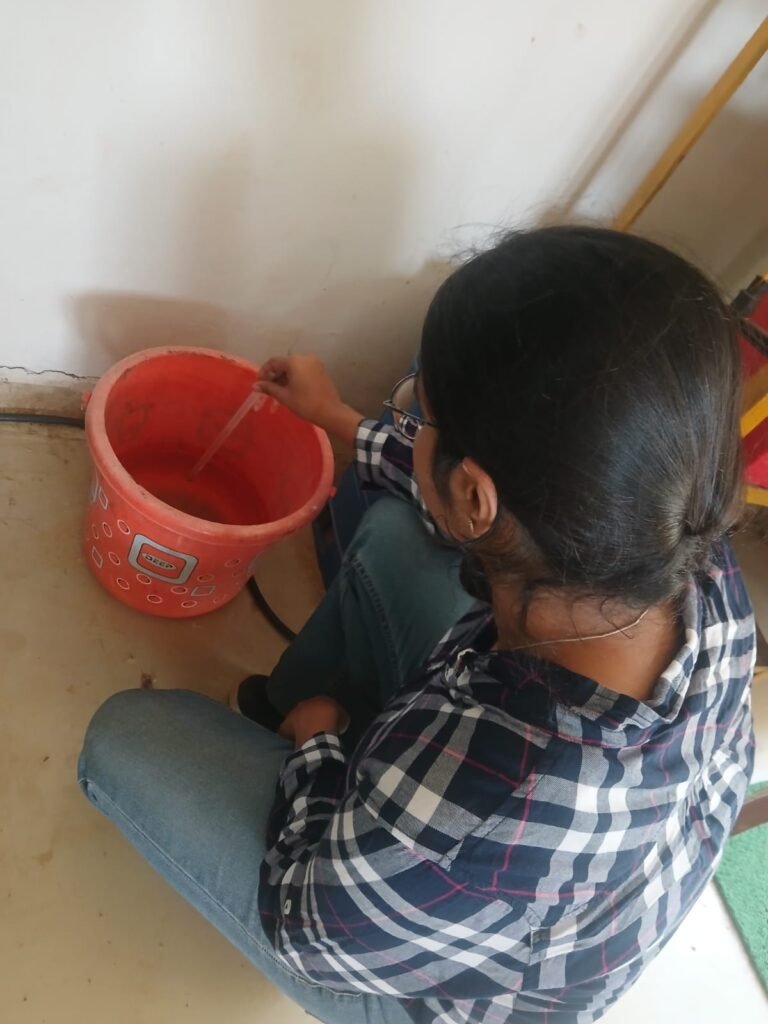
- Place the tanks in undisturbed Area
- Mix the sample uniformly and add 5 L in a tank
- Add 1.25 g alum in 100 ml distilled water and mix it
- Add alum solution in water and mix it gentally
- Add 0.025 g polyelectrolyte in tank
- Stir slowly while adding polyelectrolytes and alum
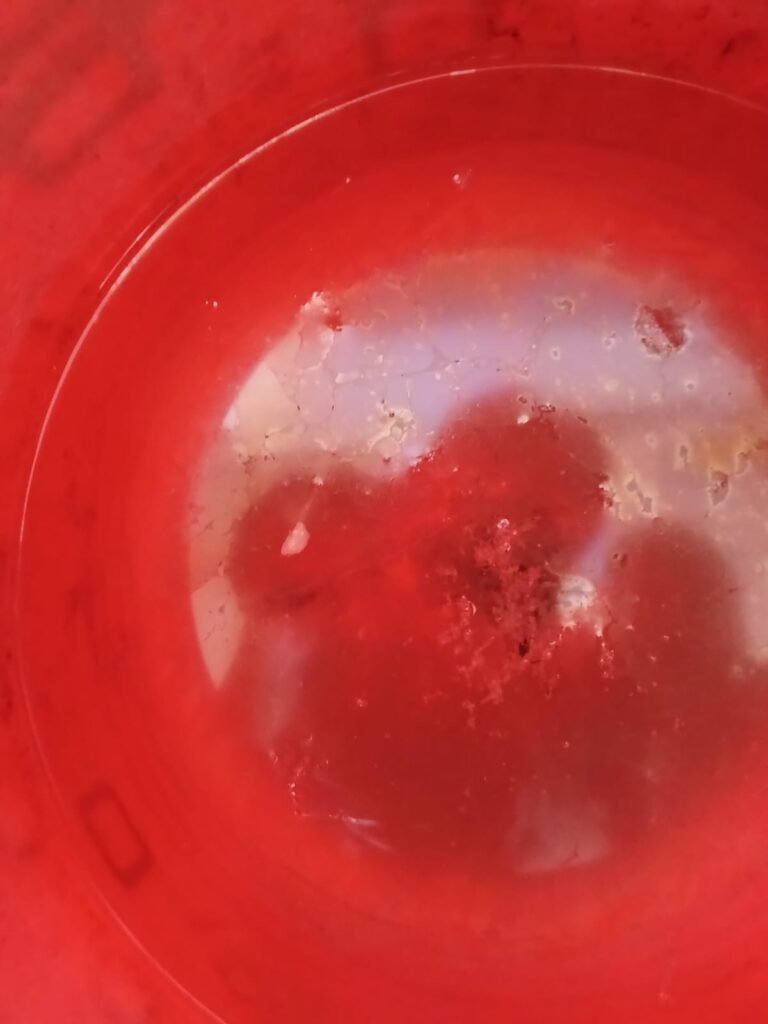
- Let the flocs to settle down for 48 hrs.
- After 48 hrs, collect 20 ml sample and calculate COD.
3. Aeration due to bubbling
Basic Knowledge – The bubbles increase dissolved oxygen (DO) levels, which support aerobic microorganisms present in the water. These microorganisms use oxygen to biologically decompose organic pollutants responsible for COD. Bubbling creates mixing and turbulence, which improves contact between oxygen, microorganisms, and pollutants. Some volatile gases and odor-causing compounds may also escape during aeration, further improving water quality. As the amount of oxidizable organic matter decreases, the COD value reduces.
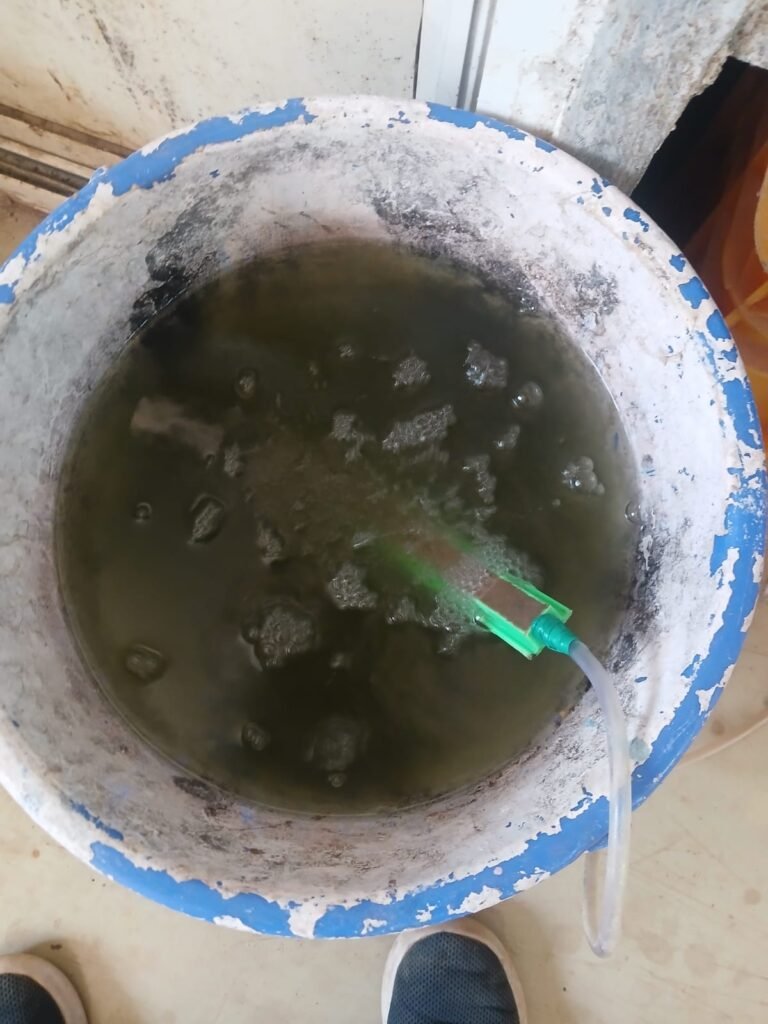
Materials Required – 20 L Bucket , Bubbler / Air pump, Diffuser, flexible pipe, tape
Procedure –
- Connect the outlet of pump to diffuser using flexible pipe.
- Take 15 L of sample water in a Bucket.
- Place the diffuser at bottom of Bucket.
- ON the pump.
- After 24 hrs, collect 20 ml sample and determine COD.
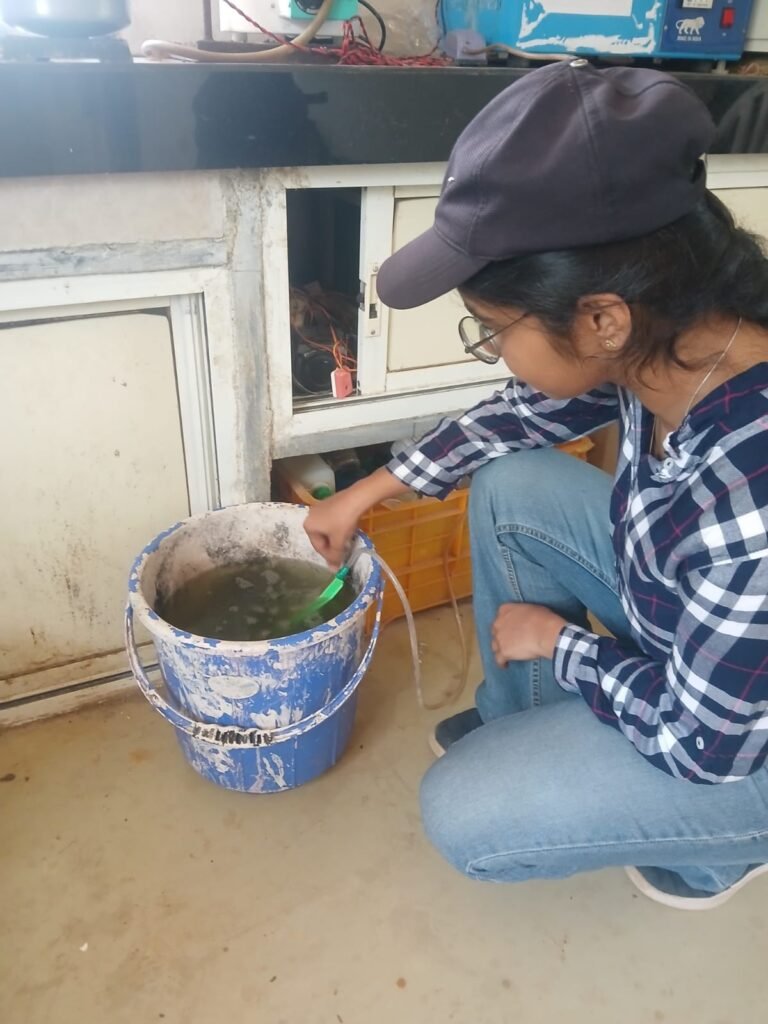
4. Aeration due to sprinkler Mechanism
Basic Knowledge – Aeration by sprinkler works on the principle of increasing contact between water and atmospheric air. When water is sprayed through a sprinkler nozzle, it breaks into small droplets. These droplets expose a large surface area to air, allowing oxygen from the atmosphere to dissolve into the water. The smaller the water droplets and the longer their contact with air, the better the aeration efficiency.
Materials Required – 20 L Bucket, Submersible pump, flexible pipe, tape, sprinkler/nozzle
Procedure –
- Connect sprinkler to submersible pump through flexible pipe
- Take 15 L sample water in Bucket
- Place the pump at bottom of bucket
- Make arrangement of sprinkler such that water droplets fall in the bucket
- ON the pump
- After 24 hrs, collect 20 ml sample and determine COD.
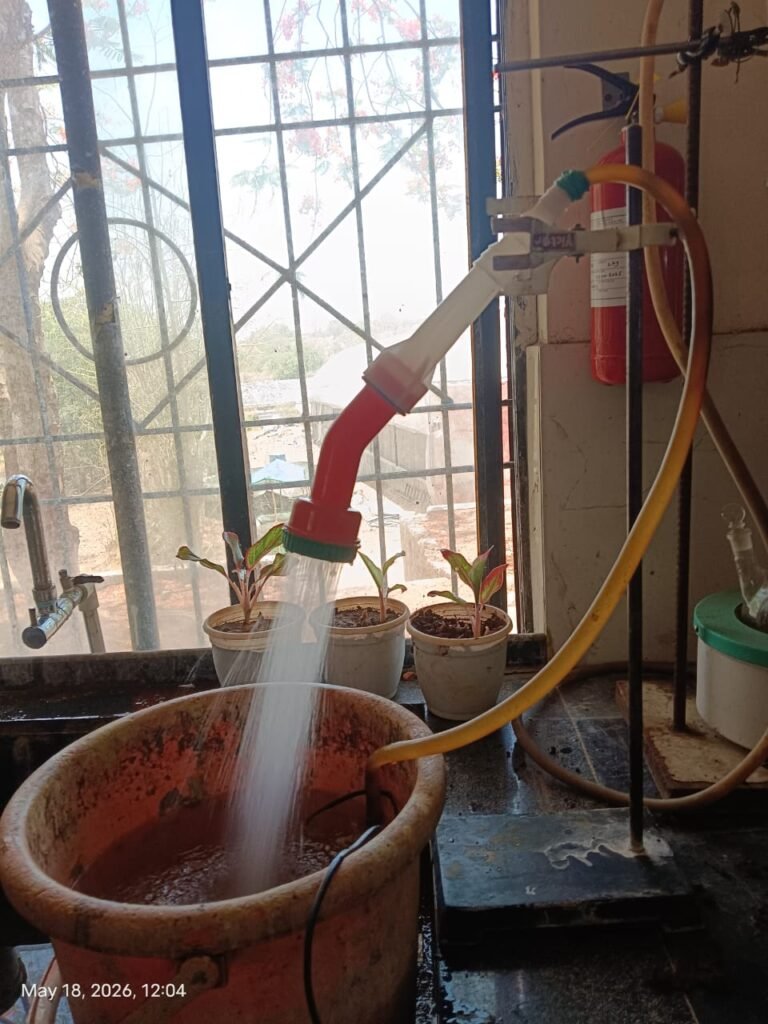
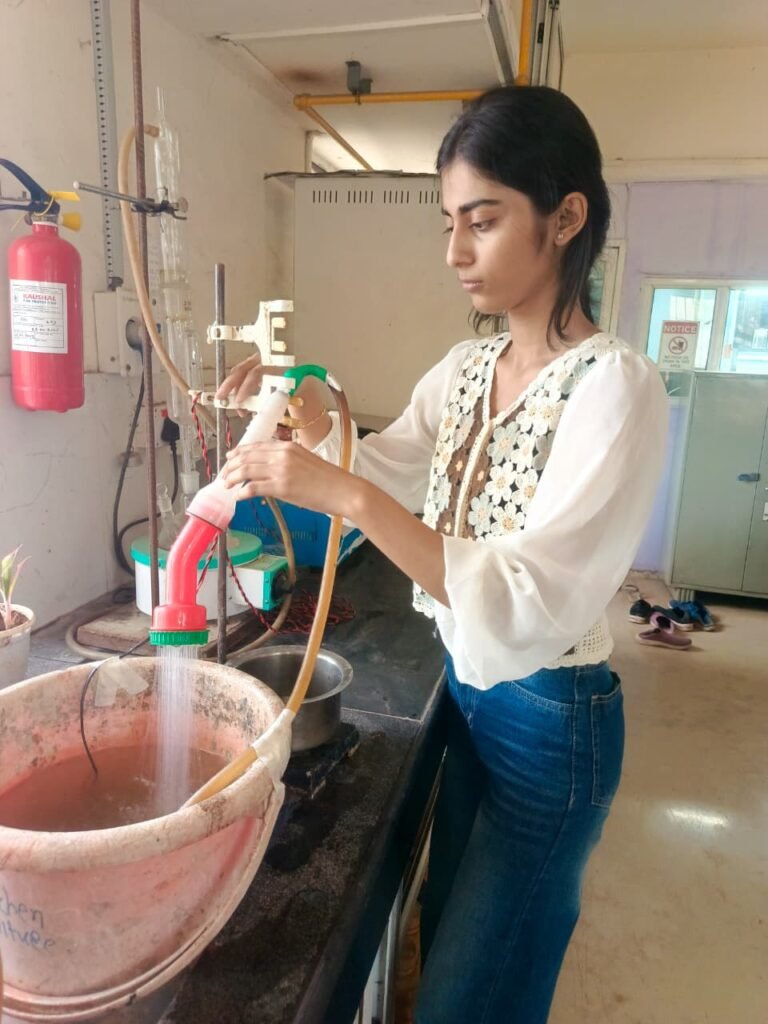
While determining COD, we used silver sulphate that was prepared by us.
For more information about silver sulphate synthesis refer the following link: https://vadic.vigyanashram.blog/2026/05/17/preparation-of-silver-sulfate-for-cod-analysis/
COD Table
| Aeration Method Name | Initial Titration readings | Final Titration readings | Initial COD | Final COD | % Reduction in COD |
|---|---|---|---|---|---|
| Blank | 23.5 | 21.4 | – | – | – |
| Bubbling | 16 | 14.4 | 300 | 280 | 6.67 % |
| Sprinkler | 16 | 17 | 300 | 176 | 41.33 % |
| Photosynthesis | 16 | 14.2 | 300 | 288 | 4 % |
| Sedimentation | 16 | 15.8 | 300 | 224 | 25.33 % |
From the above table , the study showed that all methods reduced COD at different levels. Amongst all sprinkler aeration gave the best results by reducing the COD from 300 mg/L to 176 mg/L. Sedimentation also showed good reduction, while bubbling and photosynthesis using Azolla were less effective in comparison.
From the experiment, it can be concluded that aeration methods that provide better contact between air and water help in faster breakdown of organic pollutants, resulting in greater COD reduction. The experiment also proved that the silver sulphate synthesized from silver was successfully used in the COD determination process.
NOTE: This experiment was performed by me and Anushka as part of a comparative study on COD reduction in wastewater using natural and aeration-based treatment techniques.