13 May 2026
Decomposed organic materials such as compost, agricultural waste, leaf litter, or spoiled plant material contain a large variety of microorganisms. Among these microorganisms, bacteria and fungi play an important role in decomposition, nutrient recycling, and soil fertility. Isolation of these microbes helps in studying their morphology, growth characteristics, and industrial or agricultural importance.
Objective
To isolate and obtain pure cultures of bacteria and fungi from a decomposed (compost/agricultural waste) sample. using serial dilution and spread plate techniques.
Materials Required
A) Equipment
- Laminar Air Flow
- Autoclave
- Incubator
- Micropipettes (1 ml and 0.1 ml tips)
- Sterile Petri Plates
- Sterile Test Tubes
- Glass Spreader (L-rod)
- Inoculation Loop
- Conical Flask
- Cotton Plug
- Aluminium Foil
- Measuring Cylinder
B) Chemicals and Media
- Sterile Distilled Water
- Nutrient Agar (NA) – for bacterial isolation
- Potato Dextrose Agar (PDA) – for fungal isolation
- Streptomycin (used in PDA plates to suppress bacterial growth)
- 70% Ethanol – for surface sterilization
Media Preparation
1) Preparation of Nutrient Agar (NA)
Nutrient Agar is used for the growth and isolation of bacteria.
Procedure
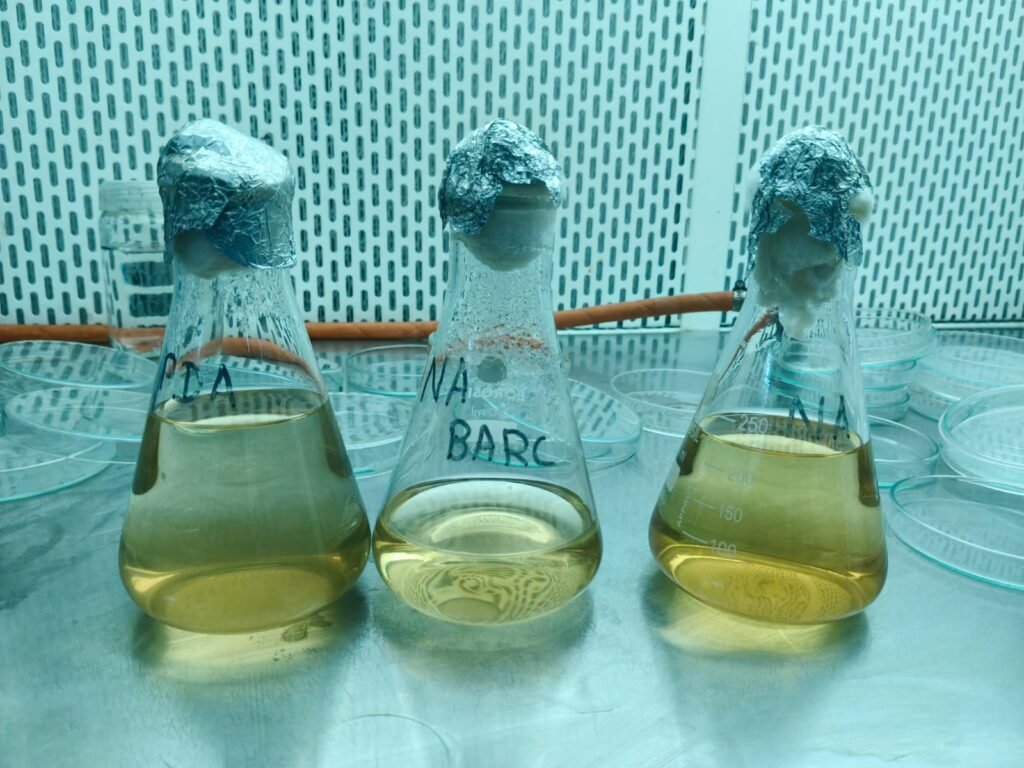
- Dissolve 7 gm of Nutrient Agar powder in 250 ml distilled water.
- Transfer the solution into a conical flask.
- Close the flask using a cotton plug and cover it with aluminium foil.
- Sterilize the medium in an autoclave at 121°C and 15 psi pressure for 15 minutes.
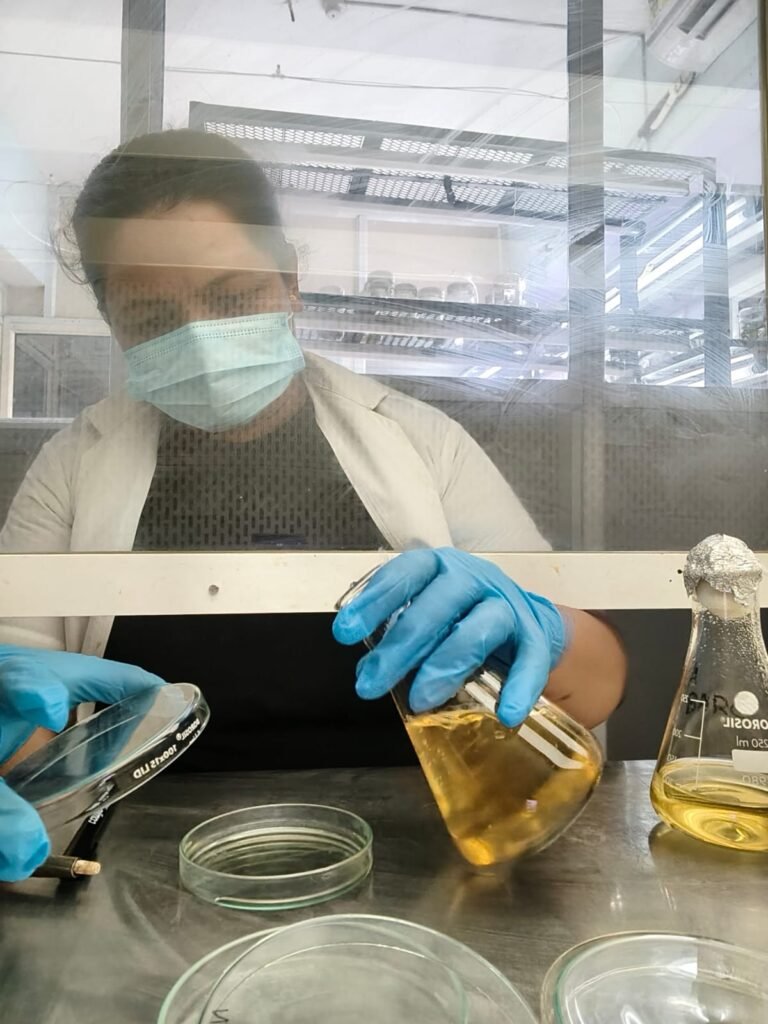
- After autoclaving, transfer the flask into the laminar air flow chamber.
- Allow the medium to cool to about 45–50°C.
- Pour the medium into sterile Petri plates and allow it to solidify.
2) Preparation of Potato Dextrose Agar (PDA)
Potato Dextrose Agar is commonly used for fungal isolation and growth.
Procedure
- Dissolve 39 gm PDA powder in 1 litre distilled water.
- For 250 ml medium, dissolve 9.75 gm PDA powder in distilled water.
- Transfer the solution into a conical flask.
- Close the flask with a cotton plug and aluminium foil.
- Sterilize by autoclaving at 121°C, 15 psi for 15 minutes.
- Allow the medium to cool.
- Add Streptomycin antibiotic after cooling to suppress bacterial contamination.
- Pour the medium into sterile Petri plates.
Sterilization by Autoclaving
The following materials should be sterilized before use:
- Nutrient Agar (NA)
- Potato Dextrose Agar (PDA)
- Petri dishes
- Micropipette tips
- Measuring cylinders
- Test tubes
- Glass spreaders
Procedure
1) Sample Collection
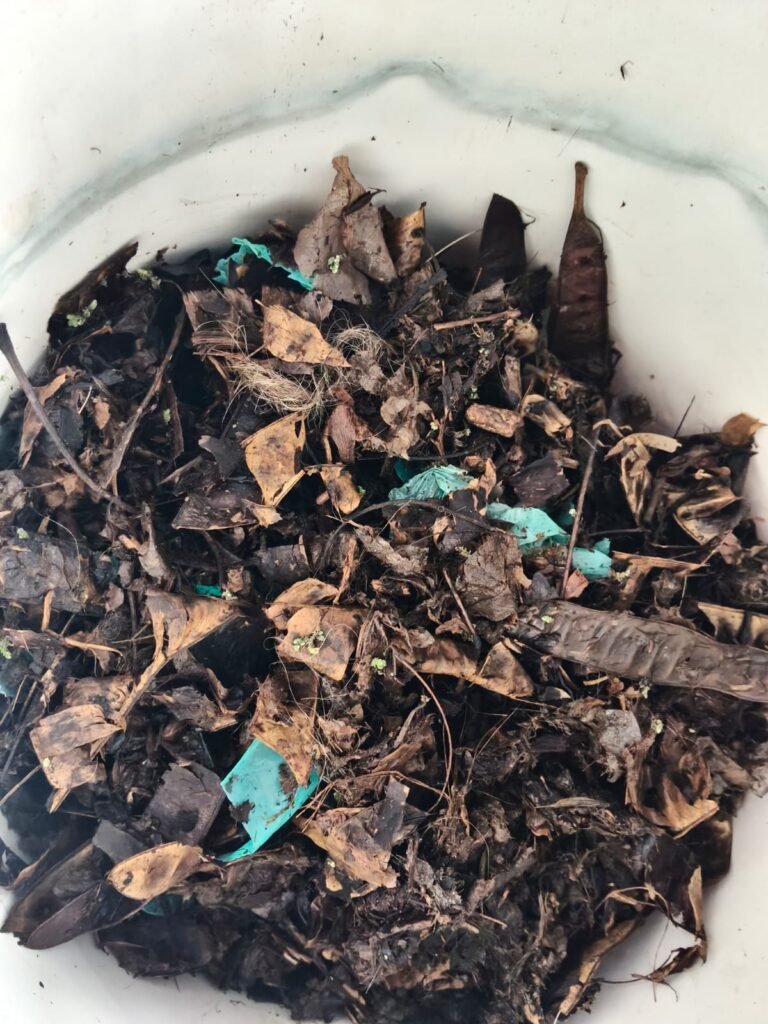
- Collect approximately 1 gm of decomposed sample in a sterile container.
- The sample include decomposed agricultural waste.
Serial Dilution
Serial dilution is a microbiological technique used to reduce the concentration of microorganisms present in a sample step by step. It helps in obtaining isolated colonies of bacteria and fungi on agar plates for easy observation and identification.
In decomposed samples, the microbial population is usually very high. If the sample is plated directly, microorganisms grow densely and colonies overlap with each other. Therefore, serial dilution is performed to decrease the microbial load and obtain separate, well-isolated colonies.
Principle of Serial Dilution
In serial dilution, a small amount of sample suspension is transferred into sterile distilled water repeatedly in a fixed ratio, usually 1:10..Each dilution reduces the concentration of microorganisms by ten times.
Procedure of Serial Dilution
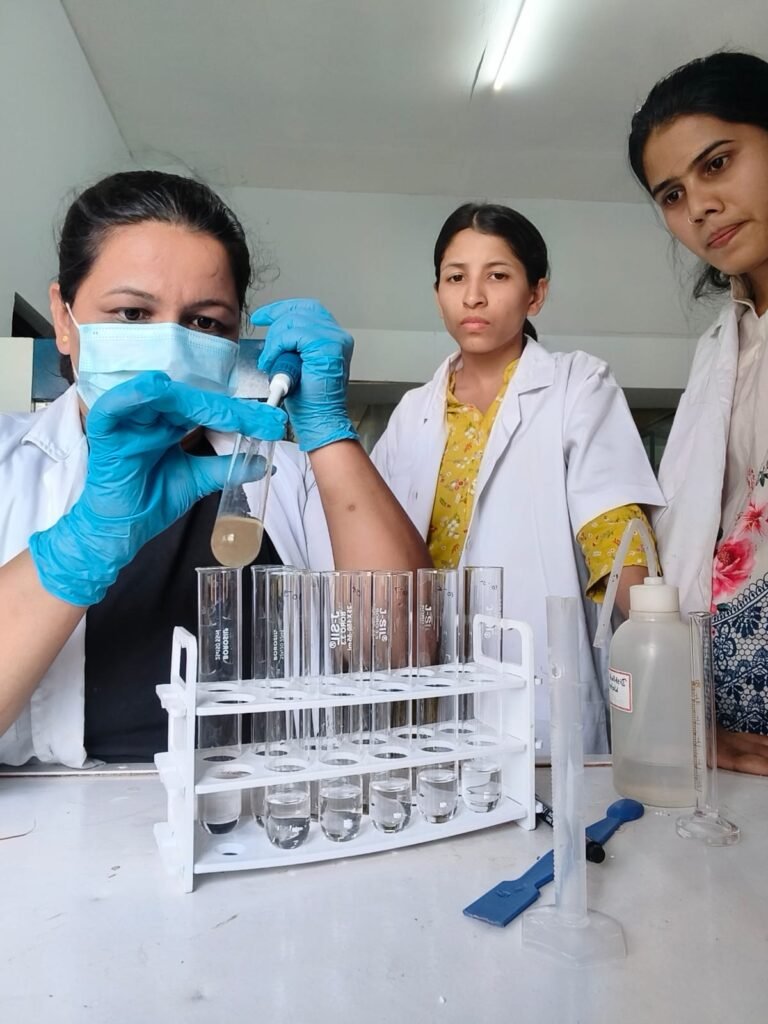
Step 1: Preparation of First Dilution (10⁻¹)
- Take 1 gm of decomposed sample.
- Add it into a test tube containing 9 ml sterile distilled water.
- Mix properly by shaking or vortexing.
This forms the: dilution
Step 2: Preparation of Second Dilution (10⁻²)
- Take 1 ml from the 10⁻¹ dilution.
- Transfer it into another test tube containing 9 ml sterile distilled water.
- Mix thoroughly.
This becomes: dilution.
Step 3: Continue Further Dilutions
Repeat the same process:
- 1 ml from 10⁻² → 9 ml water = 10⁻³
- 1 ml from 10⁻³ → 9 ml water = 10⁻⁴
- 1 ml from 10⁻⁴ → 9 ml water = 10⁻⁵
- 1 ml from 10⁻⁵ → 9 ml water = 10⁻⁶
- 1 ml from 10⁻⁶ → 9 ml water = 10⁻⁷
Purpose of Serial Dilution
Serial dilution is performed to:
- Reduce microbial concentration
- Obtain isolated colonies
- Prevent overcrowding on agar plates
- Facilitate colony counting
- Help in identification and purification of microorganisms
Plating Method (Spread Plate Technique)
A) Isolation of Bacteria on NA Plates
Procedure
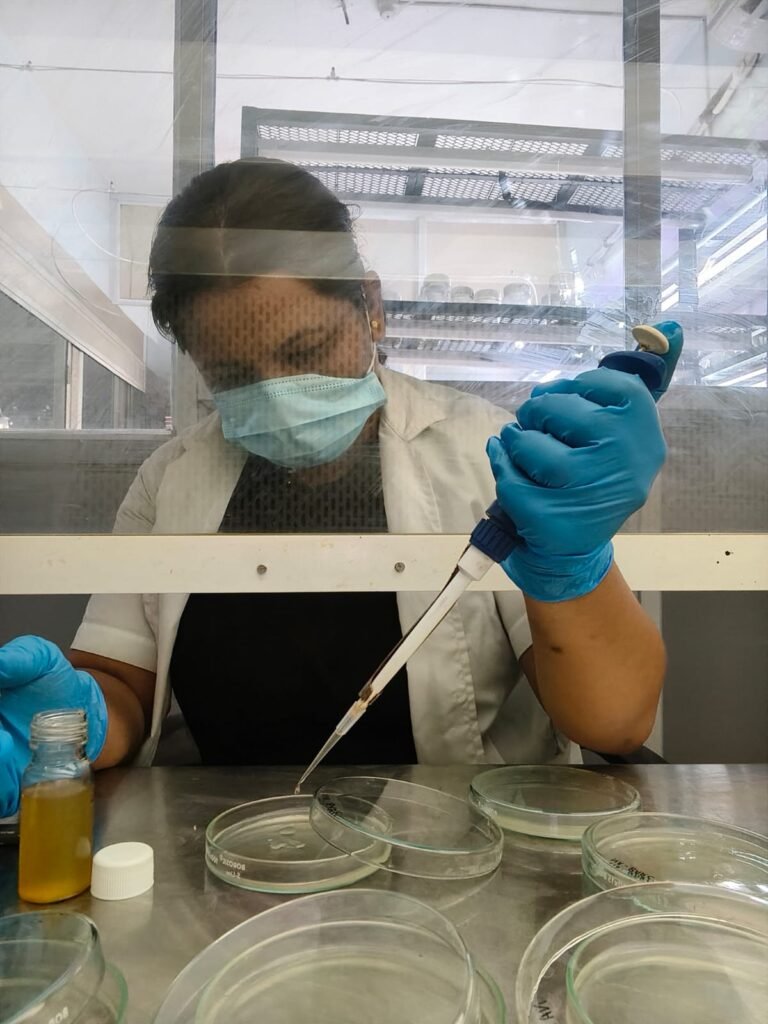
- Take 0.1 ml from the selected dilution.
- Transfer it onto the surface of a sterile Nutrient Agar plate.
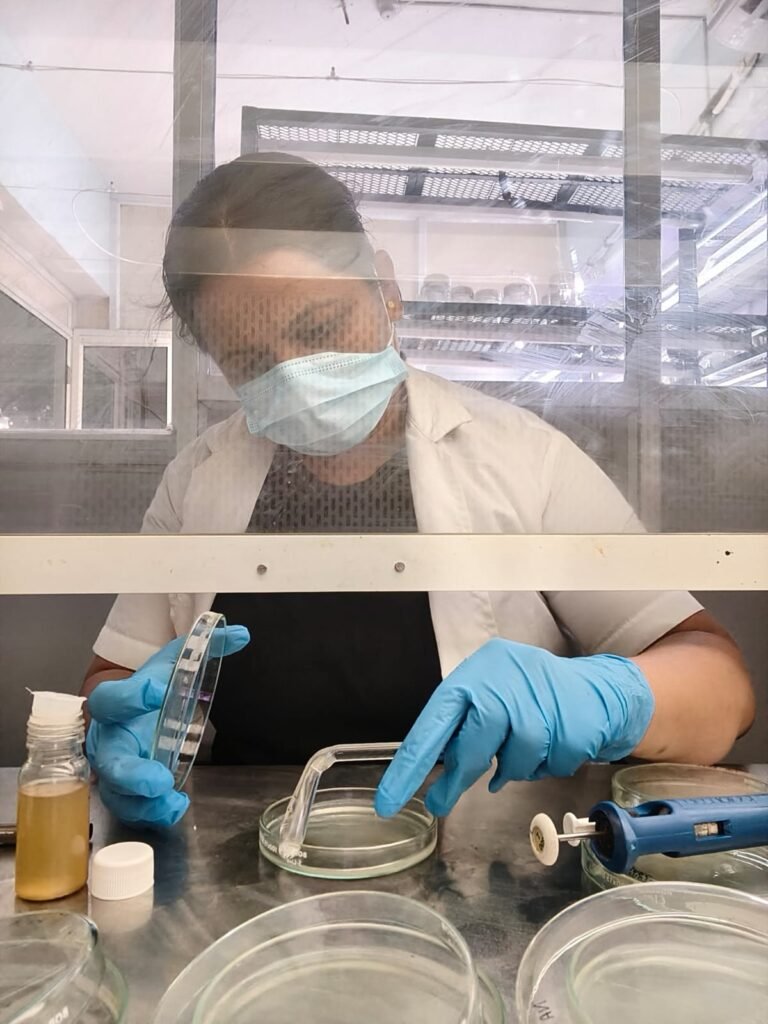
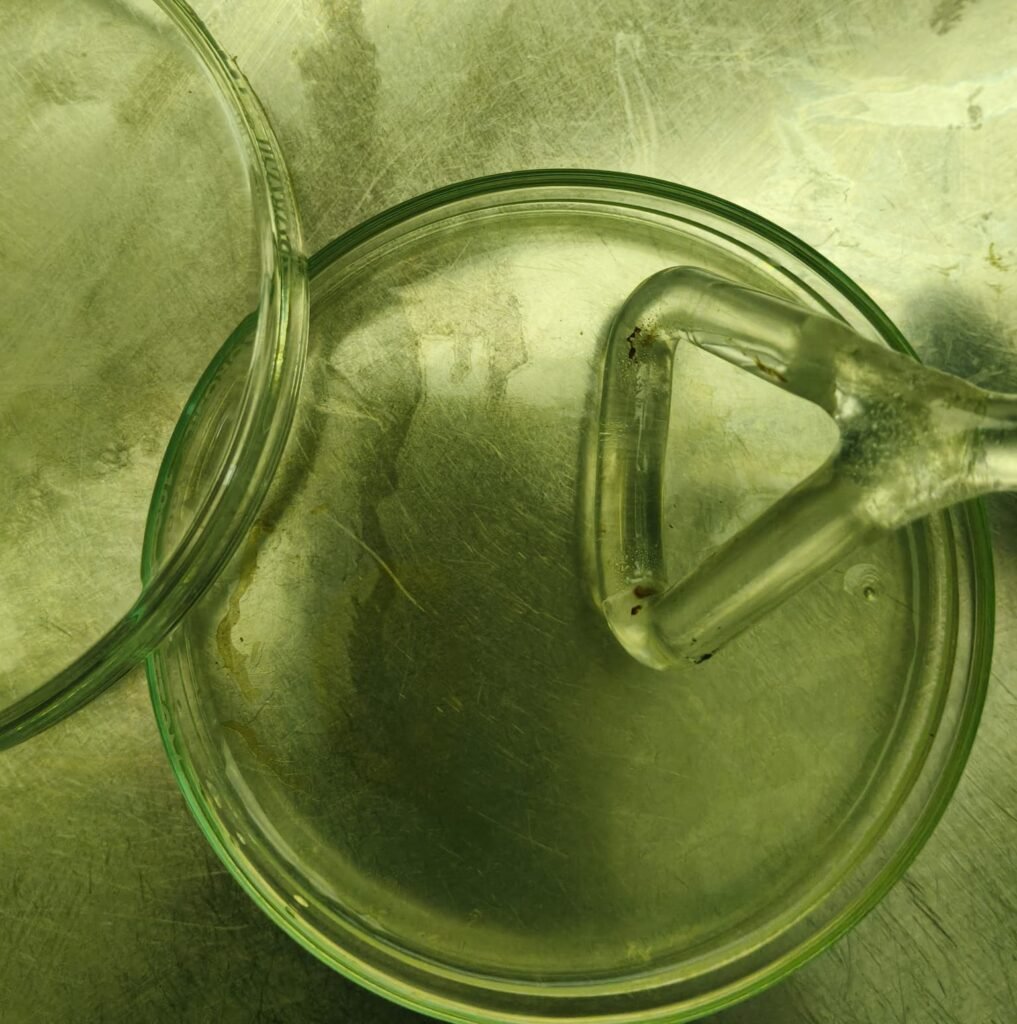
- Spread evenly using a sterile glass spreader (L-rod).
B) Isolation of Fungi on PDA Plates
Procedure
- Take 0.1 ml from the dilution.
- Spread evenly on PDA plates containing Streptomycin.
- The antibiotic suppresses bacterial growth and promotes fungal isolation.
Incubation
After plating, incubate the plates under suitable conditions.
| Microorganism | Temperature | Duration |
|---|---|---|
| Bacteria | 37°C | 24–48 hours |
| Fungi | 37 °C | 3–5 days |
Why Are Plates Incubated in an Inverted Position?
Plates are incubated upside down (inverted position) for several important reasons:
- Prevents water droplets from falling onto the agar surface
- Maintains proper colony shape
- Avoids smearing and spreading of colonies
- Reduces contamination spread across the plate
- Ensures accurate colony observation and isolation
16 May 2026
Observation
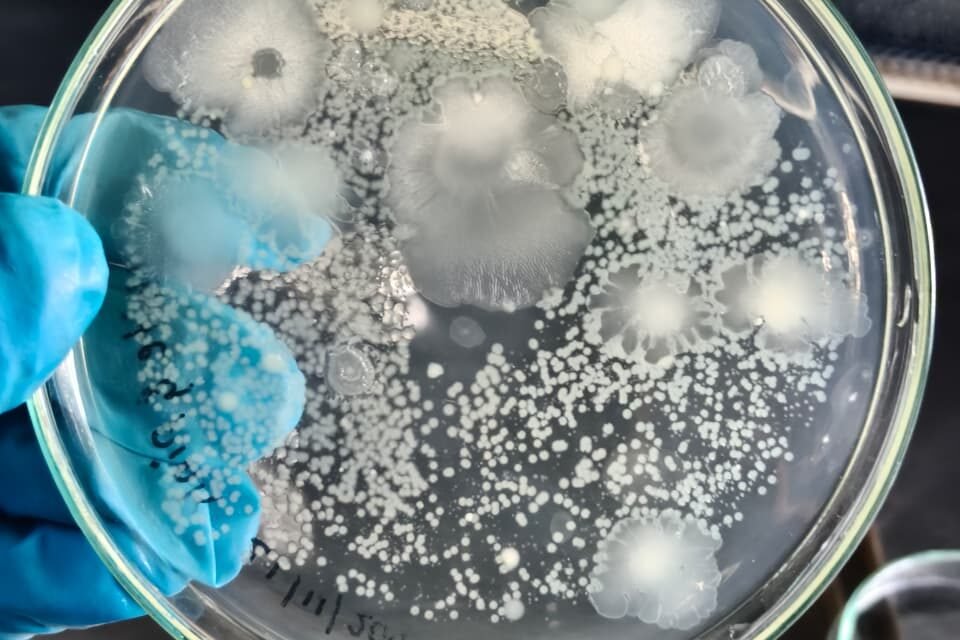
Bacterial Colonies
Bacterial colonies generally appear as:
- Small and round colonies
- White, cream, or yellow colored growth
- Smooth and shiny surface
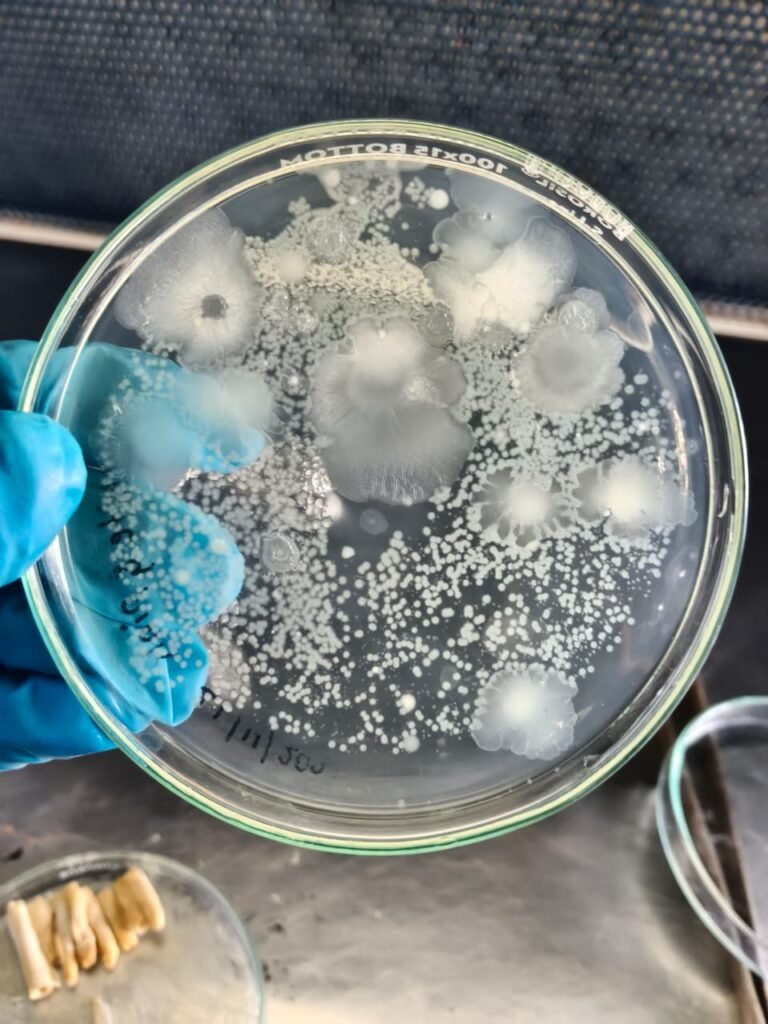
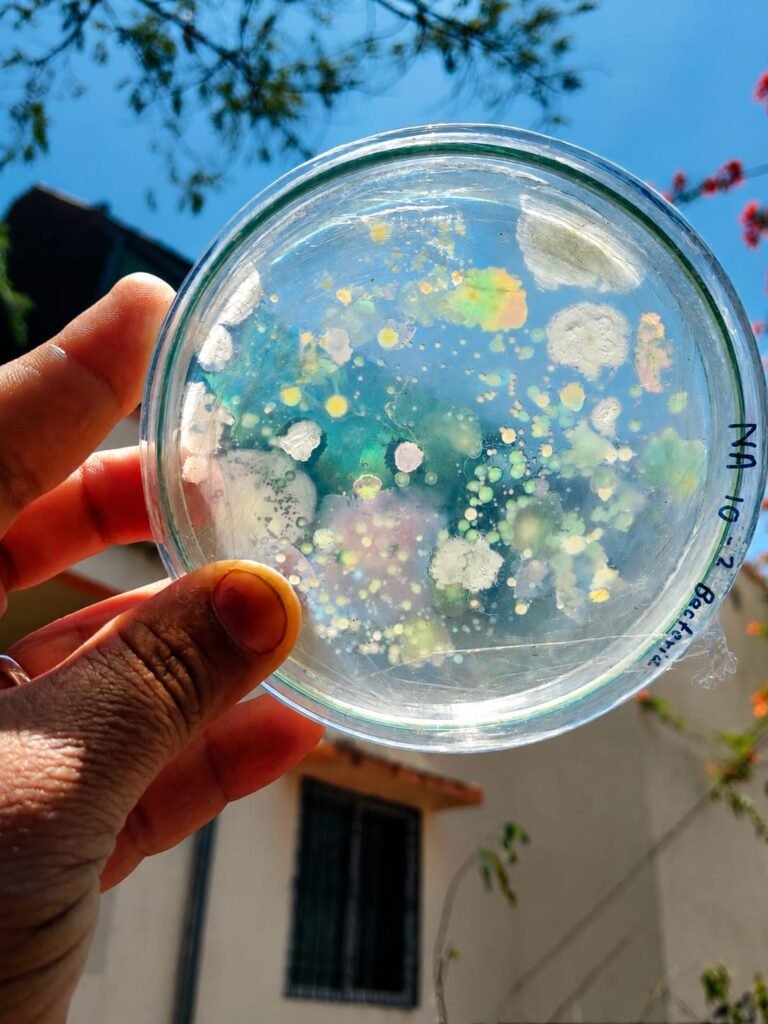
On 13 May, plating of the decomposed agricultural waste sample was performed. After incubation, visible bacterial growth appeared on 16 May. Based on colony morphology and visual characteristics, three bacterial isolates were identified as Bacillus subtilis, Pseudomonas aeruginosa, and Cellulomonas species. These bacteria are commonly associated with the decomposition of Agri waste and play an important role in biodegradation, cellulose breakdown, and nutrient recycling in the environment.
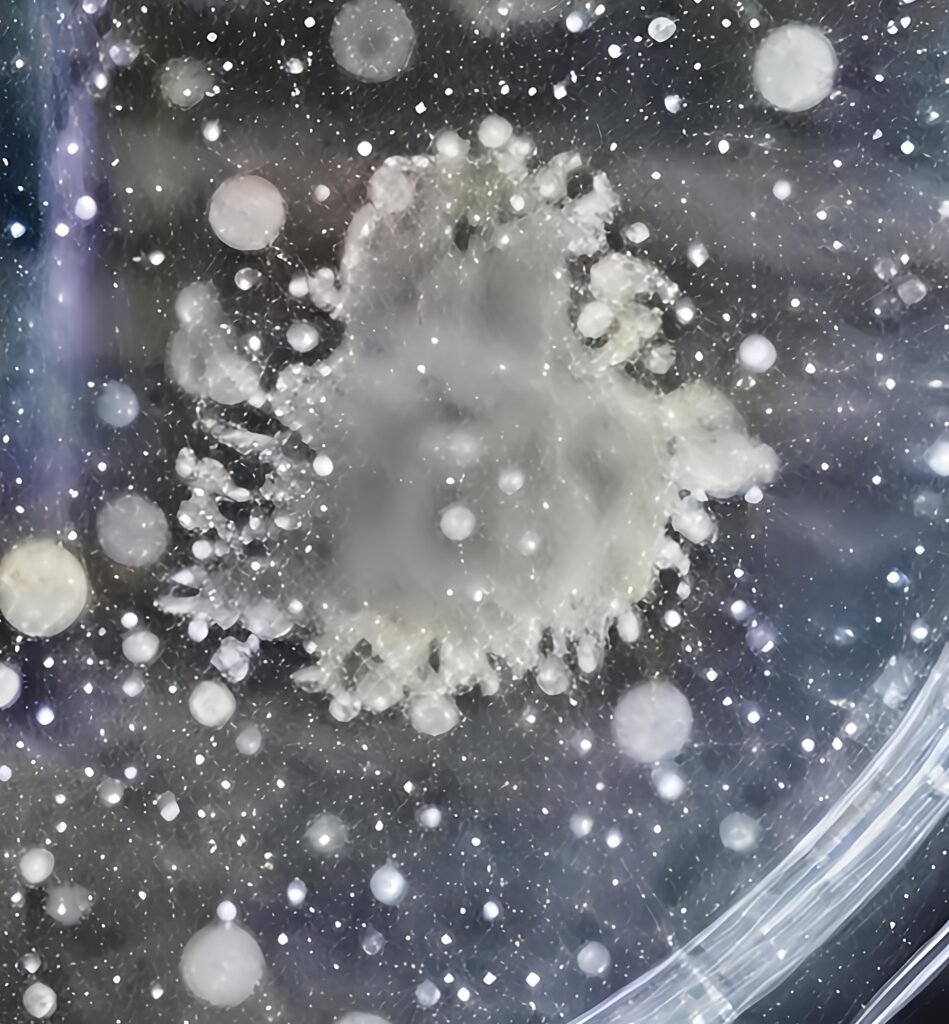
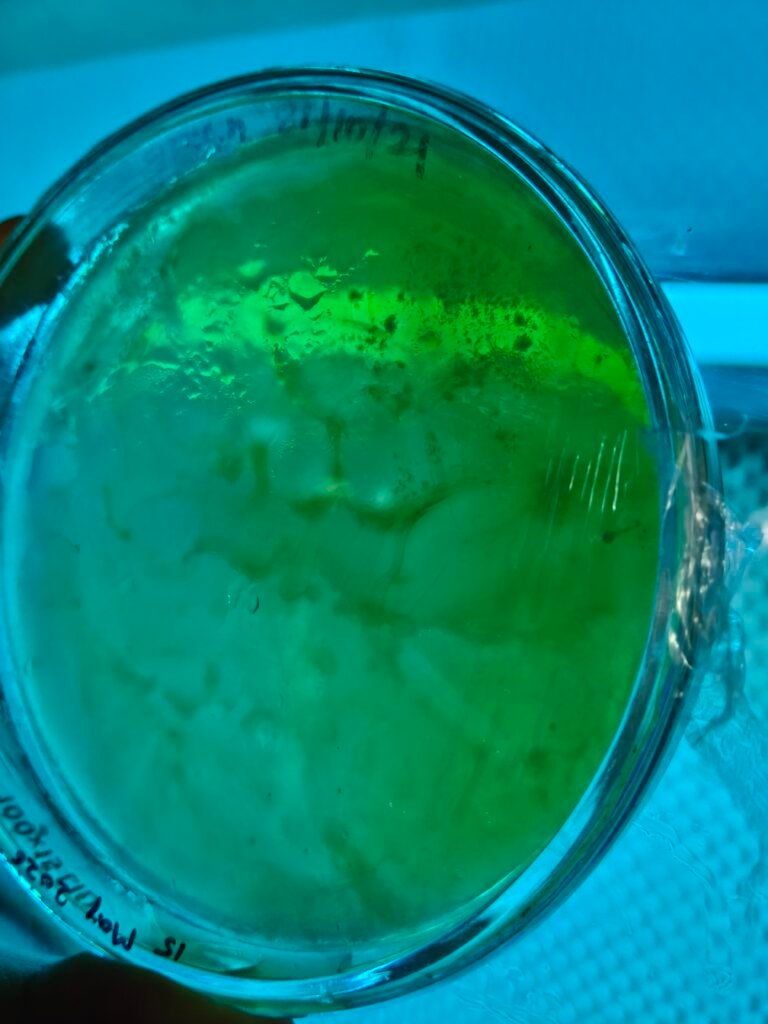
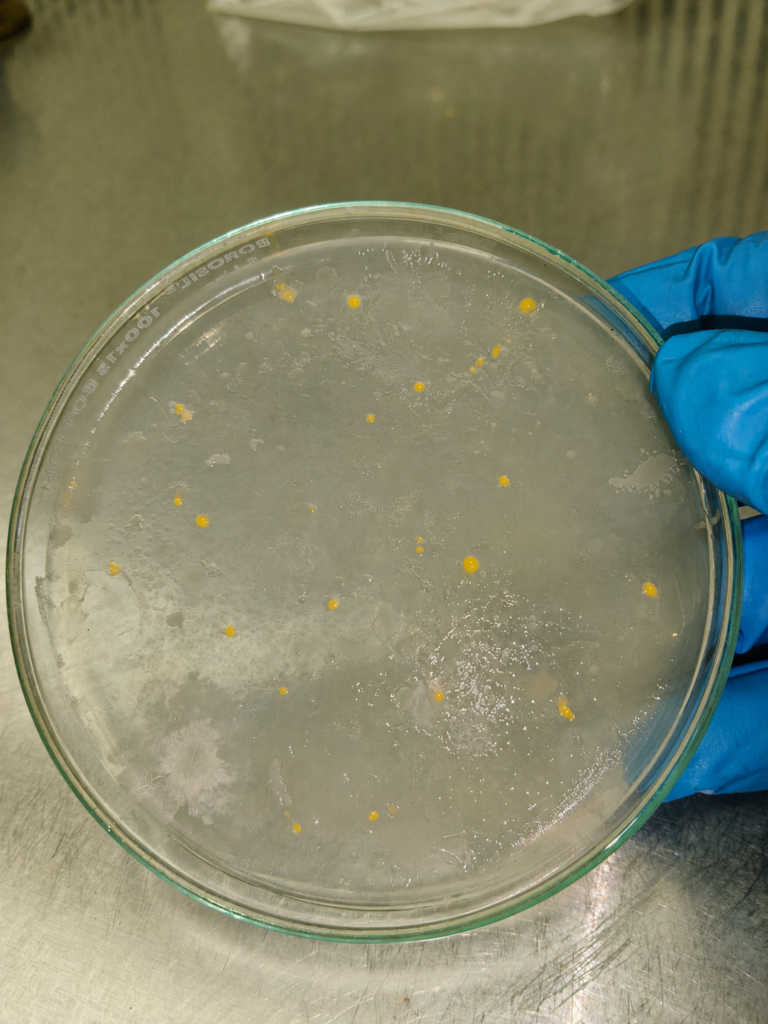
| Bacterial Isolate | Colony Appearance | Texture & Surface | Color / Pigmentation | Key Visual Characteristic |
|---|---|---|---|---|
| Bacillus subtilis | Large, flat, dull colonies with irregular or wavy margins. Colony Size: Large (5 mm to 10+ mm), rapidly spreading | Dry, rough, wrinkled, and matte appearance | Cream to greyish-white | Wrinkled and spreading colony pattern is characteristic |
| Pseudomonas aeruginosa | Large, flat, spreading colonies with irregular edges | Smooth, moist, mucoid, and wet-looking | Blue-green or yellow-green pigment due to pyocyanin and pyoverdine | Green pigmentation diffuses into agar and produces a grape-like odour |
| Cellulomonas species | Small, round, convex colonies with smooth margins. S Colony Size: small to medium (1 mm to 5 mm) | Smooth, moist, and glistening surface | Colonies are generally yellow to deep yellow due to carotenoid pigments. | Yellow pigment remains within colonies and does not diffuse into agar |
Fluorescence Property of Pseudomonas aeruginosa
- Pseudomonas aeruginosa produces a fluorescent pigment called pyoverdine.
- When the bacterial colonies are exposed to UV light (ultraviolet light), they show a bright green or yellow-green fluorescence.
- This fluorescence helps in the rapid identification of Pseudomonas species in microbiology laboratories.
- The fluorescent pigment is water-soluble and may diffuse into the surrounding agar medium.
20 May 2026
Fungal Colonies
Fungal colonies usually show:
- Cottony or fluffy appearance
- Green, black, or white patches
- Rapid spreading growth
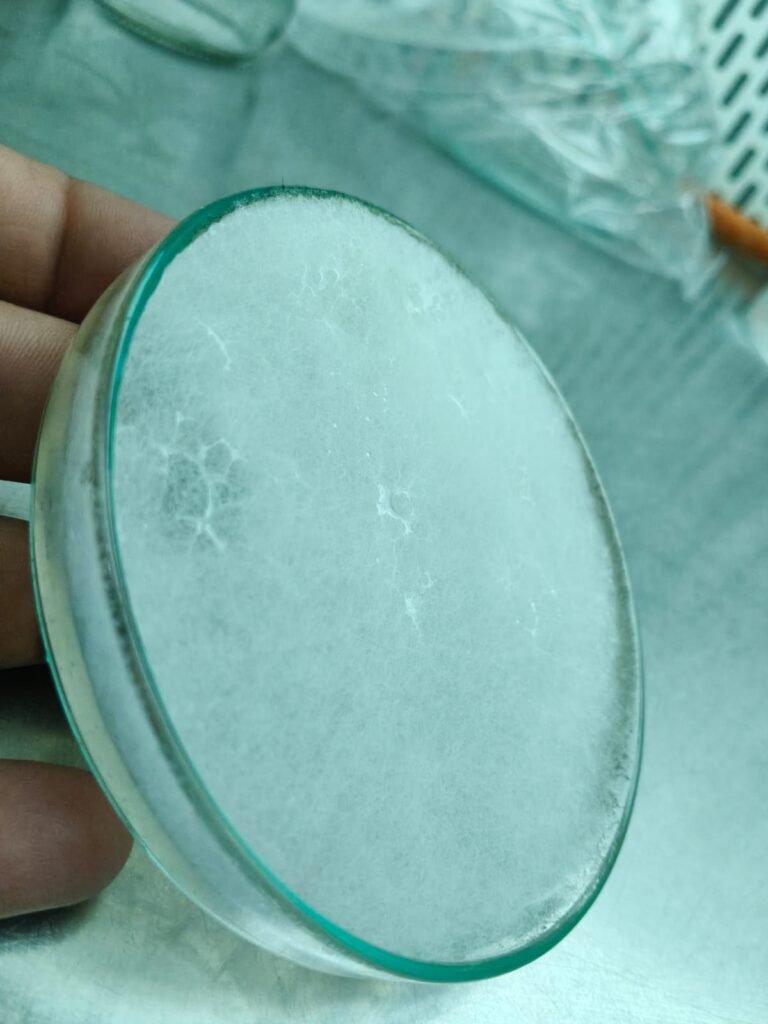
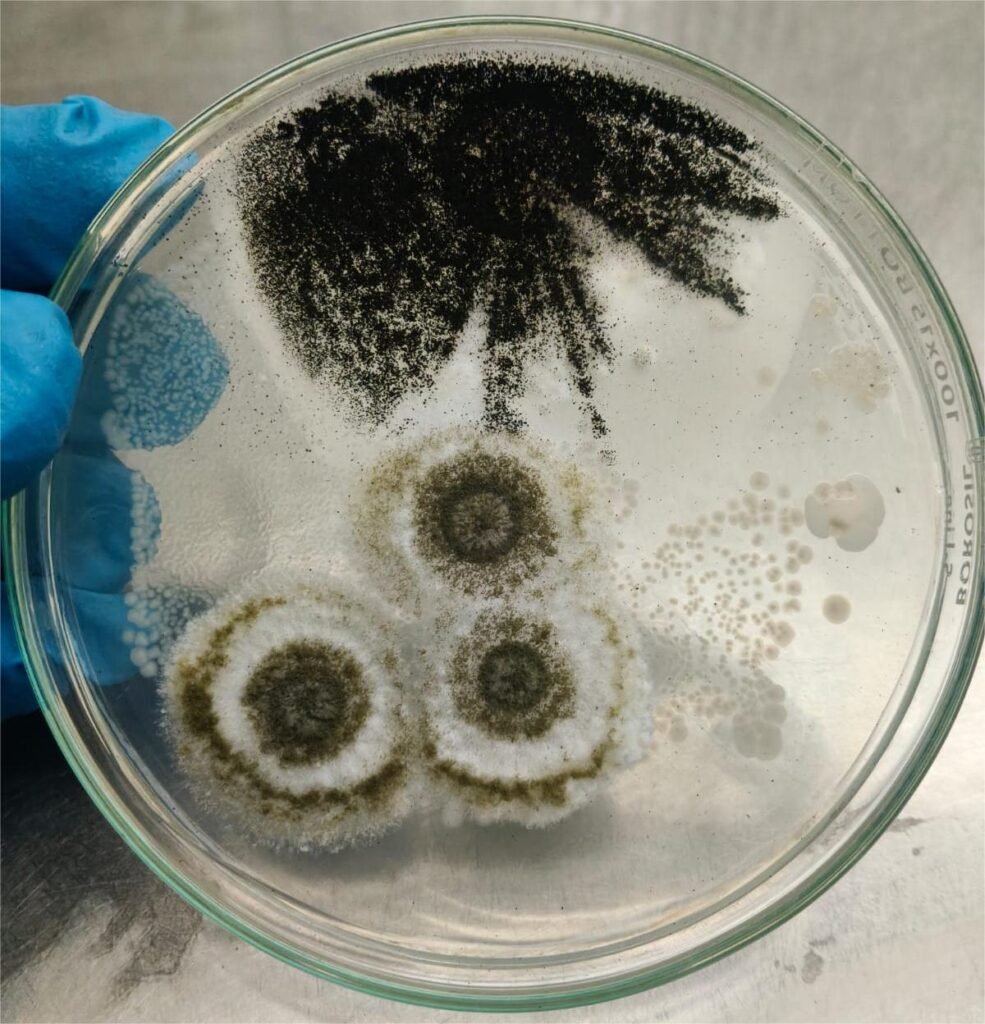
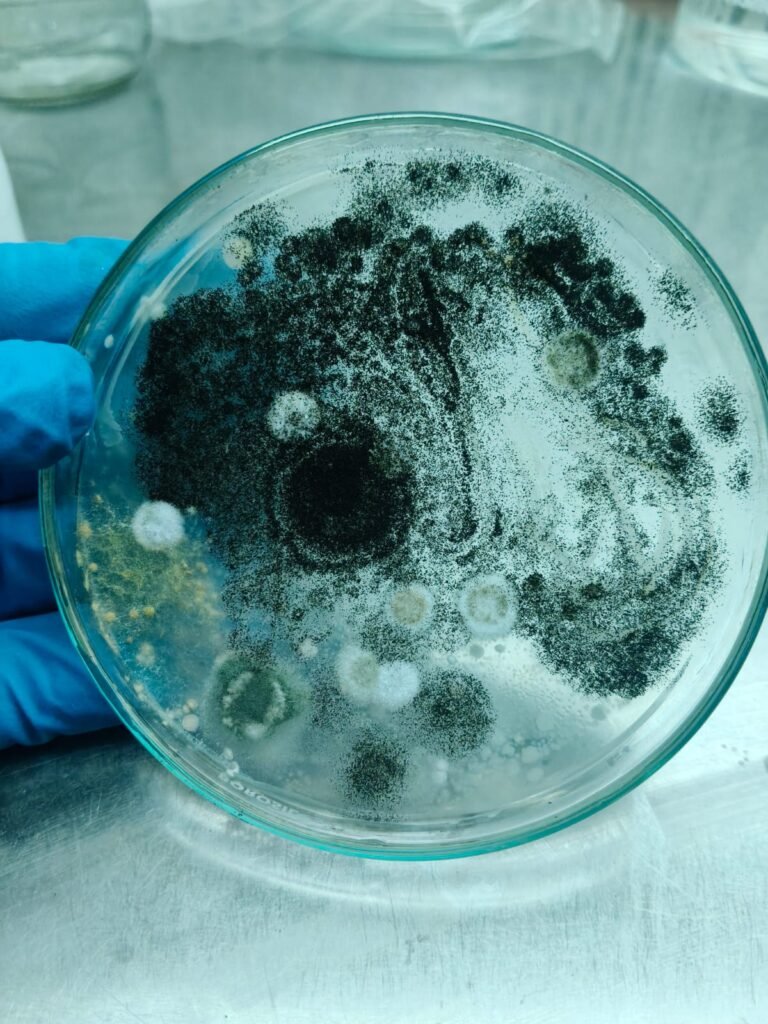
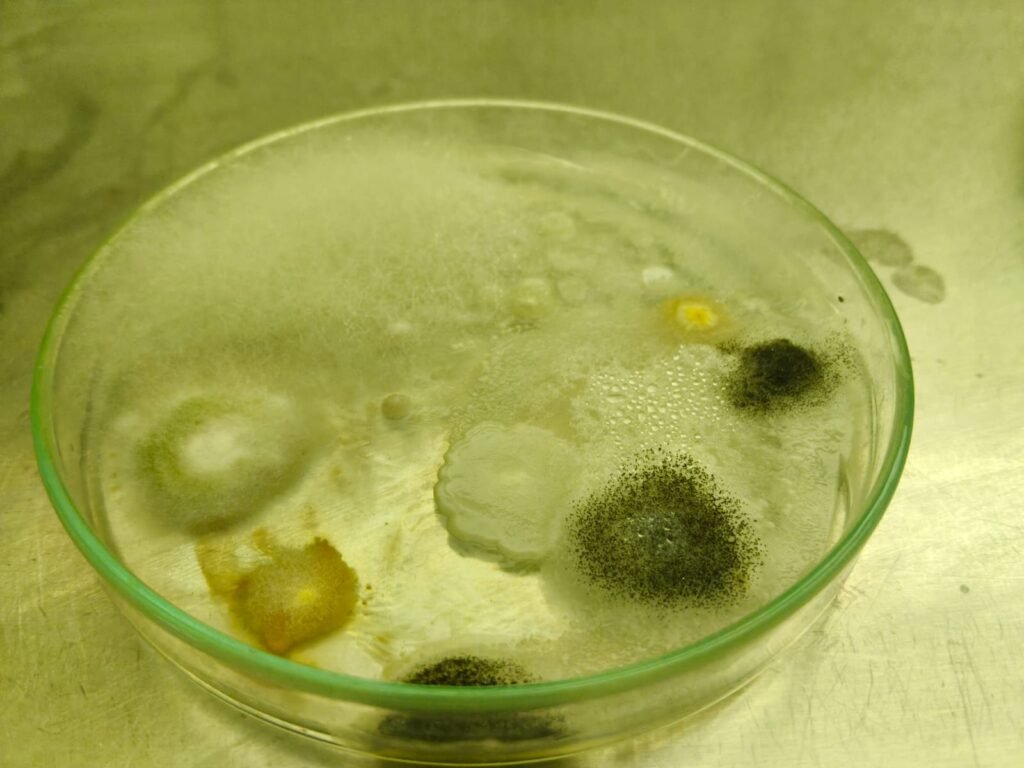
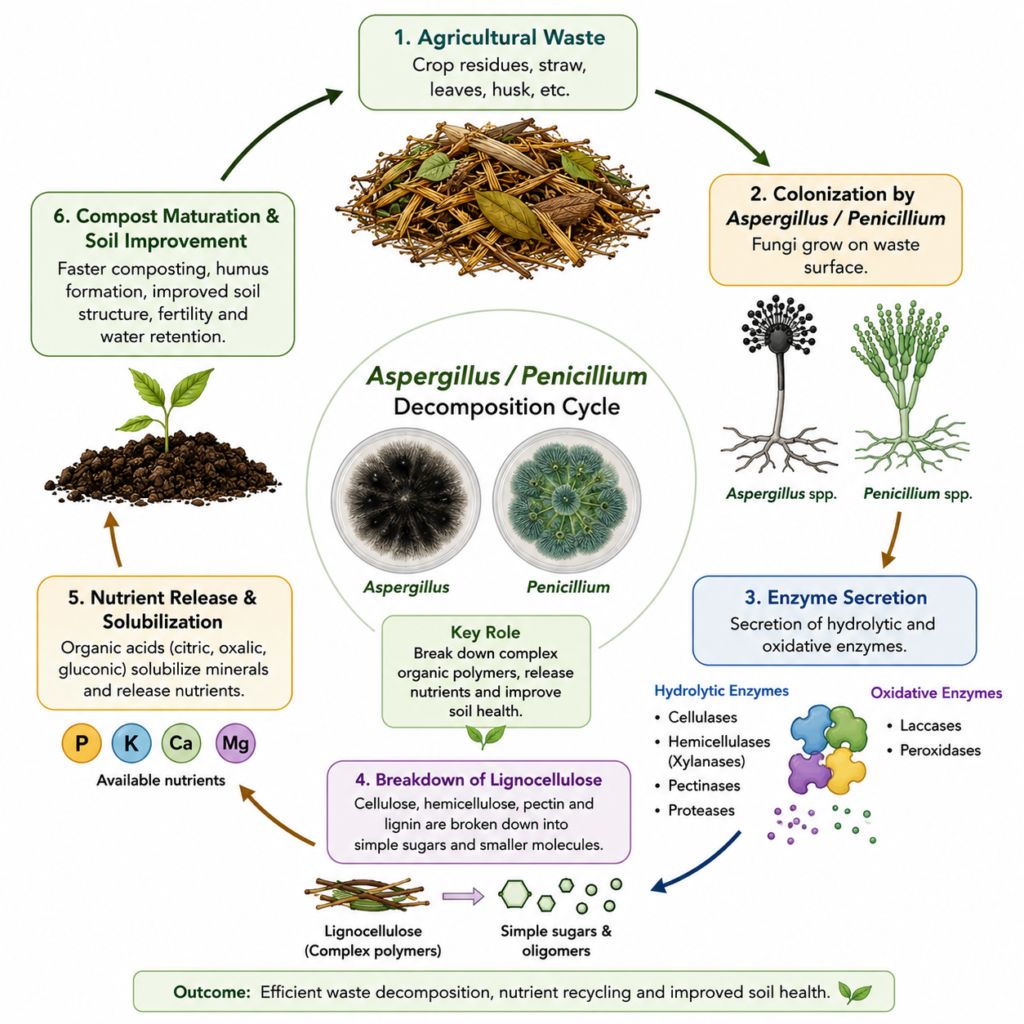
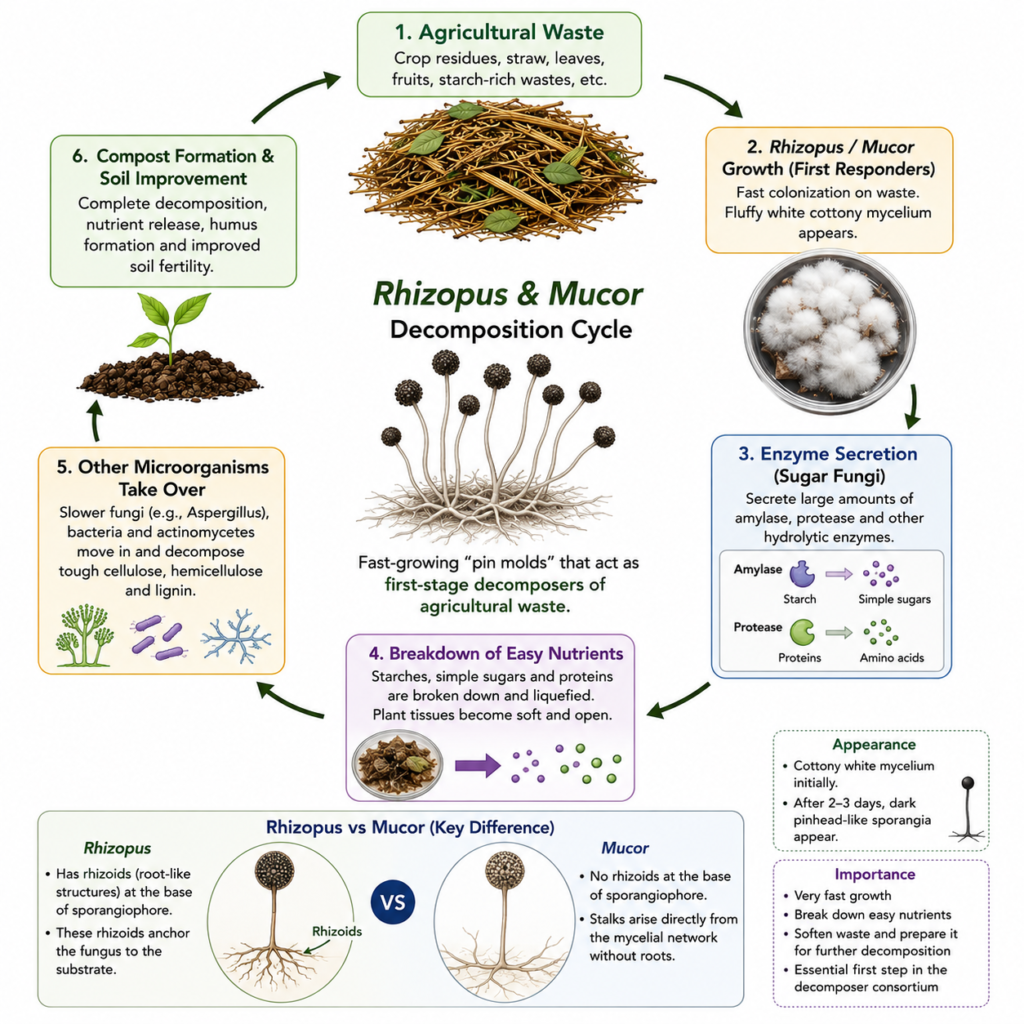
On 13 May, plating of the decomposed agricultural waste sample was performed. After incubation, visible fungal growth appeared on 20 May. Based on colony morphology and visual characteristics, three fungal isolates were identified as Aspergillus niger, Penicillium species, and Rhizopus/Mucor species. These fungi are commonly associated with decomposition of organic waste and play an important role in biodegradation and nutrient recycling.
Decomposition Cycle :