18 Aug 2026 :
What is Spirulina?
Spirulina, scientifically known as Arthrospira, is a photosynthetic, filamentous cyanobacterium. It has a blue-green color and grows well under alkaline conditions. Spirulina biomass contains several nutritional components, including proteins, pigments, vitamins, minerals, carbohydrates, and lipids.
Spirulina Used For?
A. Food and Nutritional Products
Spirulina is used as a nutritional supplement and protein-rich biomass. It contains high levels of protein along with bioactive compounds such as phycobiliproteins and carotenoids.
B. Animal Feed and Aquaculture
Spirulina biomass can be used as a nutritional supplement in fish, poultry, aquaculture, and other animal-feed applications.
C. Protein Source
Because of its relatively high protein content, Spirulina has been widely studied as an alternative protein source.
D. Pigments and Bioactive Compounds
Spirulina contains important pigments such as:
Phycocyanin – a blue pigment
Chlorophyll
Carotenoids
Phycocyanin is one of the important commercially valuable pigments obtained from Spirulina.
E. Wastewater Treatment
Under suitable controlled conditions, Spirulina and other microalgae can be used for nutrient uptake and wastewater-treatment-related applications.
F. CO₂ Fixation
As a photosynthetic organism, Spirulina uses carbon dioxide (CO₂) to produce biomass. Therefore, it is also studied for CO₂ biofixation and environmental biotechnology.
What is Mother Culture?
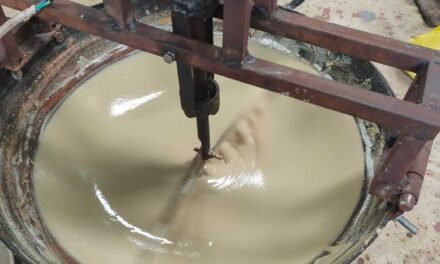
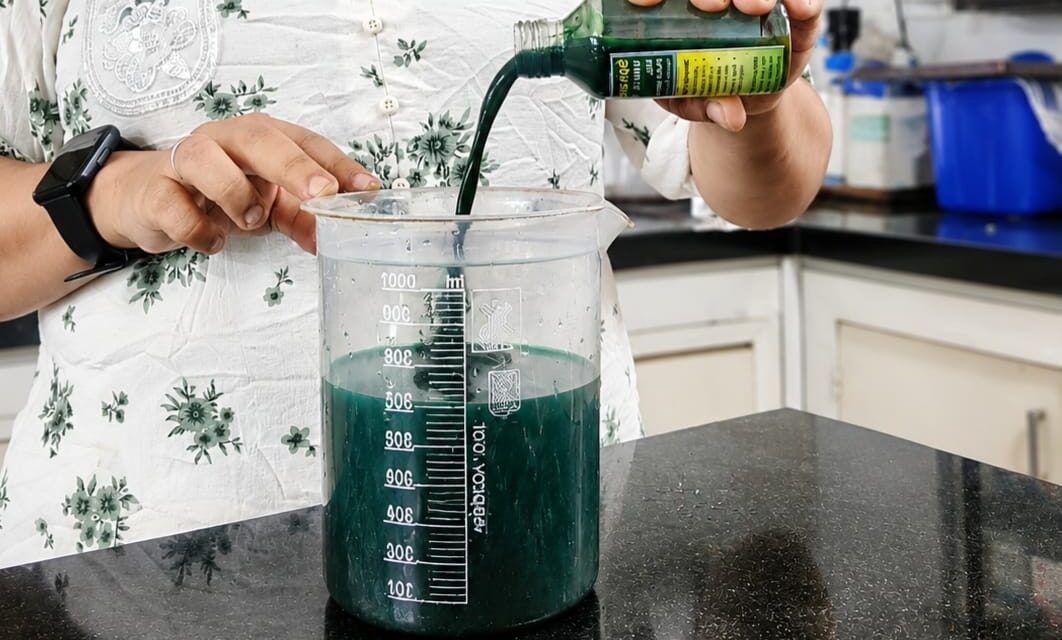
A mother culture is a healthy, living Spirulina culture maintained as a starter culture for further multiplication. Instead of transferring the mother culture directly into a very large production tank, it is generally better to gradually increase the culture volume through different stages.
Mother Culture → Starter Culture → Intermediate Culture → Larger Culture → Mass Multiplication
Step-wise multiplication helps with culture adaptation, monitoring, and contamination control.
Requirements for Spirulina Growth
Spirulina growth mainly depends on the following factors:
Healthy mother culture
Suitable nutrient medium
Alkaline pH
Adequate light
Suitable temperature
Aeration or mixing
Good-quality water
Contamination control
Light, temperature, pH, nutrients, water quality, inoculum density, and mixing/aeration are important factors affecting Spirulina cultivation.
pH Requirements – Spirulina prefers an alkaline environment – pH: 9.0–10.5
Maintaining an alkaline environment can provide suitable conditions for Spirulina and can reduce the growth of some unwanted microorganisms.
If the pH suddenly decreases, investigate possible causes such as: Contamination,Changes in nutrient availability,Excessive CO₂,Changes in culture condition
Temperature – Spirulina is a relatively warm-loving cyanobacterium. 30–35°C.
Light Requirements – Because Spirulina is photosynthetic, light is essential for biomass production.
Spirulina uses light energy for photosynthesis and biomass formation. Light intensity, spectrum, and photoperiod can all influence growth.
Why is Aeration/Bubbling Important?
Aeration or gentle bubbling is useful for Spirulina cultivation.
Aeration helps to:
- Keep the culture mixed
- Prevent Spirulina filaments from settling
- Maintain more uniform nutrient distribution
- Improve CO₂ availability
- Reduce excessive oxygen accumulation
- Improve distribution of temperature and nutrients within the culture
Nutrient Medium – Spirulina cannot grow in plain water alone. It requires an appropriate nutrient medium containing essential nutrients such as: Carbon,Nitrogen,Phosphorus,Potassium,Minerals and trace elements
Mother Culture
↓
Small Starter Culture
↓
1 L Culture
↓
5 L Culture
↓
10–20 L Culture
↓
Larger Production Tank
Each stage should be transferred to the next volume when the culture is healthy and actively growing.
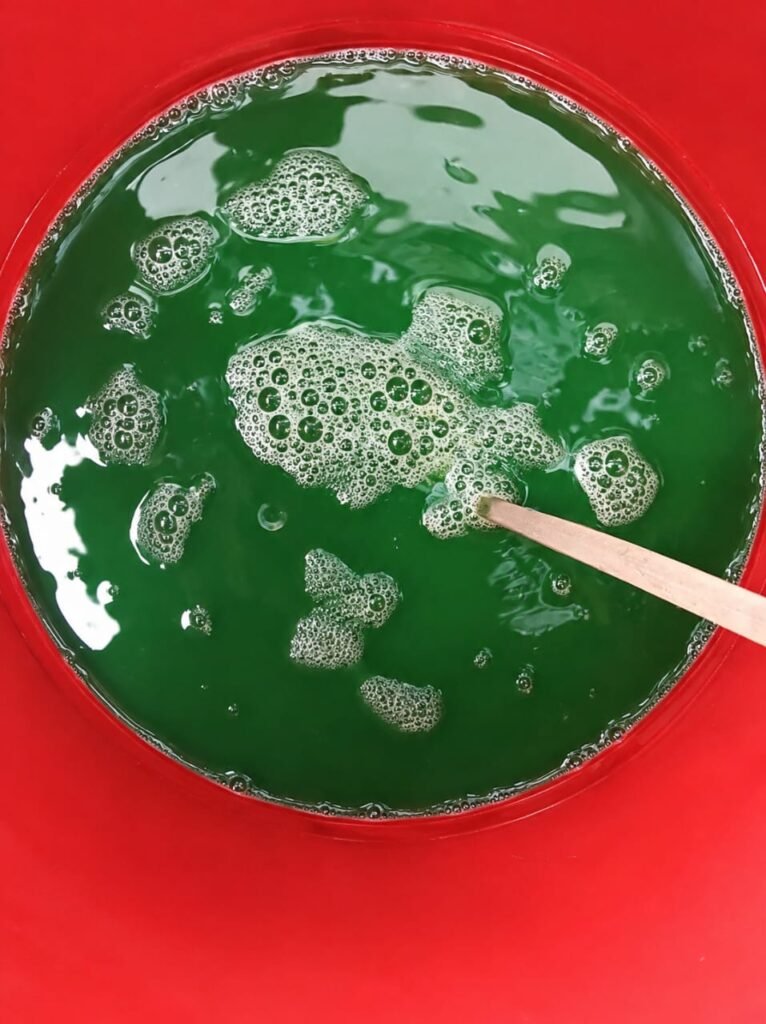
30 August 2026 – 15 Sept 2026
Nutrient Dosing for Further Growth of Spirulina Culture
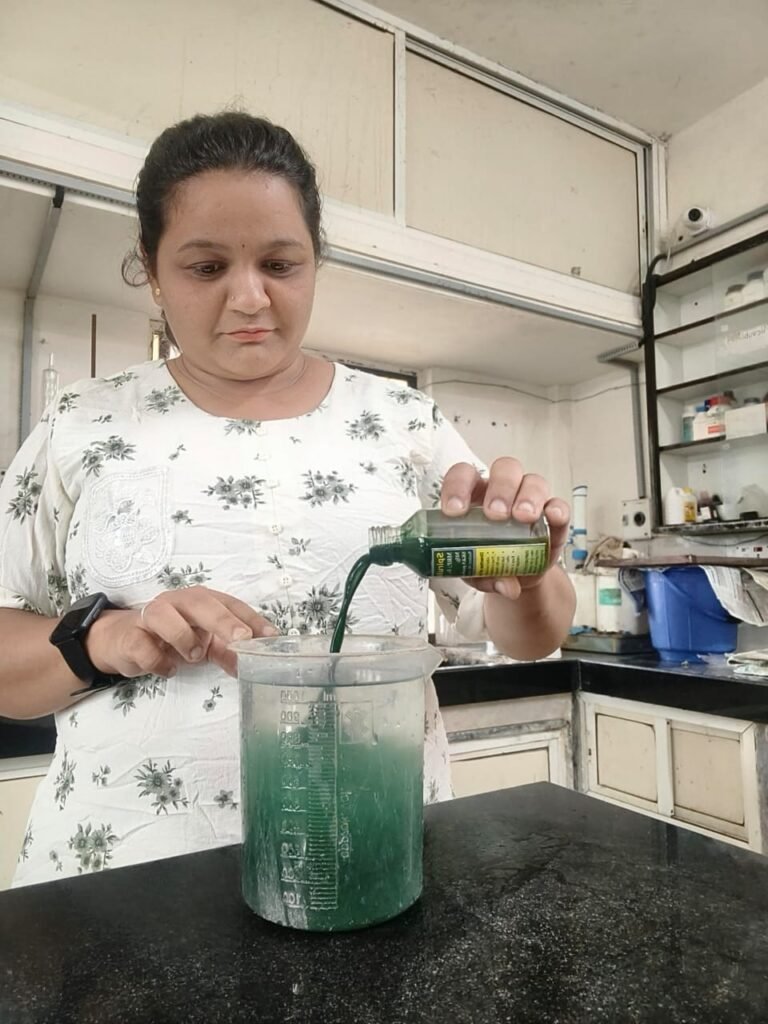
After the initial multiplication of the Spirulina culture in the mother container, the culture was further multiplied to a final volume of 5 L. To support further growth and biomass production, the culture requires essential nutrients such as Carbon (C), Nitrogen (N), Phosphorus (P), Potassium (K), Magnesium (Mg), Calcium (Ca), and Iron (Fe).
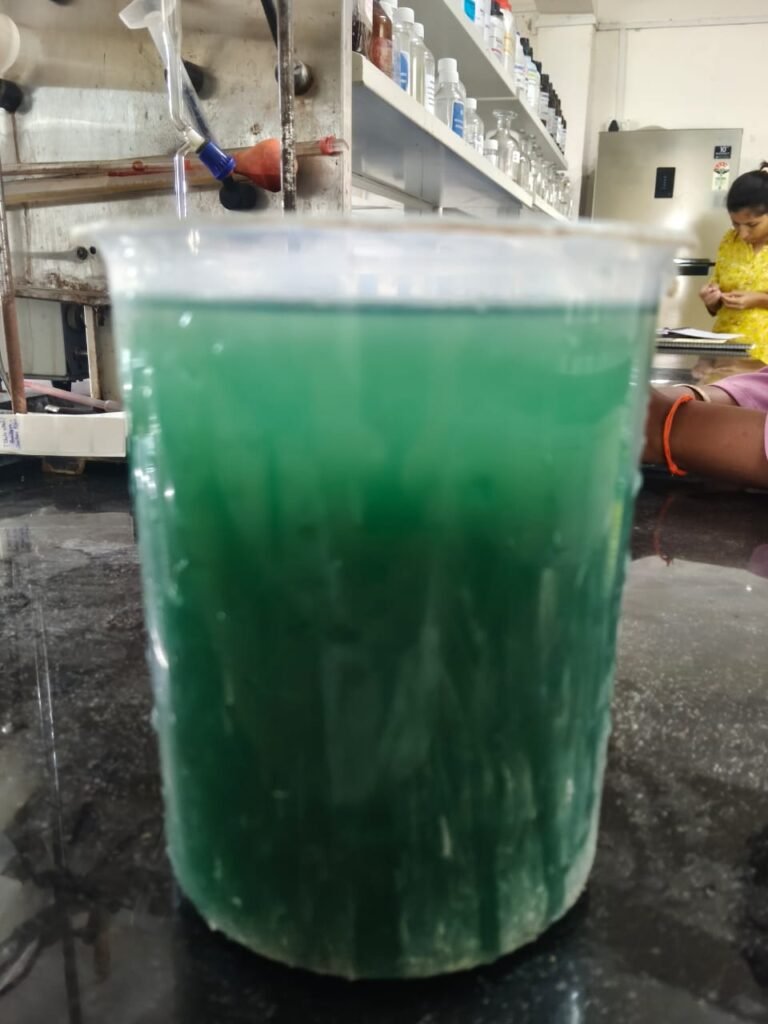
The culture was subsequently monitored for colour, pH, growth, and overall culture condition to evaluate its further development.
| Nutrient | Chemical Source | 1 L Dose | Use for Spirulina |
|---|---|---|---|
| Carbon (C) | NaHCO₃ (Sodium bicarbonate) | 1.0 g | Carbon source, photosynthesis & biomass growth |
| Nitrogen (N) | NPK 19:19:19 | 0.5 g | Protein synthesis & biomass growth |
| Phosphorus (P) | NPK 19:19:19 | 0.5 g | Cell growth, ATP & energy metabolism |
| Potassium (K) | NPK 19:19:19 | 0.5 g | Cell metabolism & enzyme activity |
| Magnesium (Mg) | MgSO₄·7H₂O | 0.05 g | Photosynthesis & chlorophyll formation |
| Calcium (Ca) | CaCl₂·3H₂O | 0.02 g | Cell stability & metabolic processes |
| Iron (Fe) | FeSO₄·7H₂O | 0.001–0.002 g | Photosynthesis & enzyme activity |
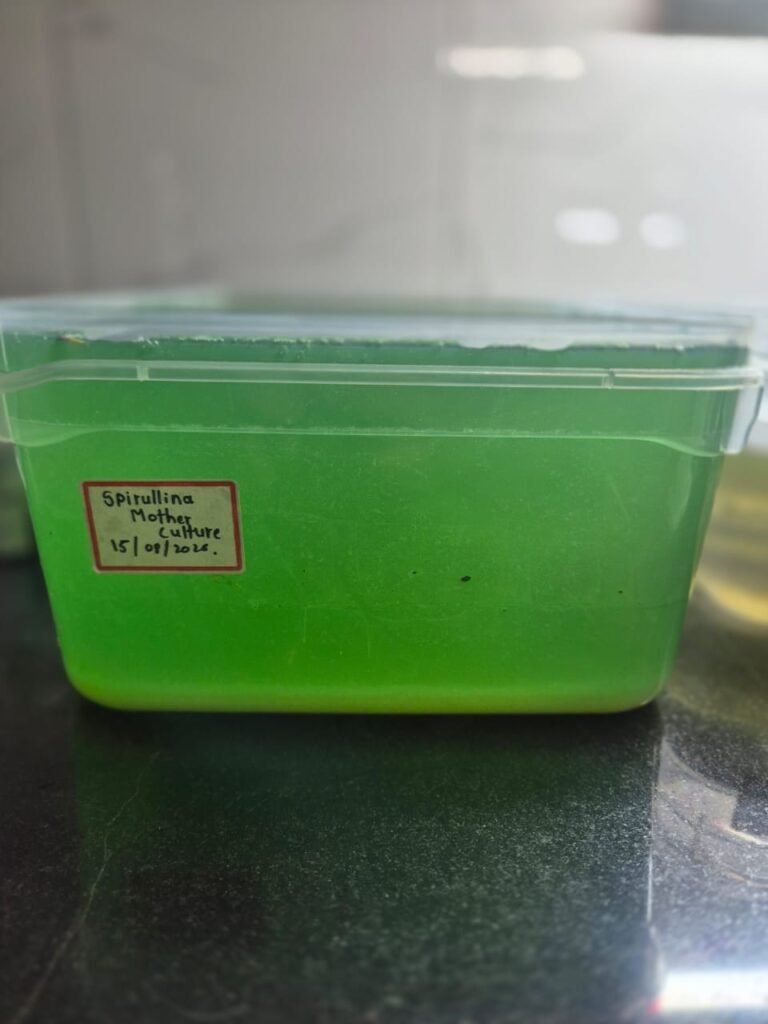
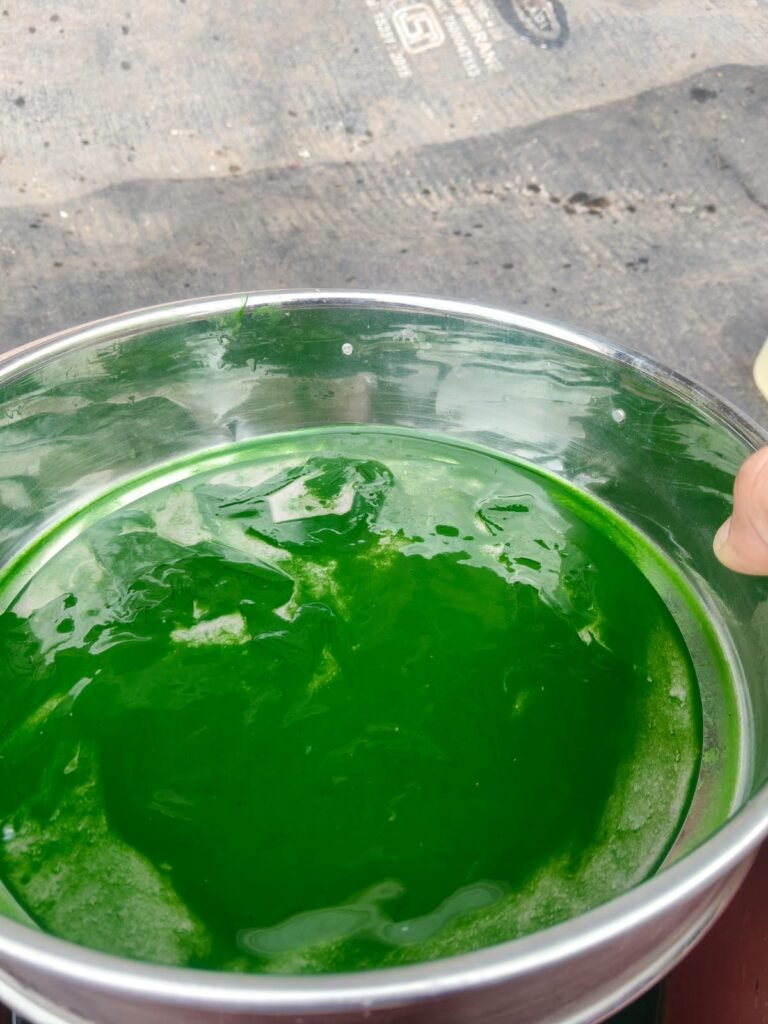
| Parameter | Observation |
|---|---|
| Colour | Dark green |
| Culture density | Dense, with increased visible biomass |
| Appearance | Uniform green suspension with biomass accumulation |
| Growth | Good growth and biomass development observed |
| Contamination | No obvious visual contamination observed |
| Overall observation | Culture appeared healthy and actively growing |