
Date: 24 June, 2026 to 25 June, 2026
Introduction:
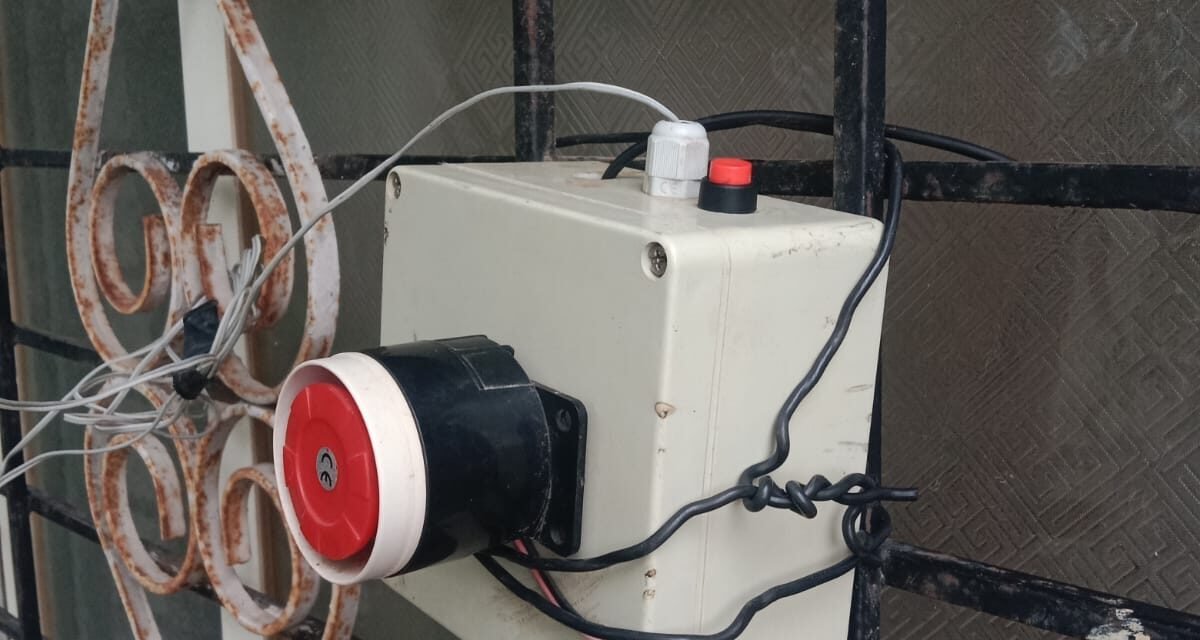
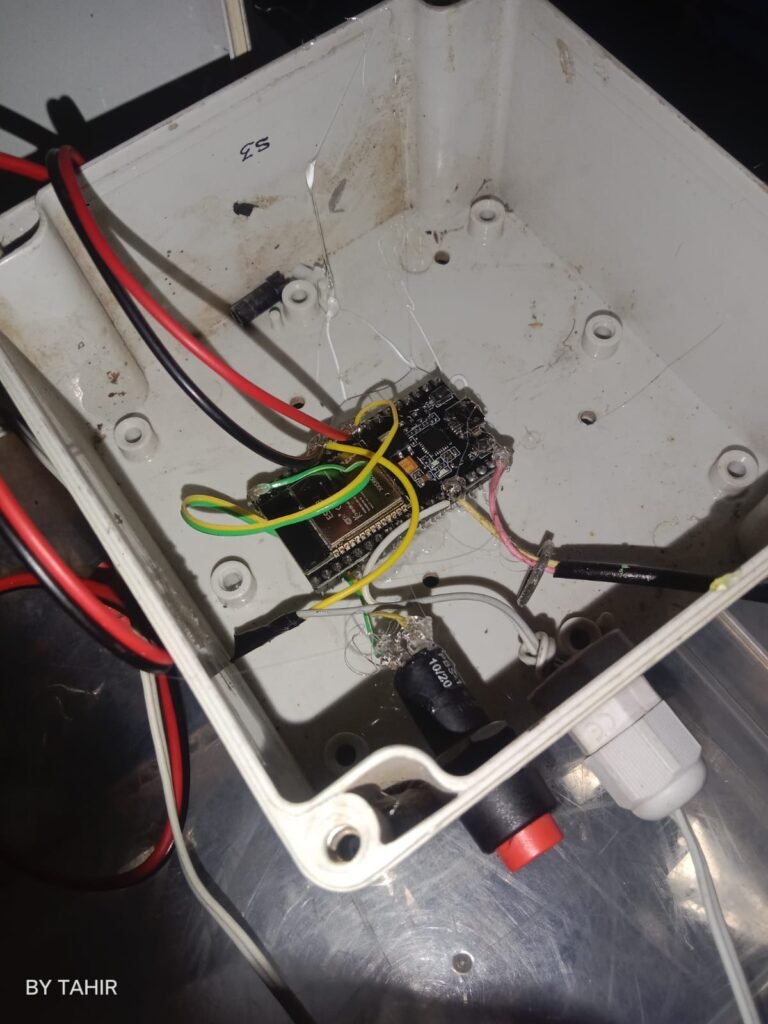
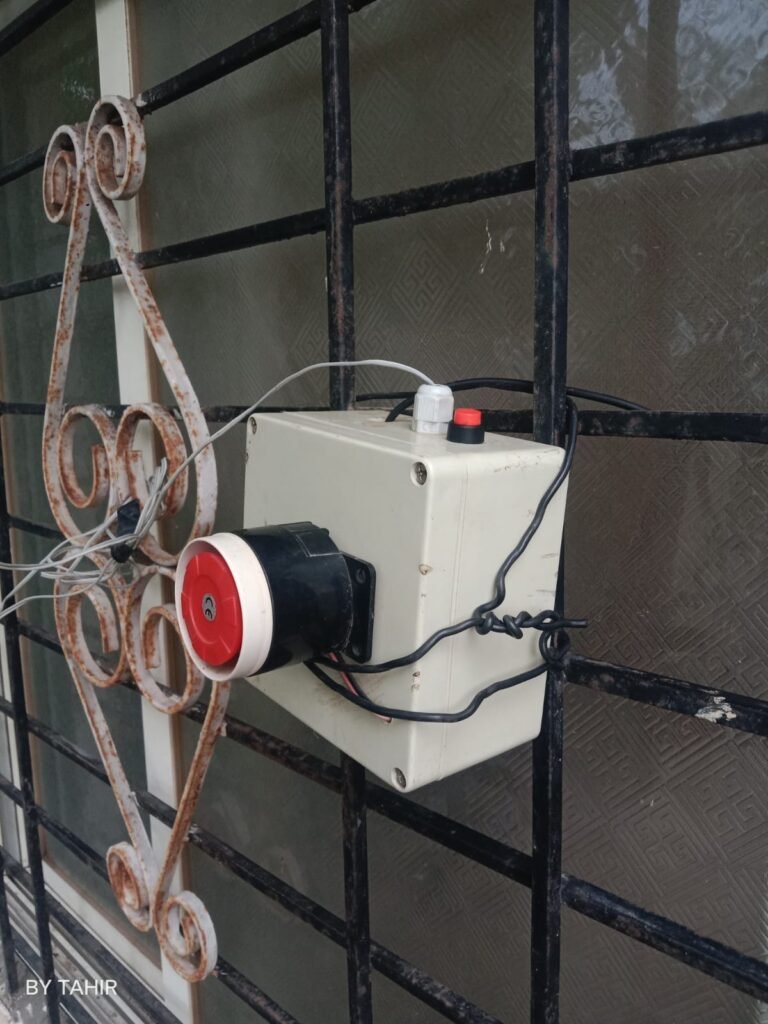
Today, I worked on the development of a Smart Water Tank Overflow Alarm System using an ESP32 microcontroller, a float level sensor, a buzzer, and a push-button switch. The main objective of this project is to prevent water wastage caused by tank overflow by providing an audible alert when the tank becomes full. The system also allows the user to manually silence the alarm while ensuring that the alert is automatically reactivated for the next filling cycle.
Project Objective:
The purpose of this project is to create a simple, reliable, and low-cost solution for monitoring water tank levels. By using a float sensor and an alarm mechanism, the system helps users avoid water overflow and promotes efficient water management.
Hardware Components Used:
- ESP32 Development Board
- Float Level Sensor
- Buzzer
- Push Button Switch
- Connecting Wires
- Power Supply
Development Process:
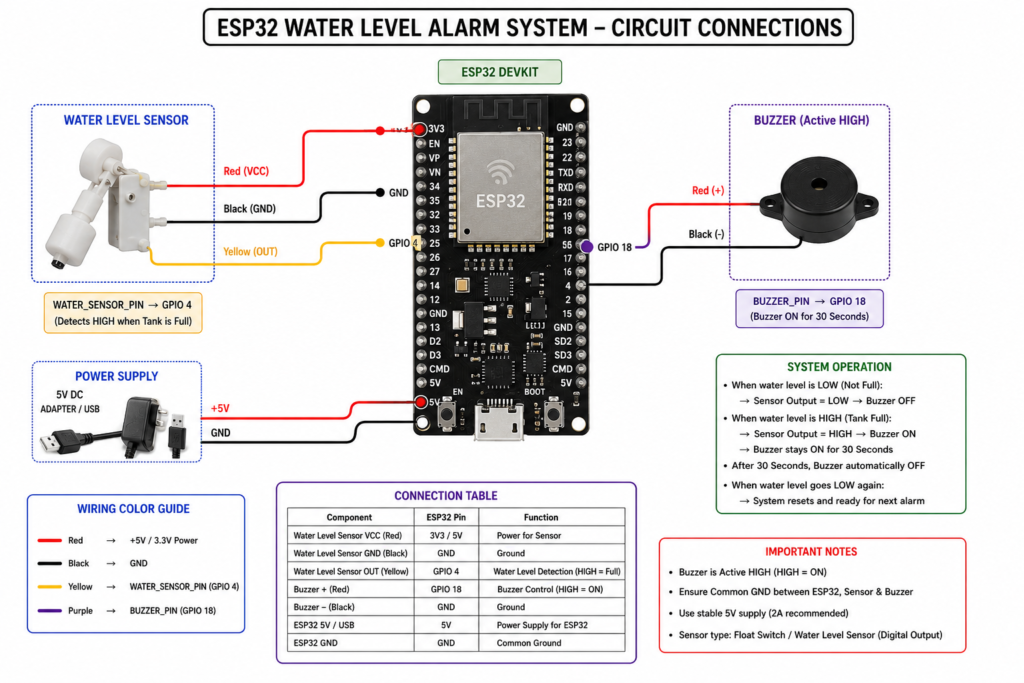
During today’s work, I designed and programmed the complete control logic of the overflow alarm system. The float sensor was configured to detect when the water level reaches the maximum level inside the tank. Once the sensor detects a full tank condition, the ESP32 activates the buzzer to alert the user.
A mute button feature was also implemented in the software. When the alarm is sounding, the user can press the button to immediately silence the buzzer. The system stores this muted state and keeps the alarm disabled while the tank remains full.
To improve reliability, an automatic reset mechanism was programmed. When the water level drops below the sensor level, the system recognizes that the tank is no longer full and automatically rearms the alarm. This ensures that the buzzer will function normally during the next tank-filling cycle without requiring any manual reset.
Working Principle:
- The float sensor continuously monitors the water level.
- When the tank becomes full, the sensor sends a signal to the ESP32.
- The ESP32 activates the buzzer to indicate an overflow condition.
- The user can press the mute button to silence the alarm.
- The alarm remains muted while the tank stays full.
- Once the water level decreases, the system automatically resets and prepares for the next cycle.
Code :
// —————————–
// ESP32 Water Level Alarm
// —————————–
define WATER_SENSOR_PIN 4 // Water level sensor pin
define BUZZER_PIN 18 // Buzzer pin
bool buzzerPlayed = false;
unsigned long buzzerStartTime = 0;
bool buzzerOn = false;
void setup() {
pinMode(WATER_SENSOR_PIN, INPUT);
pinMode(BUZZER_PIN, OUTPUT);
digitalWrite(BUZZER_PIN, LOW);
Serial.begin(115200);
}
void loop() {
int sensorState = digitalRead(WATER_SENSOR_PIN);
// Tank becomes full
if (sensorState == HIGH && !buzzerPlayed) {
digitalWrite(BUZZER_PIN, HIGH);
buzzerStartTime = millis();
buzzerOn = true;
buzzerPlayed = true;
Serial.println("Tank Full! Buzzer ON");}
// Turn buzzer OFF after 30 seconds
if (buzzerOn && (millis() – buzzerStartTime >= 30000)) {
digitalWrite(BUZZER_PIN, LOW);
buzzerOn = false;
Serial.println("Buzzer OFF");}
// Reset when water level goes LOW
if (sensorState == LOW) {
buzzerPlayed = false;
}
}
Outcome:
The Smart Water Tank Overflow Alarm System was successfully programmed and tested. The buzzer activated correctly when the tank reached the full level, the mute button functioned as expected, and the automatic reset feature operated reliably when the water level decreased.
Conclusion:
Today’s work resulted in the successful development of a fully functional water tank overflow monitoring system. The project demonstrates the practical application of sensors, microcontrollers, and automation techniques for water conservation. The system is simple, user-friendly, and can be further enhanced in the future with wireless notifications, mobile app integration, or IoT-based monitoring capabilities.