Introduction:
- Plant tissue culture is the technique of growing plant cells, tissues, or organs on a nutrient medium under sterile laboratory conditions.
- The principle of plant tissue culture is based on totipotency — the ability of a single plant cell to develop into a complete plant under suitable conditions.
- The concept of plant tissue culture was discovered by Gottlieb Haberlandt in 1902. He is known as the Father of Plant Tissue Culture.
Aim
To learn and perform plant tissue culture techniques for growing plants under sterile laboratory conditions.
Objectives
- To understand the basic concept of Totipotency
- To learn sterilization and aseptic techniques
- To prepare nutrient culture media
- To inoculate and grow plant explants in culture bottles
- To observe callus formation, shoot growth, and rooting
- To gain hands-on practical skills in Plant Biotechnology and plant tissue culture methods
I started my one month internship at Vigyan Ashram on 8 May to gain hands-on training and practical knowledge in plant tissue culture.
The theory related to plant tissue culture was covered from 8th May to 10th May 2026.9
Important Terms
- Explant → A small part of a plant used to start the culture.
Examples: shoot tip, leaf, node, root, meristem. - In vitro → “In glass,” meaning growth in a test tube, flask, or culture bottle.
Principle – Totipotency
A single plant cell has the ability to develop into a complete plant. With suitable nutrients, hormones, temperature, and light, cell division occurs and forms:
- Callus
- Shoot
- Root
- Complete plantlet
Applications
- Micropropagation – production of a large number of plants
- Production of disease-free plants
- Conservation of rare plants
- Year-round production
- Genetic improvement
Advantages
- Rapid multiplication
- Disease-free plants
- Uniform plants
- Space saving
- Germplasm conservation
Limitations
- Expensive setup
- Skilled labour required
- Risk of contamination
Laboratory Safety in Plant Tissue Culture
- Laboratory safety in plant tissue culture is important to prevent contamination, protect workers, and ensure successful plant growth under sterile conditions.
- Wear gloves, face mask, lab coat, and clean footwear.
- Tie long hair properly.
- Clean the laminar airflow surface with 70% ethanol before work.
- Sterilize instruments like forceps and scalpels before use.
- Avoid talking, coughing, or sneezing near culture materials.
- Handle culture bottles carefully near the flame.
- Follow fire safety rules while using spirit lamps and ethanol.
- Dispose of contaminated materials properly.
- Maintain a clean and aseptic working environment.
- These safety practices help maintain contamination-free tissue culture conditions.
Instruments
Autoclave : The autoclave works on the principle of steam under pressure (moist heat sterilization).
When water boils inside the autoclave, steam is produced. The pressure increases, which raises the temperature above 100°C. The hot steam penetrates materials and kills microorganisms, bacteria, fungi, viruses, and spores by denaturing their proteins.
Standard Conditions : Time: 15–30 minutes, Temperature: 121°C ,Pressure: 15 psi
Hot Air Oven : The hot air oven works on the principle of dry heat sterilization.
Hot air circulates inside the oven at high temperature and kills microorganisms by oxidation and protein denaturation.
The usual sterilization temperature is between 160°C and 180°C.
Laminar air flow : A laminar air flow is a cabinet that provides a continuous flow of filtered air to create a sterile working area and prevent contamination.
Principle:
Air passes through a HEPA filter that removes particles and microorganisms of size 0.3 micron (µm) and larger with about 99.97% efficiency. The filtered air flows in a uniform (laminar) direction to maintain sterility.
Fumigation in PTC
Chemicals Used: 1. Formalin 2. Potassium permanganate (KMnO₄)
Purpose : 1. To sterilize the culture room
2. To kill bacteria, fungi and spores
3. To maintain aseptic conditions
Principle : When formalin is mixed with potassium permanganate, it releases formaldehyde gas which disinfects the entire room.
Materials Required : 1. Formalin (37–40%) , 2. Potassium permanganate (KMnO₄) , 3. Petri dish, 4. Gloves, mask, lab coat
Procedure: 1. Take a heat-resistant container (Petri dish).
2. Add potassium permanganate crystals first (10 gm KMnO₄).
3. Pour 20 ml formalin over it.
4 .Immediate chemical reaction produces formaldehyde gas (fumigation).
General Ratio : Formalin : KMnO₄ ( 20 ml : 10 gm)
Cleaning Procedure for Contaminated Plant Tissue Culture Bottles
Materials Required
- 20 L plastic bucket
- Potassium dichromate (K₂Cr₂O₇) – 15 g
- Distilled water / tap water – 50 ml
- Sulphuric acid (H₂SO₄) – 30 ml
- Glass beaker
- Vim liquid / laboratory detergent
- Oven
- Autoclave
Procedure
- Take a 20 L bucket and fill it with clean tap water.
- In a glass beaker, take 15 g potassium dichromate (K₂Cr₂O₇).
- Add 50 ml distilled / Tap water and stir until crystals dissolve completely.
- Carefully add 30 ml concentrated sulphuric acid (H₂SO₄).( Always add acid to water slowly while stirring. Never add water to acid.)
- Pour this dichromate–sulphuric acid solution into the bucket and mix well.
- Place contaminated culture bottles (opened) into this cleaning solution.
- Keep the bottles immersed for 24 hours to loosen and disinfect contamination.
- After 24 hours, remove the bottles and wash thoroughly using Vim or laboratory detergent with a brush to remove all residues.
- Rinse the bottles 3–4 times with clean tap water.
- Drain the water completely and dry the bottles.
- Place the bottles in a hot air oven at 180°C for 12 hours for complete drying and sterilization.
- After drying, the clean bottles are ready for reuse in the next plant tissue culture process.
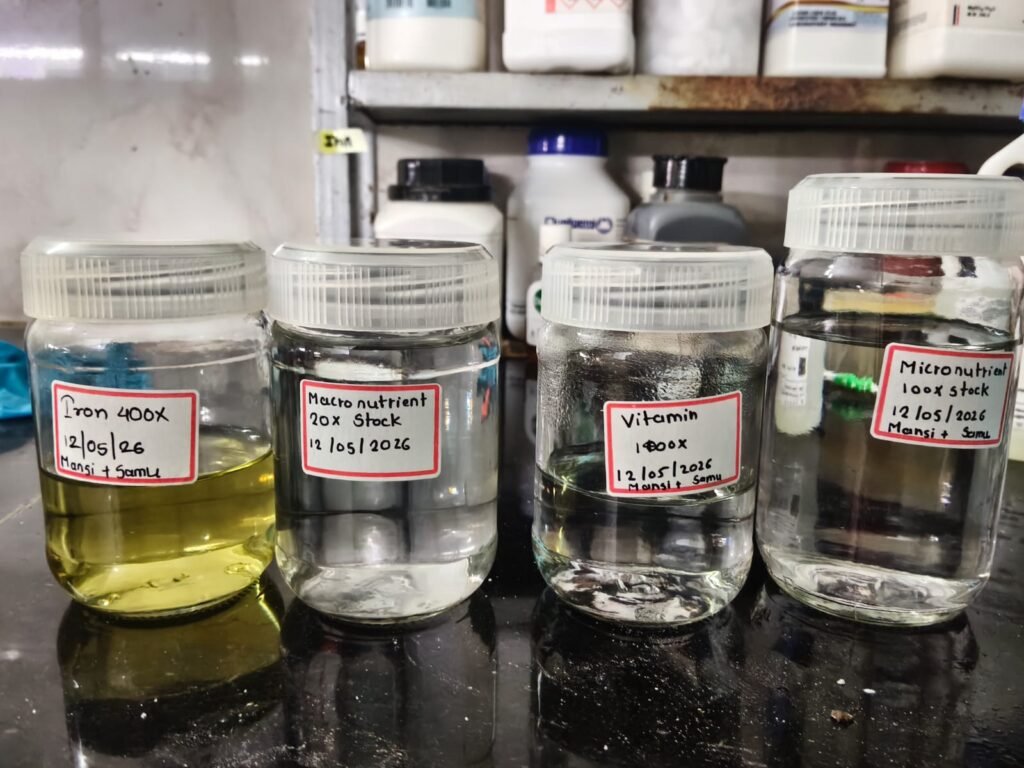
Preparation of Stock solution – Macro , Micro Nutrient ,Vitamin , Iron Source
Preparation of Macronutrients
| Macronutrients | Original Concentration | Amount of Salt After Multiplying Original concentration by 20X |
| NH4NO3 (Ammonium Nitrate) | 1650mg/l | 8250mg |
| KNO3 (Potassium Nitrate) | 1900mg/l | 9500mg |
| KH2PO4 (Potassium Dihydrogen Phosphate) | 170mg/l | 850mg |
| MgSo4.7H2O (Magnesium Sulphate Heptahydrate) | 370mg/l | 1850mg |
| CaCl2.2H20 (Calcium Chloride) or Cacl2(Fused) | 440mg/l 330mg/l | 2200mg 1650mg |
Preparation of Micronutrients
| Micronutrients | Original Concentration | Amount of Salt After Multiplying Original concentration by 100X |
| H3BO3 (Boric Acid) | 6.2mg/l | 155mg |
| MnSO4.4H2O (Magnese Sulphate Tetrahydrate) | 22.3mg/l | 557.5mg |
| ZnSO4.7H20 (Zinc Sulphate) | 8.6mg/l | 215mg |
| Na2MoO4.2H20 (Sodium Molybate) | 0.25mg/l | 0.625mg |
| CuSO4.5H2O (Copper Chloride Hexahydrate) | 0.025mg/l | 0.625mg |
| CoCl2.6H20 (Cobalt Chloride Hexahydrate) | 0.025mg/l | 0.625mg |
| KI (Potassium Iodide) | 0.83mg/l | 20.75mg |
Preparation of Iron Source
| Sources | Original Concentration | Original Concentration multiplying by 400X, Final solution volume (50ml) |
| FeSO4.7H2O | 27.8mg/l | 2780mg |
| Na2EDTA.2H2O | 37.3mg/l | 3730mg |
PREPARATION OF VITAMINS:-
| Vitamins | Original Concentration | Original Concentration multiplying by 1000X, Final solution volume (50ml) |
| Thiamine HCl | 0.1mg/l | 5mg |
| Pyridoxin HCl | 0.5mg/l | 25mg |
| Niacin | 0.5mg/l | 25mg |
| Glycine | 2.0mg/l | 100mg |
Preparation of ms (Murashige and Skoog ) media:-
| Materials | Final Volume (500ml) | Final Volume (250ml) |
| Distilled water | 250ml | 100ml |
| 20X, Macronutrients | 25ml | 12.5ml |
| 100X, Micronutrients | 1.25ml | 0.625ml |
| 1000X, Vitamins | 1.25ml | 0.625ml |
| 400X, Iron sources | 0.5ml | 0.25ml |
| Mesoinositol | 50mg | 25mg |
| Sucrose | 15gm | 7.5gm |
| Agar powder | 4gm | 2gm |
Roles
| Macronutrients | N, P,K, Mg, S, Ca |
| Micronutrients | Fe, Zn, B Mo, Mn |
| Iron source | Chlorophyll Formation |
| Vitamins | Metabolic Activity |
| Sucrose | Energy source |
| Plant hormones | Shoot and Root initiation |
| Agar | Solidifying agent |
| Distilled water | Solvent |
| Mesoinsitol | Cell Division |
| Sucrose(3%) | Energy Source |
Methodology
Step1 : Selection of explant
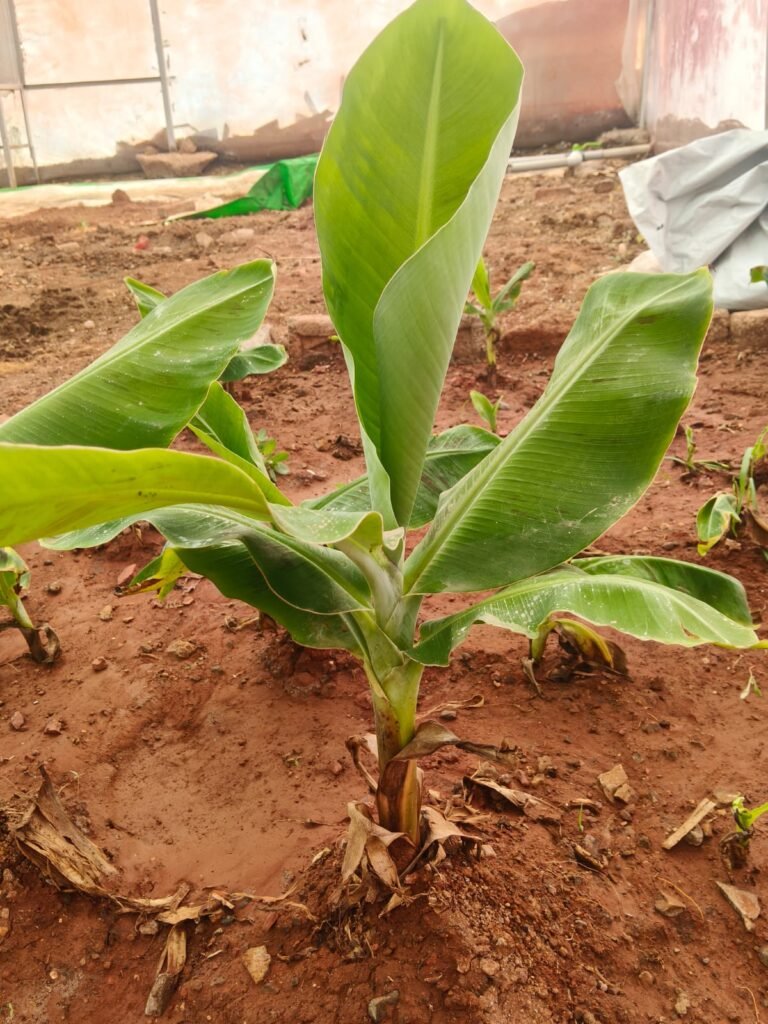
A banana sucker is commonly used as the explant material.
The sucker should be selected from healthy mother plant age between 6 to 12 months.
( Narrow upright leaves ).
Collection procedure :-
Select a suitable sucker from the field (Digging fork, sickle ) tools.
Switch on the laminar airflow cabinet & sterilize the working area using UV light before operation.
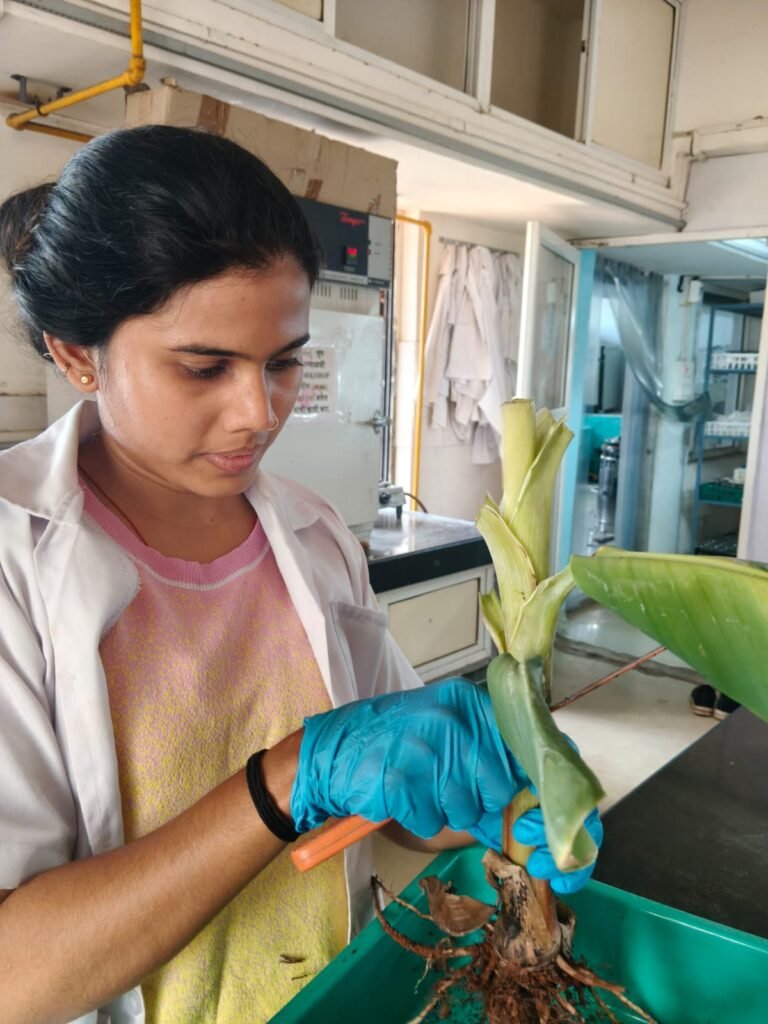
2) Carefully uproot or cut the sucker without damaging the central meristem.
3) Remove excess soil & outer leaves.
4) Place the explant in a clean tray or sterile container for transport to the laboratory.
Step 2 : Cleaning & Surface Sterilization
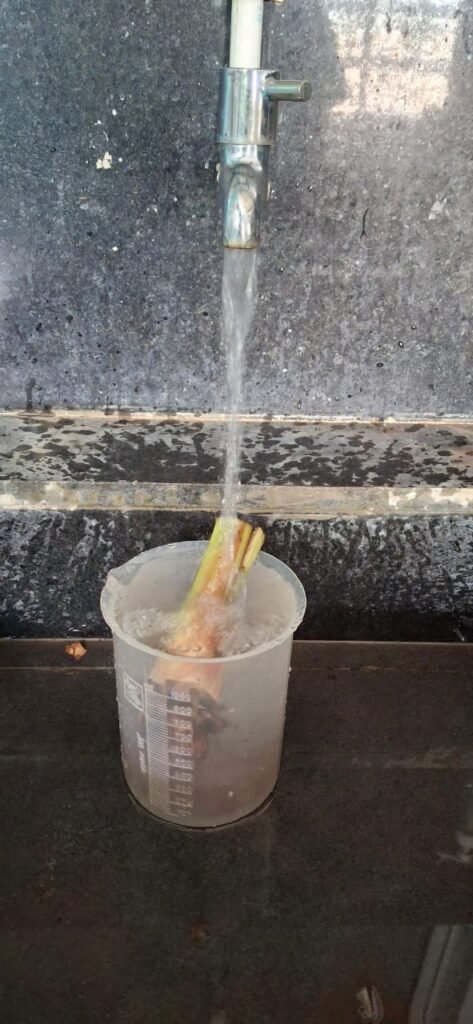
1. Washing explant under Running Water 15 min.
2. The collected banana explant (sucker) is first washed thoroughly under running tap water for 15 minutes.
3. This step removes soil particles, dust.
4. It also reduces the initial microbial load present on the explant surface.
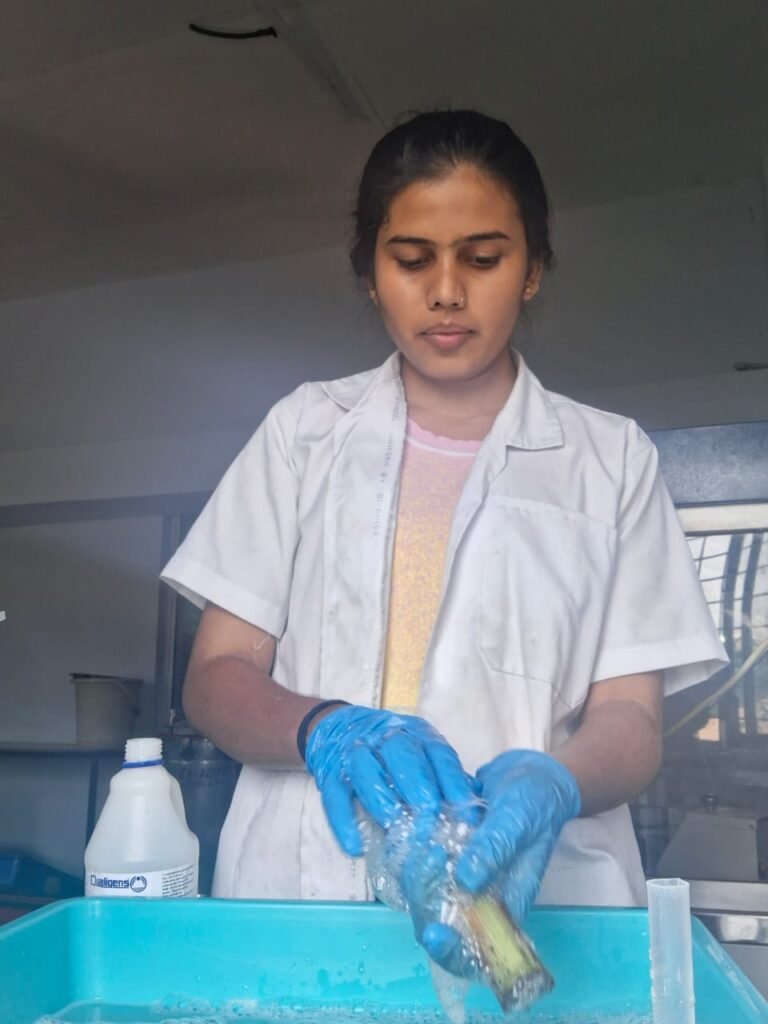
Step 3 : Soap treatment (10 min)
1. prepare : a soap solution using liquid detergent (Labolene 30ml) of distilled water
2. Immerse the explant in this solution for 5-10 min with gentle rubbing.
3. Savlon /Dettol Treatment (15 min)
4. Transfer the explant into a Savlon or Dettol Solution (3ml Savlon in 300 ml distilled water.
Keep the explant submerged for 15 minuts.
Then transfer explant in laminar airflow.
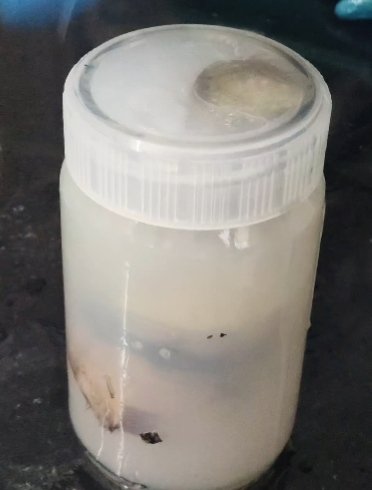
Step 4 – Sodium Hypochloride Treatment (4%)
1. Sodium Hypochloride (NaOCl) solution : 50 ml Naocl in 250 ml
2. place the explant in this solution for 30 minutes inside the laminar airflow
3. After chemical treatment (NaOCl) sol, wash explant 3-5 times using sterile distilled water.
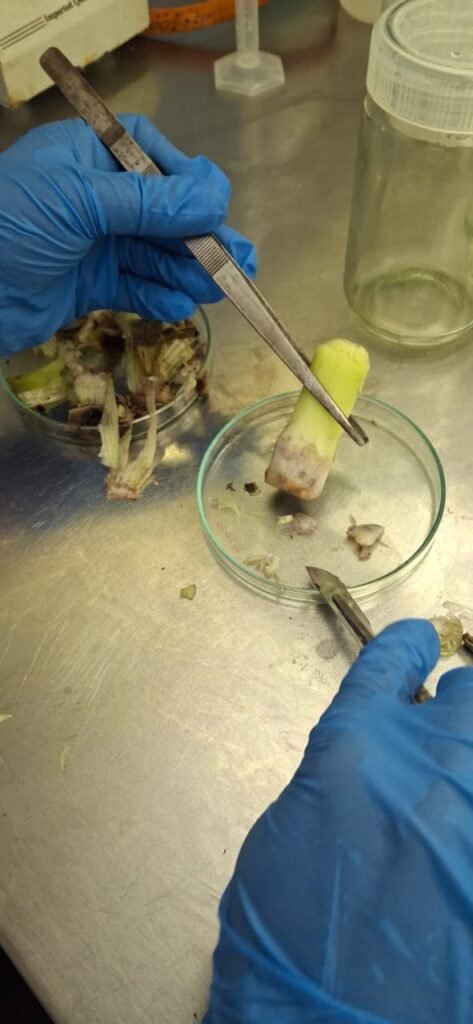
4. place explant on sterile Petri dish / brown paper & cut / trim it into required size.
Steps 5 : Antibiotic Treatment
1. prepare a cefotaxime antibiotic solution (eg. 2ml cefotaxim in 200 ml sterile distilled water)
2. Transfer the sterilized explant into this solution
3. Allow the explant to soak for 20 minutes under sterile condition.
Precaution:
Always use freshly prepared antibiotic soln.
Do not exceed treatment time, as prolonged exposure may affect tissue viability.
Handle explants with sterile forceps inside laminar airflow.
Step 6 : Inoculation
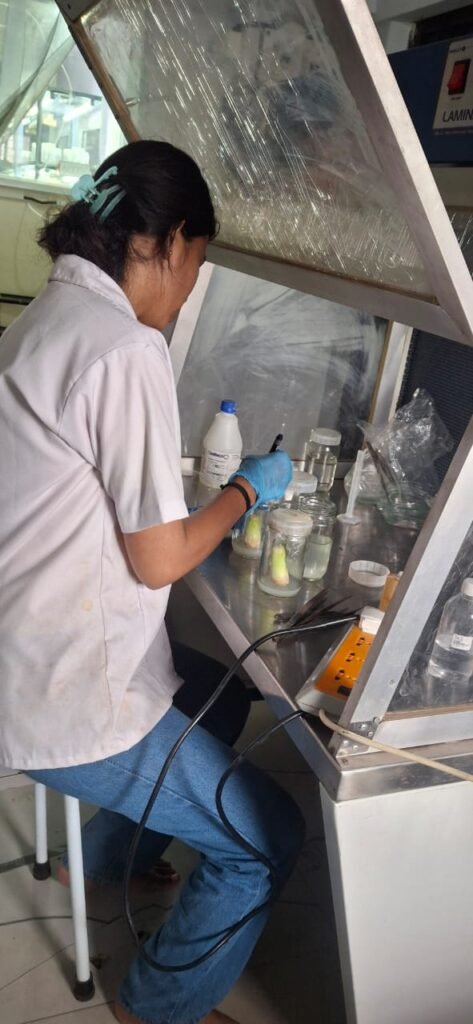
Inoculation is the process of transferring the sterilized explant onto a nutrient medium under completely aseptic conditions.
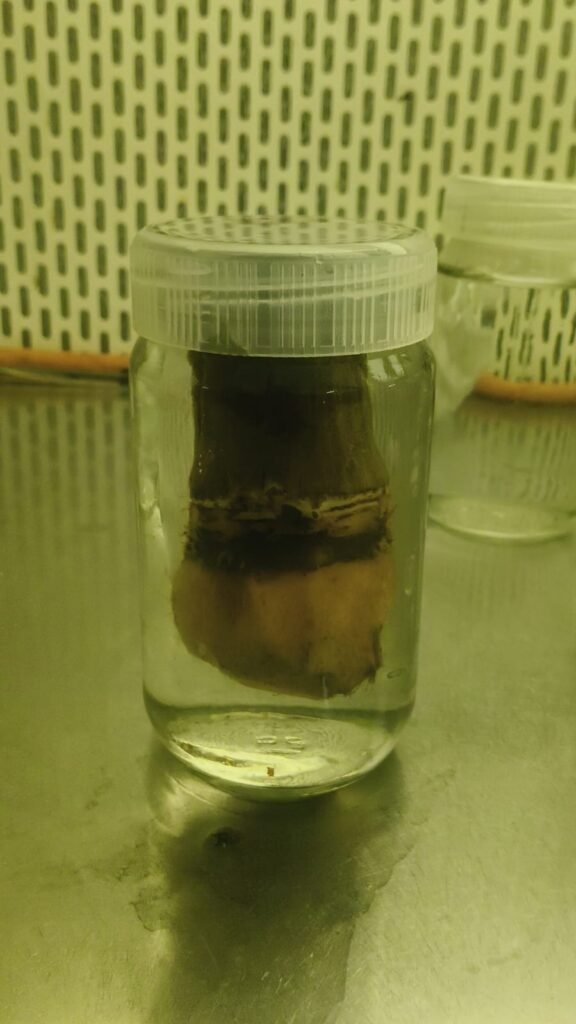
1. Carefully transfer the explant into a culture bottle containing MS ( Murashige & Skoog) medium.
2. Close the culture bottle immediately to prevent contamination.
3. Maintain strict aseptic conditions throughout the process.
Step 6 – Incubation
After inoculation, the culture bottles are transferred to a controlled growth environment for proper development.
Condition Maintained
1. Temperature – 24°C
2. Light Duration – 7–8 hrs
3. Dark Period – 15–16 hrs
After inoculation process completed clean the laminar with ethanol & keep UV on for 15 min.
BAP (6-Benzylaminopurine) stock solution :
BAP Stock Solution (1 mg/mL) – 50 mL
Procedure
- Weigh 50 mg of BAP accurately.
- Take a clean beaker, add 2–3 mL of distilled water.
- Since BAP does not dissolve easily in water, add 1–2 drops of 1 N NaOH to help dissolution.
- Stir gently until the BAP completely dissolves.
- Transfer the dissolved BAP solution into a 50 mL volumetric flask.
- Make up the final volume to 50 mL with distilled water.
- filter-sterilize the solution through a 0.22 µm filter.
- Label the bottle as: BAP – 1 mg/mL
- Store the solution in a refrigerator at 4 °C.
Preparation Of Hormones Media :
| Material Name | Final Volume (for 250 mL) |
|---|---|
| Distilled Water | 100 mL |
| Macronutrients | 12.5 mL |
| Micronutrients | 0.625 mL |
| Iron Source | 0.625 mL |
| Vitamins | 0.25 mL |
| Myo-Inositol | 25 mg |
| Sucrose | 7.5 g |
| Agar | 2 g |
| BAP (6-Benzylaminopurine) | 0.750 mL |
| IAA (Indole-3-Acetic Acid) | 0.125 mL |
SUBCULTURING :-
2nd Stage :
After 30 days we prepared hormones media ( ms media + BAP + IAA )
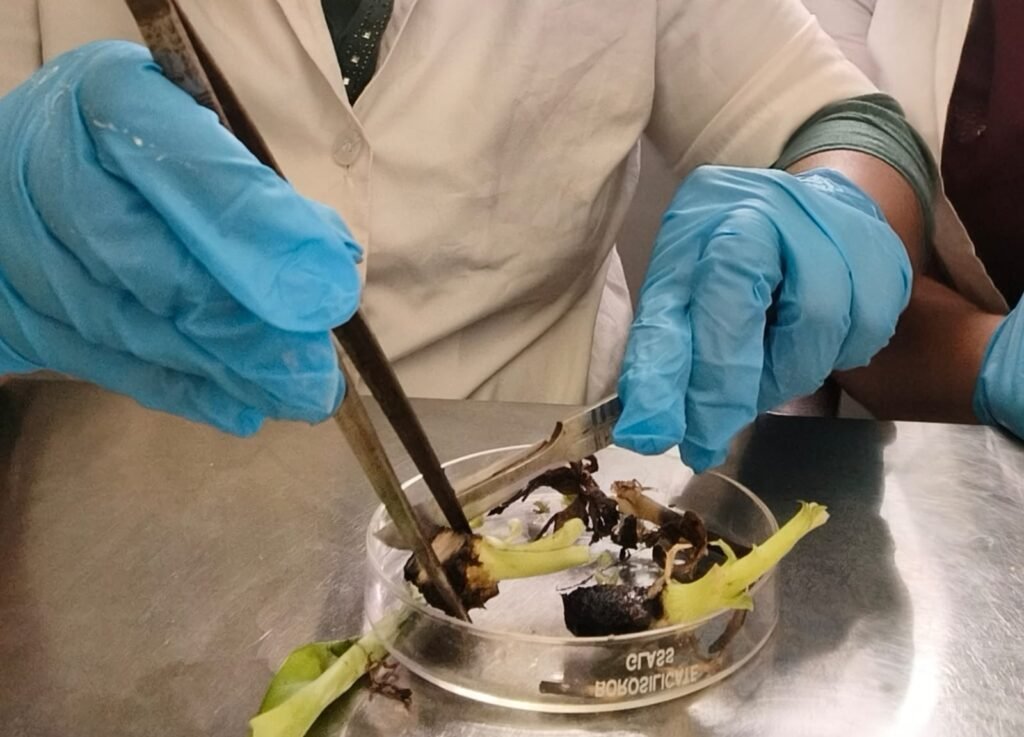
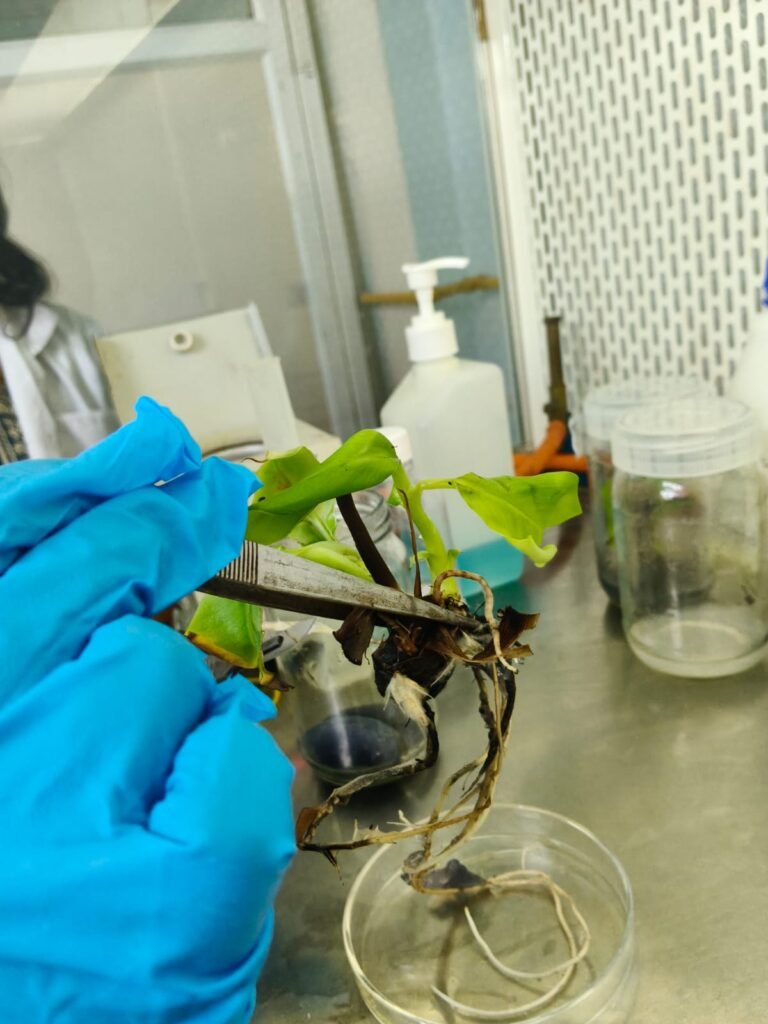
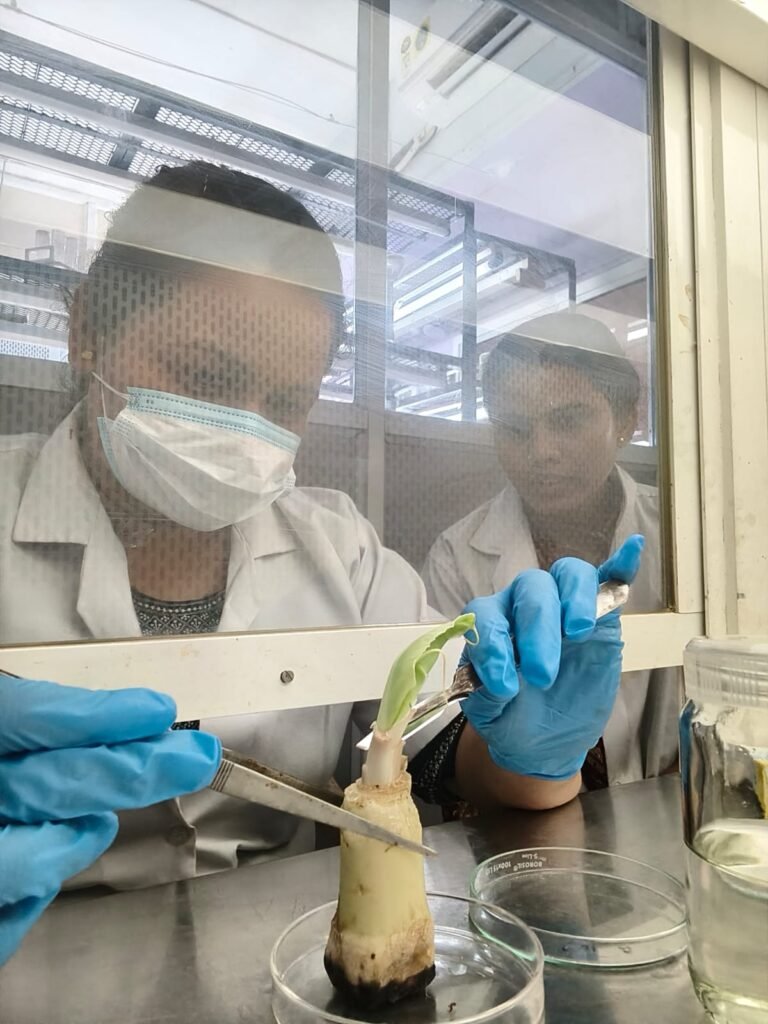
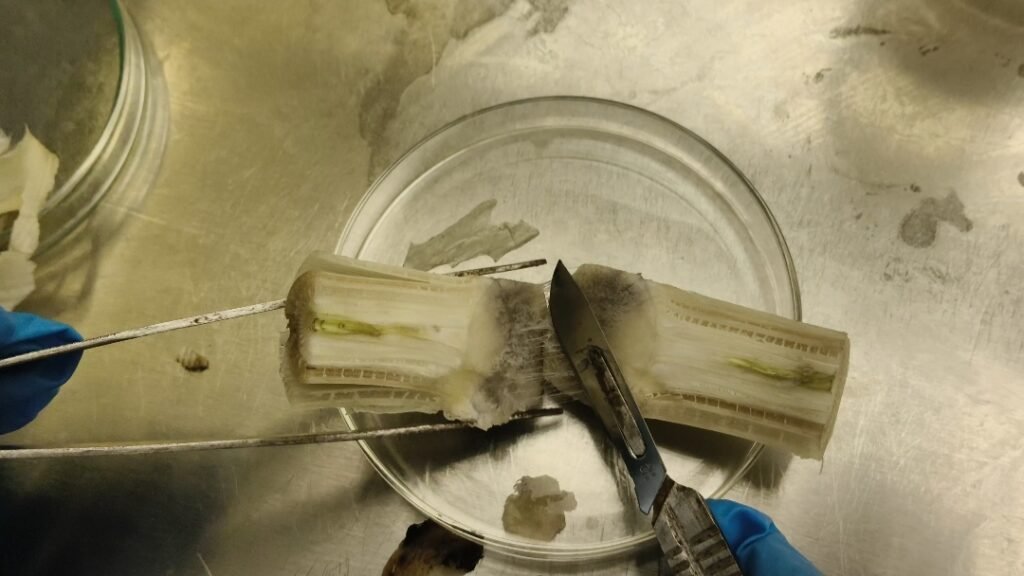
After preparing the hormone-supplemented medium, the explant is taken from the culture bottle and cut into two parts .kept cut banana parts in Antibiotics solution for 20 Min .
Then, each part is inoculate into fresh culture bottles containing the same hormone medium.
3rd Stage :
After preparing the hormone-supplemented medium, the explant is taken from the culture bottle and cut into two or more parts . kept cut banana parts Antibiotic solution for 20 min. Then, each part is inoculate into fresh culture bottles containing the hormone media.