Introduction
Idli is one of the most popular traditional fermented foods of South India, prepared from rice, black gram (urad dal) and poha. It is widely consumed due to its soft texture, easy digestibility and natural fermentation.
In a typical formulation of Rice 720g + Urad dal 230g + Poha 60g + Methi dana, the product is carbohydrate-dominant and low in protein.
Soybean contains 36-40% high-quality protein with all essential amino acids and offers a low-cost solution for protein enrichment. However, direct incorporation is limited due to presence of anti-nutritional factors and beany flavour.
This project proposes a dual-fermentation model – first, bio-processing of soybean into tempeh using Rhizopus oligosporus, and second, integration of this processed soybean into conventional idli batter for natural lactic fermentation.
Aim
To develop a low-cost, high-protein idli by incorporating soybean, after making it safe and digestible through Tempeh fermentation (Rhizopus oligosporus).
Objectives
Idli is one of the most popular traditional fermented foods of South India, prepared from rice, black gram (urad dal) and poha. It is widely consumed due to its soft texture, easy digestibility and natural fermentation.
In a typical formulation of Rice 720g + Urad dal 230g + Poha 60g + Methi dana, the product is carbohydrate-dominant and low in protein.
Soybean contains 36-40% high-quality protein with all essential amino acids and offers a low-cost solution for protein enrichment. However, direct incorporation is limited due to presence of anti-nutritional factors and beany flavour.
This project proposes a dual-fermentation model – first, bio-processing of soybean into tempeh using Rhizopus oligosporus, and second, integration of this processed soybean into conventional idli batter for natural lactic fermentation.
Procedure
This procedure requires 3 days.
13/10/26
Material purchasing
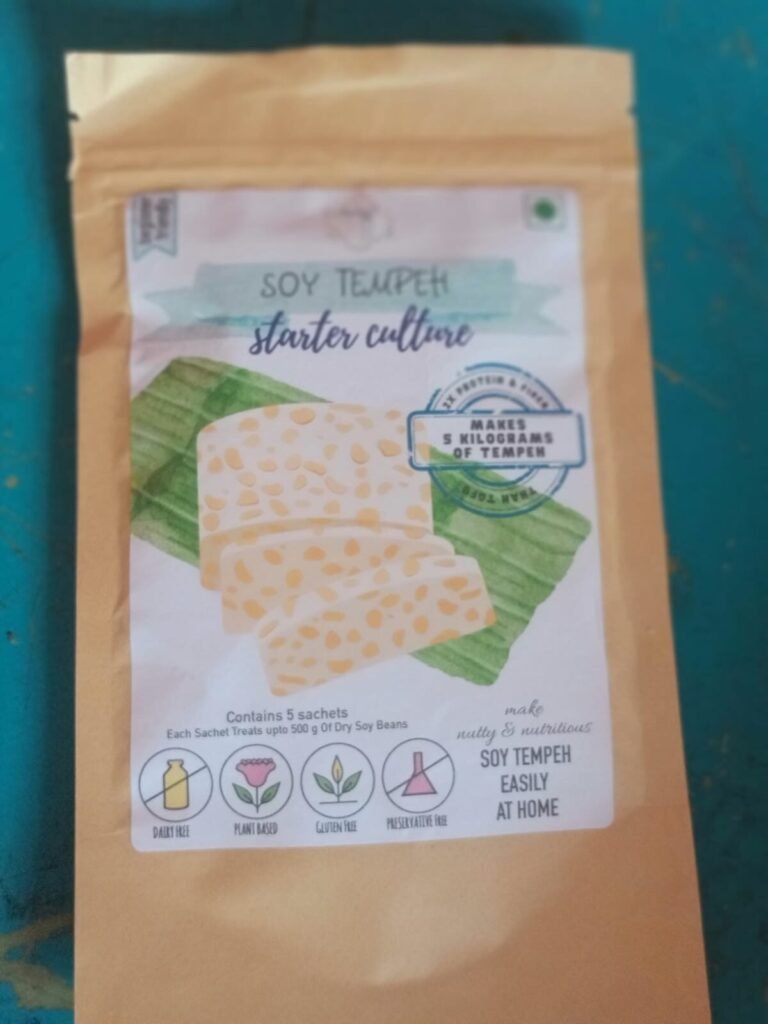
Tempeh starter- ordered from amazon (429/- Contains 5 sachets ,each sachet treats upto 500 gm of soyabean)
Soybean – 500g
Rice – 130g (wet weight)
Urad dal – 50g (wet weight)
Poha – 10g
19/10/26
Day 1:Making Tempeh from Soyabean.
1) Soak soyabean at night for 12hrs .
2) Remove the skin in the morning .
3) Boil for 30 min with 2 spoon vineger.
4) Drain water completely and dry beans on cloth for 1 hrs. Otherwise fungus will grow.
5) Add half spoon of starter and mix well.
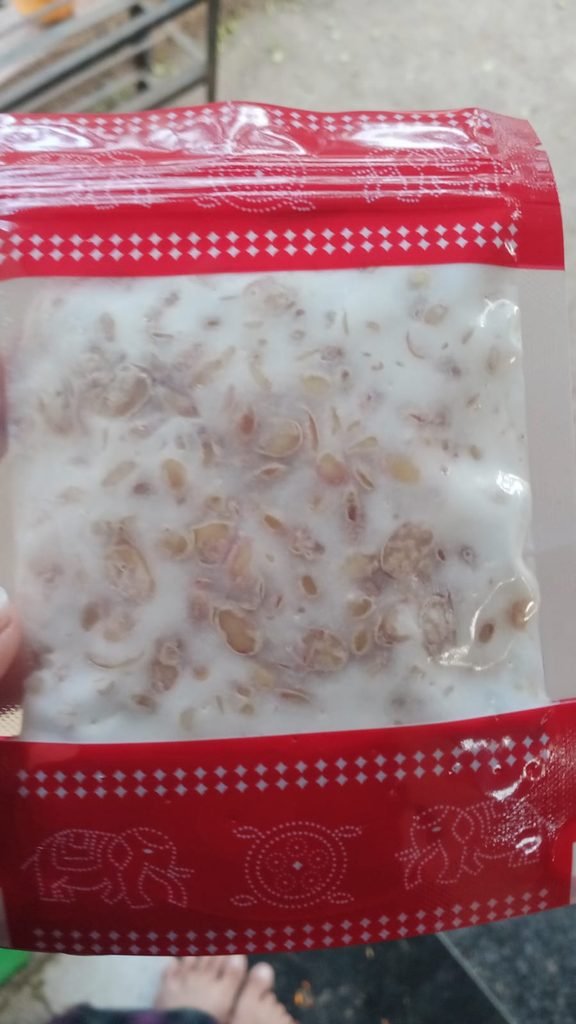
6) Put beans in zip-lock bag and make small pores with help of toothpick.
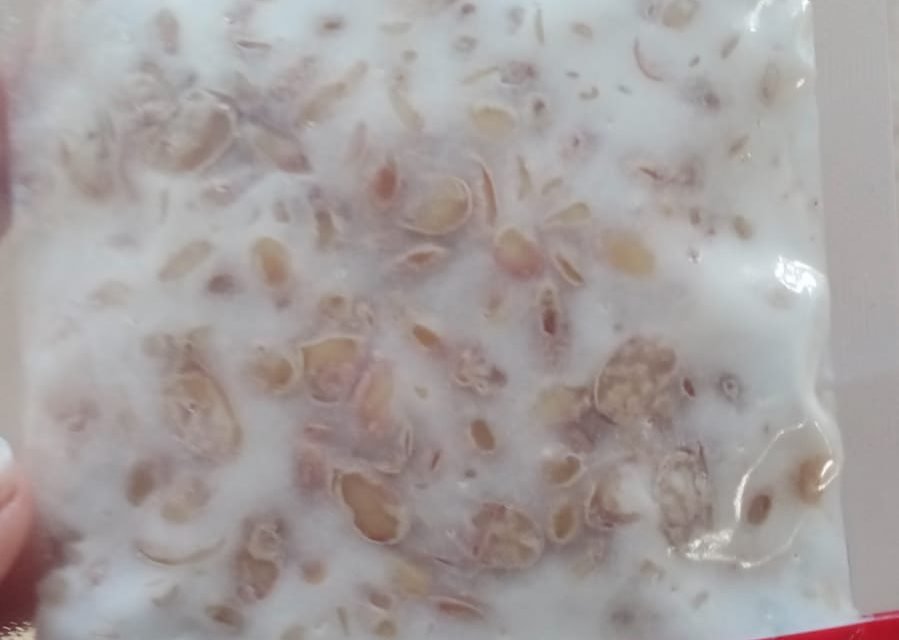
7) Keep in warm place 30- 32 °C for 36-48 hours .Dark place.Our tempeh was ready after 38 hrs.
8) After 2 days ,white fungus will smell like white cake .It will smell like mushroom. Tempeh ready (900gm).
9) Keep the tempeh in fridge.It can stay fresh for 2 days.
20/10/26
Day 2:Making Idli dough
1) Soak rice- 6hr, Urad dal- 4hr ,Methi dana- 6hr .
2) Grind using aprox 700ml water
3) Keep for fermentation for 12hrs.And store in fridge .
22/10/26
Day 3:Adding tempeh to Idli dough.(13 : 5 : 3)
1) Steam all the Tempeh for 10 min.This removes bitterness.
2) Weigh 30 gram of tempeh seperately which will be added in idli dough.
2) Grind steamed tempeh to smooth paste with 10ml water maximum.Donot add water directly,add slowly till you get a thick, dosa-batter like consistency – not too watery.till you get a thick, dosa-batter like consistency – not too watery.
3) Make sure paste is fully cool. It should be room temperature, not hot. If hot, it will kill the idli bacteria.
4) Mix tempeh paste + rice-urad batter together gently with hand (clockwise). Mix well for 2-3 minutes. Do not add salt.
5) : Keep this combined batter in a warm place for 30 minutes for natural lactic fermentation. It should rise and become fluffy like normal idli batter.
6) Add salt only after second fermentation, just before steaming.It should rise and become fluffy like normal idli batter.
7) Pour in moulds, and steam idlis for 10-12 mins.
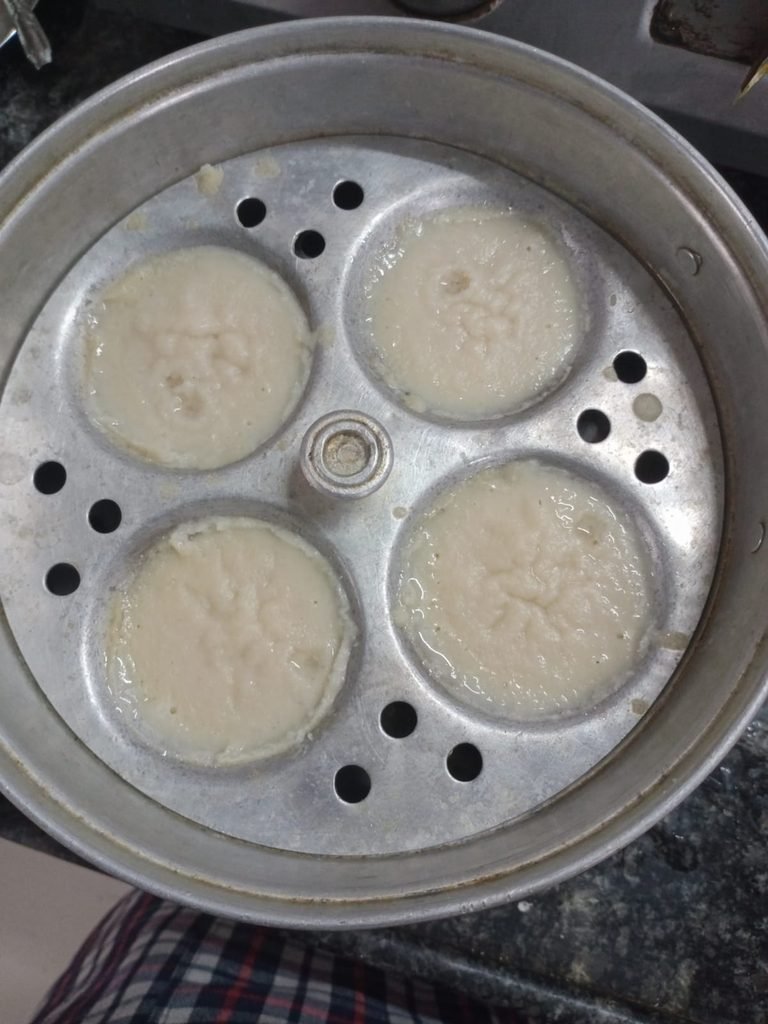
Note- The final idli had a taste similar to regular idli but lacked the desired fluffiness. This may be due to insufficient fermentation, limited gas production, or the inability of the batter to retain gas effectively. The texture may also be influenced by the composition of soybeans and the type of microorganisms present in the tempeh starter.Overall taste was good.Have to work further on fluffiness of the idli
Drying and storing of Soya Tempeh Flakes
Steaming to Remove Bitterness:
1) Cut fresh soya tempeh into thin flakes/slices.
2) Steamed flakes in steamer for 10-15 mins.This removes bitter taste and beany flavour.
3) Spread on cloth for 5 mins to drain excess water.
21/10/26
First LOD – Before Bulk Drying (Drying till Constant Weight):
Sample: W1 = 10g, Temp: 105°C
After 1 hr = 5.37g
After 30 min = 5.15g
After 10 min = 5.11g
After 10 min = 5.4g
After 10 min = 5.4g (constant weight)
Final W2 = 5.11g
LOD% = (10 – 5.11)/10 x 100 = 48.9%
Drying of Bulk Batch:
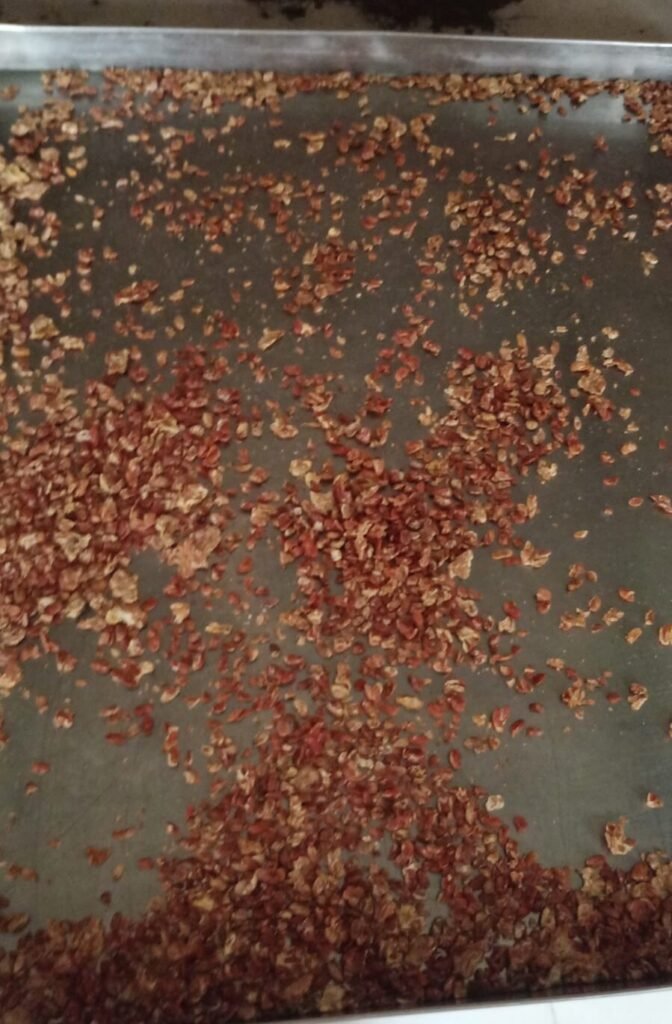
1) Spread steamed flakes on butter paper in tray.
2) Dried in drying oven at 70°C for 7 hours.
3) Flakes became crisp, light cream color.
22/10/26
Second LOD – After Bulk Drying:
Sample from dried bulk: W1 = 10g, 105°C for 1 hr
W2 = 9.73g
LOD% = (10 – 9.73)/10 x 100 = 2.7%
Storage:
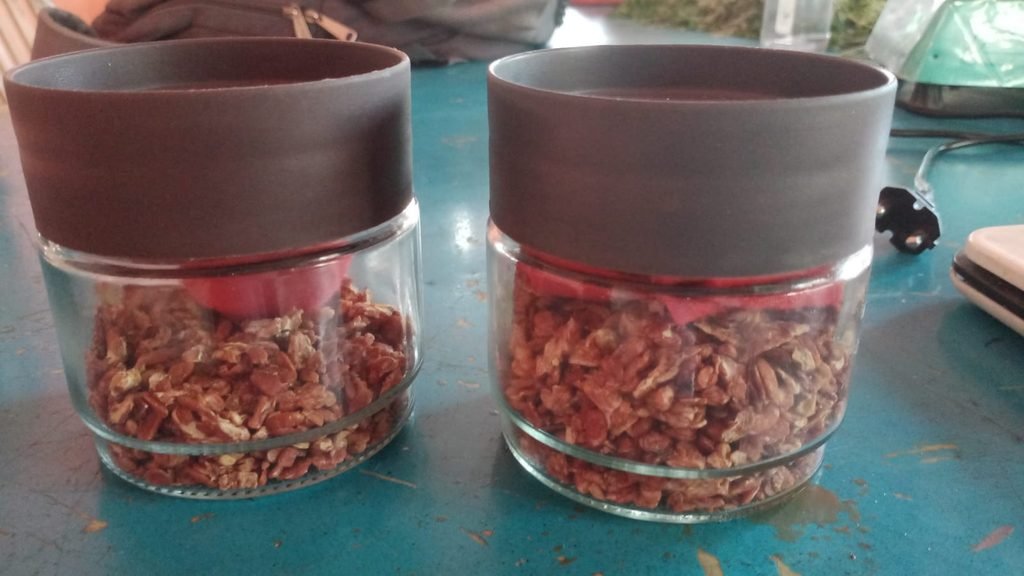
1) Cooled flakes completely.
2) Prepared potli: Roasted 2 spoons raw rice on tawa low flame till light yellow, cooled, tied in thin cotton cloth.
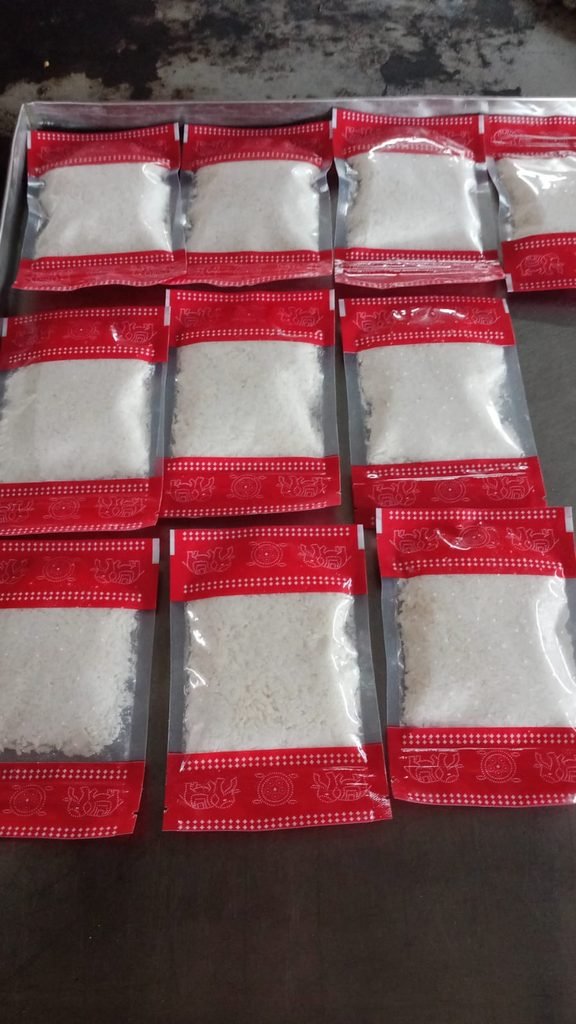
3) Packed flakes AS FLAKES in dry glass jar with airtight lid, kept potli inside.Store in fridge.
4) Grind small quantity only when needed.
23/10/26
Soya Dosa
(20 : 5 : 2)
| Ingredient | Quantity |
|---|---|
| Rice | 200 g |
| Urad dal | 50 g |
| Dried soybean tempeh | 20 g |
| Water | As required |
| Salt | As required |
Procedure
- Soaking: Wash the rice and urad dal separately and soak them for 4–6 hours.
- Grinding: Drain the water and grind the rice and urad dal into a smooth batter using sufficient water.
- Fermentation: Transfer the batter into a clean container and allow it to ferment for approximately 8–12 hours, or until suitable fermentation is observed.
- Tempeh preparation: Grind 20 g of dried soybean tempeh into a fine powder.
- Mixing: After the dosa batter has fermented, add the tempeh powder and mix thoroughly.
- Resting: Keep the batter for another 30 minutes after adding the tempeh.
- Dosa preparation: Add salt as required, adjust the consistency with water, and spread the batter on a preheated, lightly greased dosa pan.
- Cooking: Cook until the dosa is golden brown and crisp.
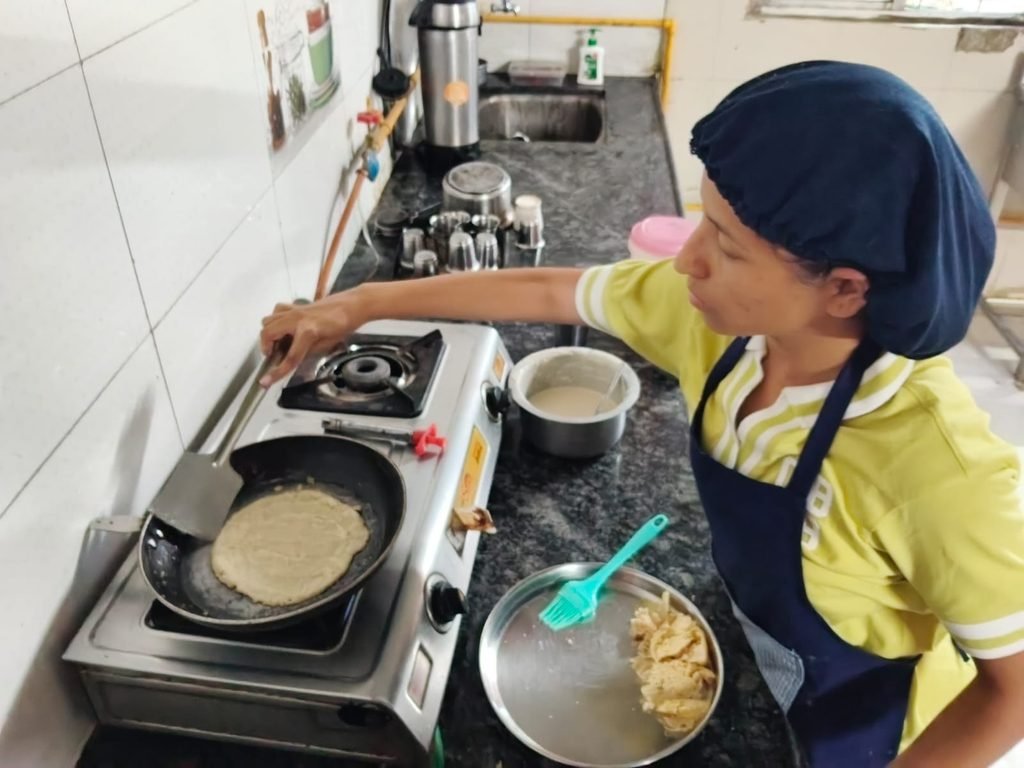
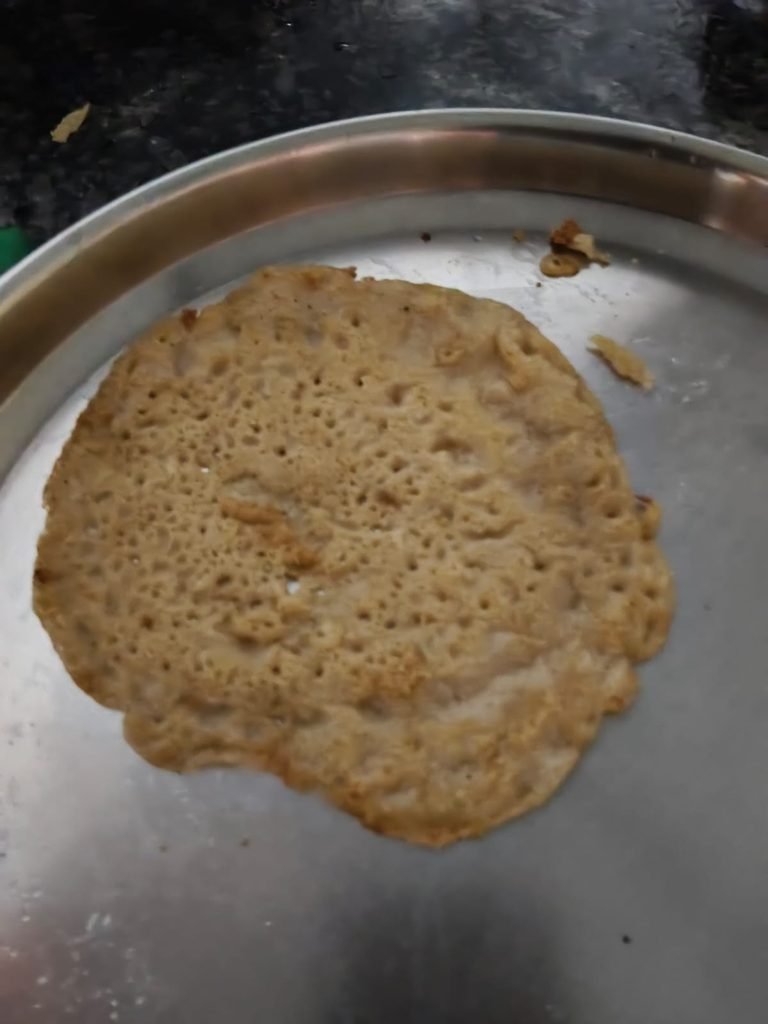
Note-The soya dosa prepared using dried soya tempeh had a slightly bitter aftertaste. Further trials may be conducted to improve the quality of the dosa.
Soya paav
(10 : 1)
Soya paav was prepared by adding 10 g of dried soya tempeh to 100 g of flour. The overall taste was good, with a slight soybean flavour noticeable in the aftertaste.
Formulations for Soy Tempeh-Enriched Food Products
| Product | Rice (g) | Urad Dal (g) | Flour (g) | Dried Soy Tempeh (g) |
|---|---|---|---|---|
| Idli | 130 | 50 | — | 30 |
| Dosa | 200 | 50 | — | 20 |
| Paav | — | — | 100 | 10 |
| Dish | Ingredient ratio | Soybean ratio | Soybean percentage |
|---|---|---|---|
| Soya Idli | 13 : 5 : 3 | 3/21 | 14.29% |
| Soya Dosa | 20 : 5 : 2 | 2/27 | 7.41% |
| Soya Pav | 10 : 1 | 1/11 | 9.09% |
25/10/26
2nd trial of Idli was taken.in which 10% of soya tempeh was added .
Note -The taste was fine but the fluffiness was even after fermnting properly.
25/10/26 , 26/10/26
Multiplication of Tempeh Starter Culture
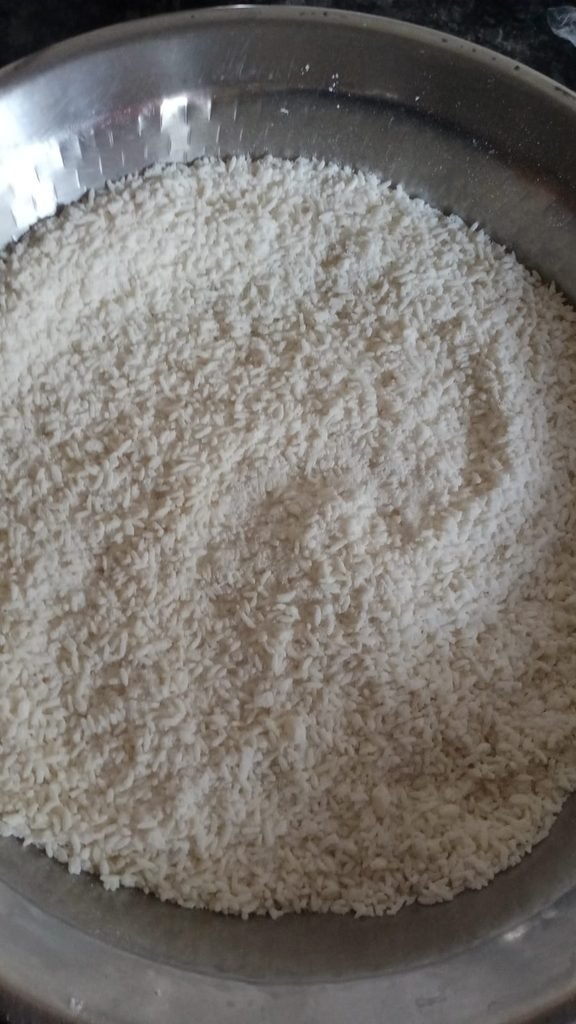
Objective: To multiply the original tempeh starter culture using rice and rice flour as the substrate.
Material required
- Rice – 250 g (Kolam)
- Original tempeh starter culture – 3 g
- Rice flour – 150 g (Kolam)
Procedure
1. Preparation of rice: Take 250 g of rice and wash it thoroughly with clean water. Cook or steam the rice until it is soft but not excessively wet.
2. Cooling: Allow the cooked rice to cool to room temperature before adding the starter culture.
3. Addition of starter culture: Add 3 g of the original tempeh starter culture to the cooled rice and mix thoroughly to ensure uniform distribution.
4. Addition of rice flour: Add 150 g of rice flour to the mixture and mix well to distribute the ingredients evenly.
5. Incubation: Transfer the mixture into a clean, suitable container. Keep it under appropriate conditions for the growth of the tempeh fungus, following the starter manufacturer’s instructions.
6. Storage: Once adequate growth is obtained, the multiplied culture should be dried under suitable hygienic conditions, if appropriate for the starter type, and stored in a clean, airtight container.