Introduction-
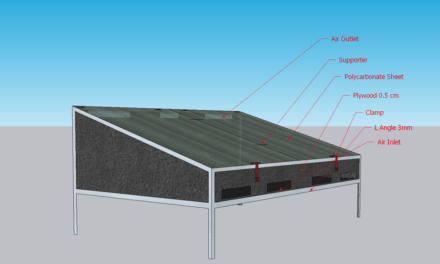
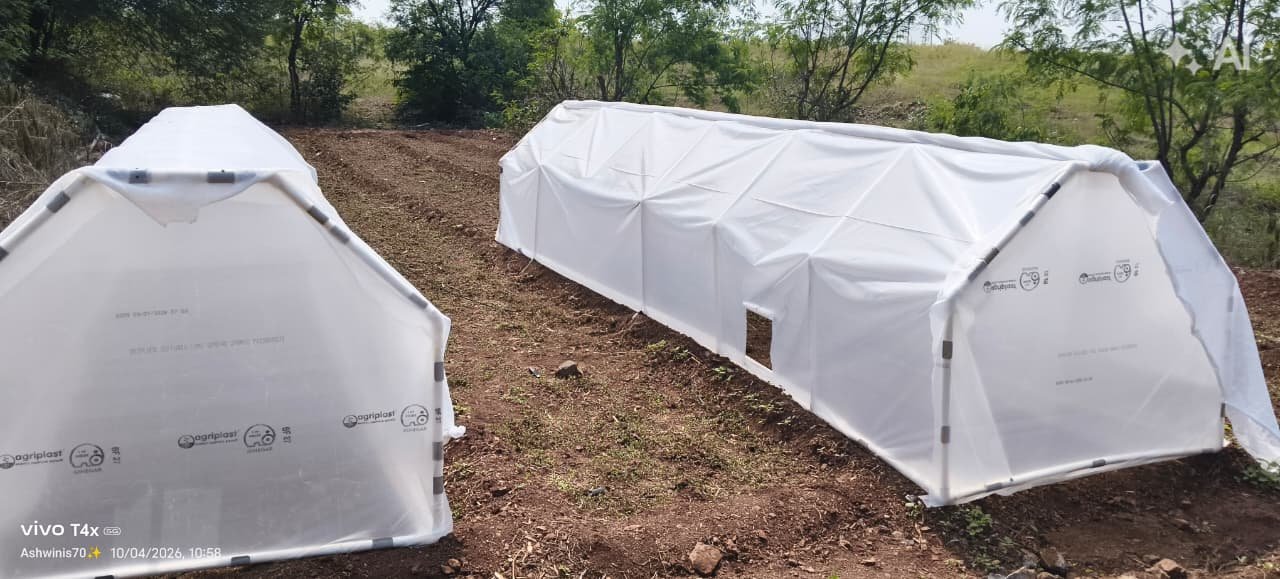
In Protected farming, managing the internal microclimate is critical for optimal crop growth. In this project,real-time indoor and outdoor environment data-including temperature, humidity and solar radiation – were collected and analyzed for Tunnel 1 and Tunnel 2. By evaluating the thermal differentials across ventilation cycles, tunnels thermal performance was assessed to optimize climate control strategies
Objectives-
- Continuous Microclimate Monitoring and Data Synchronization.
- Thermal and Humidity Differential Analysis
Concept-
Agricultural tunnels are designed to shield crops from harsh weather ,yet trapped solar radiation often causes indoor temperature to exceed ambient levels,leading to crop heat stress and yield loss. This study investigates whether the tunnel structure effectively maintains lower temperature than the outdoor temperature ,humidity, solar radiationand wind speed at 5-minute intervals. By evaluating the thermal differentials across closed and open natural ventilation intervals.
Date – 04/10/2026 to 10/10/2026
Discussion with dixit sir-
Today, I had a project briefing and progress discussion with Dixit Sir regarding the tunnel microclimate study. Siddharth completed the installation of the data loggers in both Tunnel 1 and Tunnel 2 to capture environmental parameters. Following Sir’s guidance, I was assigned to verify the continuous data transmission and sensor accuracy from both loggers to ensure consistent readings. Once the baseline data logging was validated, Sir directed me to proceed with processing, cleaning, and carrying out the comparative microclimate data analysis for both tunnels.
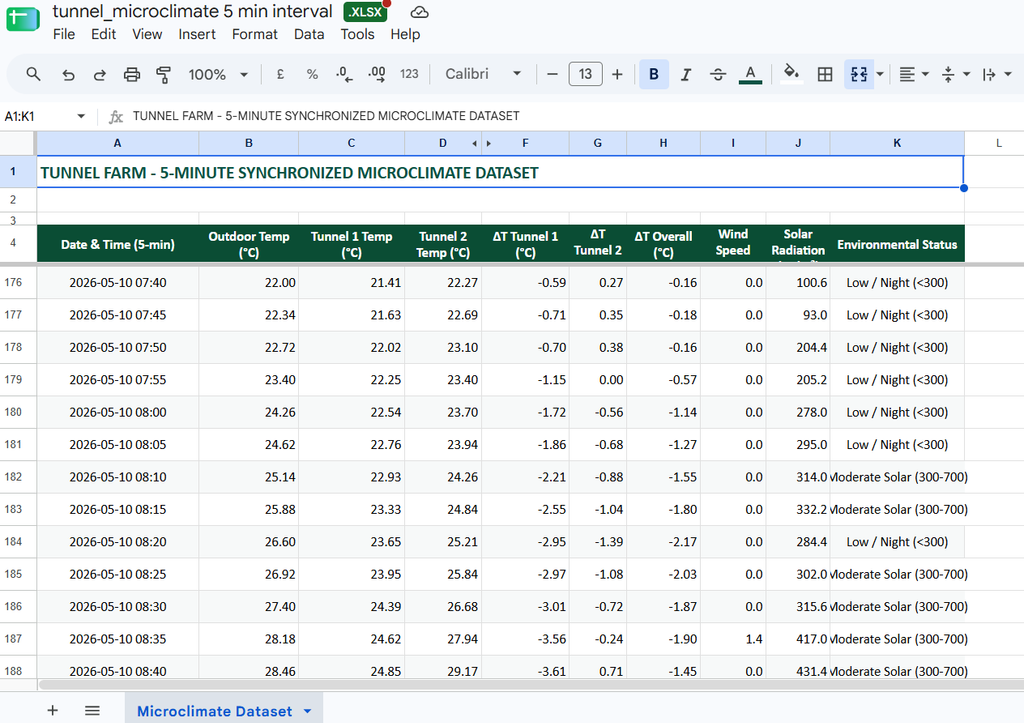
Data Collected as –
Points I understood from Data
- Observed that the temperature inside Tunnel 2 was higher than tunnel 1 during the data collection period.
- Observed that tunnel 2 has a higher temperature than tunnel 1, and the inside-outside temperature difference is negligible at low solar radiation but increases to approximately 5-6 degree C during peak solar radiation.