8 March 2026
Introduction :
Curd formation is a biochemical process that involves the fermentation of milk by beneficial bacteria, mainly Lactobacillus species. These bacteria convert lactose (milk sugar) into lactic acid, which lowers the pH and causes milk proteins (casein) to coagulate, forming curd. The bacterial count plays a crucial role in determining the quality, texture, taste, and time of curd formation. A higher bacterial count generally speeds up the fermentation process and results in a firmer curd, while a lower count may delay curdling or produce a watery texture. Thus, maintaining an optimal bacterial population is essential for consistent and desirable curd quality.This study is conducted to analyze and optimize the bacterial count required for proper curd formation at Vigyan Ashram. For them, maintaining consistent quality of curd and fermented dairy products is important for small-scale food production.
Objective :
To determine how the number of lactic acid bacteria affects the rate of curd formation and the texture, consistency, and acidity of the final product.
To improve the quality and consistency of curd produced at Vigyan Ashram.
Required Materials :
• Fresh milk (same batch)
• Starter culture (curd containing Lactobacillus bacteria)
• Sterile test tubes / small containers
• Measuring cylinder
• Micropipette (if available)
• Incubator or warm place (35–40 °C)
• pH paper or pH meter
• Stopwatch or timer
• Sterile spoon
• Labels and marker
➢ Preparation of Milk
1. Take fresh milk.
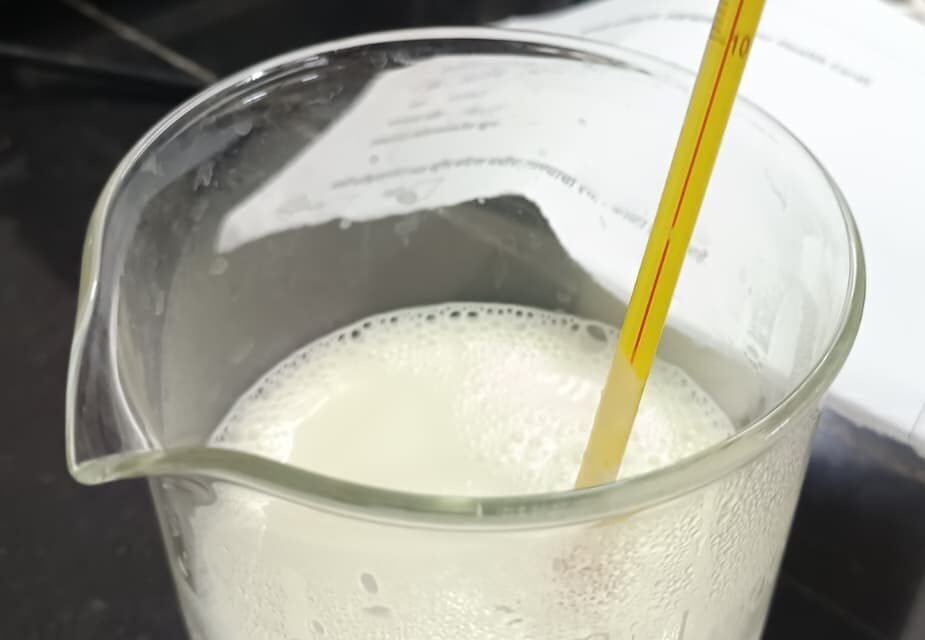
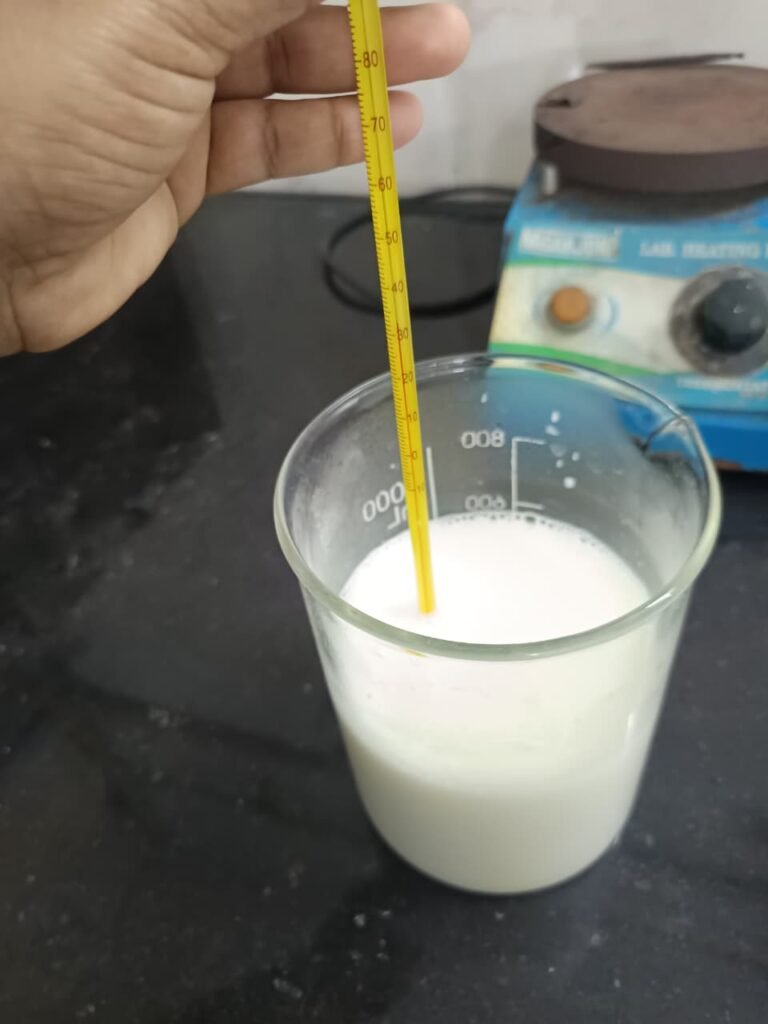
2. Boil the milk for 5–10 minutes to kill unwanted microbes.
3. Cool the milk to 37–40 °C (lukewarm temperature).
4. Pour equal amounts of milk (for example 100 ml) into 4–5 sterile bottles.
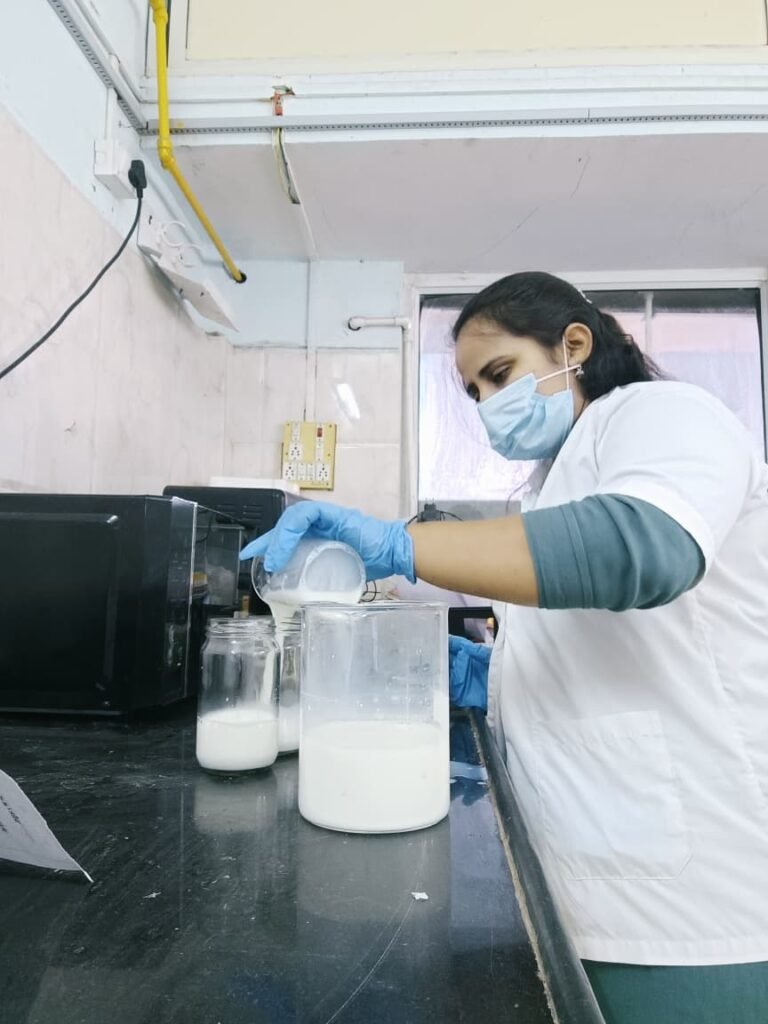
➢ Preparation of Different Bacterial Concentrations
• Add different amounts of starter curd (lactic acid bacteria) to each bottles.
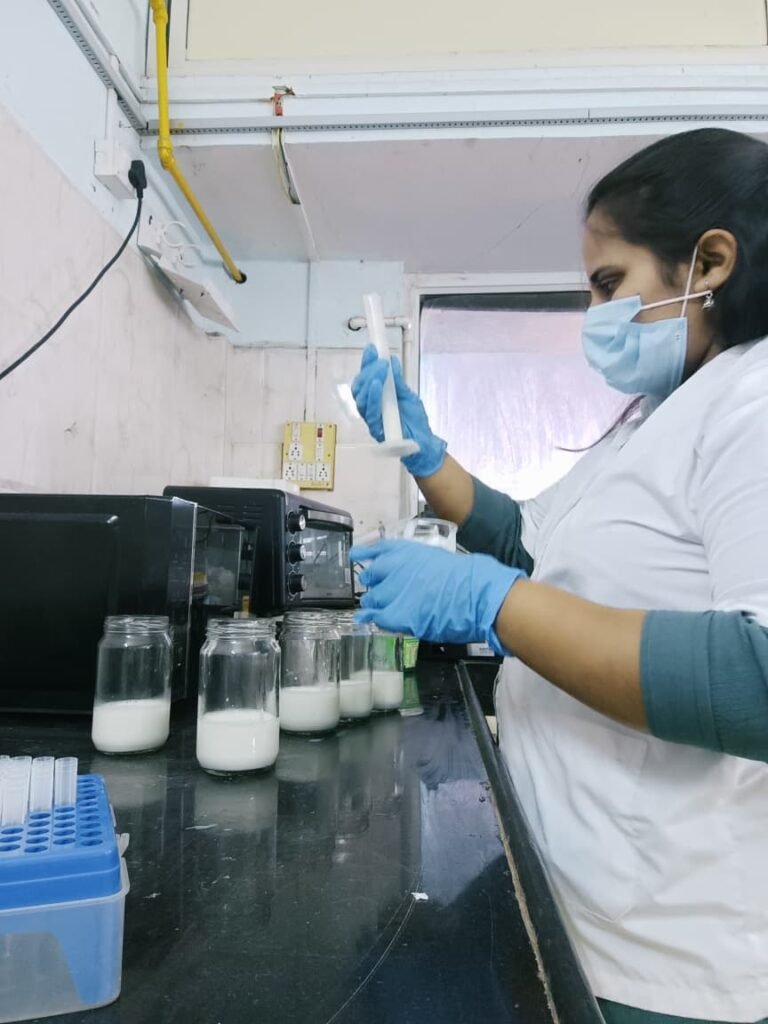
Example design:
| Sample | Milk Volume | Starter Curd |
| Control | 100ml | 0ml |
| Sample A | 100ml | 1ml |
| Sample B | 100ml | 2ml |
| Sample C | 100ml | 5ml |
| Sample D | 100ml | 10ml |
This creates different bacterial counts.
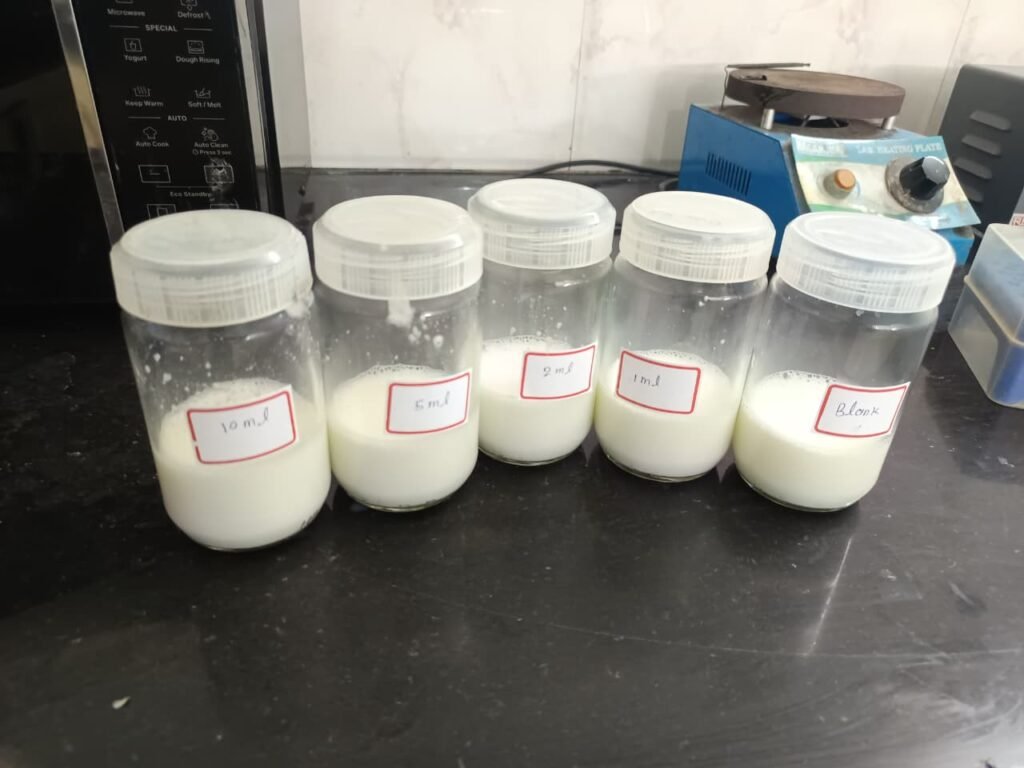
➢ Mixing
1. Mix the starter culture gently with sterile spoon
2. Close the glass bottles.
3. Label each sample clearly.
➢ Incubation
1. Keep all samples at 37–40 °C
.2. Incubate for 6–8 hours.
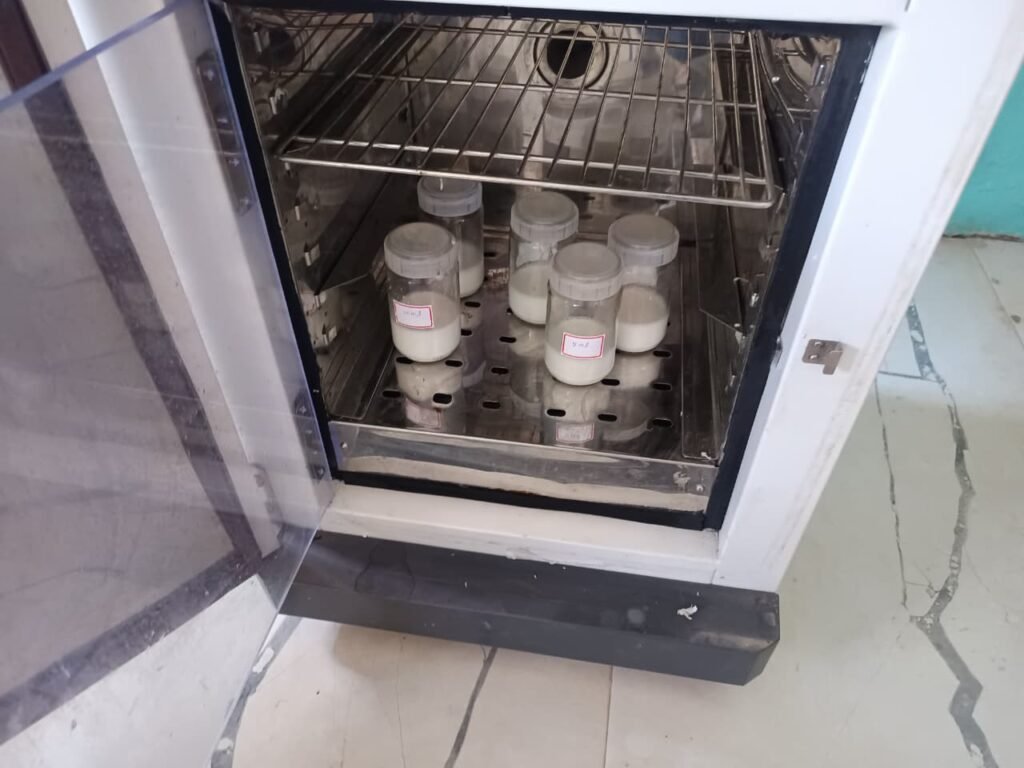
3. Do not disturb the containers during incubation.
➢ Observation of Curd Formation Record the following:
A. Time for Curd Formation
• Check every 1 hour
• Note when milk becomes solid curd.
B. TextureObserve:
• Soft
• Firm
• Watery
• Smooth
C. ConsistencyCheck:
• Thickness
• Whey separation
D. Acidity
• Measure pH using pH paper or pH meter.
| Sample | Starter Amount | Time for curd starter | Texture | Consistency | pH |
| Control | 0ml | – | No curd formed | liquid milk | 6.31 |
| Sample A | 1ml | 3 hours | Smooth | Thick | 4.15 |
| Sample B | 2ml | 3hourd | soft | Medium thick | 4.5 |
| Sample C | 5ml | 2 hours | very smooth | slightly thick | 4.13 |
| Sample D | 10ml | 2 hours | slightly grainy | very thick | 4.24 |