05/06/2026
Mango Leather Rolls (Aam Papad)
Recently, my colleague Nikhil Patil and I were presented with 5.6 kg of premium frozen Ratnagiri Hapus (Alphonso) mango pulp. Under the guidance of Dixit Sir, we decided to preserve this seasonal fruit by preparing Mango Leather Rolls (Aam Papad). This document describes the complete process, from thawing the frozen pulp to preparing shelf-stable mango leather rolls, along with the practical challenges encountered during production.
Ingredients
Mango pulp – 5.6 kg
Sugar – 130–140 g per kg of pulp
Ghee – as required for greasing trays
Black salt – 2–3 g per kg of pulp
Recipe & Process
Thawing and Preparation
The frozen Ratnagiri Alphonso mango pulp was thawed at room temperature until completely softened. After thawing, the pulp was weighed, and the total weight was confirmed to be 5.6 kg.
Brix Test and Sweetening
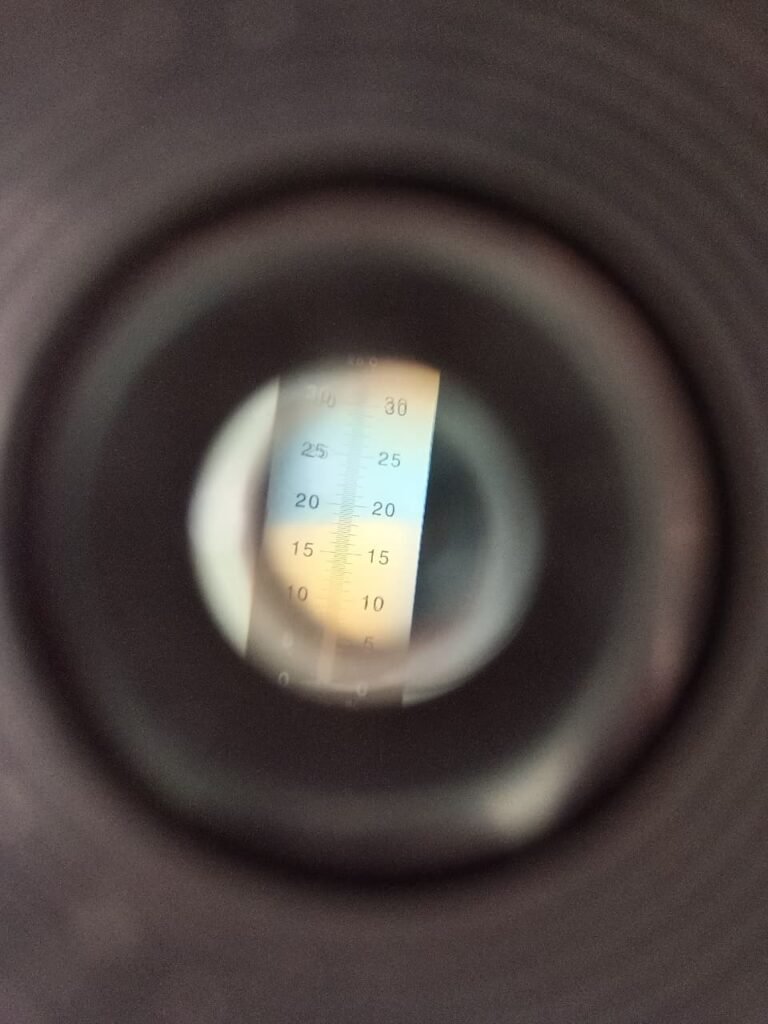
A Brix test was conducted to determine the natural sugar content of the mango pulp. The measured Brix value was 19.3°Bx. Based on the standard formulation of 130 g sugar per kilogram of pulp, approximately 740 g of sugar was added to the 5.6 kg batch.
Cooking
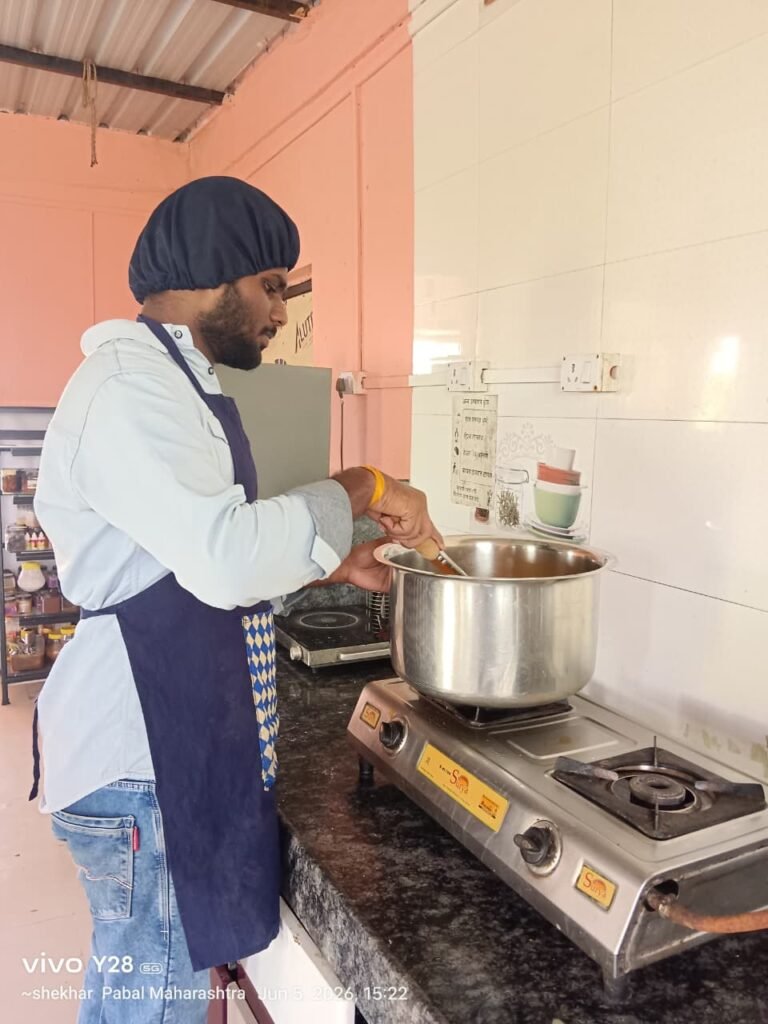
The mango pulp and sugar were heated together while stirring continuously until a smooth and uniform mixture was obtained. Continuous stirring prevented scorching and ensured even heating.
Pouring and Dehydration
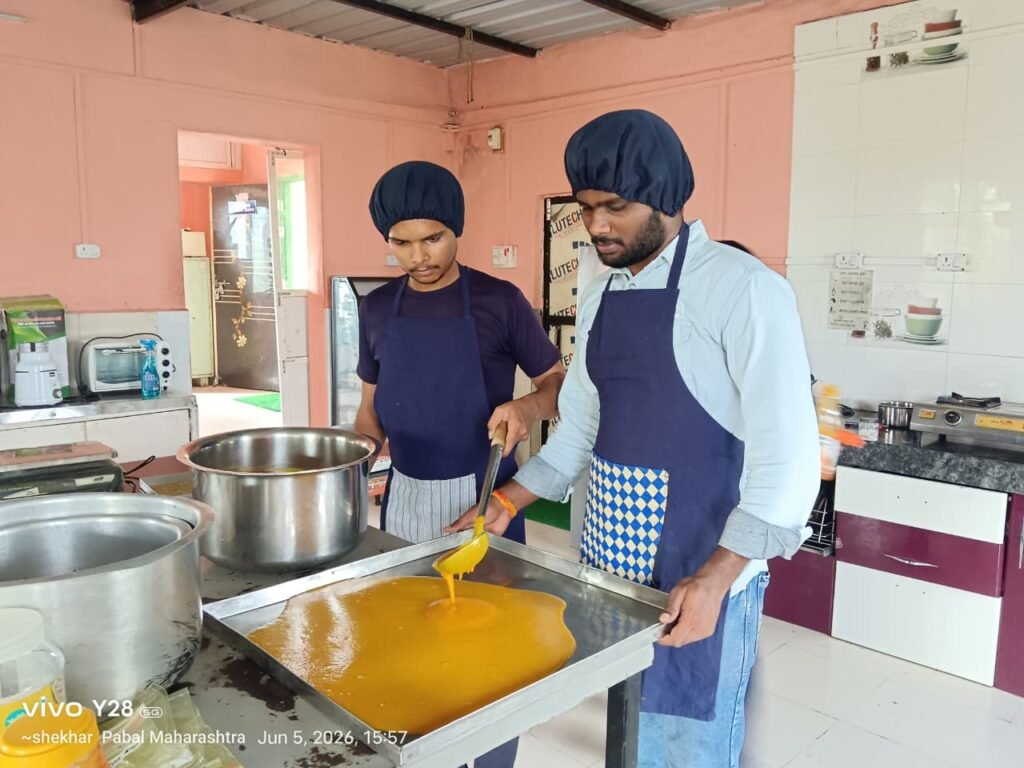
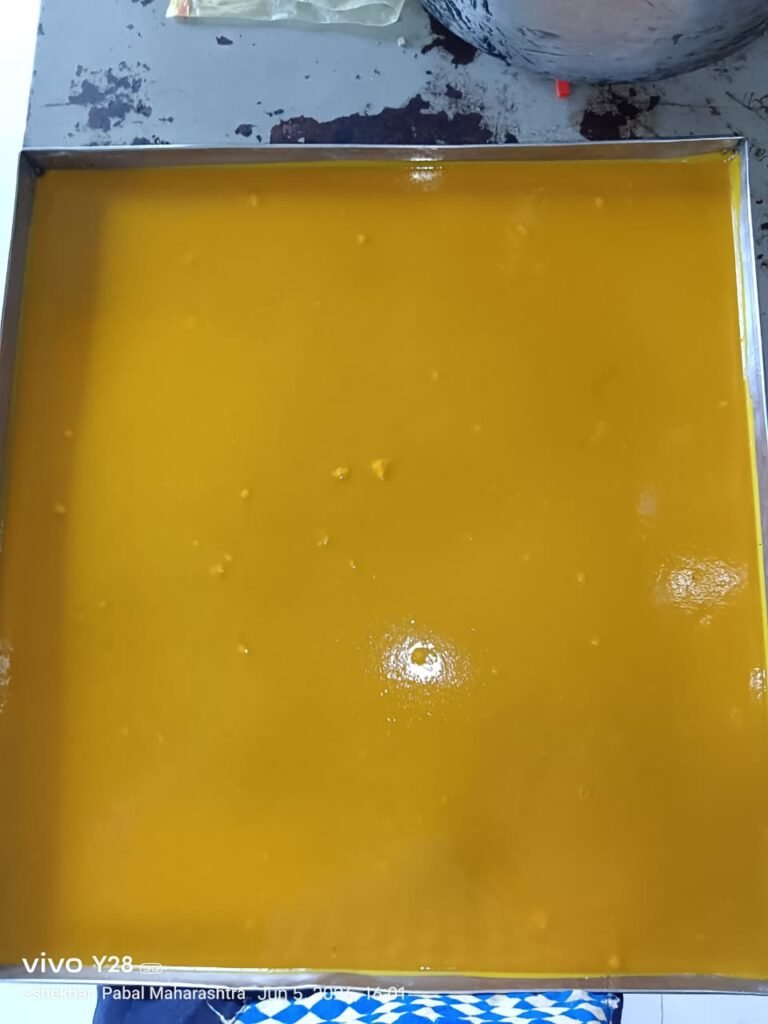
Stainless steel trays were lightly coated with ghee to prevent sticking. The cooked mango mixture was poured onto the trays and spread uniformly to a thickness of approximately 2–3 mm, producing four trays. The trays were then placed in a hot-air oven for dehydration.
06/06/2026
Preparation of Storage Jars
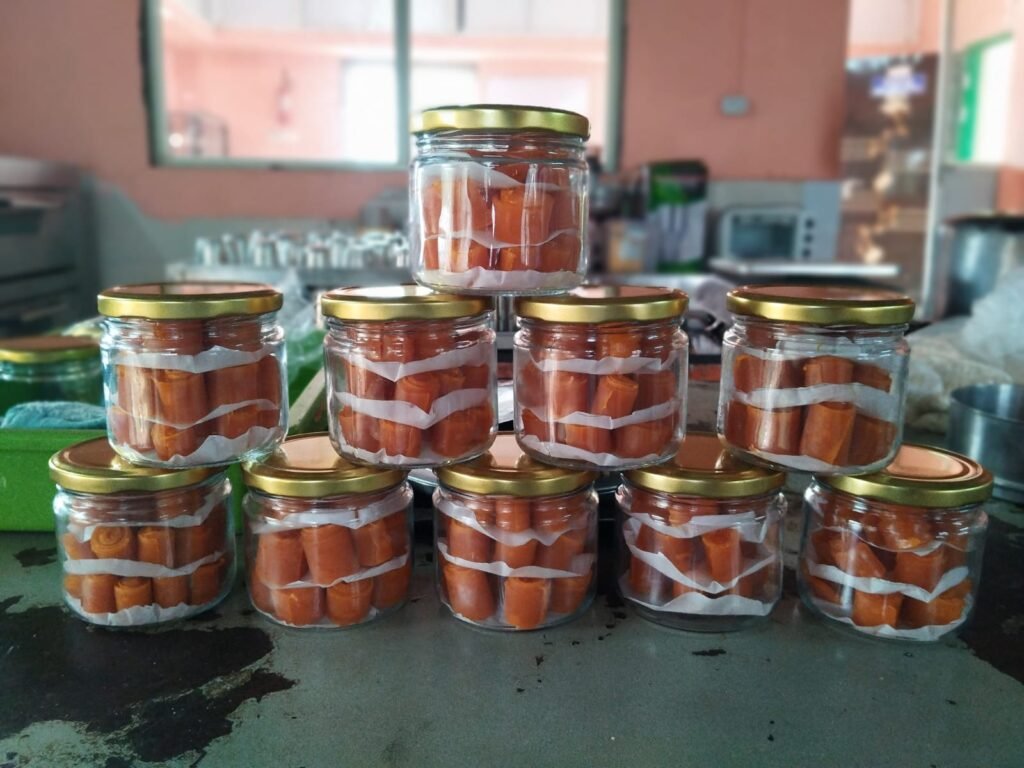
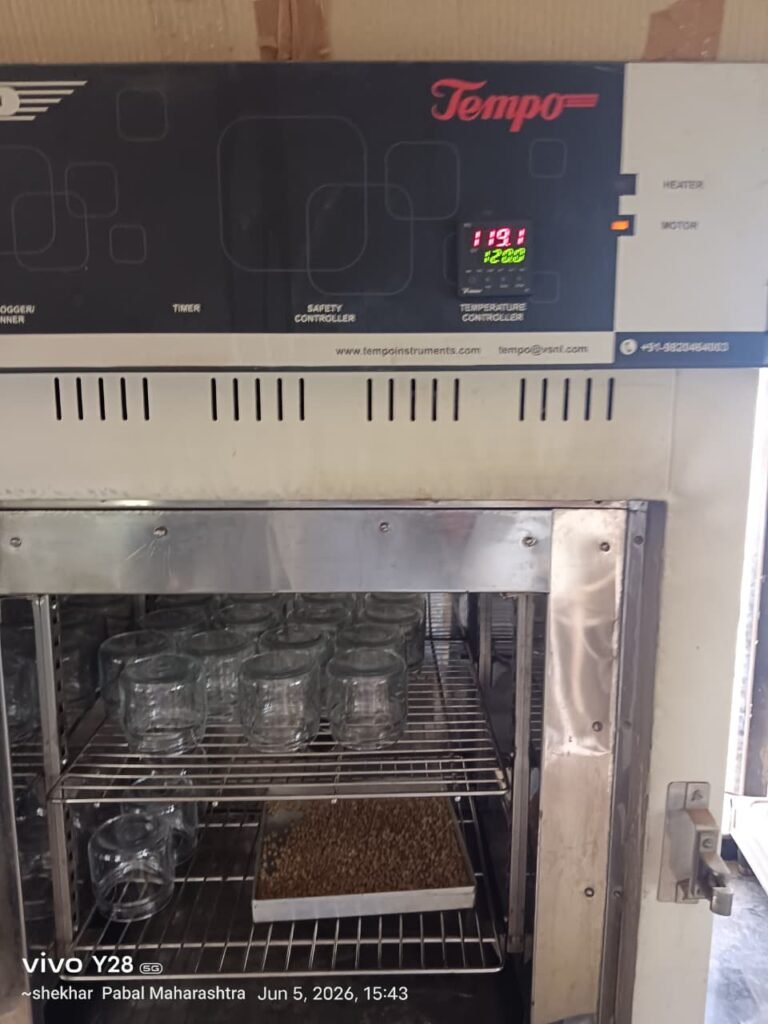
Glass jars were sterilized in a hot-air oven at 180°C for 40 minutes, while the lids were sterilized in an autoclave at 120°C for 15 minutes before packaging.
Challenges Encountered
During dehydration, a power outage interrupted the drying process, requiring the drying time to be extended by approximately one hour.
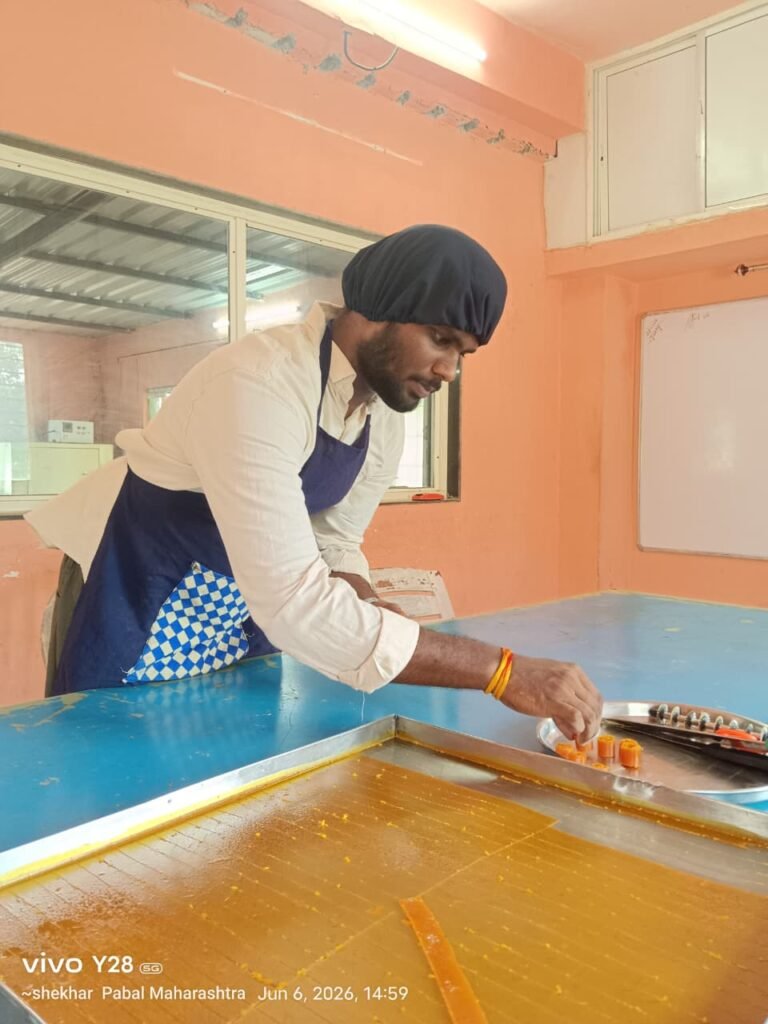
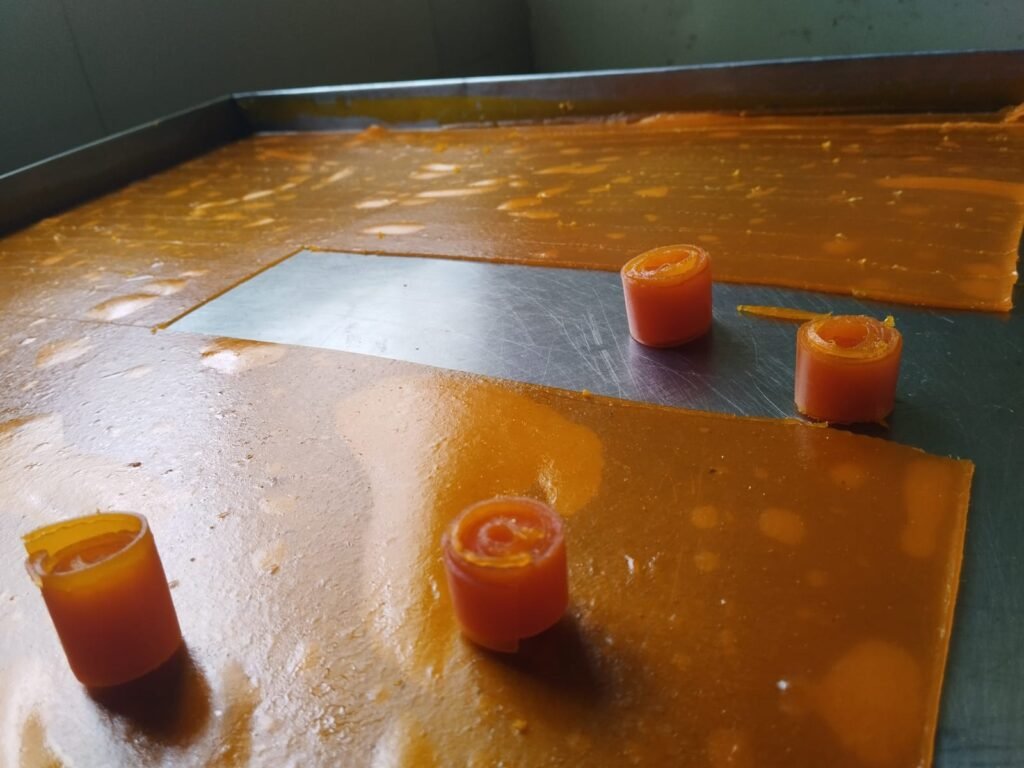
The stainless steel trays had slightly uneven surfaces, causing the mango pulp to collect in some areas and making cutting more difficult.
The available cutting ruler was not suitable, resulting in mango leather rolls of uneven size.
Preservation and Packaging
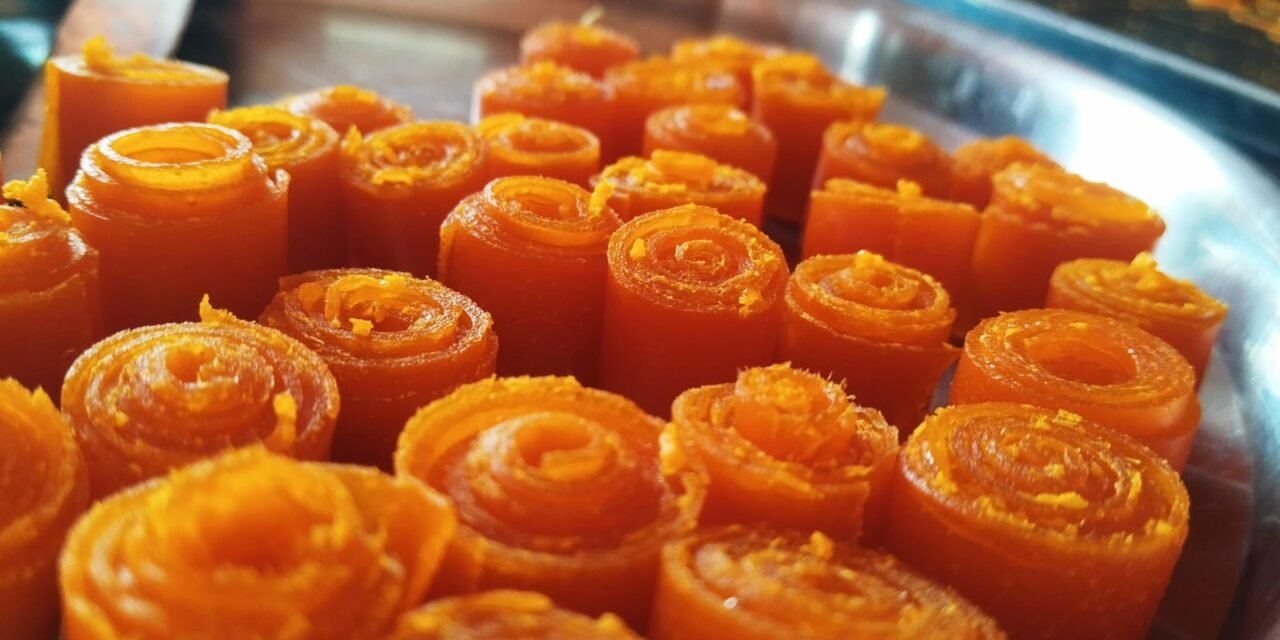
After drying, the mango leather sheets were cut into strips and rolled carefully. The finished rolls were packed into sterilized jars in 200 g portions to maintain product quality during storage.
Future Scope
The current storage method is temporary. Future work will focus on developing a sustainable commercial packaging system to improve shelf life, product appearance, and marketability of the mango leather roll
CONCLUSION :-
The Mango Leather Roll (Aam Papad) was successfully developed using frozen Ratnagiri Alphonso mango pulp through cooking, tray spreading, dehydration, cutting, rolling, and hygienic packaging. The product was successfully prepared and packaged in 200 g portions using sterilized glass jars.
The developed Mango Leather Rolls were successfully utilized for selling, demonstrating the practical feasibility of the developed product. The project also provided practical experience in fruit preservation, dehydration, packaging, and product handling. Further improvements can be made in cutting uniformity and commercial packaging to enhance product appearance and marketability.