
bsf breeding chamber
(using artificial light source)
Introduction / Background / Need of Project •
Black soldier flies are non pest insect which can be used for reducing the organic waste and helpful in preventing the diseases spreading from unmanaged organic waste. A colony of about 10,000 larvae can process roughly 5 to 10 kilograms of organic scraps. therefore, producing more larvae we required a control environment of 27°C -30°C and 65 to 75% relative humidity. To make larvae production free from climate dependent and hence the rate of reducing the organic waste, we required artificial chamber for breeding bsf.
Objectives and Methodology
To design artificial chamber for BSF breeding by controlling temperature ( 27-30 degree centigrade) and relative humidity ( 65 -75%), by introducing a heater which produce enough infrared rays (40 to 50%) to heat up the bsf body and enhance the probability of bsf meeting.
Methodology
1. Study temperature and humidity data of pabal village
2. Heat and mass transfer calculation.
3. Selecting heating and humidification source.
4. Design artificial breeding chamber for bsf.
5. Prototyping.
6. Test.
5/07/26 to 12/07/26
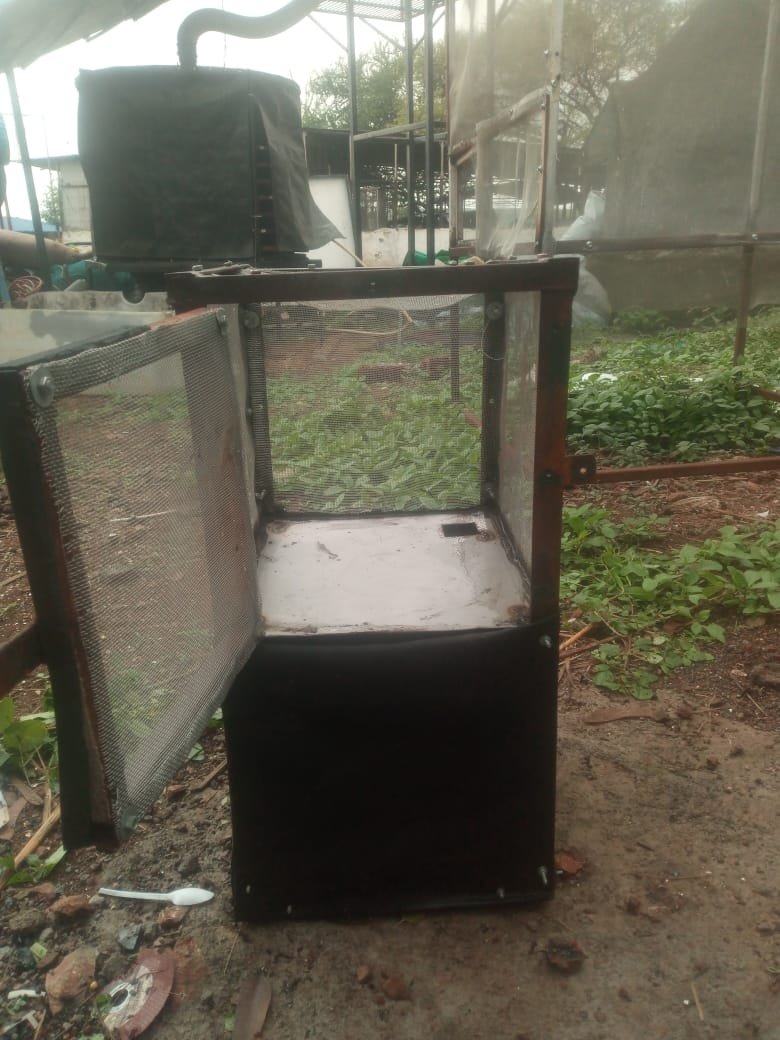
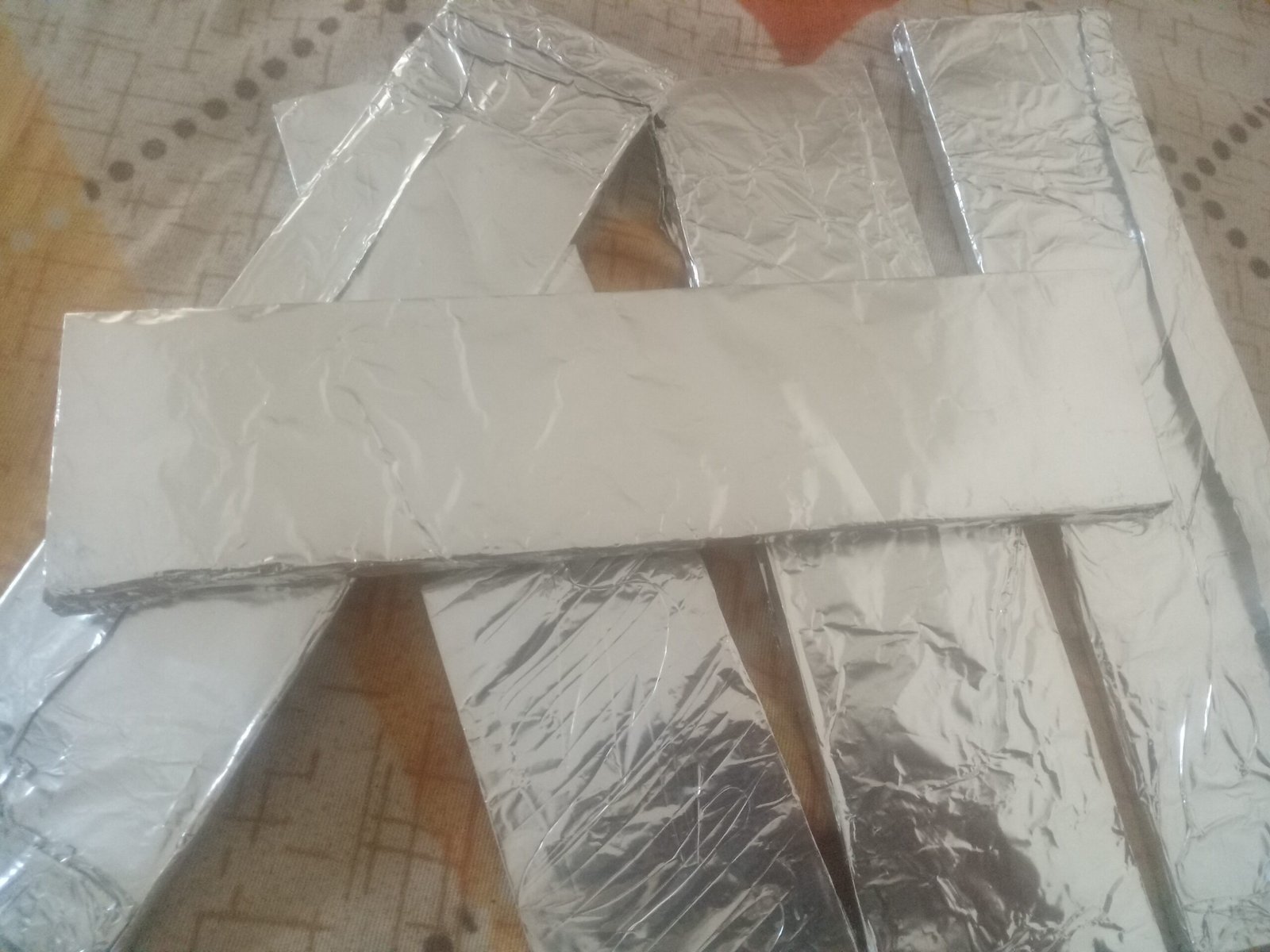
MEASURING DIMENSIONS AND KNOWING SPECIFICATION OF BATTERY
- I measured the exact dimensions of the breeding chamber, which came out to 30 × 30 × 60 cm. I also noted down the technical specifications of our battery—it operates at 48V with a capacity of 83.2 Ah—to ensure it can handle the system’s power needs.
CLEANING OF BREEDING CHAMBER
- sanitizing thE 30*30*60 chamber thoroughly before installing any components.
- BSF colonies thrive in warm, humid conditions—which are unfortunately the exact same conditions that breed harmful bacteria, mites, and wild molds. Cleaning the chamber beforehand creates a “blank slate.” It prevents contaminated surfaces from spoiling the feed substrate or harming the flies, ensuring a high survival rate for the colony.
ACRYLIC PLATE DESIGN AND PREPARATION
- Precision cutting 20CM*5CM*4mm acrylic plates, weighing them, and wrapping them in aluminum foil.
- In the wild, female Black Soldier Flies look for tight, dark, and dry crevices near decomposing organic matter to lay their eggs (called oviposition)
- Raw acrylic is smooth and translucent, which flies dislike for egg-laying. By wrapping the plates in aluminum foil, we create a textured, crinkly surface with tiny, dark gaps that perfectly mimic natural crevices.
- Keeping a record of the plate weights allows you to easily calculate the exact mass of the eggs laid later on simply by weighing the plate again and subtracting the original weight


HUMIDITY CONTROL SETUP
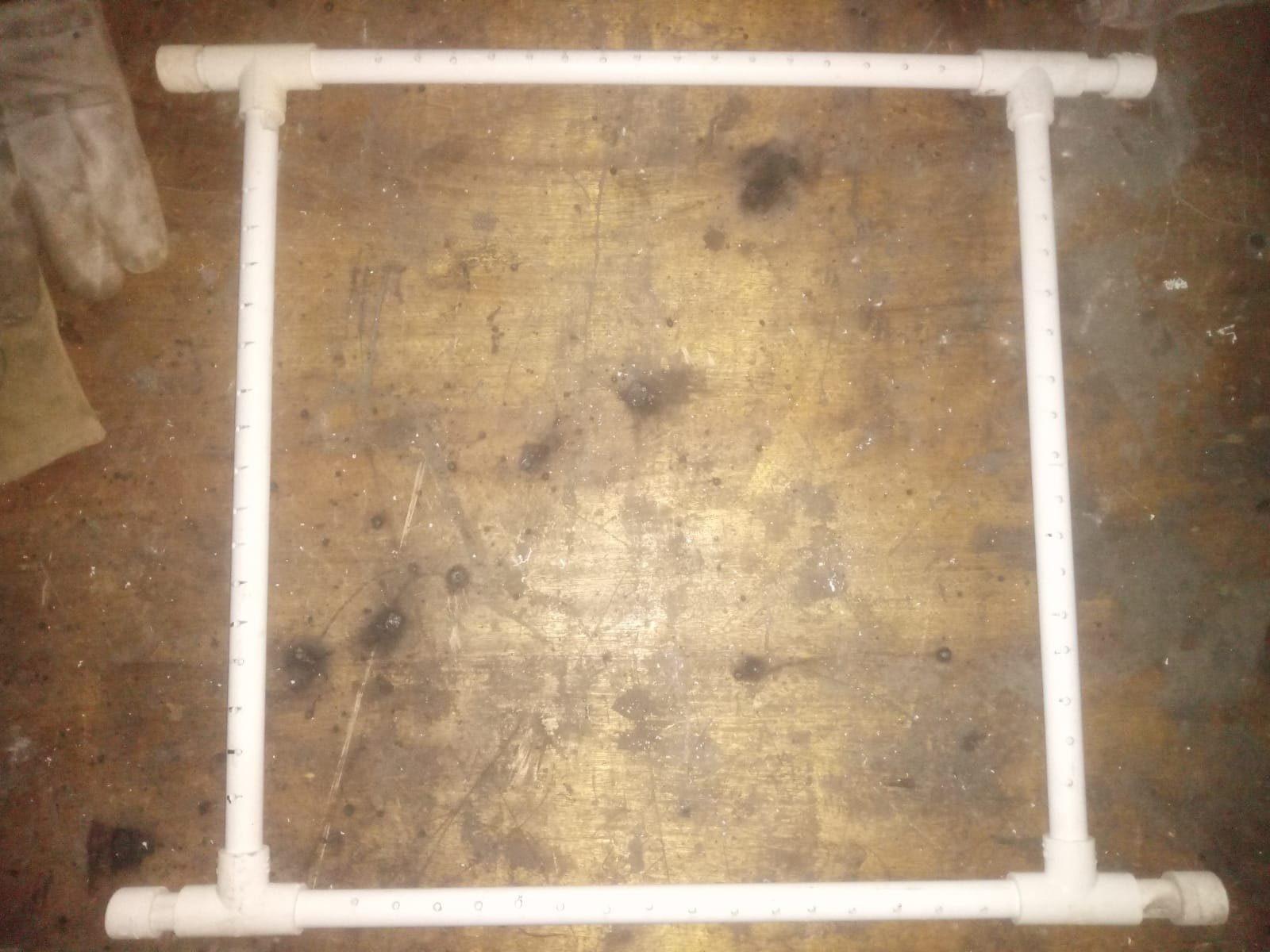
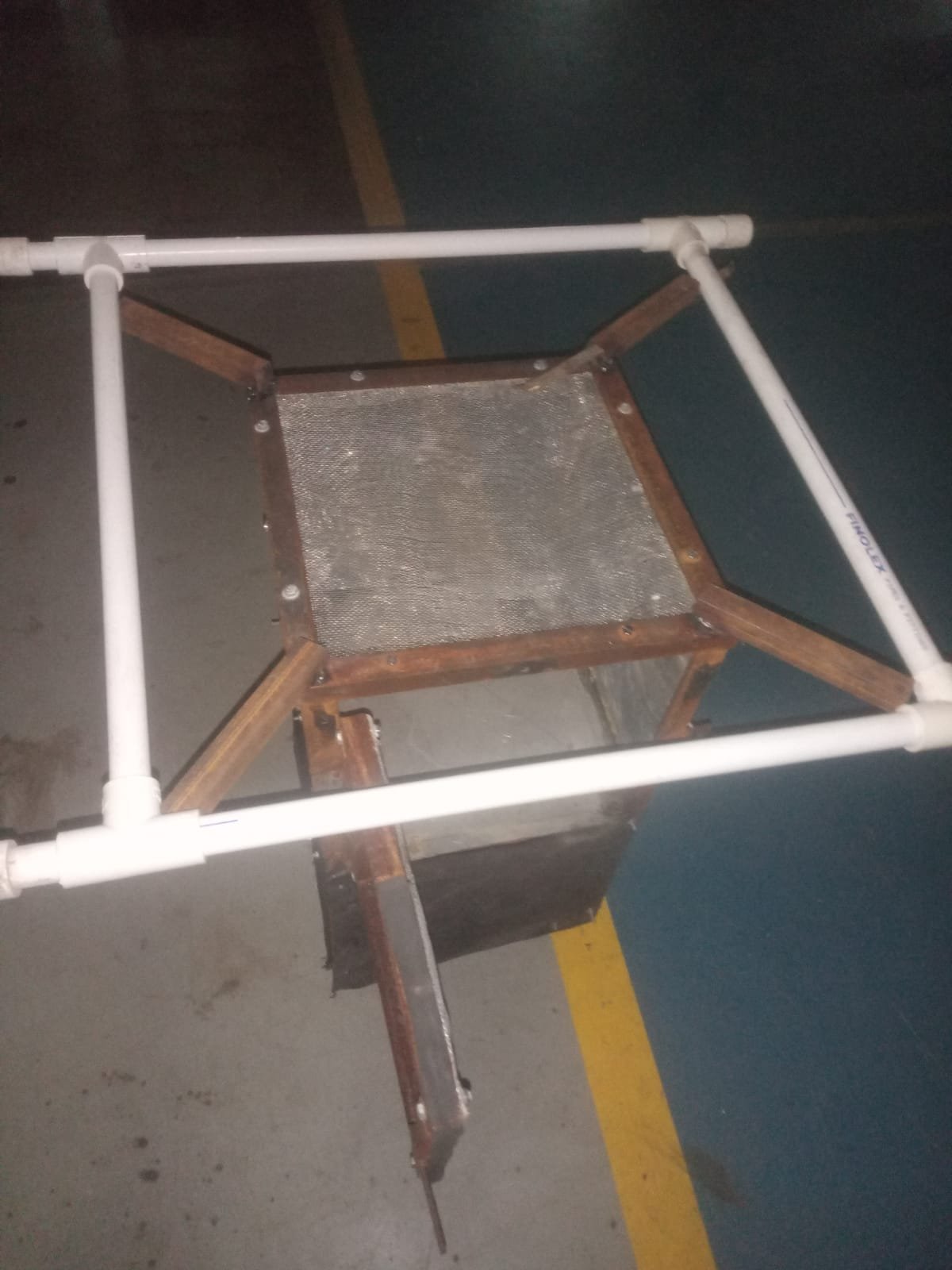
- Building a plastic pipe frame, stabilizing a junction box with welded angle rods, drilling holes into the pipes, and wrapping them in a jute mesh .
- BSF adults require high relative humidity (ideally between 60% and 80%) to mate successfully and prevent their eggs from drying out
-
Instead of using an expensive electric mister that could create oversized water droplets (which can drown the flies or ruin the egg sites), WE can built this setup
- the Mechanics: Water flows through the internal plastic pipes and leaks out through the drilled holes, saturating the tightly wrapped jute mesh. As air passes through this wet jute mesh, the water evaporates into the airflow. This delivers a steady stream of highly humid, slightly cooled air directly into the breeding chamber without creating puddles. The welded angle rods ensure the plumbing and junction box remain structurally rigid and won’t sag or shift under the weight of the water.
13/7/26-19/7/26
1. increase no of jute rope
To maintain the proper temperature and high humidity required for BSF mating and , I needed a material with excellent water-holding capacity. I purchased jute to act as our primary moisture-retaining material. Jute is highly absorbent, breathable, and great for evaporative cooling and humidity stabilization.
2. Prepping the Egg Collection Plates
Keeping track of the exact weight of these plates is crucial so we can accurately measure the egg yield later by weighing them again.
Here are the baseline weights for this week’s plates:
| Plate Number | Empty Weight |
| Plate 1 | 65g |
| Plate 2 | 64g |
| Plate 3 | 65g |
| Plate 4 | 64g |
| Plate 5 | 65g |
3. Brewing the Perfect Attractant
Female BSFs need a strong scent signal to tell them where to lay their eggs. I prepared a fermented bait station to place directly beneath the acrylic plates.
Our recipe this week:
-
5g maize
-
1 small piece of meat
-
10g water
This mix was allowed to ferment and then placed at the bottom of the chamber. The strong odor will waft up through the acrylic plates, signaling to the flies that it’s a safe, nutrient-rich place for their offspring.
4. Placing the Fermented Product
Once the attractant was prepared, I placed this fermented product directly at the bottom of the breeding chamber. This ensures the smell rises and attracts the flies to the acrylic plates above it
5. Repurposing an Old Cooler for Humidification
To actively circulate moisture, I decided to upcycle an old room cooler structure and its water pump.
-
Size Mismatch: The old cooler structure doesn’t fit perfectly into the chamber due to its smaller size.
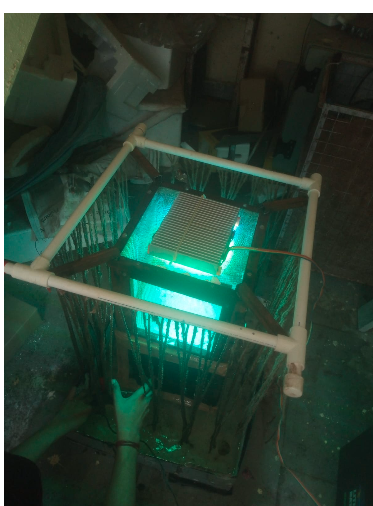
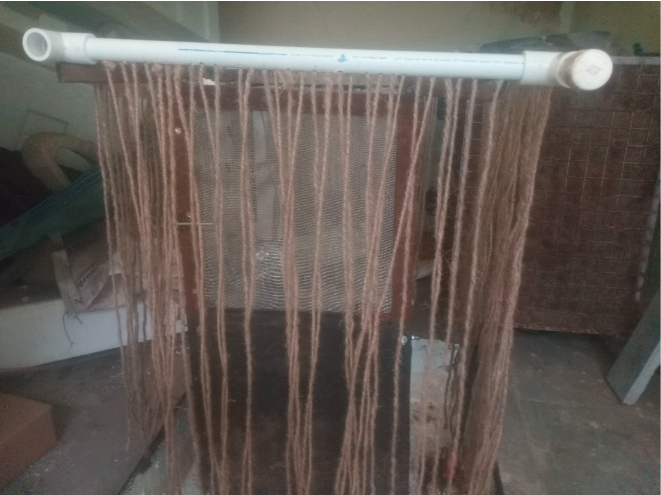
first trial of pump and jute structure
OBSERVATION –
-
The water from the pump does not reach all four sides of the setup.
-
When the water flows, the wet jute ropes stick and join together, reducing effectiveness.
- Proposed Solution: For the next step, I plan to use a wire mesh. This will hold the jute ropes in place, maintain their position, and keep them separated so water flows properly.
20/07/26 to 26/07/26
MODIFICATION IN PVC FRAME:
- Add number of gute rope in the holes.
- Identify the leakages in the pvc frame and fix it with the help of m-seal.
OUTCOME:
- Flow of water in pvc pipes are continuous and completely through out the pvc pipes.
- Wettening of gute rope is uniform and proper.
- NO leakages in the system and overflow of water into the breeding chamber.
OBSERVATIONS:
- first day:
- Light operated for 4 hours.
- Day temperature range 21 to 29 degree centigrade.
- Relative humidity of day 80% to 95 %.
- Initial 5 minute, movement is observed in flies.
- number of flies in chamber is 5.
2. Second day:
- light operated for 5 hours.
- Day temperature range 23 to 28 degree centigrade.
- Relative humidity of day 75% to 95 %.
- Initial 5 to 10 minute, movement is observed in flies.
- number of flies in chamber is 5.
3.Third day:
- light operated for 5 hours.
- Day temperature range 22 to 28 degree centigrade.
- Relative humidity of day 85% to 93 %.
- Initial 5 minute, movement is observed in flies.
- number of flies in chamber is 7.
4. Fourth day:
- light operated for 5 hours.
- Day temperture range 22.8 to 27.2 degree centigrade.
- Relative humidity of day 92% to 95%.
- initial 5 minute , movement is observed in flies.
- number of flies in chamber is 5.
PROBLEM:
- Conversion rate of pupas is very low.
- Varying temperature of the day.
PROPOSED SOLUTION:
- Pupas of the chamber should be replaced by new ones.
- Adding external heating source to the chamber for steady temperature.