Introduction
Solar distillation is a sustainable and environmentally friendly method of producing clean water using solar energy. However, conventional solar stills often operate at lower efficiencies because they remain fixed and cannot continuously utilize the maximum available solar radiation throughout the day.
The primary objective of this project is to develop a solar still capable of automatic sun tracking. By continuously aligning the system with the Sun, greater solar energy can be captured, resulting in higher water temperatures, increased evaporation rates, and improved distilled water production.
System Concept
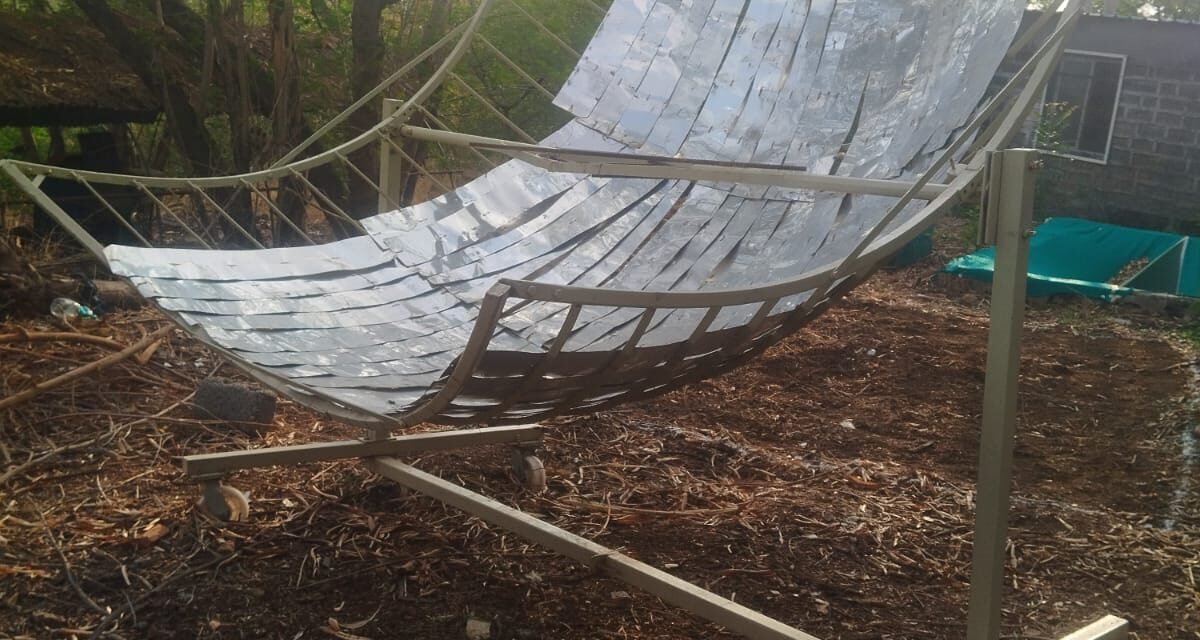
The proposed system combines a solar still with a parabolic trough solar concentrator.
The parabolic reflector concentrates incoming solar radiation onto a focal line, increasing the thermal energy available to the solar still. Higher temperatures promote faster evaporation of water, thereby improving the overall productivity of the distillation process.
To ensure maximum solar energy collection throughout the day, the concentrator must continuously face the Sun. Therefore, the development of a smooth and reliable tracking mechanism became a key part of the project.
Working Principle
The system consists of two major components:
- Parabolic Trough Solar Concentrator
- Solar Still Unit
The parabolic trough reflector concentrates incoming solar radiation onto a focal line where the receiver is placed. Heat collected at the receiver is transferred to the water inside the solar still, increasing its temperature and accelerating evaporation.
The generated water vapor rises and condenses on the cooler transparent cover of the still. The condensed droplets then flow into a collection channel and are collected as distilled water.
Disassembly and Structural Assessment
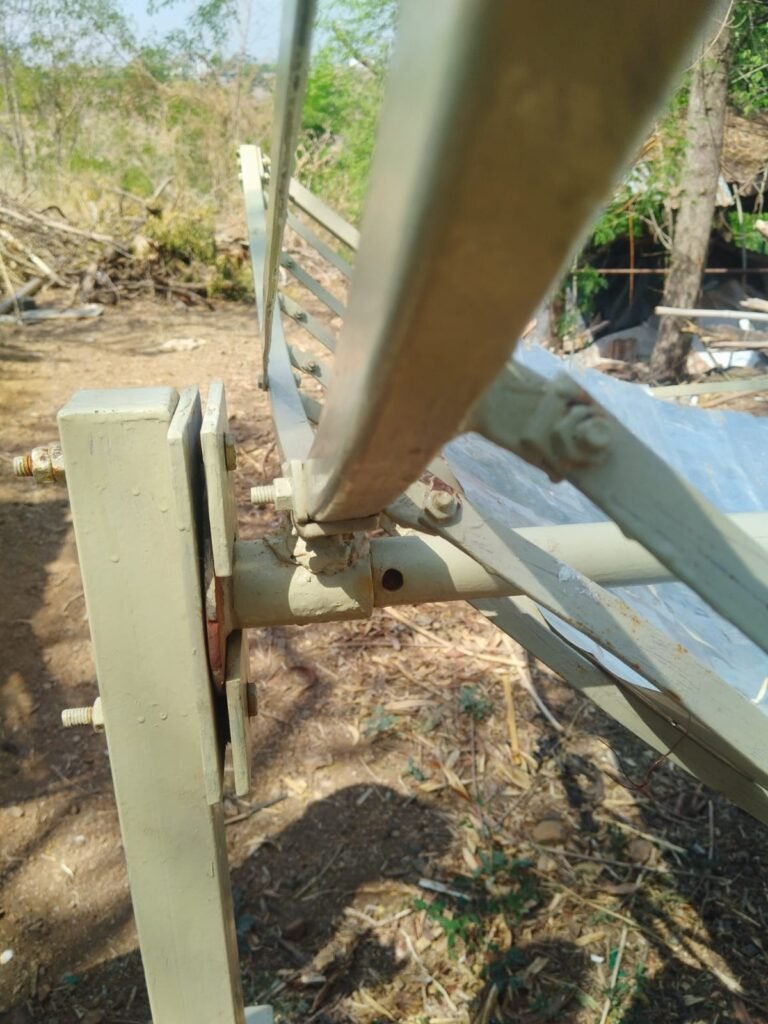
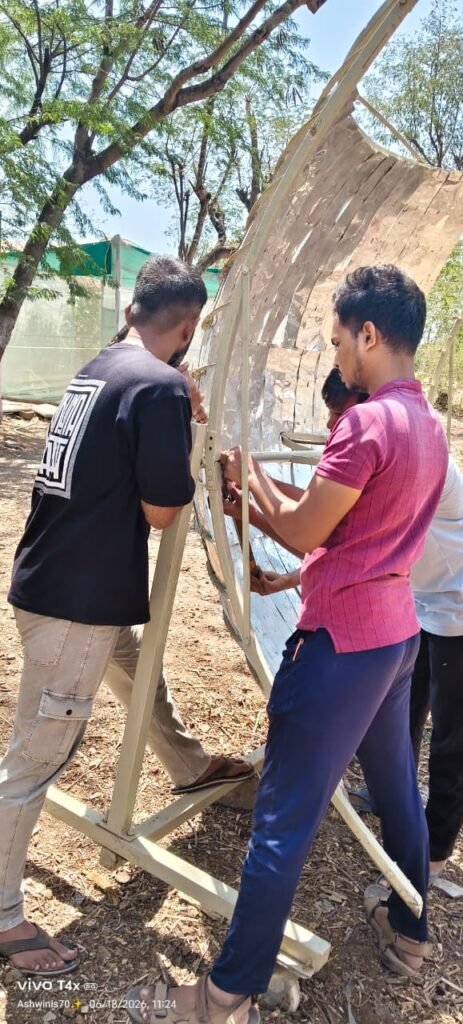
To improve the existing design, the entire structure was disassembled and carefully inspected. This process helped identify mechanical limitations and areas requiring modification before implementing the tracking mechanism.
The assessment revealed that the rotational support arrangement required improvement to achieve smooth movement. The disassembly process also provided an opportunity to strengthen structural members, improve alignment, and redesign critical mounting points.
Redesign of the Rotating Structure
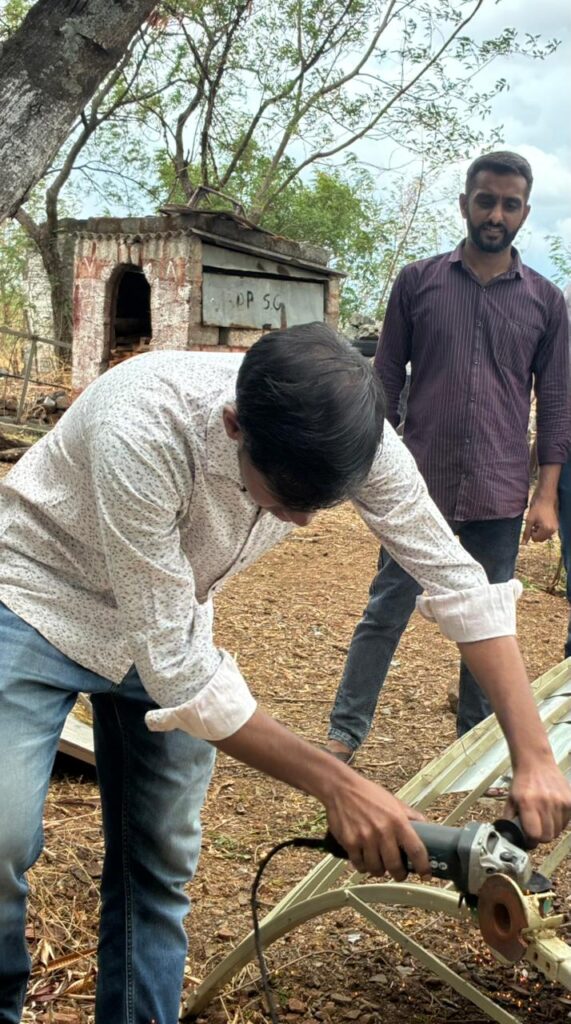
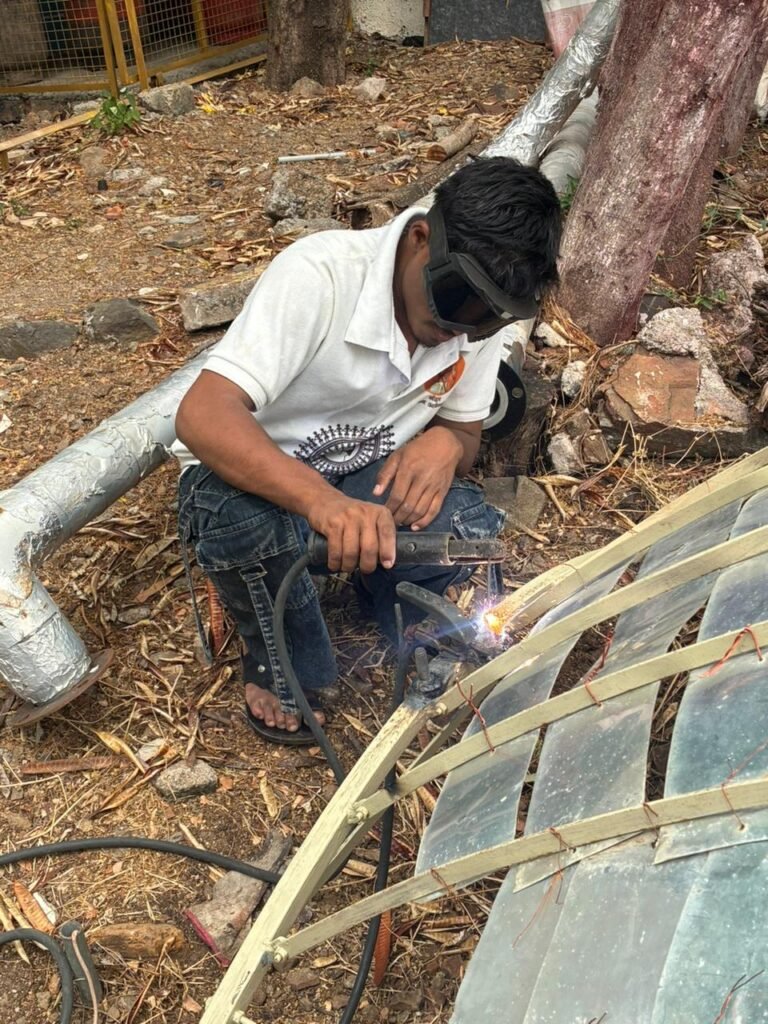
To overcome the friction problem, the original rotational arrangement was removed and redesigned.
The modified system involved:
- Welding mounting bolts onto the reflector support structure.
- Installing pillow block bearings on the structure.
- Passing a steel pipe through the bearings to act as the rotational shaft.
- Mounting the shaft securely onto the base frame.
This new arrangement provided proper support to the reflector while allowing smooth rotational movement with significantly reduced friction.
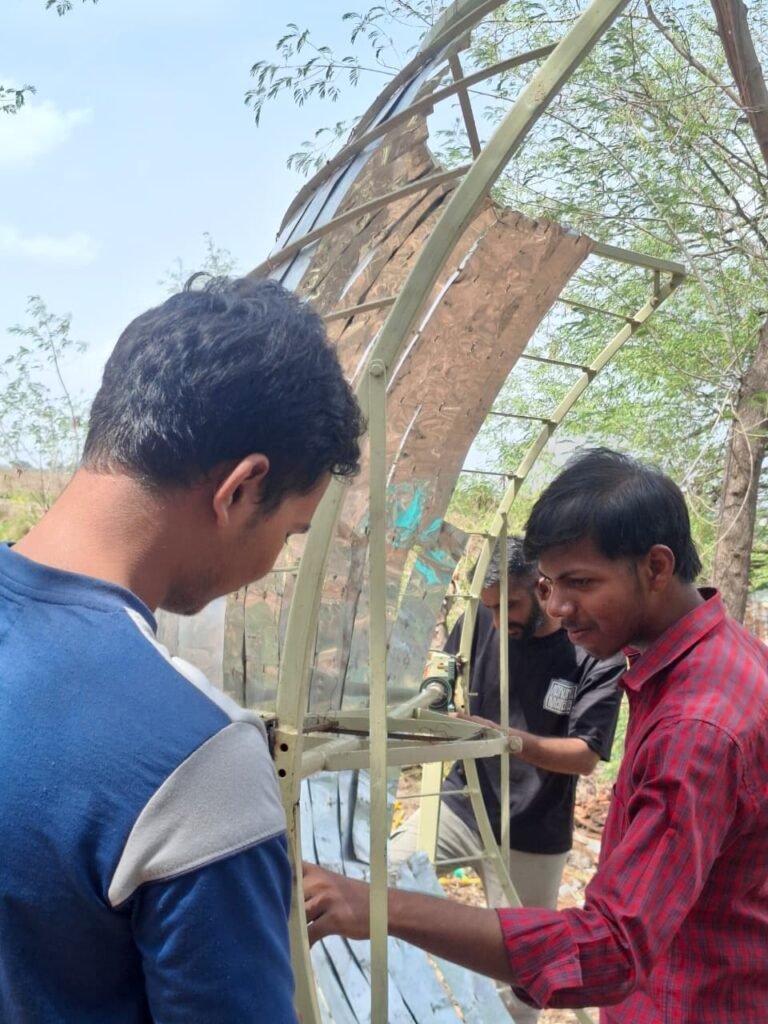
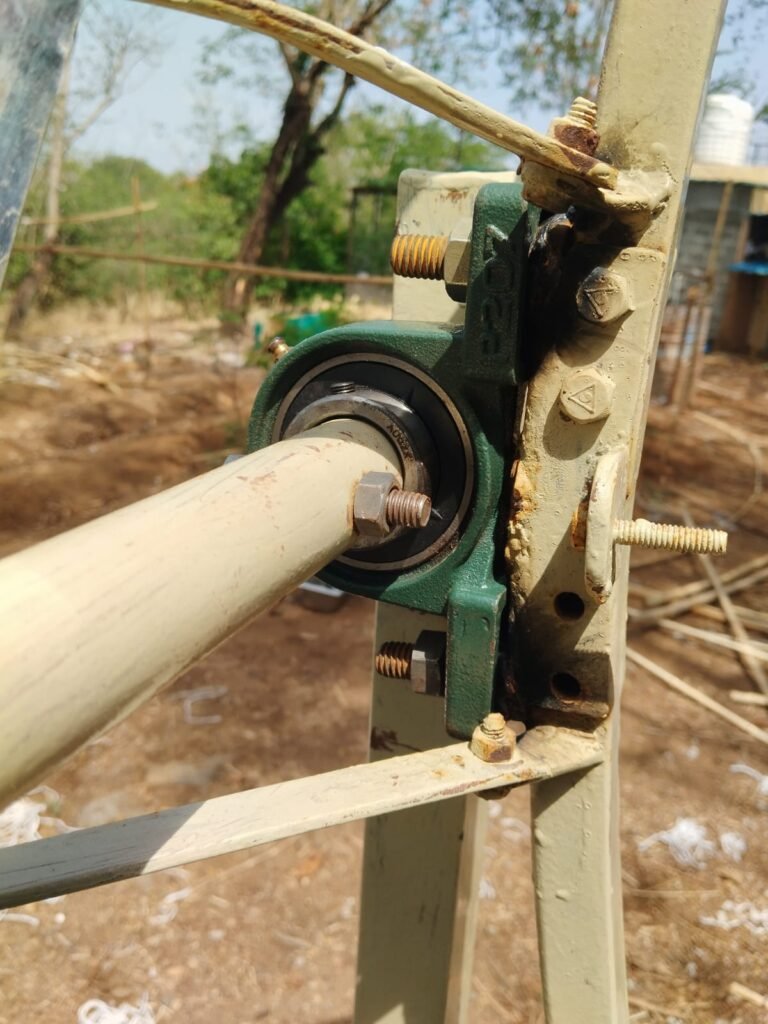
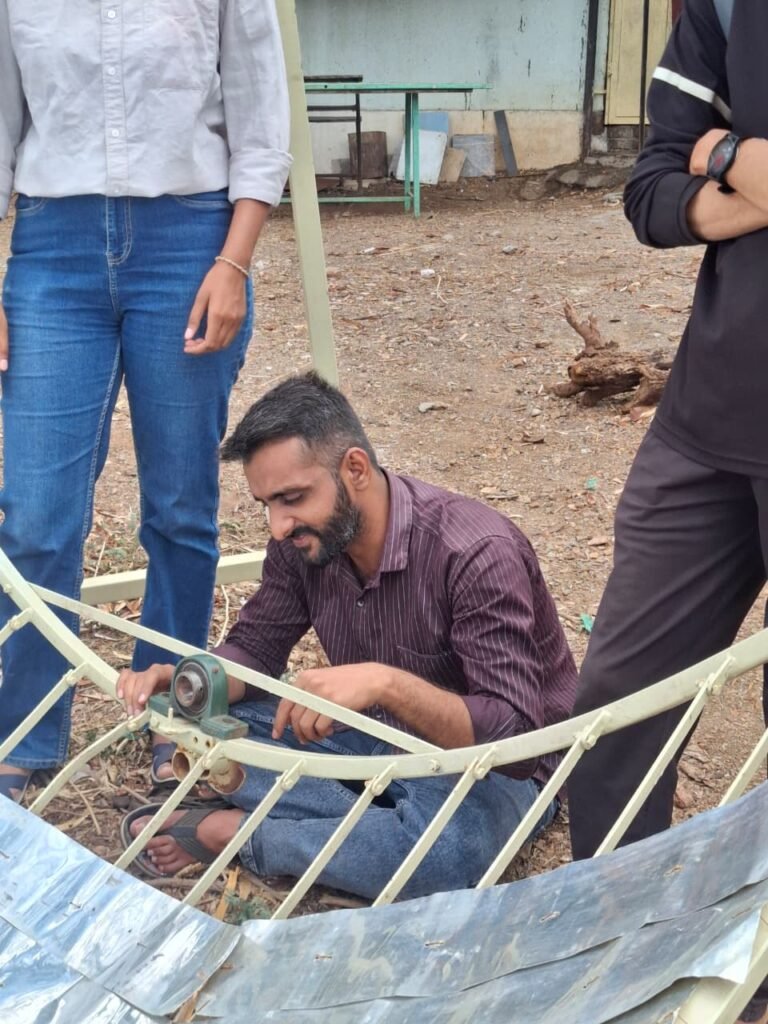
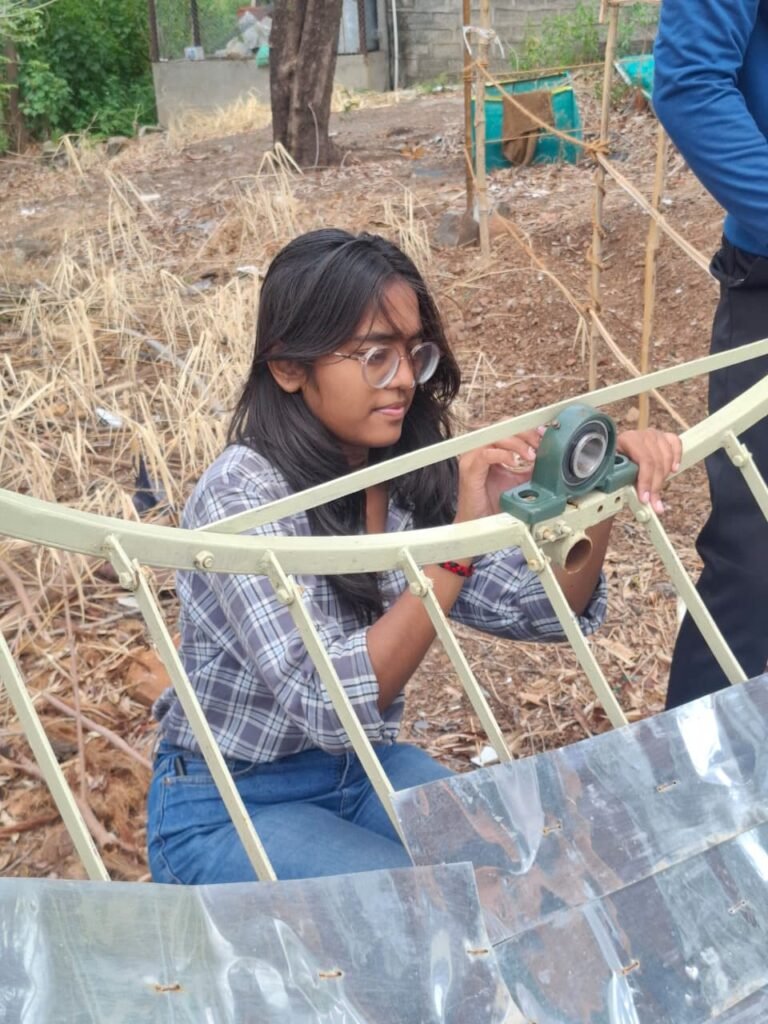
Redesign of the Rotating Structure
Several transmission mechanisms were evaluated for automating the solar parabolic trough, including direct gear drive, chain drive, and cable-driven systems. Considering fabrication simplicity, cost, ease of maintenance, and positioning accuracy, a belt-driven winding mechanism was selected.
In the proposed design, a belt is attached to both ends of the parabolic trough. The two free ends of the belt are wound in opposite directions around a drum mounted on the shaft of a stepper motor. During operation, the stepper motor simultaneously winds one side of the belt while unwinding the opposite side. This creates equal and opposite tensile forces that rotate the parabolic trough about its central axis. The transmission arrangement enables smooth bidirectional rotation while maintaining continuous belt tension.
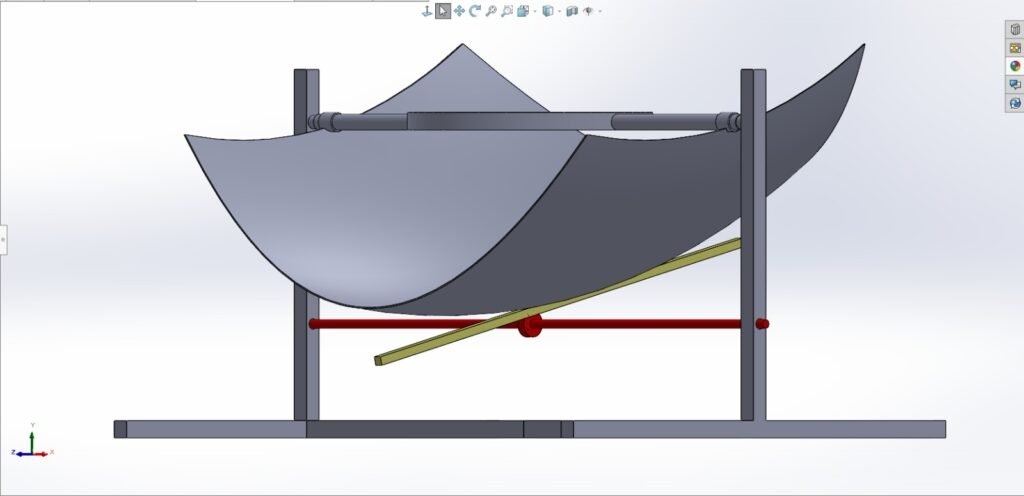
The stepper motor is mounted at the base of the supporting frame to reduce the load on the rotating structure and simplify maintenance. The belt connecting the motor drum and the parabolic trough is inclined at approximately 45° with respect to the horizontal plane, allowing the motor to be positioned conveniently within the support structure while transmitting the required motion to the collector.
Since the parabolic trough is balanced about its rotation axis, the motor is primarily required to overcome bearing friction, transmission losses, and external disturbances such as wind rather than continuously supporting the collector weight. This significantly reduces the motor torque requirement.
Experimental Torque Evaluation
To estimate the torque required for rotating the collector, an experimental test was conducted.
A 2 kg mass was suspended at one end of the parabolic trough at a distance of 1.1 m from the rotation axis. The applied load was sufficient to rotate the balanced collector, indicating the maximum torque required to initiate rotation.
The applied force iswhere
- m=2 kg
Hence,
The corresponding torque about the rotation axis iswhere
Therefore,This value represents the experimentally determined torque required to rotate the collector.
Motor Torque Calculation
The selected transmission mechanism uses a winding drum mounted on the motor shaft.
The design parameters are
- Drum radius = 25 mm = 0.025 m
- Belt inclination = 45°
Because the belt is inclined at 45°, only the component of belt tension perpendicular to the lever arm contributes to rotation.
The required belt tension is calculated as
Substituting the known values,
The required motor torque is therefore
where
- r=0.025m
Hence,
Converting into kg·cm,
Safety Factor
Although the calculated motor torque is approximately 7.1 kg·cm, the actual operating conditions include
- bearing friction,
- belt friction,
- belt elasticity,
- wind loading,
- starting and stopping inertia,
- manufacturing tolerances.
Therefore, a safety factor of 3 was adopted.
The required motor torque becomes
13/07/2026 – 20/07/2026
Motor Selection, Control System Development, and Initial Testing
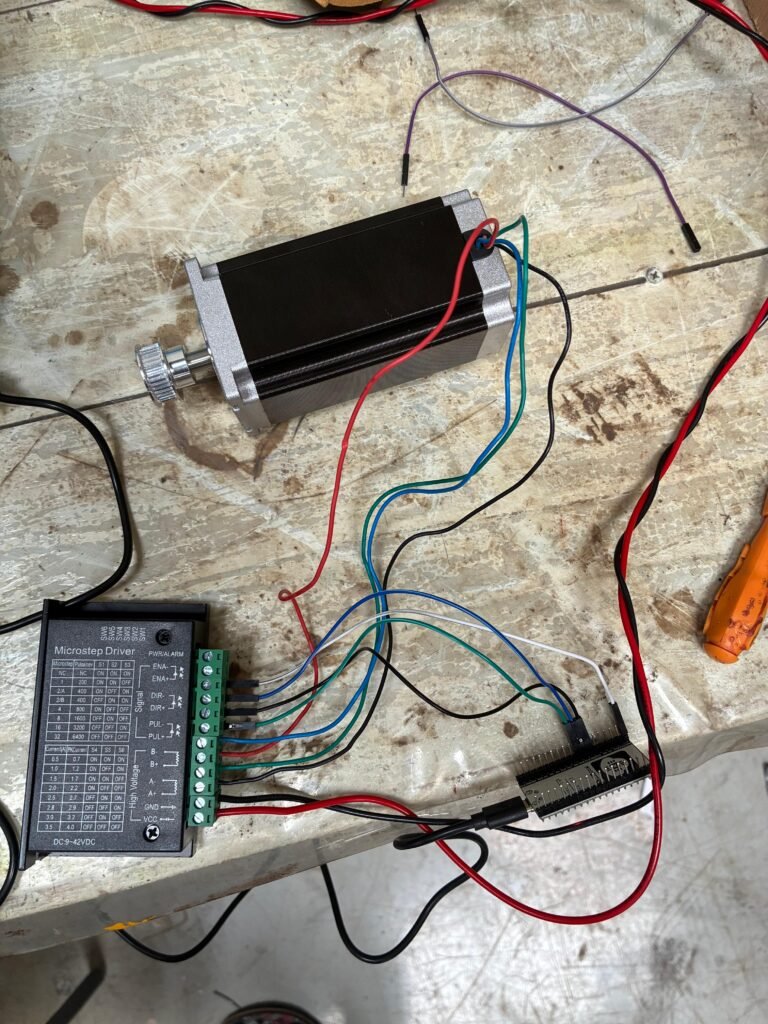
Based on the torque analysis and the experimental evaluation, an appropriate NEMA 23 stepper motor was selected to satisfy the calculated torque requirement for the solar tracking mechanism. The motor was chosen with an adequate safety margin to compensate for frictional losses, transmission inefficiencies, and external disturbances such as wind.
After selecting the motor, the mechanical transmission system was assembled and the initial prototype was fabricated. The stepper motor was integrated with the winding drum mechanism, where a belt attached to both ends of the parabolic trough is simultaneously wound and unwound to rotate the collector about its central axis.
The electrical system was then developed by interfacing the stepper motor with the ESP32 microcontroller through a suitable stepper motor driver. Initial testing was carried out to verify the communication between the microcontroller and the motor driver, evaluate the motor’s rotational performance, and ensure smooth bidirectional movement of the parabolic trough. The prototype successfully demonstrated controlled angular movement of the collector according to the commanded position.
Following the successful hardware integration, the focus shifted to the development of the solar tracking algorithm. An astronomical position algorithm was studied to determine the Sun’s position using date, time, latitude, and longitude. The algorithm calculates the solar azimuth and elevation angles corresponding to the geographical location and current time.
Based on the calculated solar position, the control software continuously determines the desired orientation of the parabolic trough and commands the stepper motor to adjust the collector angle accordingly. This enables the collector to remain aligned with the Sun throughout the day, ensuring that the maximum possible solar radiation is concentrated at the focal point of the parabolic trough, thereby improving the thermal efficiency of the solar cooker.
The developed system combines the mechanical transmission mechanism, stepper motor control, and real-time solar position calculations to achieve fully automatic and accurate solar tracking. Further work includes long-term outdoor testing, optimization of the tracking algorithm, and evaluation of the system’s thermal performance under varying environmental conditions.
21/07/2026 – 27/07/2026
Initial experiments were conducted to evaluate the rotational performance of the parabolic dish and verify the synchronization between the microcontroller, motor driver, and stepper motor. The tests confirmed that the motor successfully rotated the collector according to the commanded tracking angle. However, during continuous operation, it was observed that the belt gradually lost tension as the dish rotated. This reduction in belt tension caused the belt to slip and partially disengage from the winding drum, resulting in inaccurate positioning and unreliable control of the parabolic trough.
To overcome this issue, the transmission mechanism was redesigned by incorporating two idler pulleys into the belt path. The idler pulleys maintain constant belt tension throughout the entire range of motion while increasing the belt’s contact with the winding drum. This modification prevents belt slippage, ensures continuous engagement between the belt and the drum, and improves the transmission of motion from the stepper motor to the parabolic dish.
Following the redesign, the modified transmission system was reassembled and tested. The improved mechanism demonstrated smooth and reliable bidirectional rotation of the parabolic trough, with the dish accurately following the angular commands generated by the control algorithm. The addition of the idler pulleys significantly enhanced the stability, positioning accuracy, and overall reliability of the automatic solar tracking system, making the mechanism suitable for extended outdoor operation.
11/08/2026 – 17/08/2026
01/08/2026 – 10/08/2026
During the testing of the belt-driven transmission, belt slackening was identified as a major issue. As the parabolic dish rotated, the belt tension was not maintained uniformly throughout the range of motion. This resulted in slackening of the belt and affected the engagement between the belt and the motor winding drum, reducing the accuracy and reliability of the tracking mechanism.
To address this issue, a spring-based tensioning mechanism was initially introduced by fixing a spring at one end of the belt. Initial testing showed that the spring successfully reduced the amount of slack and improved belt engagement. However, the solution was only partially effective, as the belt continued to develop slack at certain angular positions of the dish.
To further improve the tensioning mechanism, the existing belt-and-spring arrangement is being modified. The conventional spring arrangement will be replaced with a torsion-spring-based tensioning mechanism. The torsional spring will provide a more controlled and consistent restoring force as the belt moves through the operating range. This is expected to maintain more uniform belt tension, prevent disengagement from the winding drum, and improve the accuracy of angular positioning.
The modified mechanism will subsequently be tested over the complete range of dish rotation to evaluate belt tension, slippage, angular positioning accuracy, and overall reliability of the solar tracking system.
11/08/2026 – 17/08/2026
Testing of Belt and Rope Transmission
Further testing was conducted using different flexible transmission materials, including plastic rope and conventional rope. The rope was wrapped around the drum mounted on the motor shaft with two to three overlapping turns to improve the grip between the rope and the drum.
However, during testing, it was observed that the smooth surface of the drum and the rope/plastic rope resulted in insufficient friction between the contacting surfaces. Due to this low friction, the rope slipped on the drum instead of properly winding and unwinding as the motor shaft rotated. This prevented the effective transfer of motor motion to the parabolic dish and made accurate angular control difficult.
The test demonstrated that simply increasing the number of overlapping turns was not sufficient to ensure reliable engagement between the rope and the drum. Therefore, the winding mechanism requires further modification to increase friction and improve the grip between the transmission material and the motor drum. Possible improvements include using a drum with a grooved or textured surface, selecting a higher-friction belt or rope material, or modifying the drum geometry to mechanically guide and retain the belt during winding and unwinding.
This testing helped identify the limitations of the initial rope-and-drum mechanism and provided direction for improving the transmission system for reliable solar tracking.
18/08/2026 -24/08/2026
During the operation of the belt-driven tracking mechanism, belt slackening was identified as a major issue. As the parabolic dish rotated, the belt lost tension, which affected the reliable transmission of motion from the motor to the dish and made accurate control of the tracking angle difficult.
To overcome this problem, an initial attempt was made to incorporate a spring-based tensioning mechanism. The spring was intended to maintain tension in the belt throughout the range of motion. However, the testing results were not satisfactory, as the belt continued to develop slack during operation. Therefore, an alternative mechanical arrangement was investigated.
The revised mechanism consists of two pulleys mounted on the motor-driven system. During rotation in one direction, one pulley winds the belt while the other simultaneously unwinds it. When the direction of motor rotation is reversed, the operation is also reversed. This arrangement helps maintain more consistent belt tension and provides better control over the bidirectional movement of the parabolic dish. Initial testing of this mechanism showed promising results.
However, another issue was observed during the testing phase. As the belt was continuously wound and unwound, successive layers of the belt tended to overlap each other on the pulley. This overlapping could result in uneven winding, changes in the effective pulley radius, and unreliable movement of the dish.
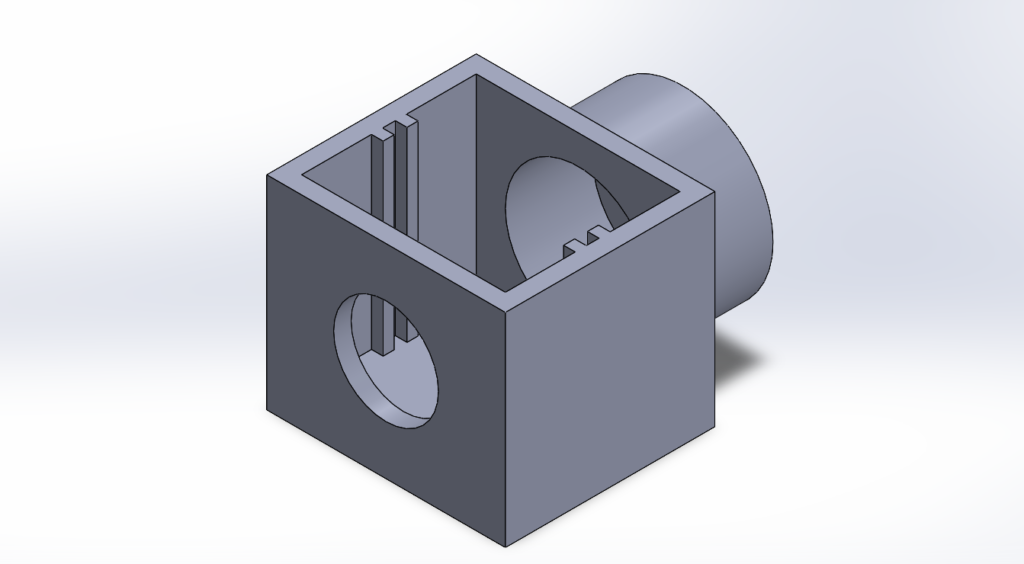
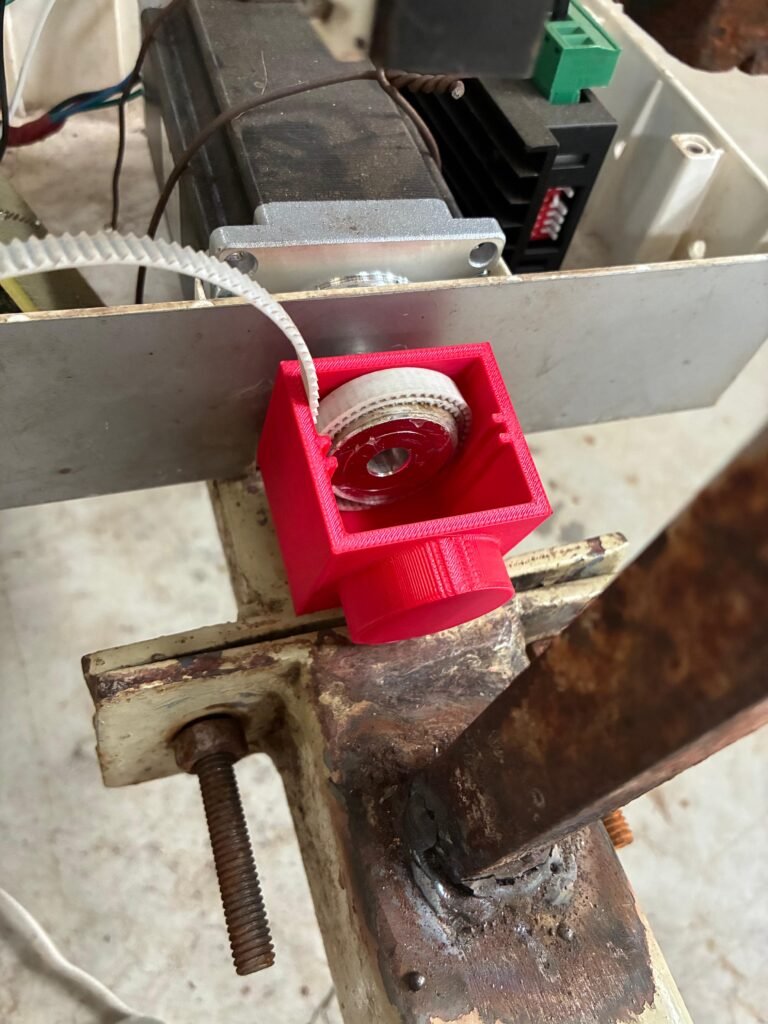
To address this issue, a guiding casing is currently being designed and fabricated around the pulley system. The casing will guide the belt into separate paths and prevent the winding and unwinding sections from overlapping with each other. This modification is expected to improve the consistency of belt movement, maintain smooth operation, and enhance the overall reliability of the automatic solar tracking mechanism
25/08/2026 -31/08/2026
Modification and Testing of the Belt Winding Mechanism
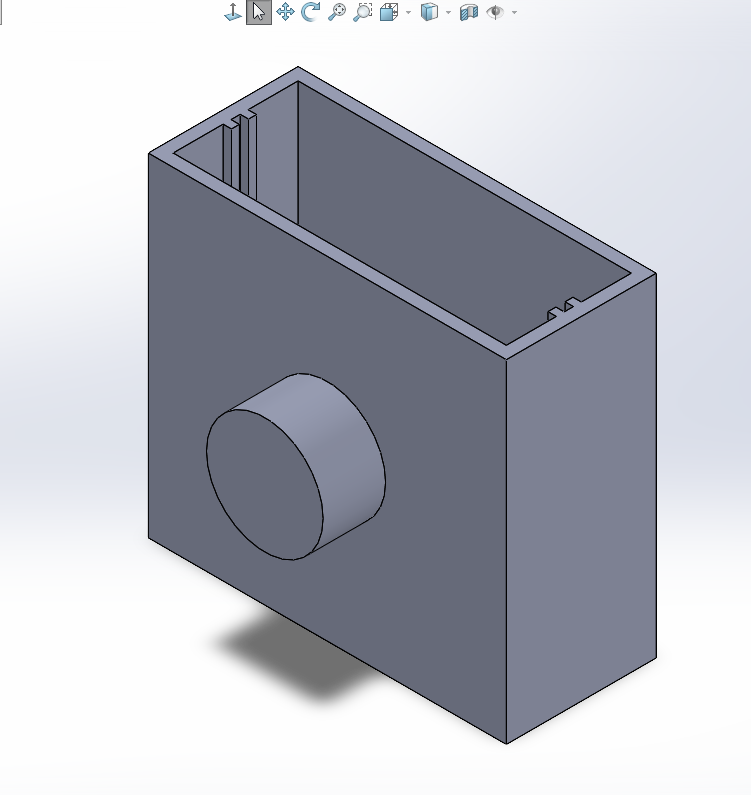
During testing of the previously designed casing, it was observed that the clearance between the casing and the winding drum was insufficient. As the belt accumulated on the drum, the limited available space restricted further winding and interfered with the smooth operation of the transmission mechanism.
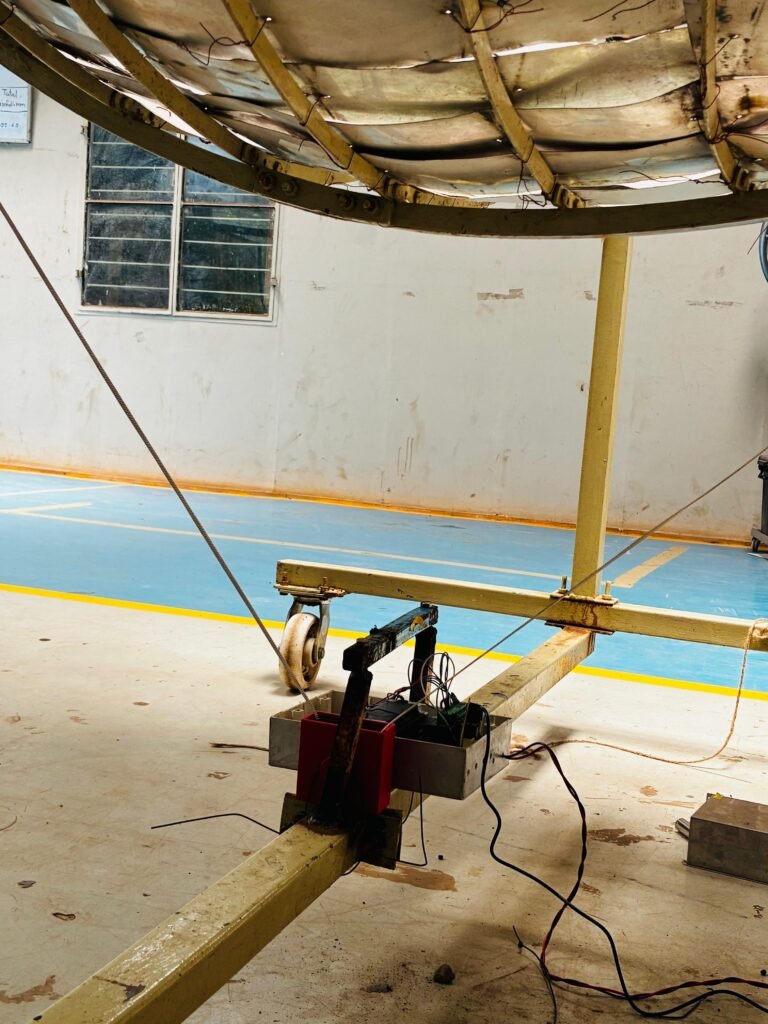
To address this issue, the casing was redesigned with additional clearance around the winding drum. A separating plate was also incorporated into the new design to keep the winding and unwinding sections of the belt separated. This prevents the two belt paths from overlapping and allows the belt to wind and unwind more uniformly on the drum.
The modified casing and belt transmission mechanism were fabricated, assembled, and tested with the parabolic dish. During the initial trials, significantly less belt slackening was observed compared with the previous designs, and the parabolic dish rotated as expected in response to the motor movement. The redesigned mechanism therefore shows improved belt management and more reliable transmission of motion.
Further testing is currently being carried out to evaluate the mechanism over the complete range of dish rotation and to identify any additional improvements required for reliable long-term operation. In parallel, development of the solar tracking control algorithm is in progress. The control system will determine the Sun’s position based on date, time, latitude, and longitude and accordingly control the stepper motor to maintain the required orientation of the parabolic dish toward the Sun.
01/09/2026 – 07/09/2026
Implementation and Initial Testing of the Automatic Sun Tracking System
Following the modifications to the belt winding mechanism and the redesigned casing with a separating plate, the mechanical transmission system is now operating reliably. The belt remains properly engaged with the winding and unwinding drums, with only minimal slack observed during operation. The parabolic dish is able to rotate smoothly in both directions according to the movement commanded by the stepper motor.
In parallel with the mechanical development, the sun-tracking algorithm and control code were implemented. The system calculates the position of the Sun using the date, time, latitude, and longitude and determines the required angular position of the parabolic dish. Based on the calculated solar position, the controller operates the stepper motor to adjust the dish orientation automatically throughout the day.
Initial integrated testing of the complete system was carried out after implementing the tracking algorithm. During these trials, the mechanical transmission, stepper motor, motor driver, microcontroller, and tracking algorithm operated together successfully, and the parabolic dish moved to the expected positions based on the calculated Sun angle.
At the current stage, the system is functioning as intended; however, the tracking accuracy has not yet been quantitatively evaluated. Further testing is in progress to identify any mechanical or control-related deviations. After completing the necessary adjustments and calibration, the tracking accuracy will be measured by comparing the calculated target angle with the actual angular position of the parabolic dish. This evaluation will help quantify the positioning error and verify the overall accuracy and reliability of the automatic solar tracking system.
08/09/2026 – 10/09/2026