
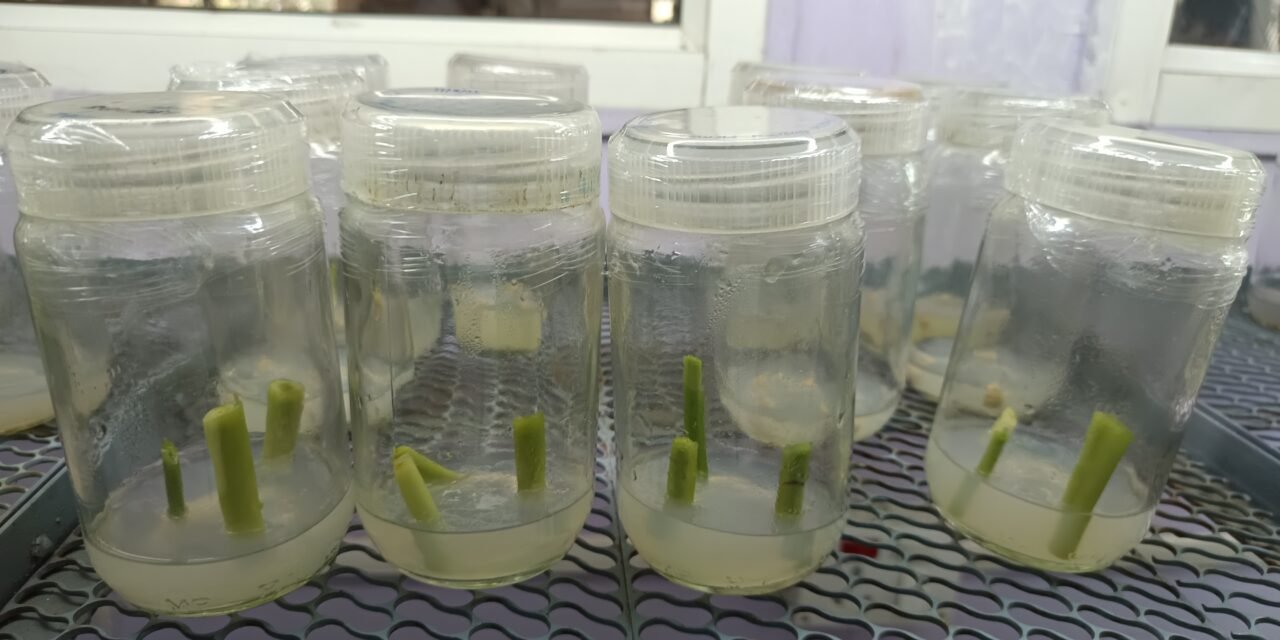
INTRODUCTION :-
Napier grass (Pennisetum purpureum), also known as elephant grass, is a tall perennial grass widely cultivated as a high-yielding fodder crop for livestock. It is valued for its fast growth, high biomass production, palatability, and nutritional quality. Traditionally, Napier grass is propagated through stem cuttings and root splits. However, these conventional methods are slow, prone to disease transmission, and require large planting materials.To overcome these limitations, plant tissue culture has emerged as an efficient technique for the rapid, large-scale, and disease-free propagation of Napier grass. Through micropropagation, explants such as shoot tips, nodal segments, or meristems are cultured under sterile conditions on nutrient media enriched with growth regulators.
EXPLANT CAN USE :-
Nodal segments
Shoot tips / apical meristems
Leaf bases or immature inflorescences
STAGES :-
Preparation of Explant
Initiation
Shoot Multiplication
Rooting
Hardening/Acclimatization
MATERIALS :-
| Beaker | Surgical Blade |
| Conical flask | Autoclave Bag |
| Petri Plate | Scissors |
| Cotton Plug | Tissue Paper |
| Test Tube | Parrafilm Tape |
| Test Tube Stand | Distilled Water |
| Forceps | Sterile Distilled Water |
| Spatula | Culture Bottle |
| Measuring Cylinder | Scalpel |
CHEMICALS FOR STERILIZATION :-
| Liquid Soap |
| Savlon ( Dettol ) |
| Ethanol |
| Sodium Hypochlorite |
| Antibiotics |
CHEMICALS FOR MS MEDIA :-
| Macronutrients |
| Micronutrients |
| Vitamins |
| Iron Source |
| Mesoinositol |
| Sucrose |
| Agar |
| Hormones |
| HCl / NaOH |
PREPARATION OF MACRONUTRIENTS :-
| Macronutrients | Original Concentration mg/l | Amount of salt after multiplying original concentration by 20X, Solution Volume (250ml) |
| NH4NO3 | 1650 | 8250mg |
| KNO3 | 1900 | 9500mg |
| KH2PO4 | 170 | 850mg |
| MgSO4.7H2O | 370 | 1850mg |
| CaCl2.2H2O | 440 | 2200mg |
PREPARATION OF MICRONUTRIENTS :-
| Micronutrients | Original Concentration mg/l | Amount of salt after multiplying original concentration by 100X, Solution Volume (250ml) |
| H3BO3 | 6.2 | 155mg |
| MnSO4.4H2O | 22.2 | 557.5mg |
| ZnSO4.7H2O | 8.6 | 215mg |
| Na2MoO4.2H2O | 0.25 | 6.26mg |
| CoCl2.6H2O | 0.025 | 0.625mg |
| CuSO4.5H2O | 0.025 | 0.625mg |
| Kl | 0.83 | 20.75mg |
PREPARATION OF VITAMINS :-
| Vitamins | Original Concentration mg/l | Original Concentration multiplying by 1000X, Final solution volume (50ml) |
| Thiamine HCl | 0.1 | 5mg |
| Pyridoxin HCl | 0.5 | 25mg |
| Nicotinic | 0.5 | 25mg |
| Glycin | 2.0 | 100mg |
PREPARATION OF IRON SOURCE :-
| Iron Source | Original Concentration mg/l | Original Concentration multiplying by 400X, Final solution volume (50ml) |
| FeSO4.7H2O | 27.8 | 2780mg |
| Na2EDTA.2H2O | 37.3 | 3730mg |
PREPARATION OF MS MEDIA :-
| Materials | Final Volume ( 250ml ) |
| Macronutrients | 12.5ml |
| Micronutrients | 0.625ml |
| Vitamins | 0.625ml |
| Iron Source | 0.250ml |
| Mesoinositol | 25mg |
| Sucrose | 7.5gm |
| Agar | 2gm |
| Distilled Water | 100ml |
MESOINOSITOL :-
When we prepare 1 litre ms media then we will take 100mg mesoinositol.
SUCROSE (3%):-
When we prepare 1 litre ms media then we will take 30gm sucrose.
PREPARATION OF HORMONES:-
BAP Stock:– 100mg BAP in conical flask (250ml) dissolve with ethanol or 1M NaOH solution and BAP powder dissolve completely in solution and make final volume 100ml solution with Distilled water.
IBA Stock:- 100mg of IBA in conical flask (250) dissolve with ethanol or 1M NaOH solution and IBA powder dissolve completely in solution and make final volume to 100ml with Distilled water.
pH CHECK:- Prepare solution media pH range is 5.8 – 5.9 by using HCl or 1M NaOH.
Agar:- Take 8 gm agar powder and add in media ,mix with glass rod then in microwave the media for 14 minutes and agar dissolve completely in media.
STERILIZATION PROCESS :-
Autoclave the used media to sterilize it before disposal. Discard the used media from the culture bottle. Soak the empty culture bottle in chromic acid (for cleaning or decontamination) for 24 hours. After 24 hours, remove the culture bottle from the chromic acid and wash it with liquid soap. Then dry it in a hot air oven at 180°C for 12 hours. Then we have wrapped glassware in autoclave bag then put in autoclave with distilled water and culture media.
Autoclave work at high pressure and temperature ( 15 psi, 121°C) for 15 to 20 minutes and kill the microorganisms. After sterilization removed glassware from sterilizer. And placed in laminar air flow then when we use it, we will turn on UV – ray light for 1 hour.
METHODOLOGY :-
11 June 2025
1.Select mother plants ( Shoot tips, Nodal part ) that are young shoot tips disease-free, and have high-yield and desirable traits.
2. Cut the mother plant in desirable shape and placed dry tray.
3. Wash the cut explant in running water for 15 minutes.
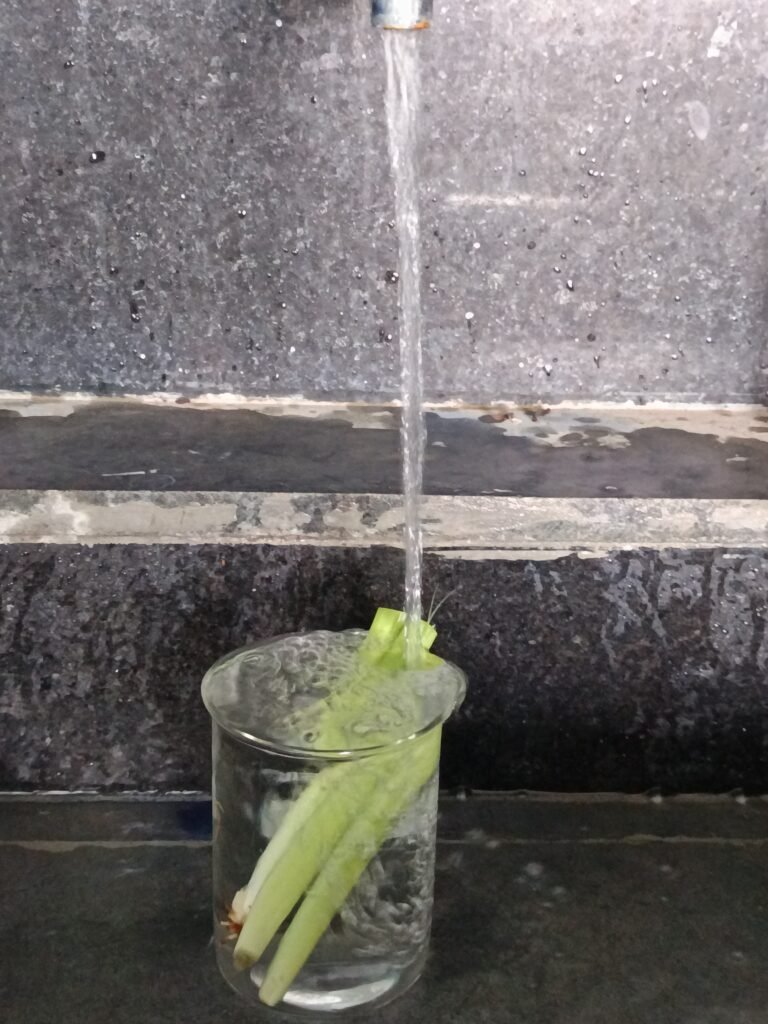
4.Handle the plant material with sterile gloves.
5. Then prepare total volume 300ml soap solution (30ml soap liquid and 270ml distilled water).
6. Wear glove hand and wash the plant material for 5 minutes.
7.Then remove the soap solution and placed in glass beaker.
8. Cut the material desirable size with the help of knife.
9. Then soak the material in savlon solution ( 3ml savlon and 300 ml distilled water) for 15 minutes.
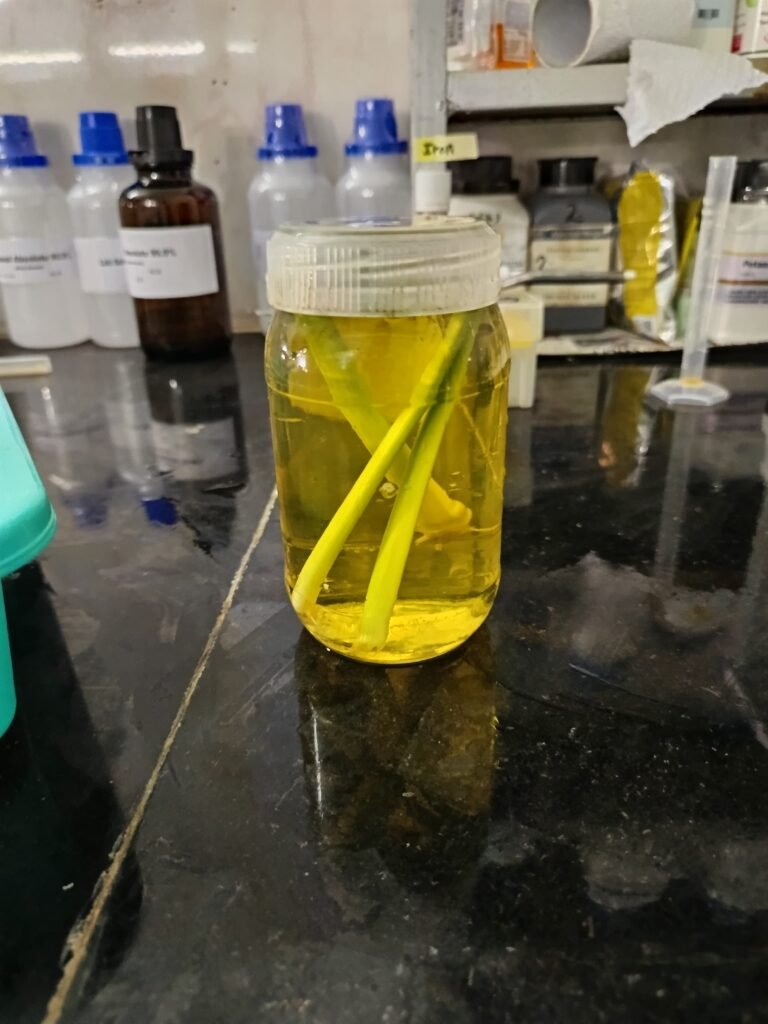
10. Then wash the plant material from sterile distilled water 3 to 5 time in bottle beaker.
11. Prepare 4% sodium hypochlorite solution and taking sodium hypochlorite solution into a laminar air flow and soak the plant material in sodium hypochlorite solution for 20 minutes( for 1 jar 10ml sodium hypochlorite and 250ml sterile distilled water).
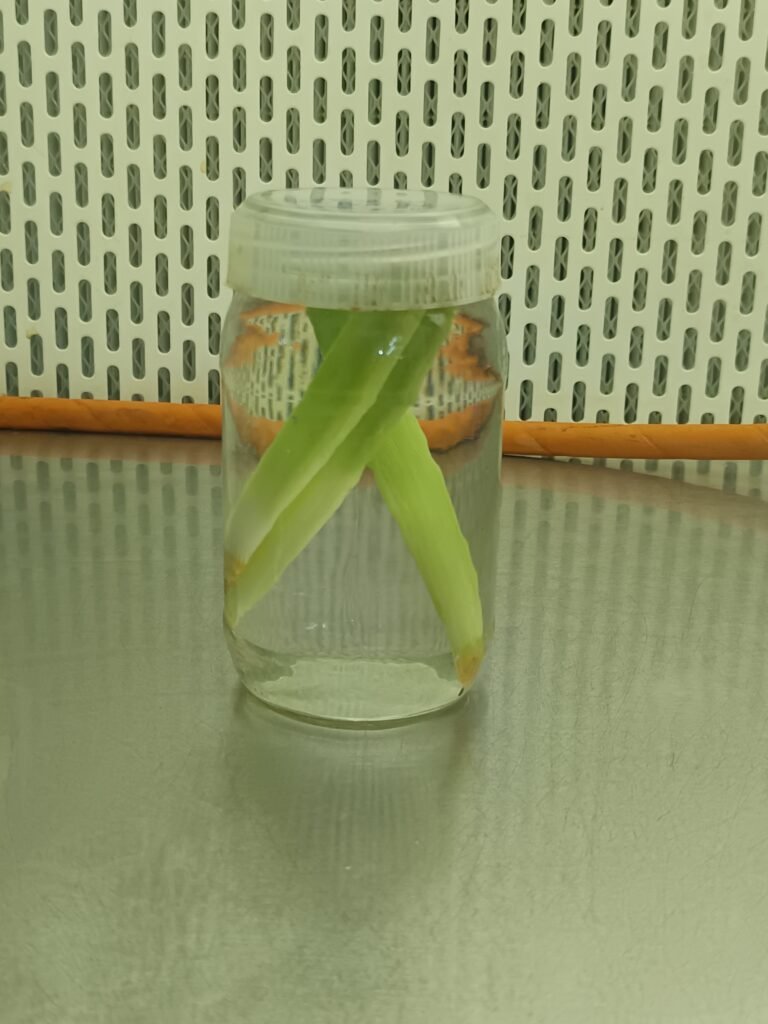
12. After 20 minutes then remove plant material from sodium hypochlorite solution and wash the plant material 3 to 5 times in sterile distilled water.
13. Then cut the plant material required culture bottle size with the help of knife on sterilized brown paper.
14. Prepare antibiotic solution using Cefotaxime antibiotic( 1ml antibiotic and 200ml sterile distilled water) and soak the plant material in this solution for 30 minutes. Using only fresh antibiotic solution.
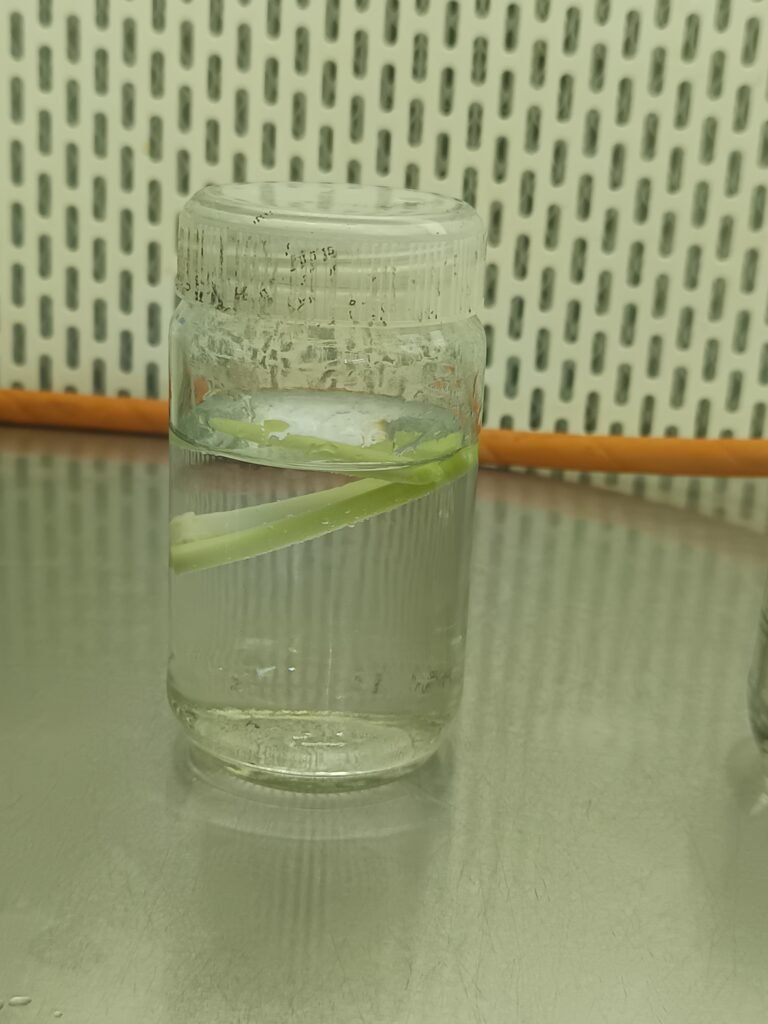
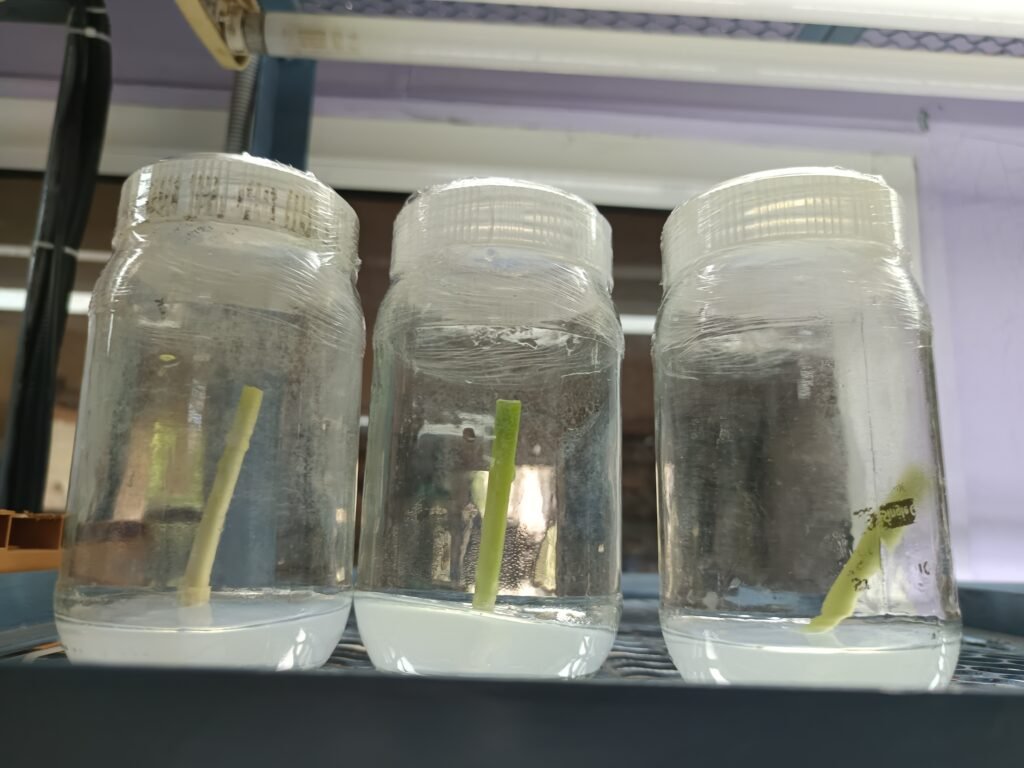
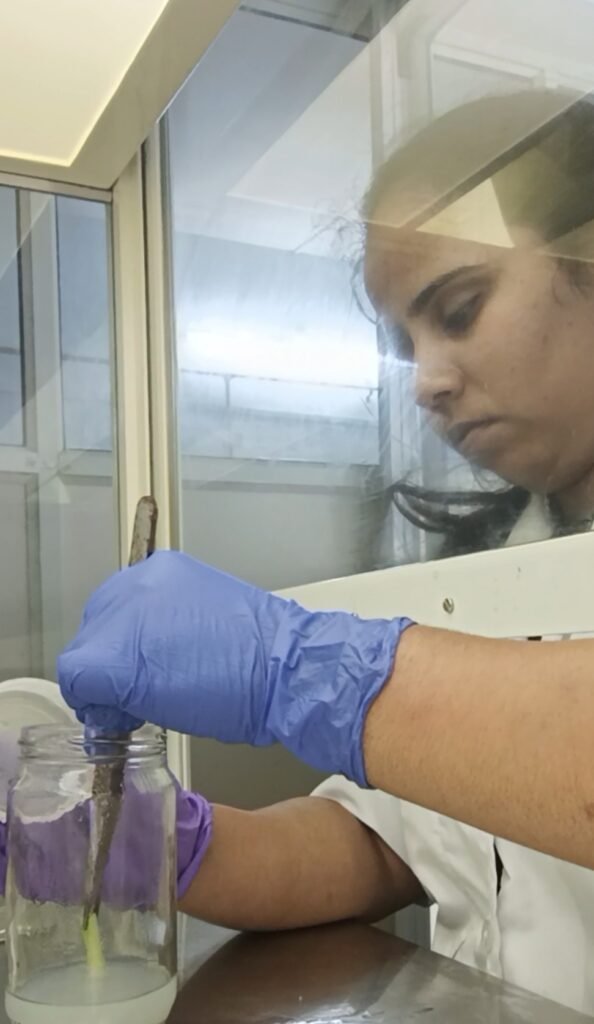
15. Then inoculate the plant material in culture medium( bottle beaker) and remove laminar air flow placed inoculate culture bottle at 24°C with photo periods of 6 to 7 hours light and 8 hours darkness for tissue culture sterile environment.
RESULT :-
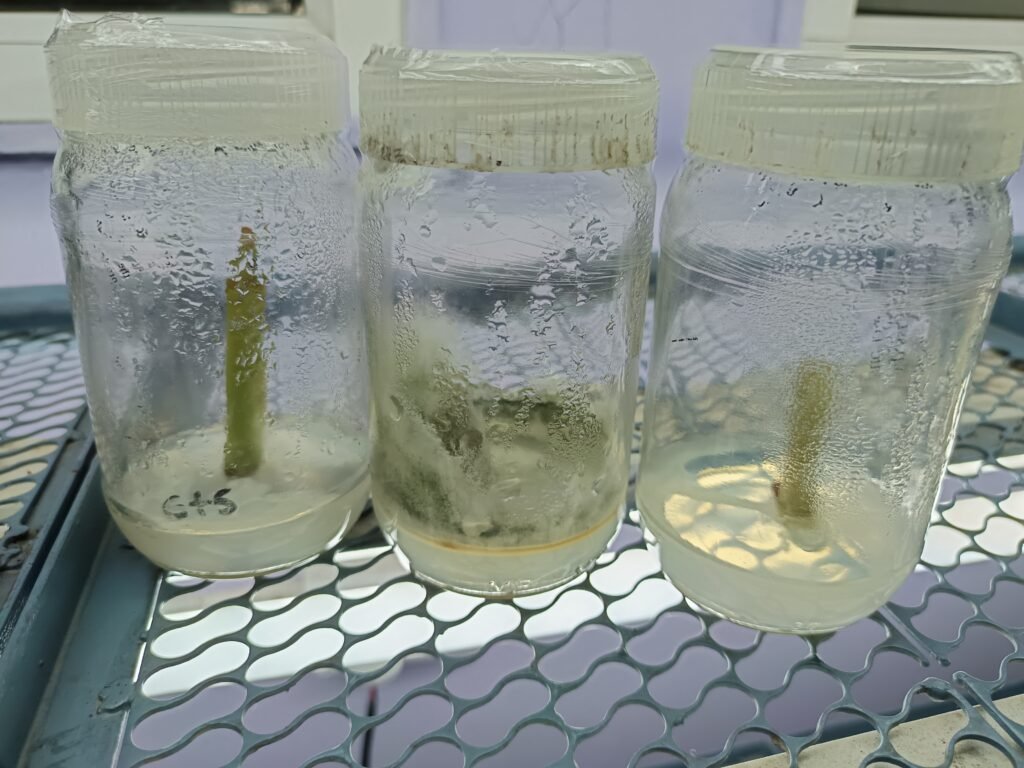
After two to three days, the inoculated naipier grass explants showed no growth and were contaminated.
2 July 2025
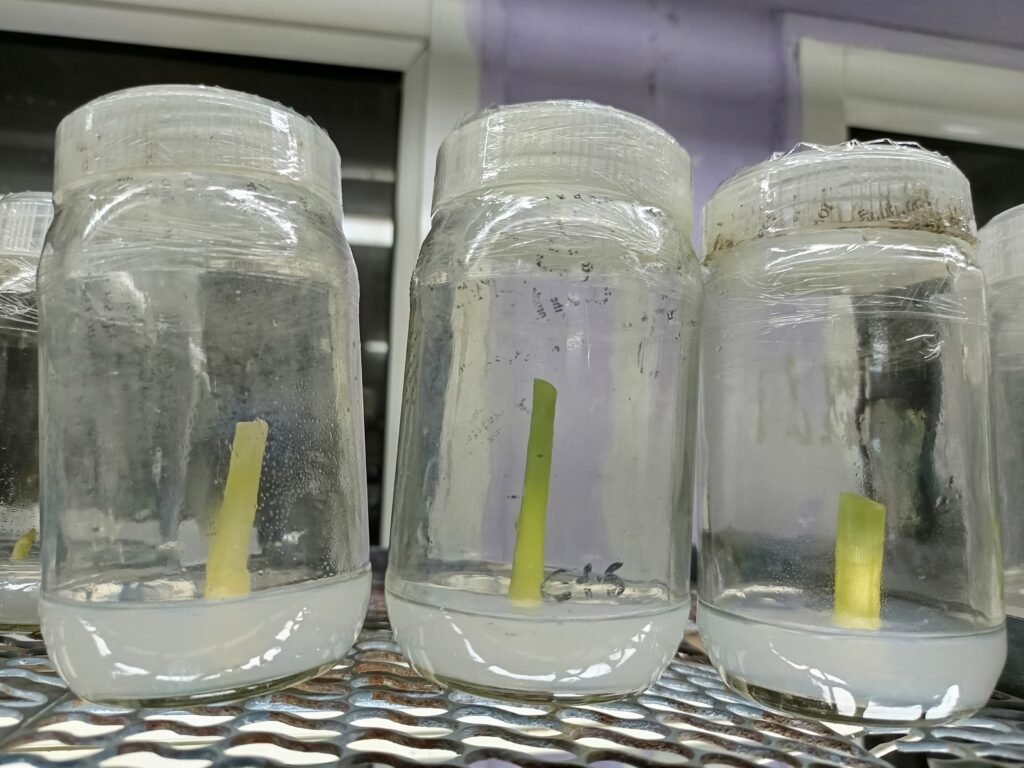
I took a one-month-old plant, performed surface sterilization, and inoculated it onto MS medium.
5 August 2025
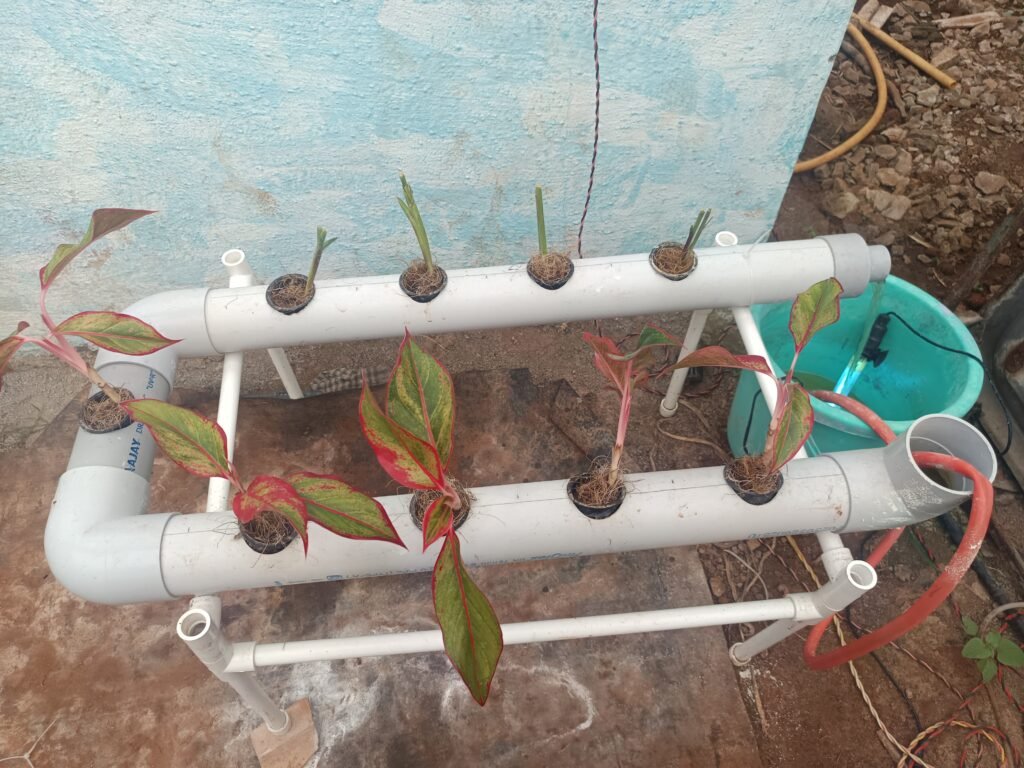
After discussing with Dixit Sir, I grew Napier grass in a hydroponic setup and treated it with fungicide and UV light.
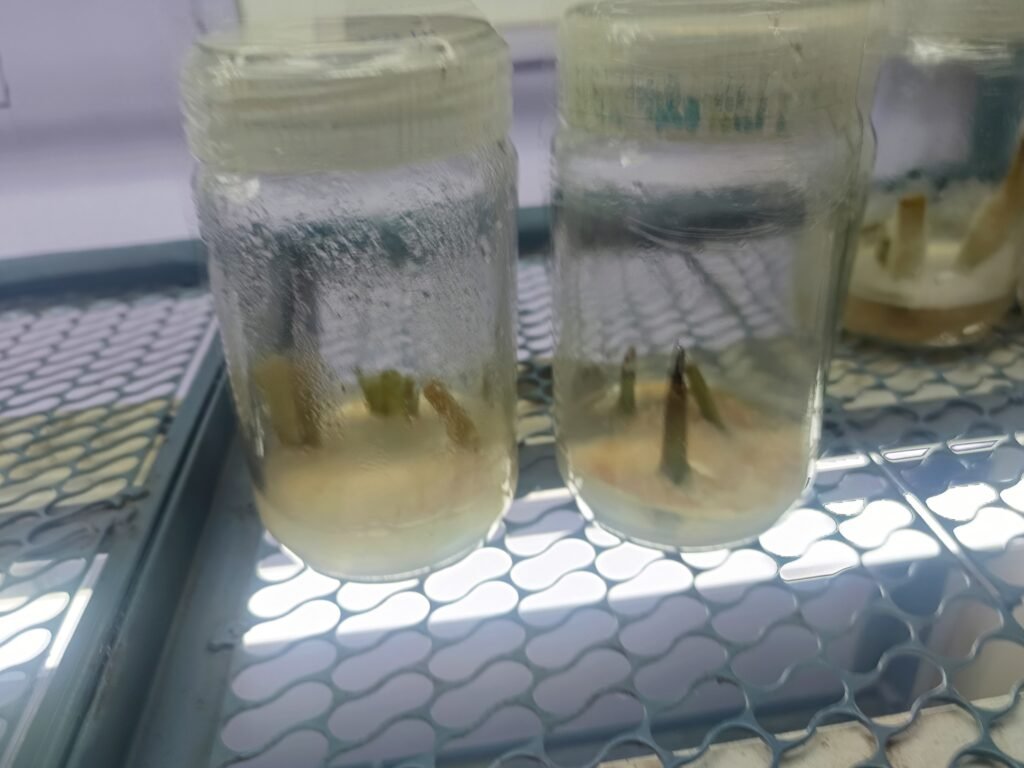
RESULT :-
Contamination appeared within 3 to 4 days after inoculation.
8 August 2025
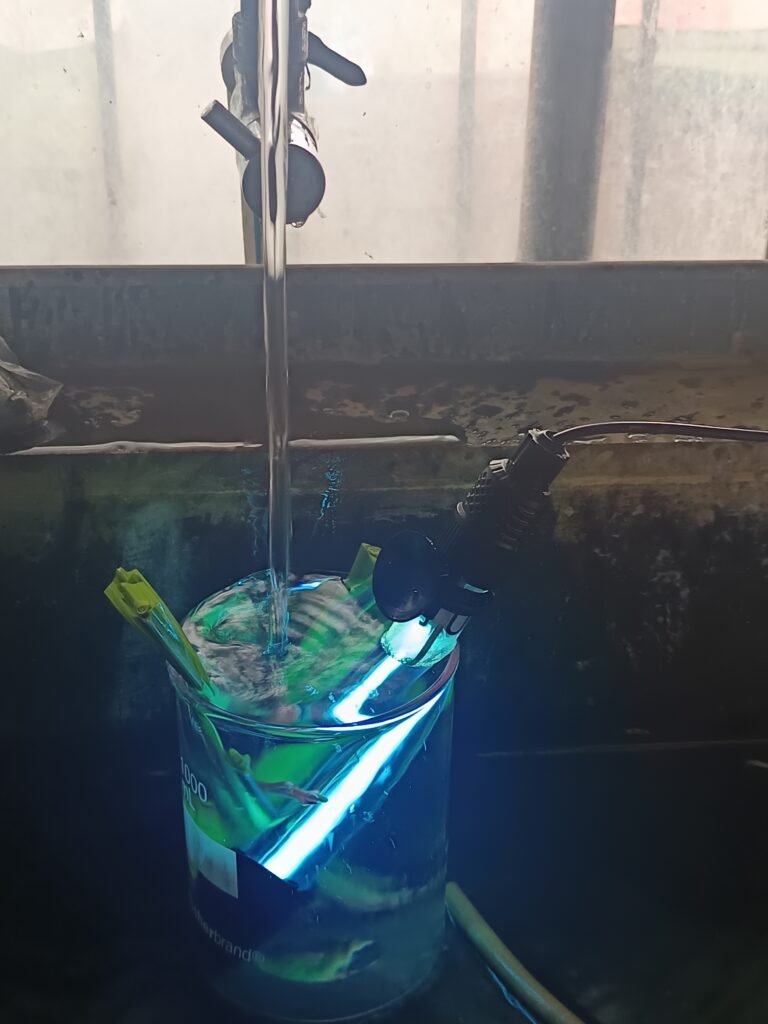
I took the shoot tips of Napier grass and kept them in running water with UV light for 15 minutes. After that, I performed surface sterilization and inoculated it onto MS medium.
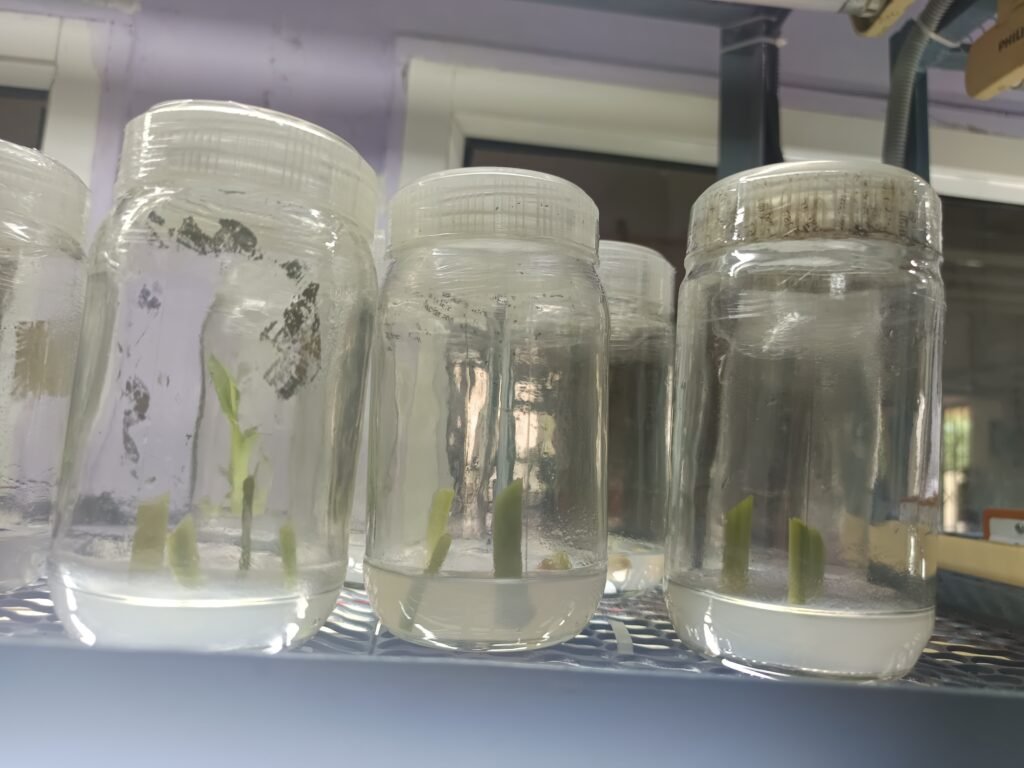
RESULT :-
Contamination appeared within 3 to 4 days after inoculation.
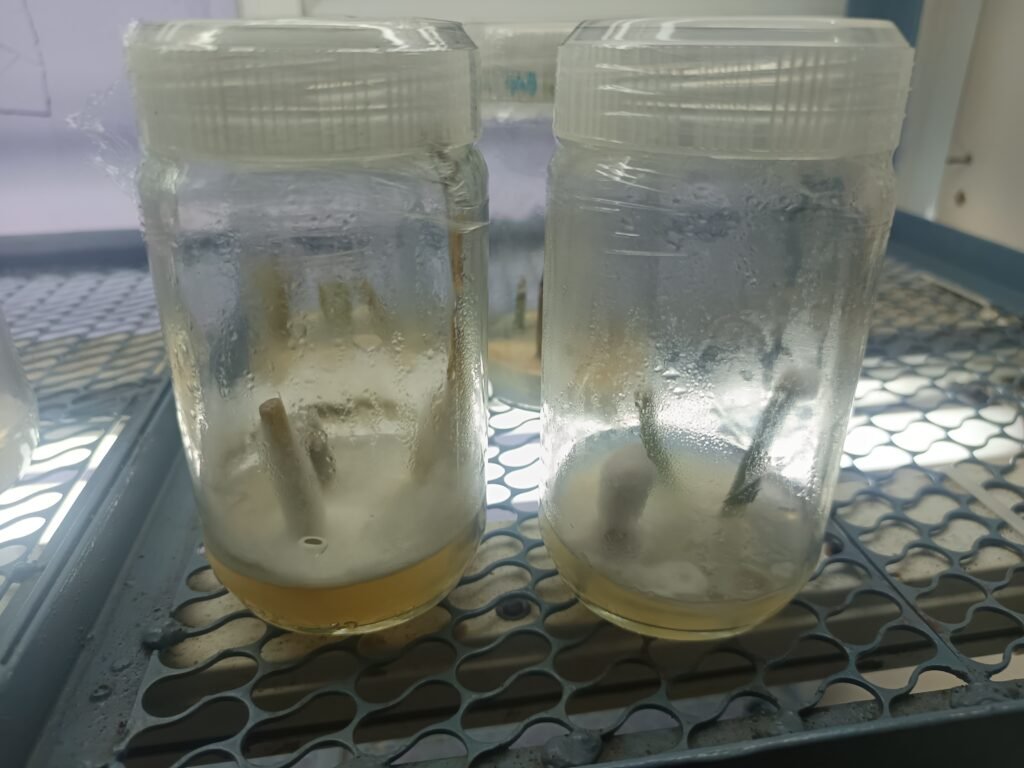
11 August 2025
I took a explant from a hydroponic setup, perform surface sterilization, and then inoculated it.
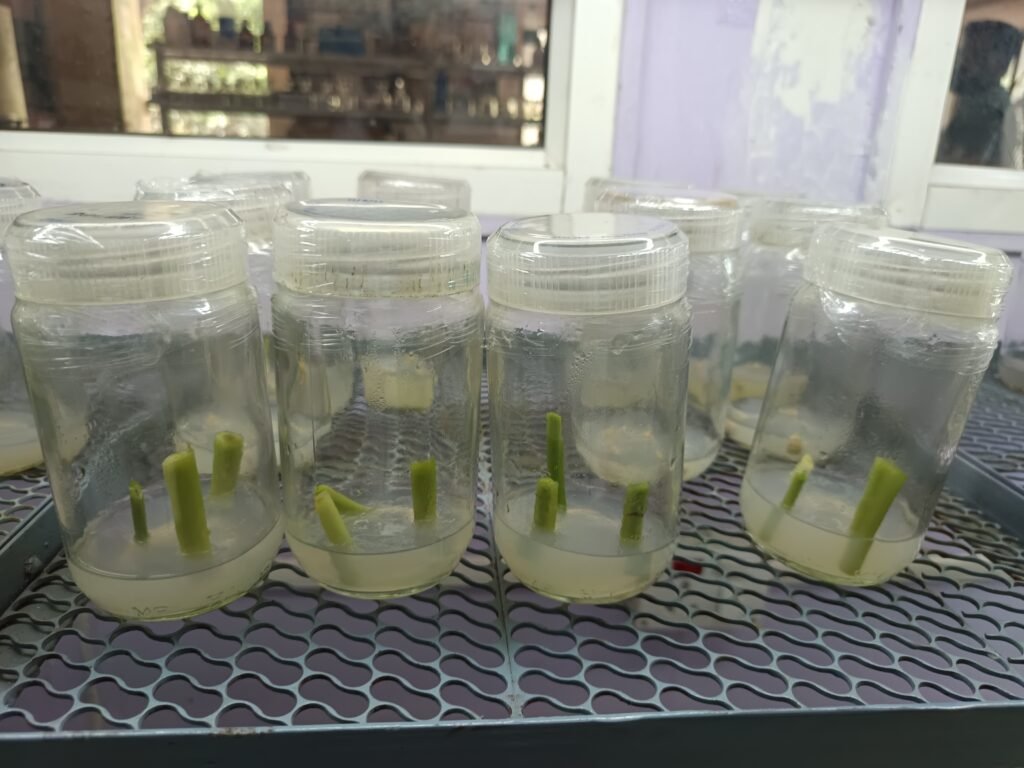
RESULT :-
Contamination appeared within 5 days after inoculation.
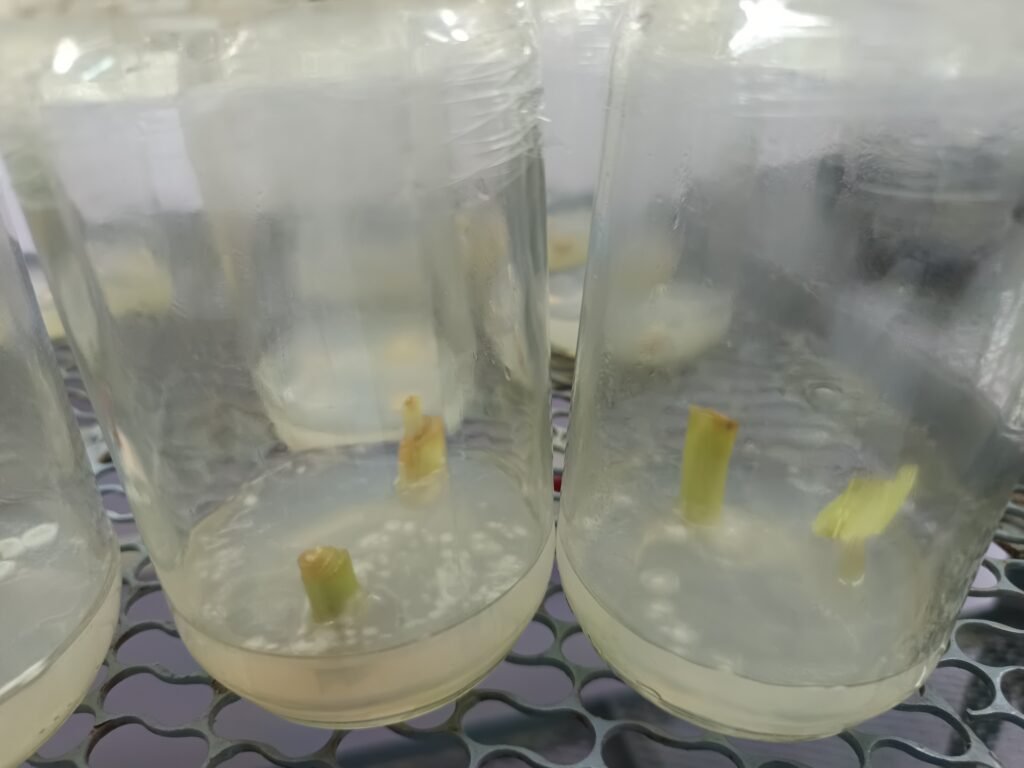
18 August 2025
I again took a explant from a hydroponic setup, perform surface sterilization, and then inoculated it.
Result :-
Contamination appeared within 5 days after inoculation.
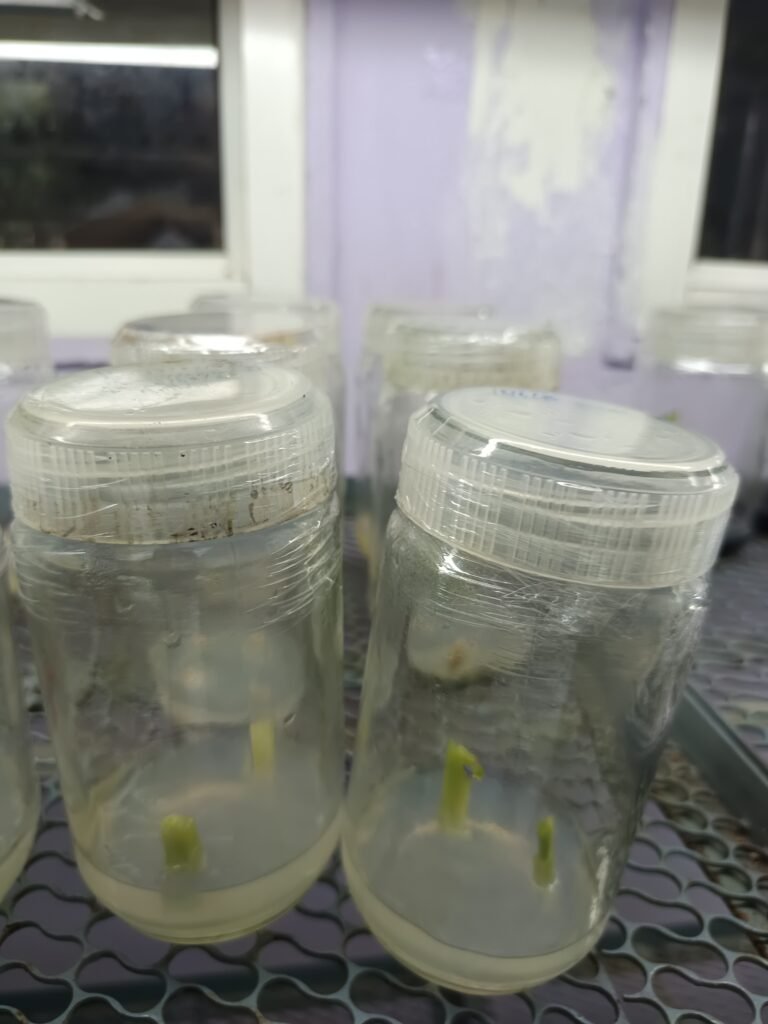
25 August 2025
I again took Napier grass from the hydroponic setup, did its surface sterilization, and then inoculated it into the culture bottle.
Result :-
Contamination appeared within 5 days after inoculation.
31 August 2025
I discussed with Dixit Sir about the contamination problem in Naipier plants, and he suggested that the Naipier plants grown in hydroponics should be washed with 1% sodium hypochlorite solution, the water should be changed daily with dosing, and UV light should be used in the hydroponic setup.
31 August 2025
I took Napier grass plants from a hydroponic setup, surface sterilized them, and then inoculated them onto MS media.
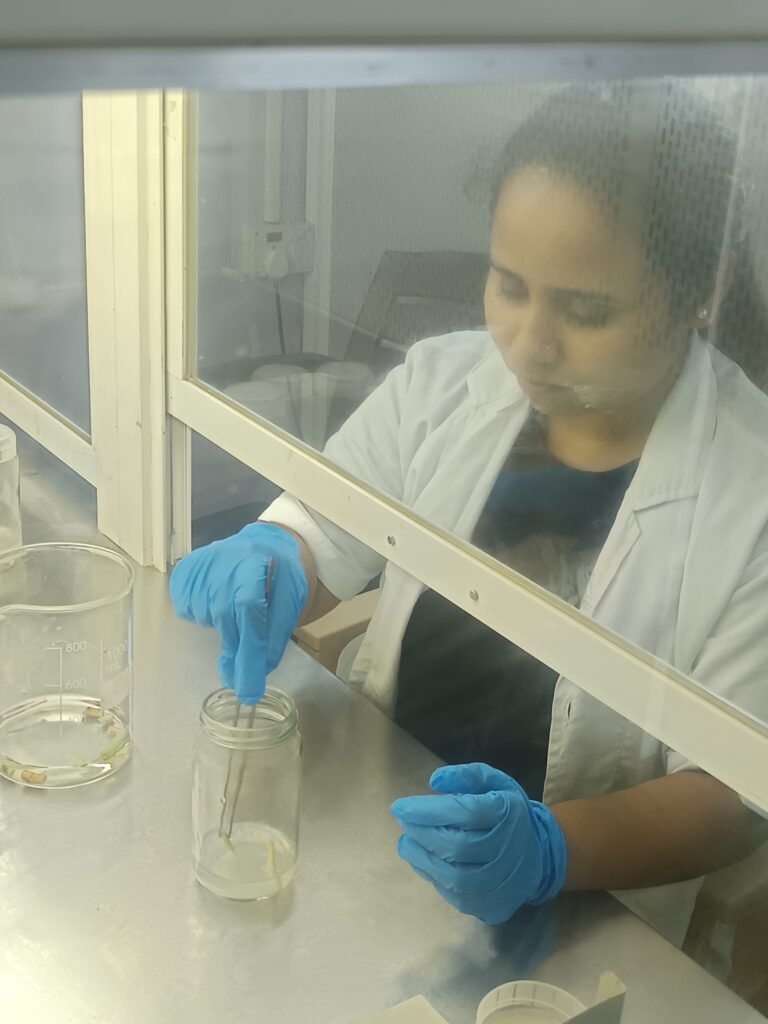
Result :-
Contamination appeared within 5 days after inoculation.
I again discussed with Dixit Sir about the contamination problem in Naipier plants, and he suggested that the Naipier plants grown in hydroponics should be washed with 0.5% sodium hypochlorite solution, the water should be changed daily with dosing, and UV light should be used in the hydroponic setup.
2 September 2025
I again took Napier grass from the hydroponic setup, did its surface sterilization, and then inoculated it into the culture bottle.
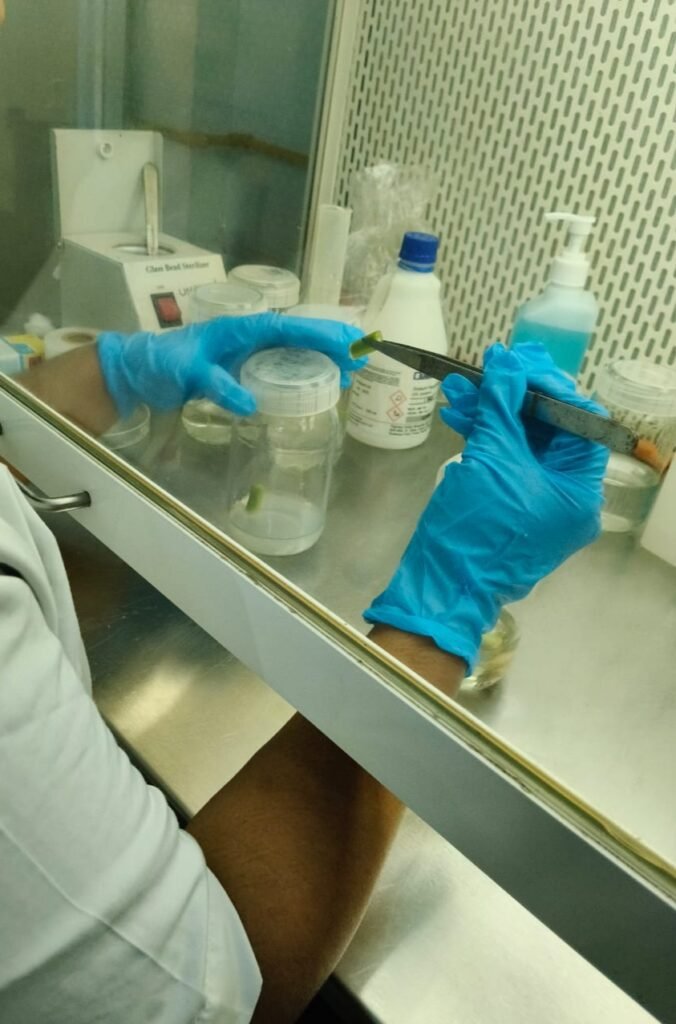
Result :-
Again contamination appeared within 5 days after inoculation.
5 September 2025
Napier grass was collected from the hydroponic setup, surface sterilized, and then inoculated into the culture bottle.
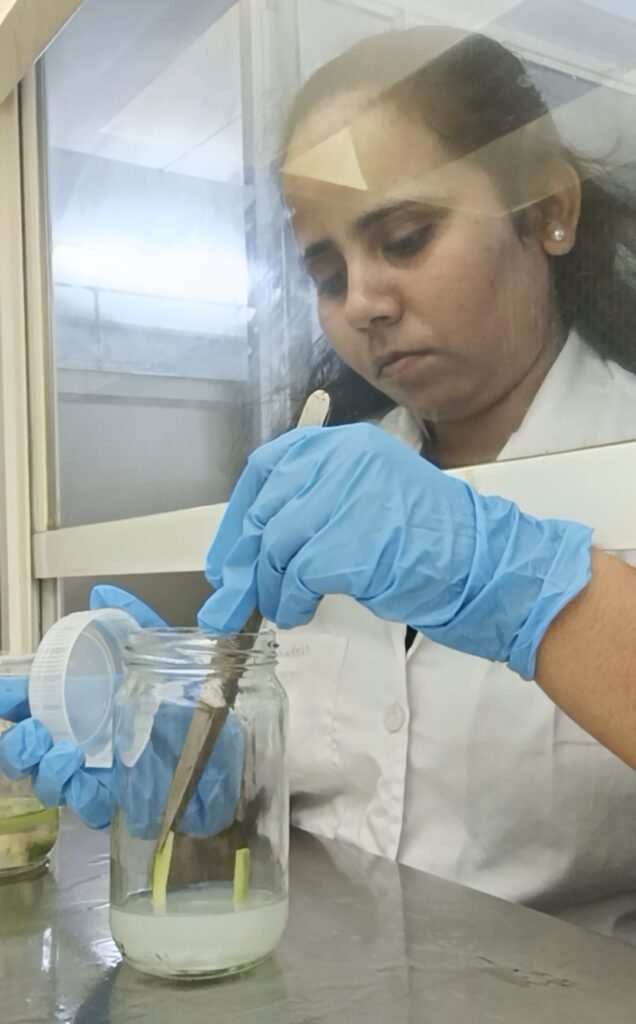
Result :-
Contamination appeared within 7 days after inoculation.
8 September 2025
I again took a explant from a hydroponic setup, perform surface sterilization, and then inoculated it.
10 September 2025
I discussed the contamination problem in Napier plants with Dixit Sir. He suggested that the Napier plants grown in hydroponics should be washed with 0.5% sodium hypochlorite solution, treated with calcium hypochlorite, the water should be dosed and changed daily, and UV light should be used in the hydroponic setup.
12 September 2025
I took a explant from a hydroponic setup, perform surface sterilization, and then inoculated.
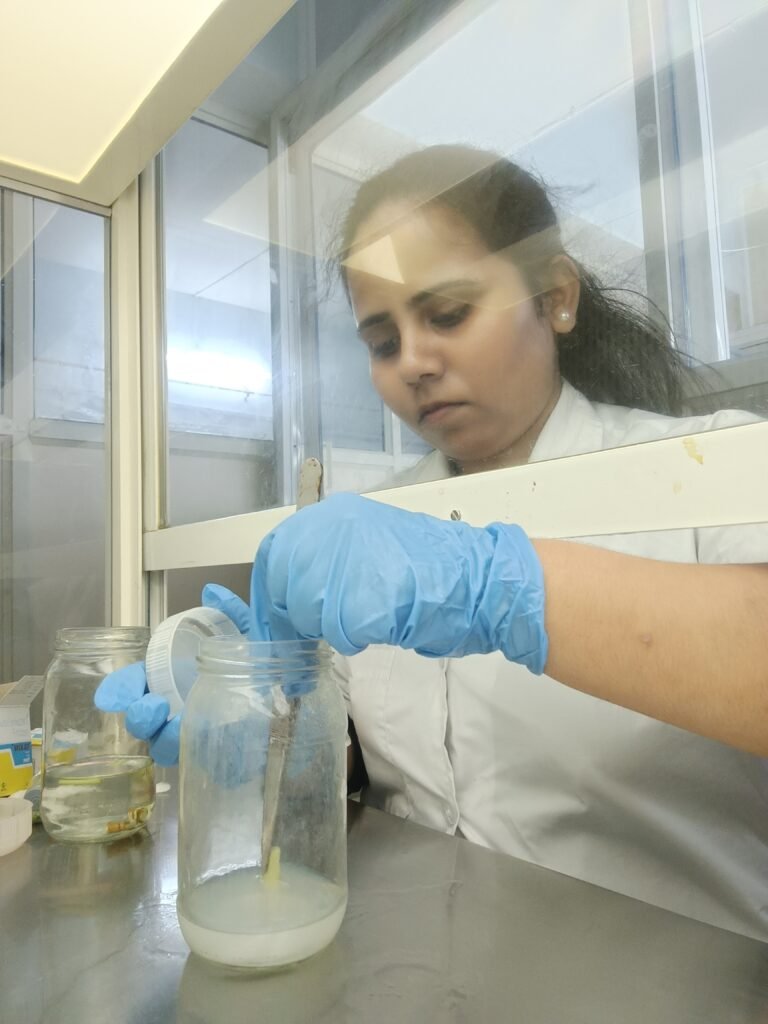
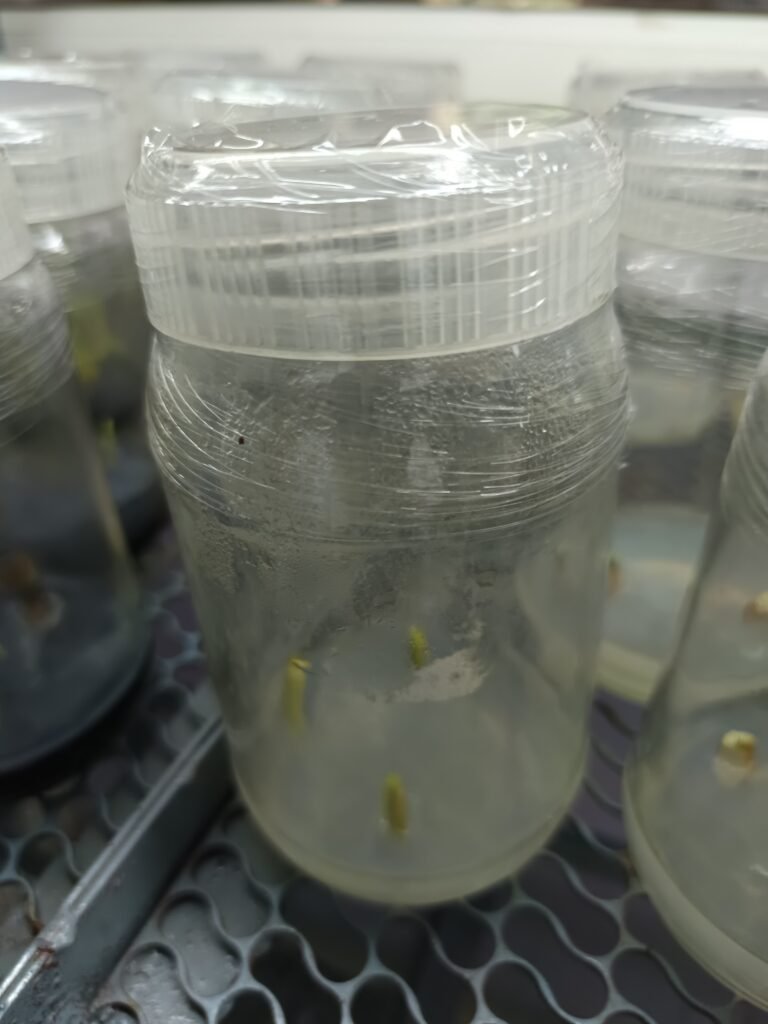
16 September 2025
I took Napier grass plants that were treated with calcium hypochlorite, then performed surface sterilization and inoculated them.
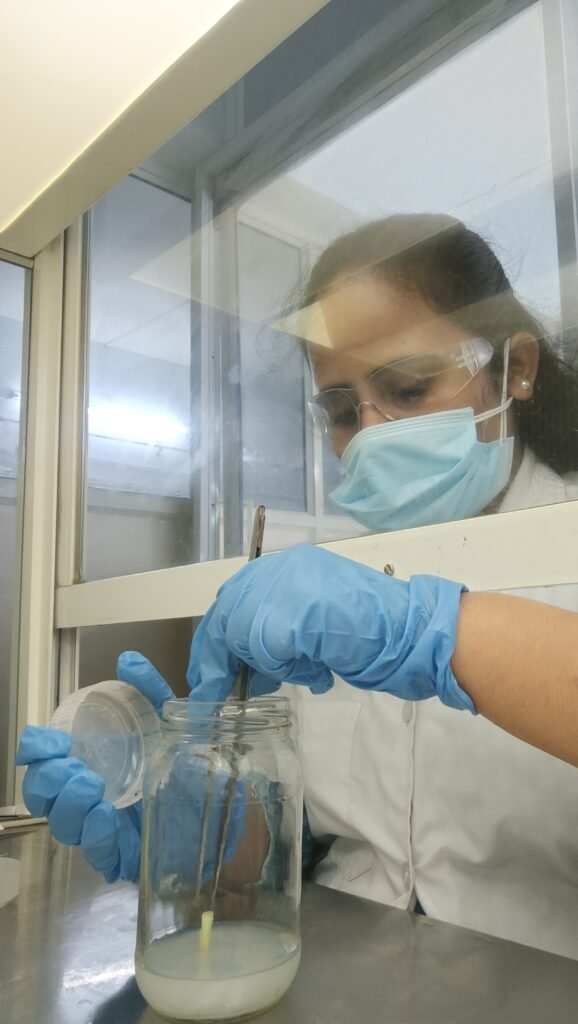
19 September 2025
Again I took Napier grass plants that were treated with calcium hypochlorite, then performed surface sterilization and inoculated them.
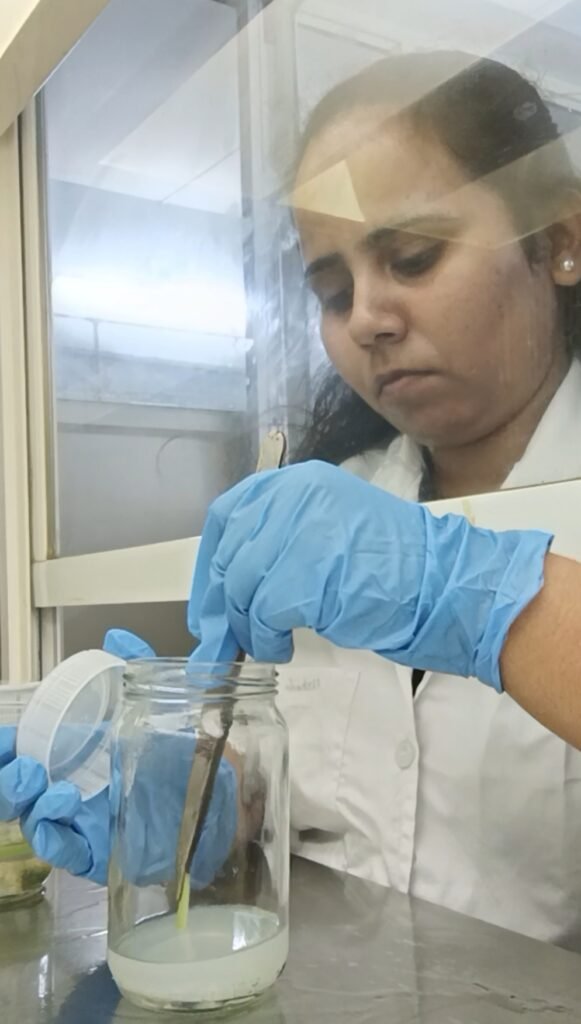
22 September 2025
I took Napier grass plants treated with calcium hypochlorite, then cleaned the surface and planted them.
24 September 2025
I took Napier grass from a hydroponic setup, surface sterilized it, and inoculated it into MS medium.
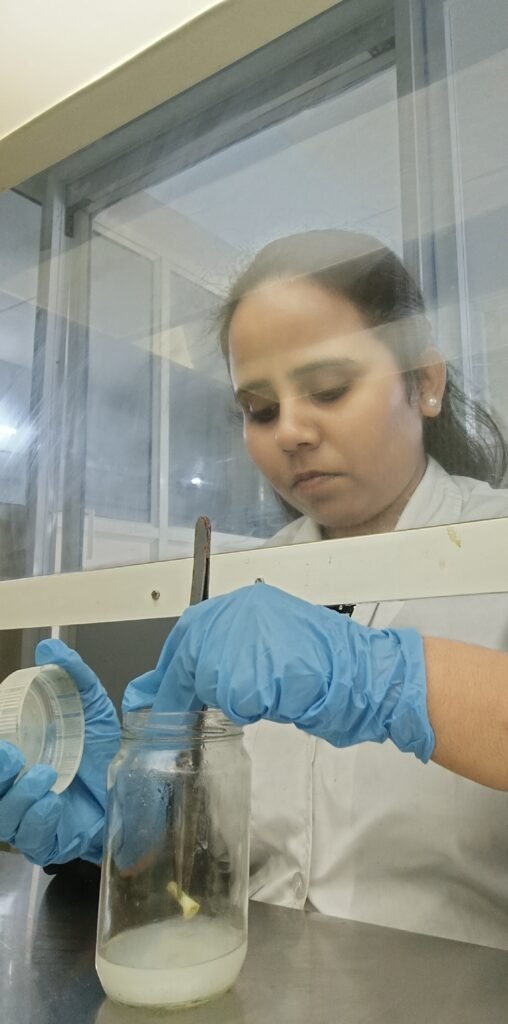
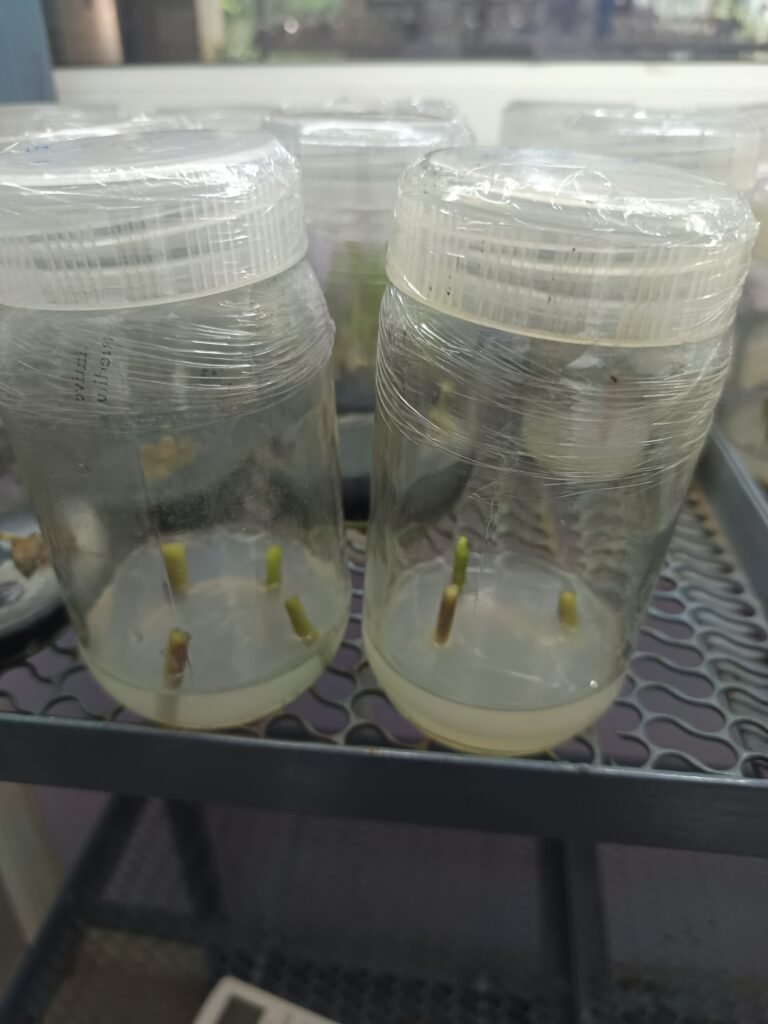
28 September 2025
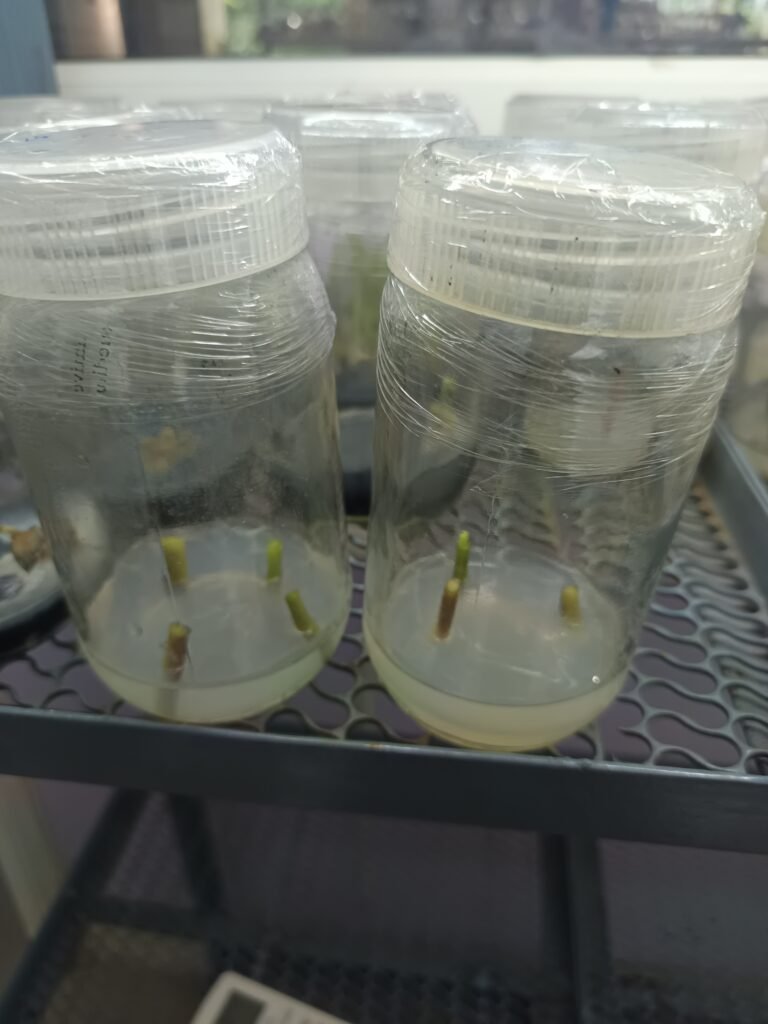
I took a explant from a hydroponic setup, perform surface sterilization, and then inoculated.
1 October 2025
Again I took a explant from a hydroponic setup, perform surface sterilization, and then inoculated.
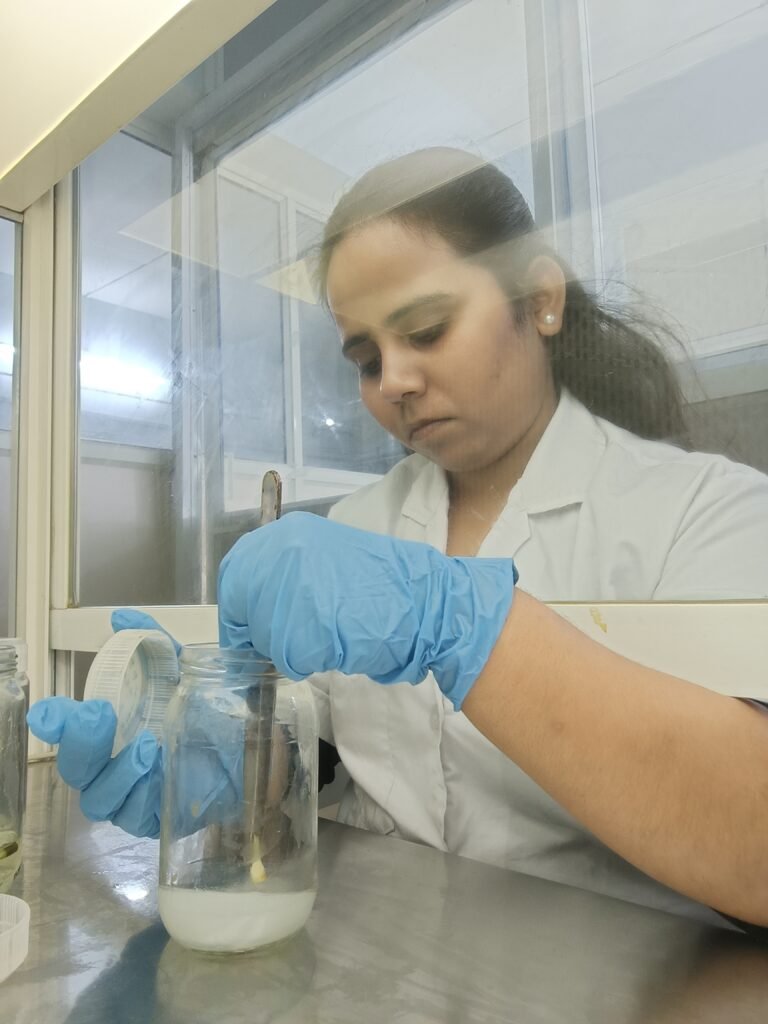
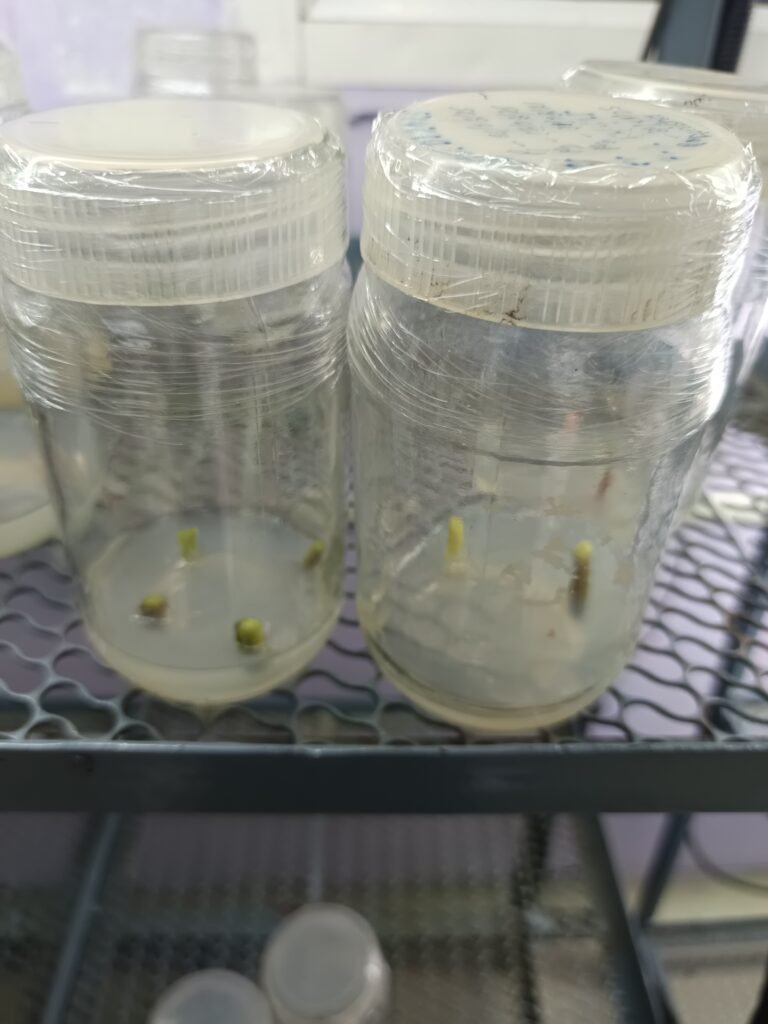
6 October 2025
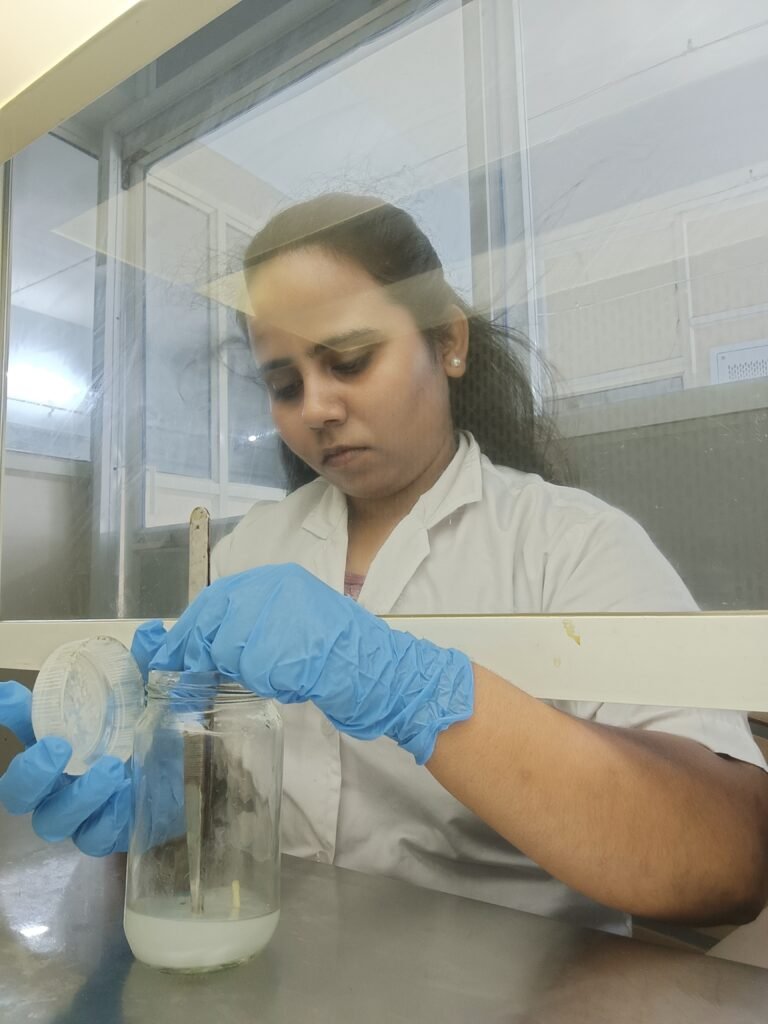
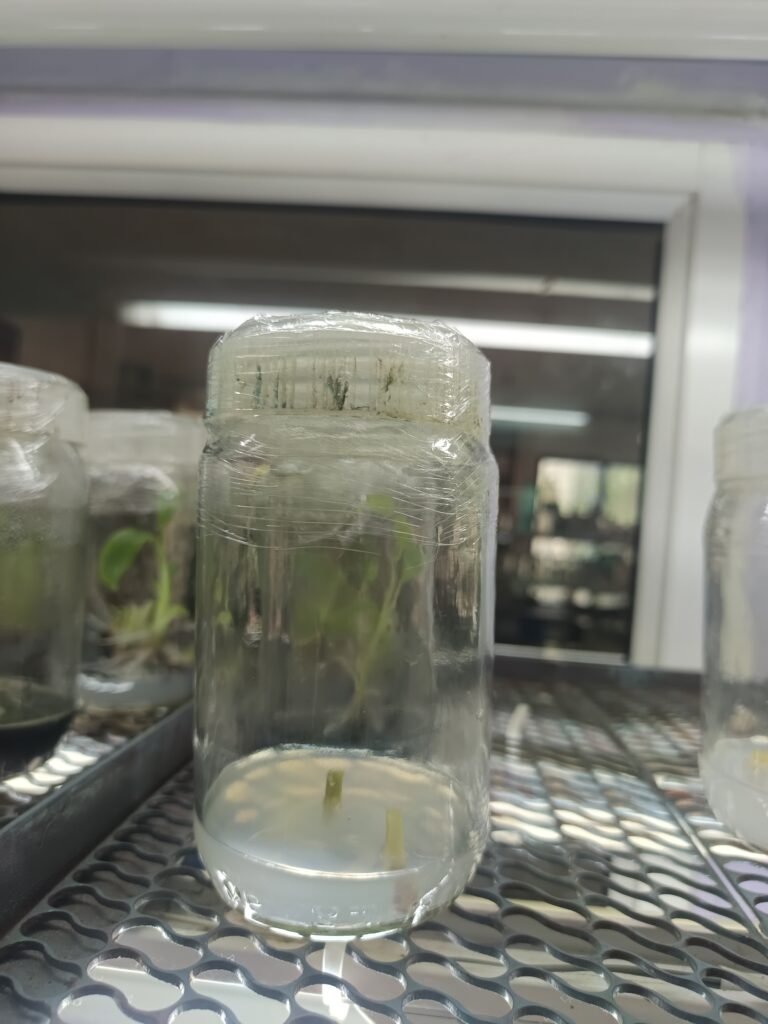
I took Napier grass from a hydroponic setup, surface sterilized it, and inoculated it into MS medium.
13 November 2025
A discussion was held with Dixit Sir regarding the tissue culture of Napier grass. Since the cultured plants were drying out after one week, Sir suggested performing tissue culture using Napier grass seeds instead.Subsequently, I purchased the seeds of Napier grass.
30 November 2025
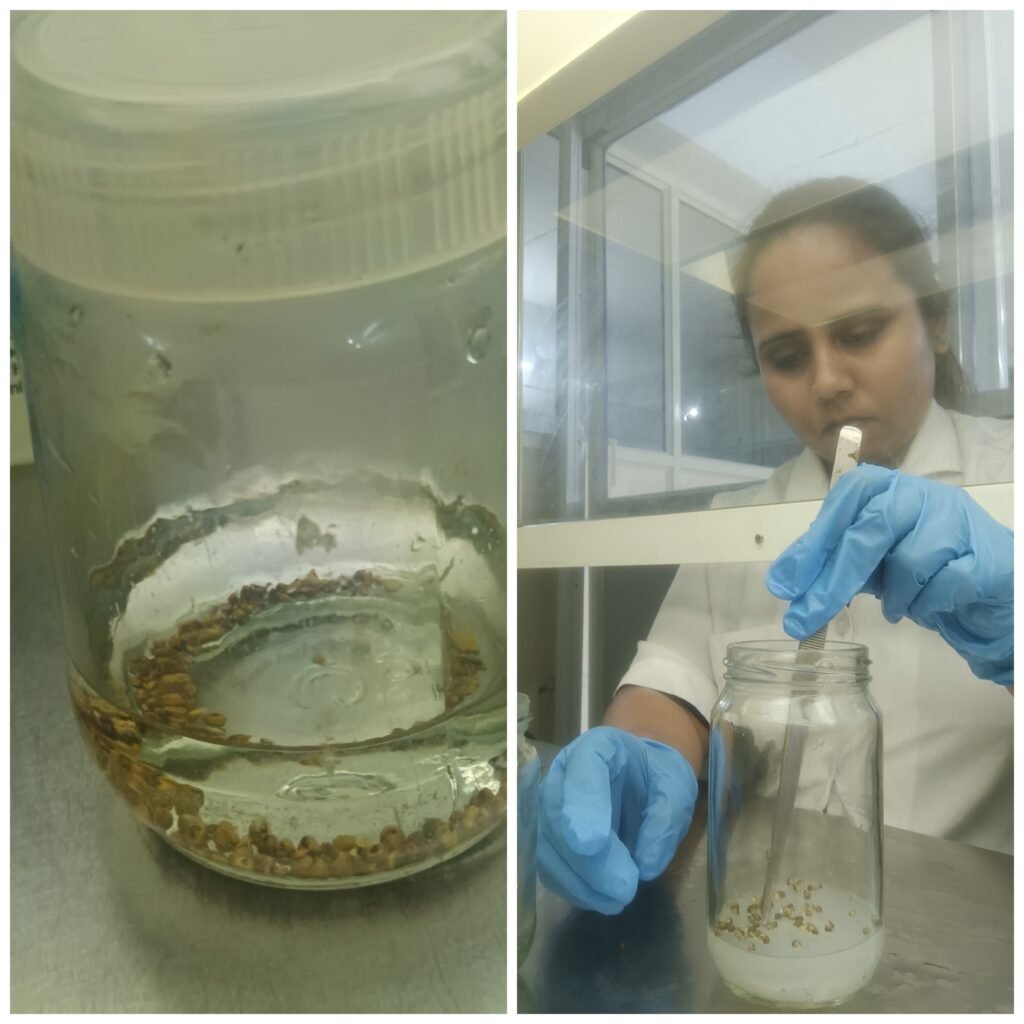
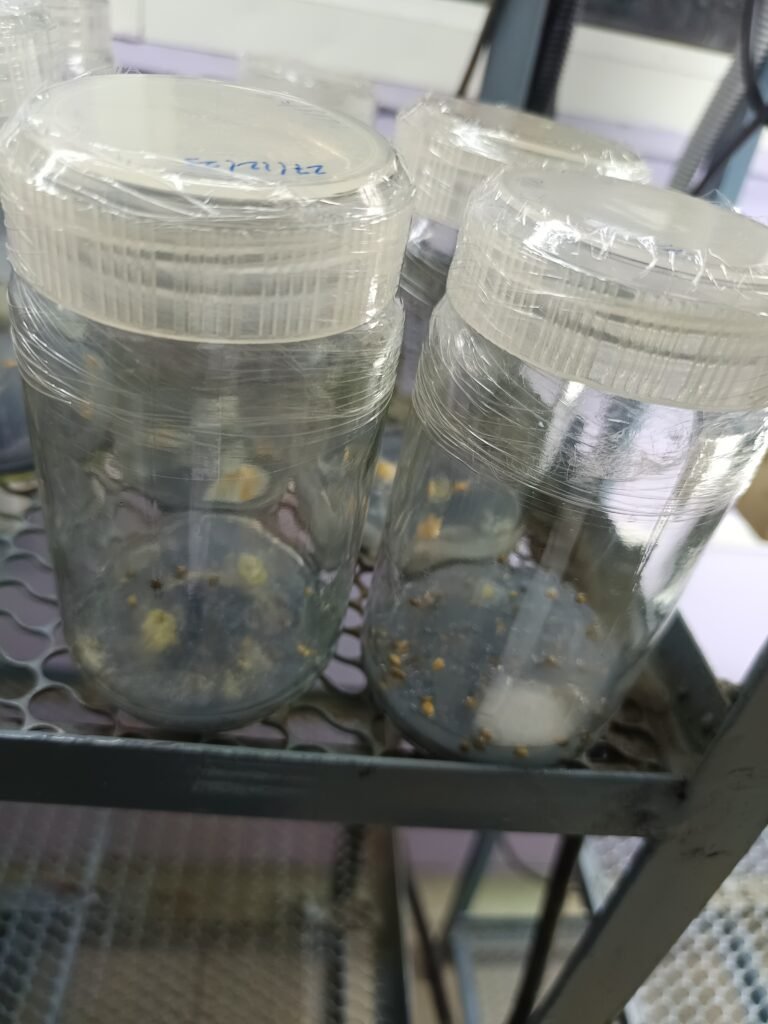
Napier grass seeds were taken and rinsed under running tap water for 15 minutes.After that, surface sterilization was performed using the same process with liquid soap and Savlon.The seeds were then kept in a sodium hypochlorite solution (prepared by mixing 100 ml of double-distilled water and 5 ml of 4% sodium hypochlorite) for 30 minutes.Subsequently, the seeds were soaked in an antibiotic solution for 30 minutes and then inoculated onto MS medium.
Result
Contamination appear after 4 days.
9 December 2025
First, Naipier grass seeds are rinsed under running tap water for 15 minutes, then washed with liquid soap for 5 minutes. After that, they are soak in Savlon solution for 15 minutes, then rinse with double distilled water 3 -5 times. The seeds are then soaked in Bavistin solution (2 g in 200 ml double distilled water) for 12 hours at 37°C.
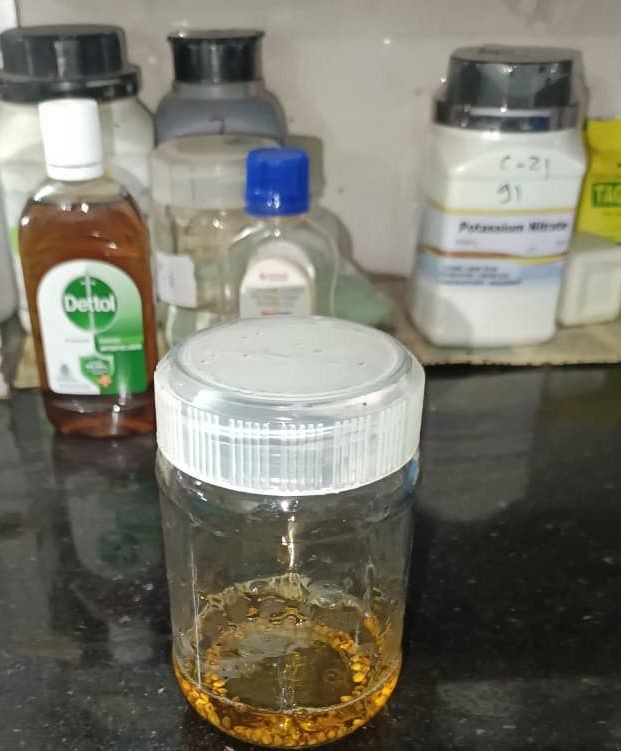
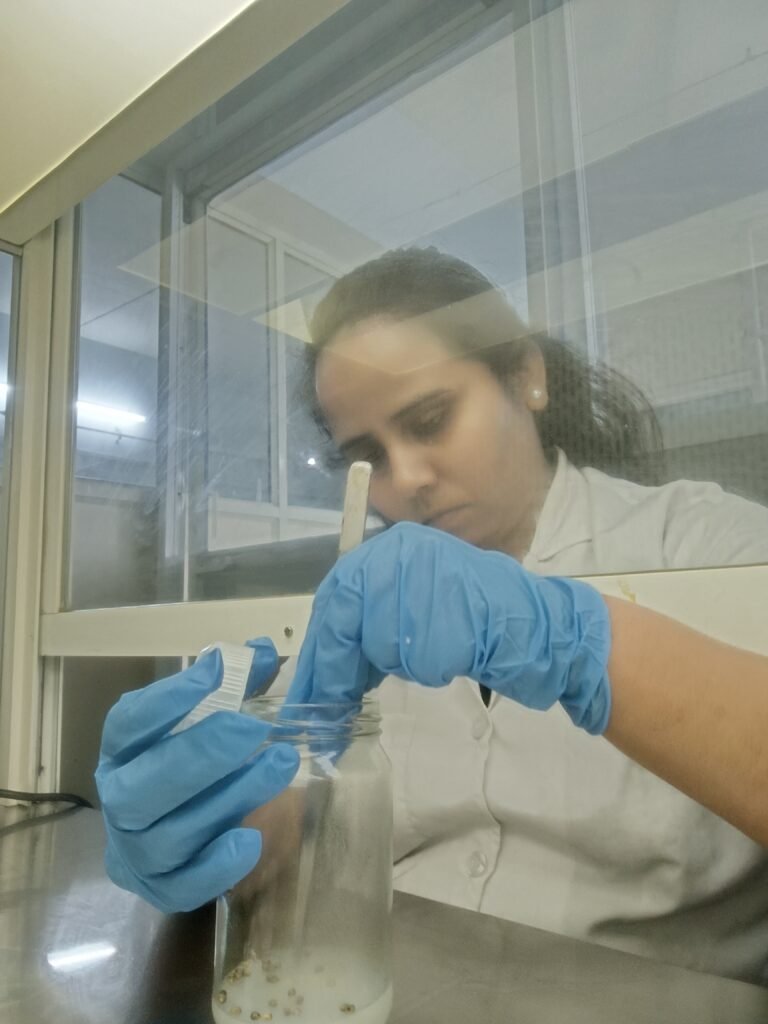
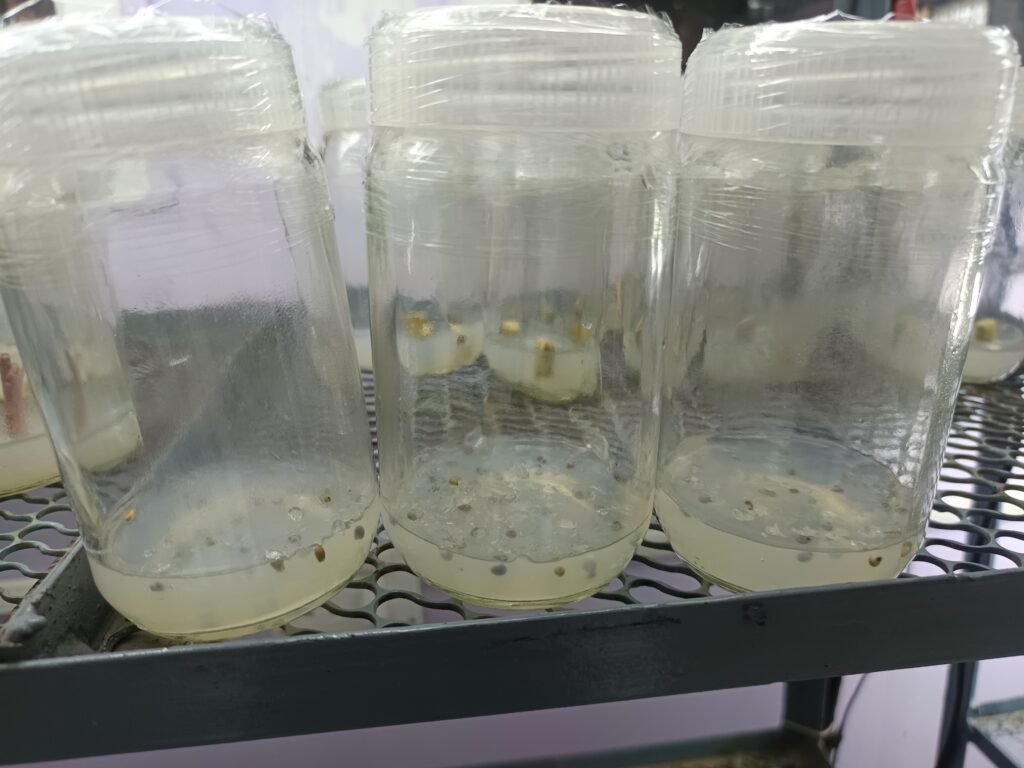
After soaking the seeds for 12 hours, they are taken and surface sterilized, then inoculated onto MS medium.
Result
Contamination appears after 12 days, but no growth is observed.
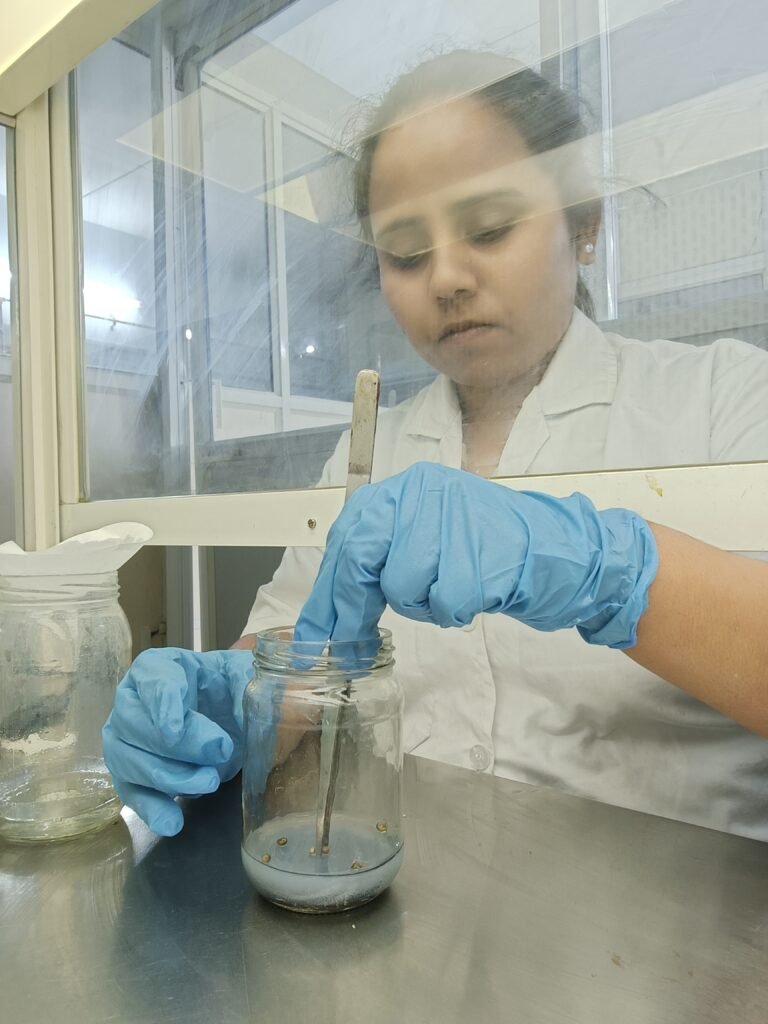
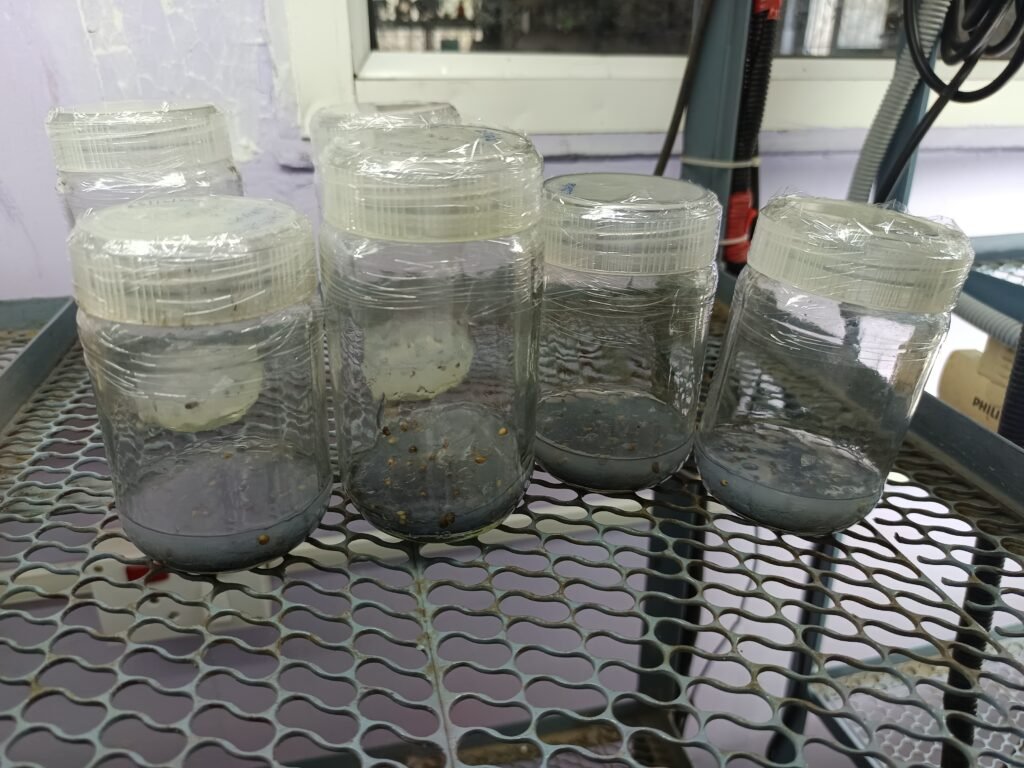
23 December 2025
After soaking the seeds for 12 hours, they are taken and surface sterilized, then inoculated onto MS medium.
24 December 2025
Soak the seeds in Bavistin solution. After 12 hours, remove the solution, then surface sterilize the seeds and inoculate them in MS medium.
Result
There is no growth in the seeds.
27 December 2025
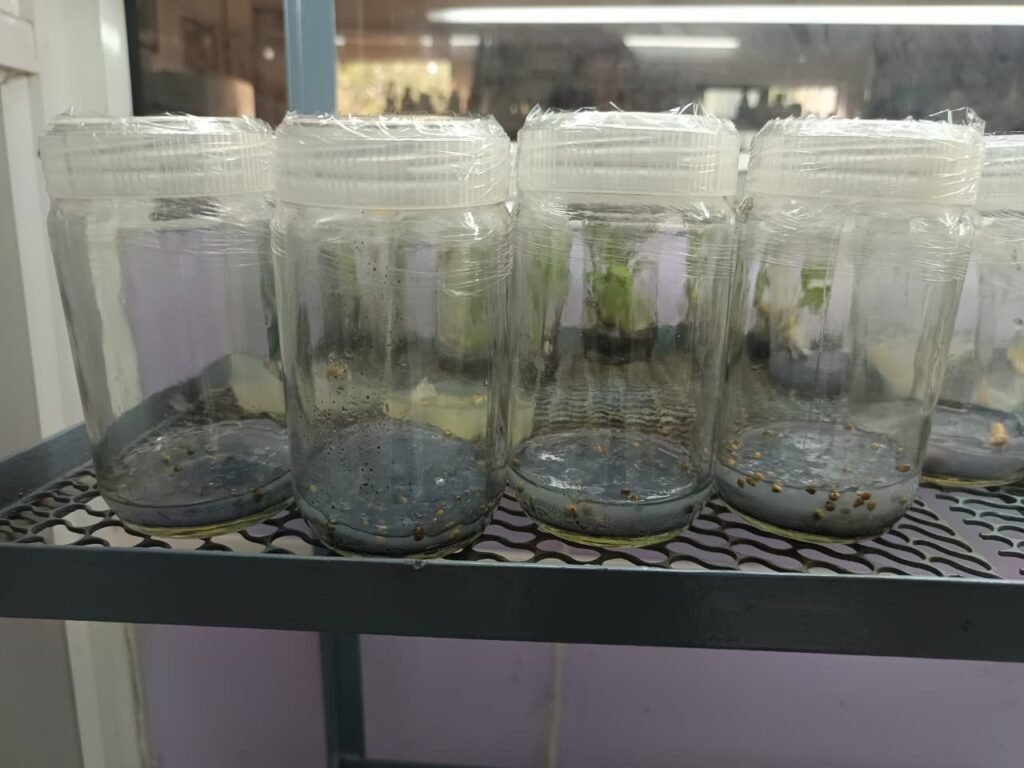
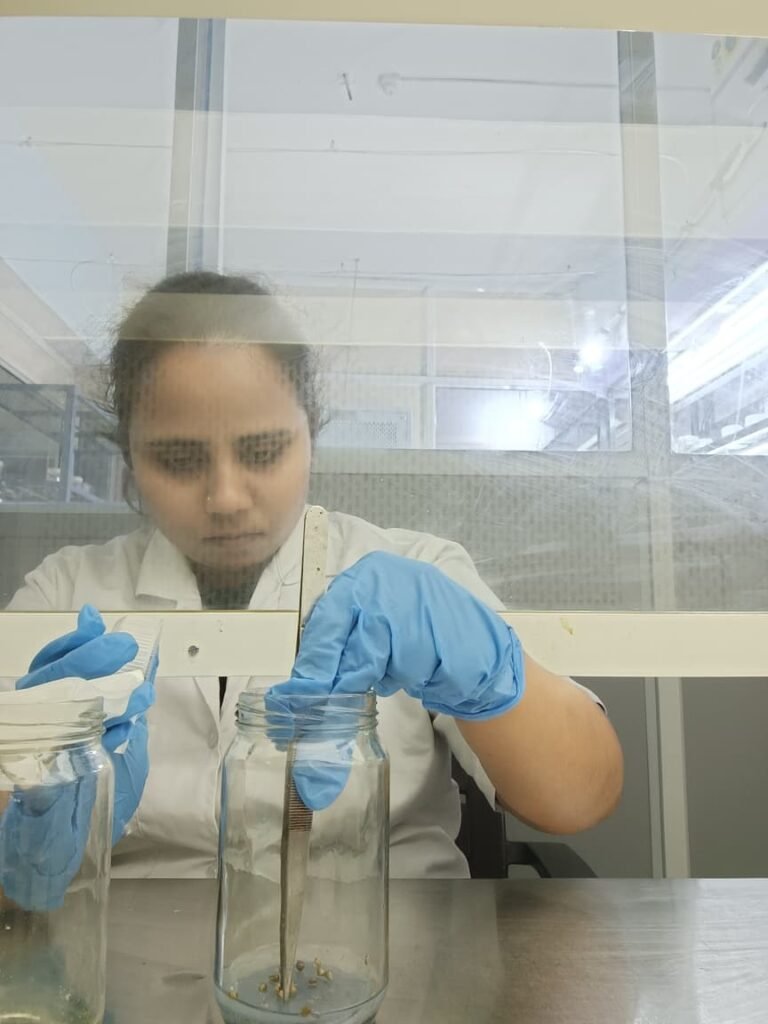
Napier grass is soaked in a Bavistin solution for 30 minutes, then washed 3–4 times with distilled water. After that, the Napier grass is soaked in a solution containing 20 ml abscisic acid and 80 ml double-distilled water. Then, surface sterilization is done, and the explants are inoculated into MS medium.
Result
Naipier grass seeds got contaminated after 8 days.
31 December 2025
Napier grass is soaked in a Bavistin solution for 30 minutes. After that, it is washed 3–4 times with distilled water. Then, the Napier grass is soaked in a solution made of 20 ml abscisic acid and 80 ml double-distilled water. Then surface sterilize the seeds and inoculate them in MS medium.
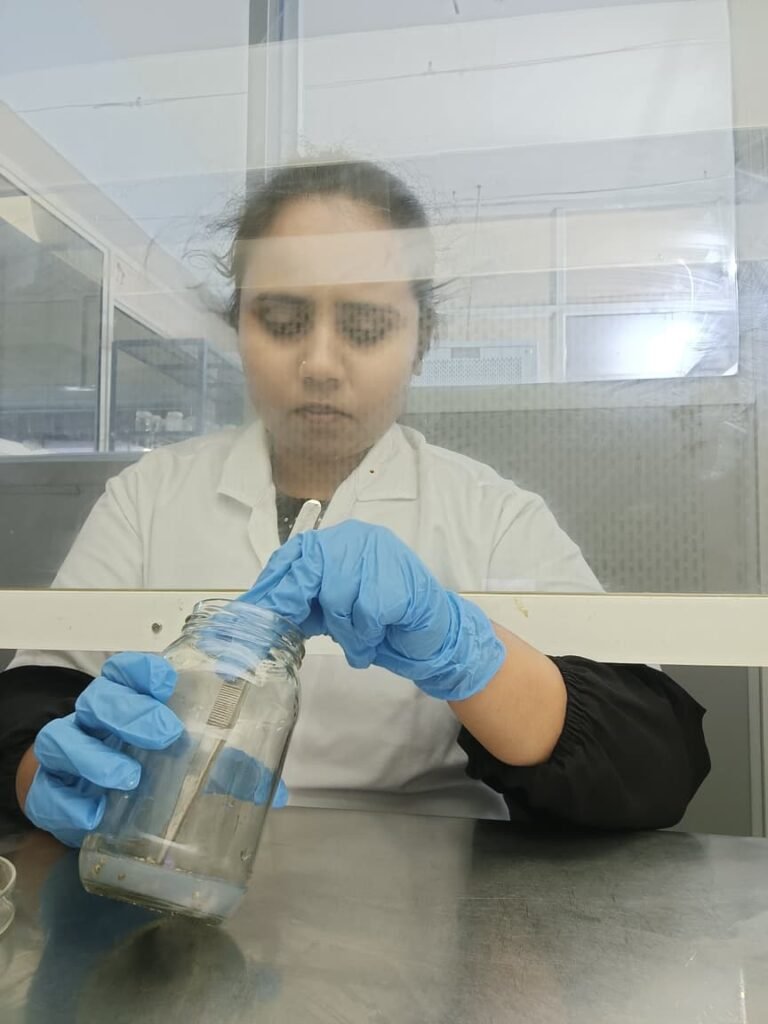
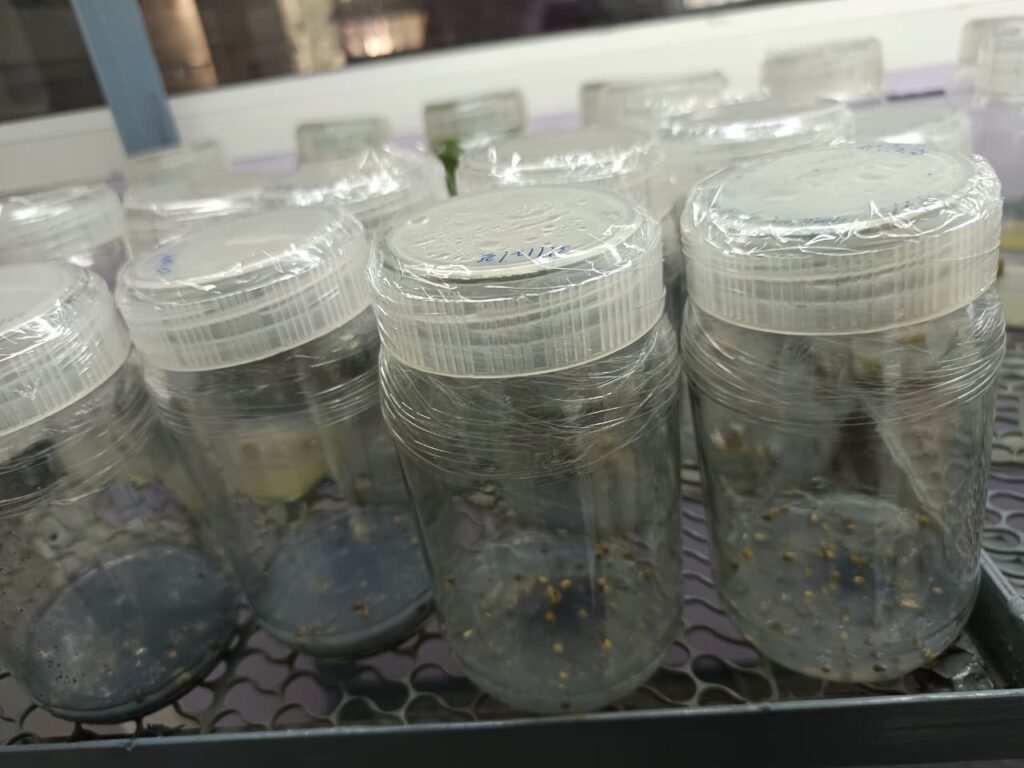
Result :
Naipier grass seeds showed contamination after one week.
10 January 2026
Naipier grass seeds are surface-sterilized and soaked in a gibberellin hormone solution. After 6 hours, Bavistin is added to the solution, and after another 6 hours, the seeds are removed, surface-sterilized again, and inoculated onto MS medium.
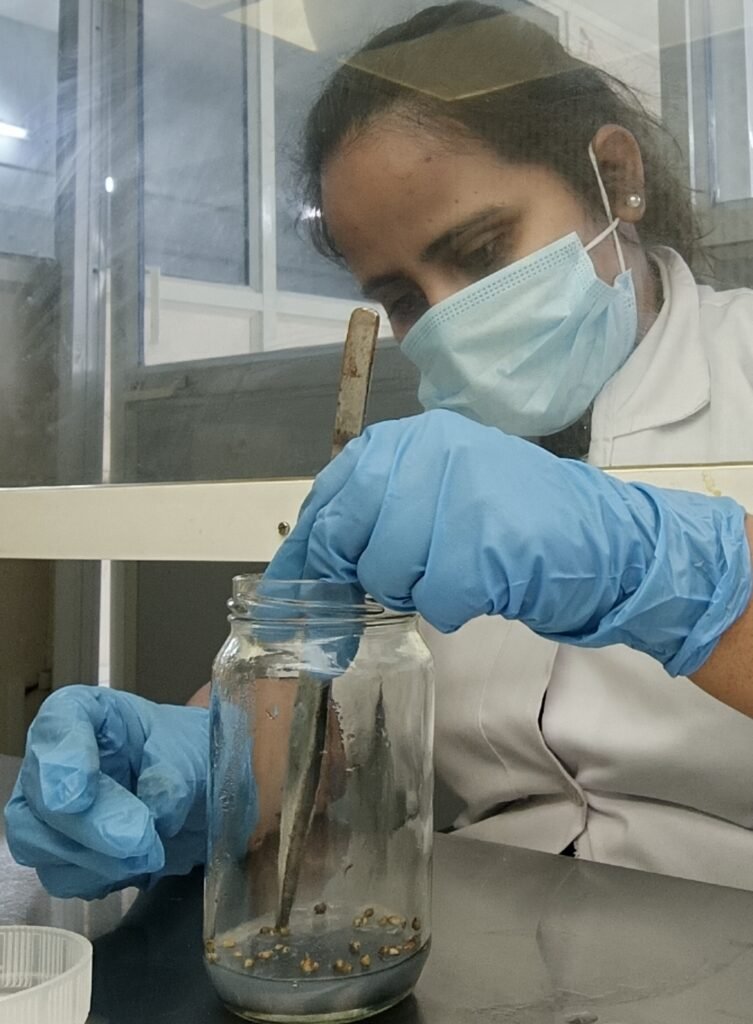
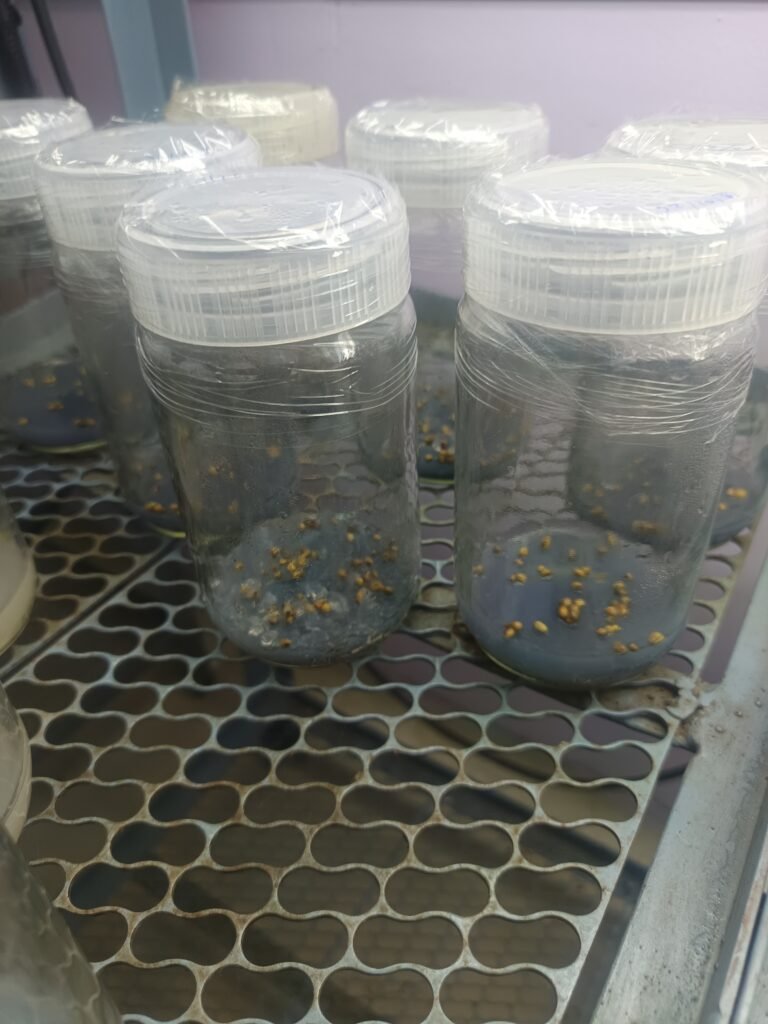
Result :
There is no contamination in Naipier grass, but no growth is observed either.
12 January 2026
Napier grass seeds are first sterilized and soaked in a gibberellin hormone solution. After 6 hours, Bavistin is added, and the seeds are kept for another 6 hours. Then the seeds are sterilized again and placed on MS medium for growth.
Result
Again naipier grass seeds got contaminated after one week.
19 January 2026
Napier grass seeds are first surface-sterilized and soaked in a gibberellin hormone solution. After 3 hours, Bavistin is added, and the seeds are kept for 9 more hours. Then the seeds are again sterilized and placed on MS medium for growing.
Result :
After one week, contamination was observed in Naipier grass seeds.
28 January 2026 – 4 Fabruary 2026
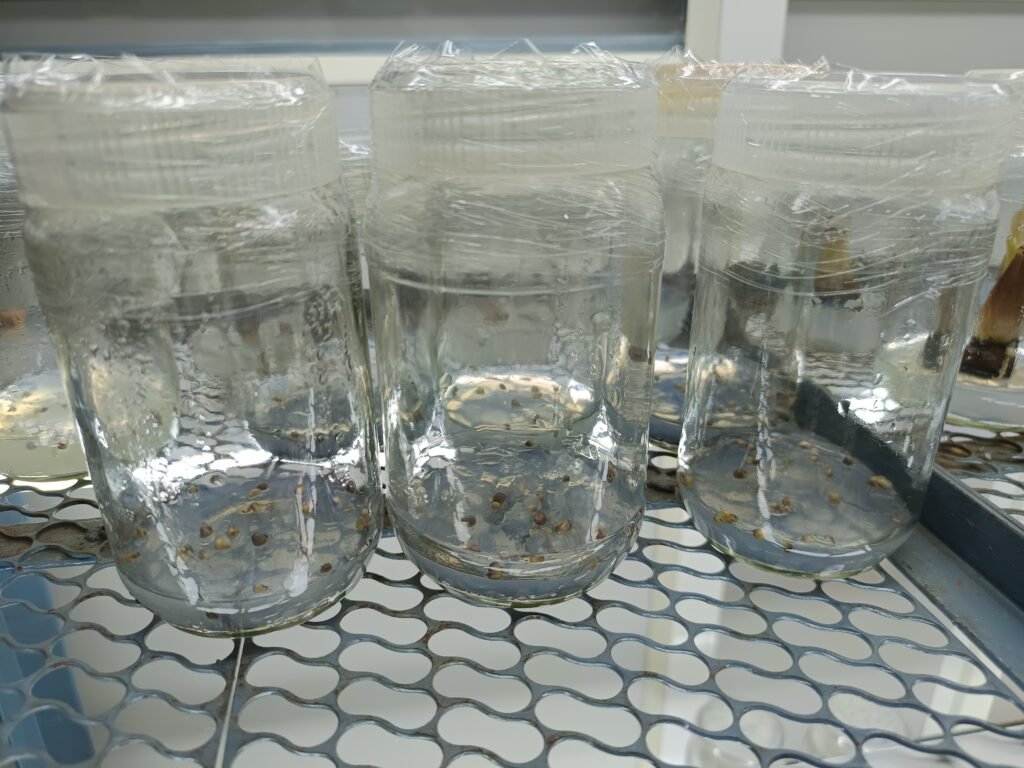
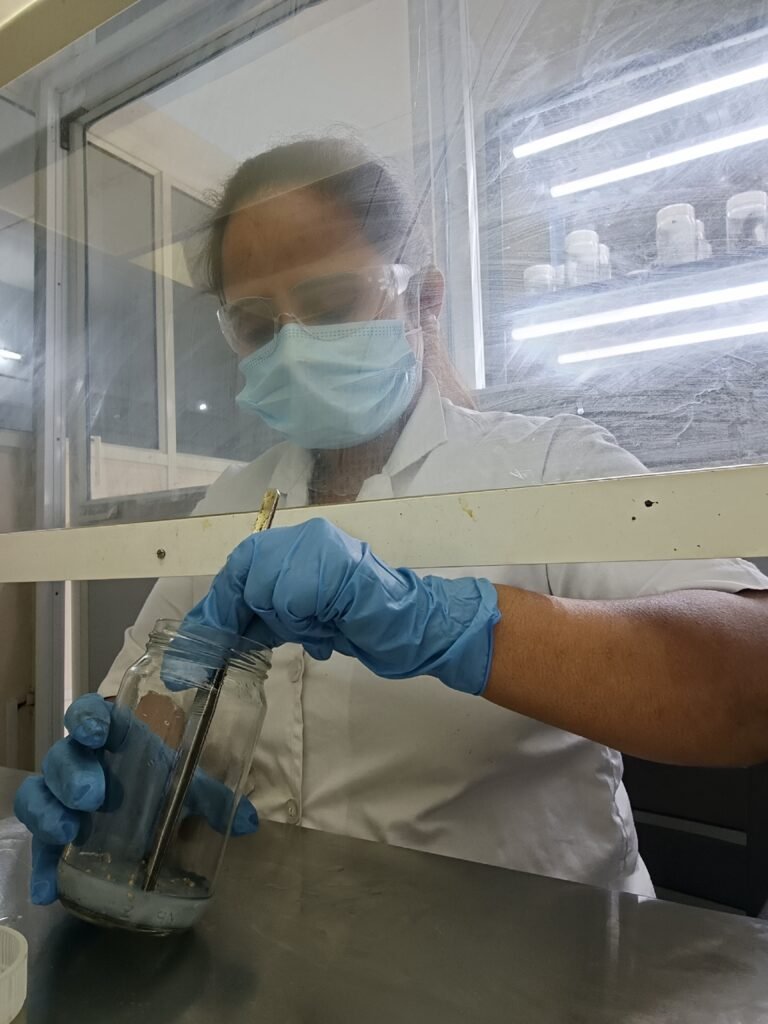
Napier grass seeds are surface-sterilized and then soaked in a gibberellin hormone solution and Bavistin powder (1 g in 200 ml of water) for 12 hours.
Then the seeds are again surface-sterilized and inoculated onto MS medium.
6 Fabruary 2026 – 12 Fabruary 2026
Napier grass seeds are surface-sterilized and then soaked in a gibberellin hormone solution and Bavistin powder (1 g in 200 ml of water) for 12 hours. Then the seeds are again surface-sterilized and inoculated onto MS medium. After inoculation, the culture bottle is kept in a dark place.
27 February – 05 March 2026
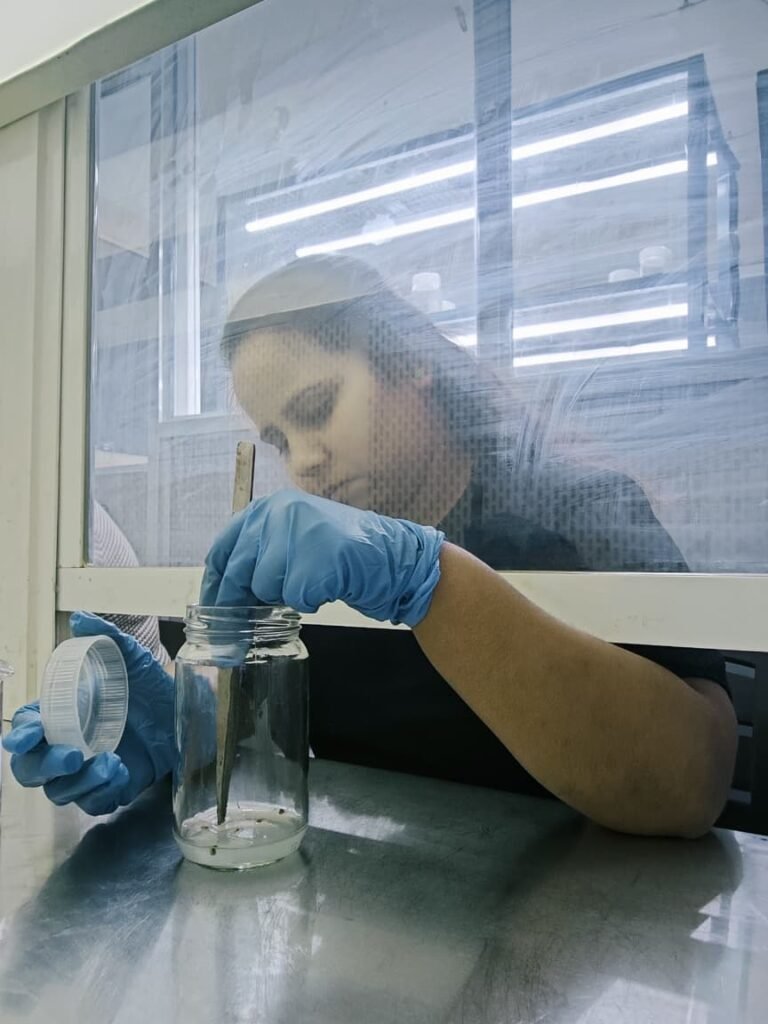
Napier grass seeds are first cleaned (surface-sterilized). Then they are soaked for 12 hours in a solution of gibberellin hormone and Bavistin powder (1 g in 200 ml water). After that, the seeds are sterilized again and placed on MS medium for growth. Finally, the culture bottle is kept in a dark place after inoculation.
06 – 12 March 2026


