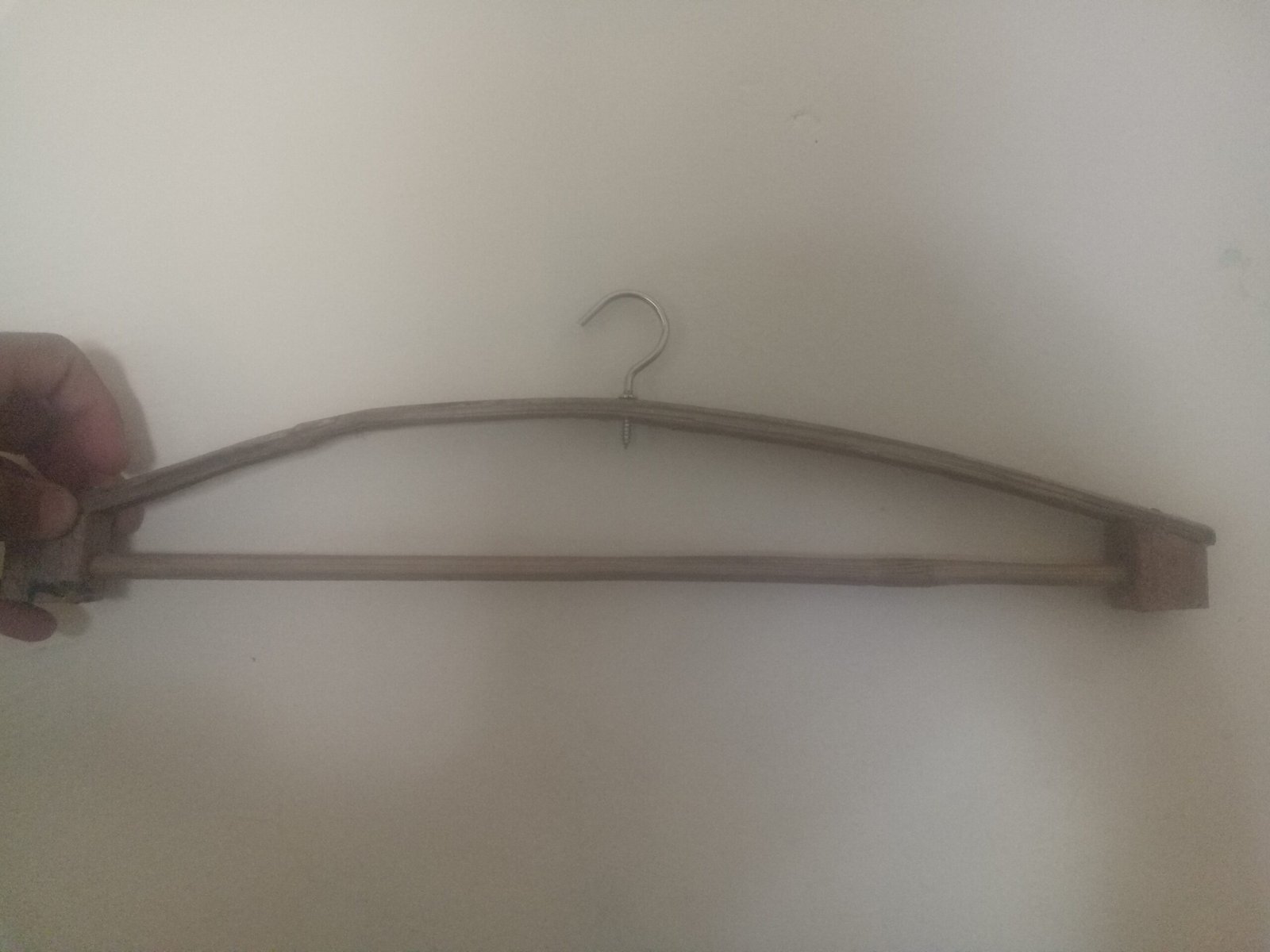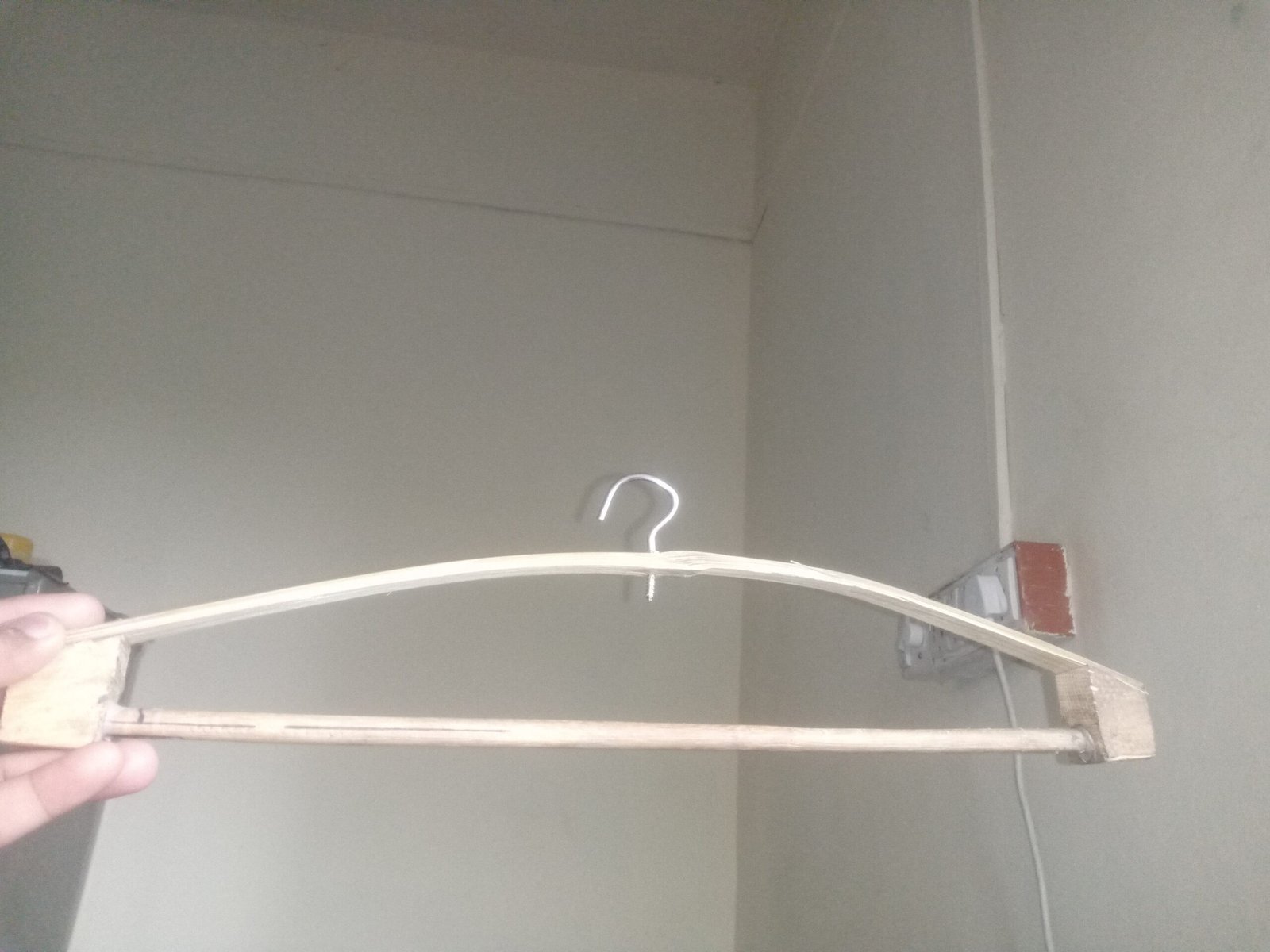
BAMBOO HANGER .
INTRODUCTION- The hand-powered bamboo hanger making machine is developed to improve the efficiency of bamboo hanger production compared to the traditional manual method. In the conventional process, a worker can produce only 30–40 hangers per day, requiring about 7–8 minutes per hanger. The proposed machine reduces the production time to1–3 minutes per hanger, allowing a single operator to manufacture approximately 200–300 hangers per day. The machine provides higher productivity, better uniformity, reduced labour effort, less material wastage, and offers an economical and sustainable solution for small-scale bamboo industries
Objectives and Methodology-
The main objective of this project is to develop a hand-powered bamboo hanger making machine capable of efficiently assembling all the small components of a bamboo hanger in less time. The machine aims to increase productivity, reduce labour effort, improve assembly accuracy, and provide a cost-effective and sustainable alternative to the traditional manual manufacturing process
METHODOLOGY–
- Study the elastic and plastic properties of bamboo to identify the most efficient bending method.
- Determine the required bending radius and dimensions of the bamboo hanger.
- Design the hand-powered bamboo hanger making machine using SolidWorks
- Assemble the components and develop the working prototype.
- Conduct performance testing to evaluate bending efficiency, production rate, and quality of the hangers produced.
MODIFICATION OF MACHINE
Fixing the Uneven Upward Movement-
-
When you lowered the operating lever, the bending block (the part that actually shapes the bamboo) was moving upward unevenly or tilting. This can cause the bamboo to bend crookedly or jam the machine.
- I modified the machine’s mechanics to ensure that when the lever is pulled down, the bending block rises perfectly straight and smooth every single time.
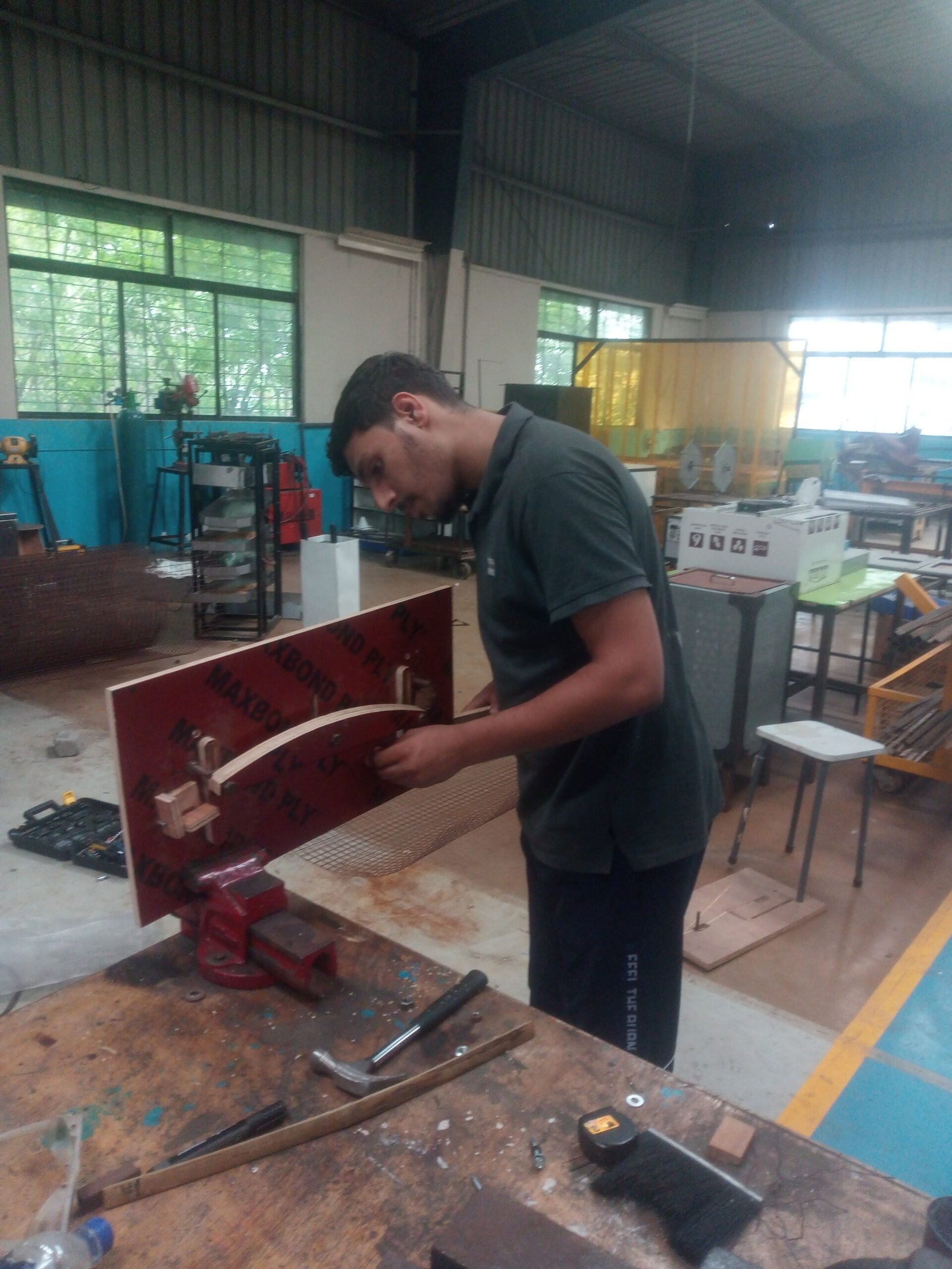
Making Proper Spacing
- Components inside the bending mechanism were either too tight (causing friction) or too loose (causing misalignment).
- adjusted the gaps between the moving parts. Getting the spacing just right ensures that the machine parts line up perfectly without binding against each other.
Adding Screws and Washers and Placing a Thin Metal Sheet Around the Groove
- When you pulled the lever, the movement felt rough, jerky, or stuck because the parts inside the guide groove were rubbing and catching against each other.
- I lined the inside of the groove with a smooth, thin metal sheet. This acts as a slick, even track that eliminates the rough friction, allowing the lever to slide up and down completely smoothly.
METHODS OF BENDING BAMBOO STRIP
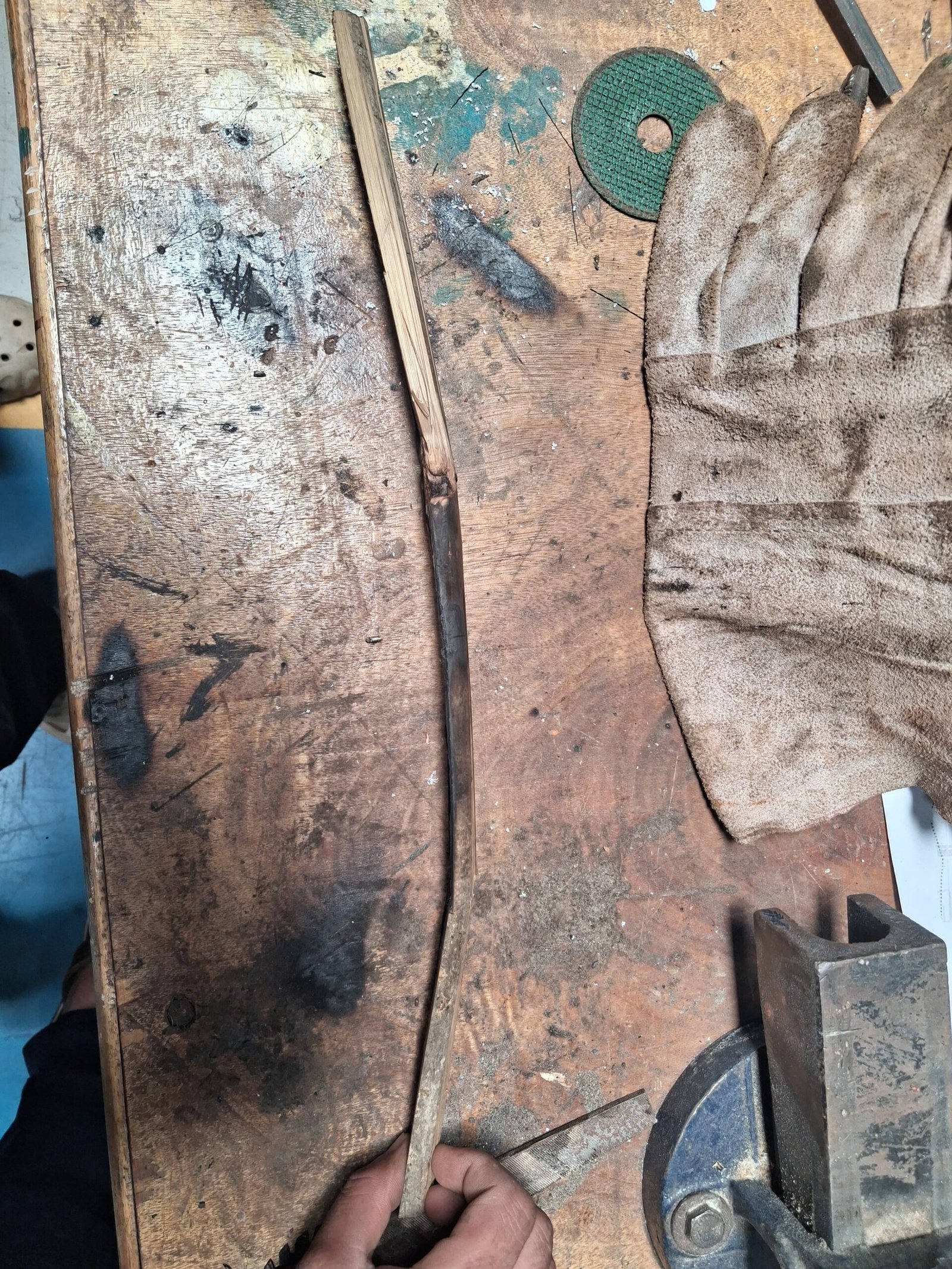
- The Weight Method- we tried to bend the bamboo by hanging or adding heavy weights to it. Once you removed the weight, the bamboo sprung right back into its original straight shape.
- The Heating Method-we applied heat to bend the bamboo. While it bent easily and held its shape perfectly, the bamboo cracked and lost its strength. Intense, direct heat dries out the natural moisture and oils locked inside the bamboo walls too quickly. This causes the fibers to become extremely brittle, leading to structural cracks and a massive drop in the weight-bearing strength needed for a hanger.
- The Water-Soaking Method (Current Focus)- we Soaking is an excellent path forward because water hydrates and softens the lignin and cellulose fibers inside the bamboo. This makes the wood highly pliable and flexible without drying it out or destroying its structural integrity. Once it is fully soaked, bent into the frame on your machine, and allowed to dry completely while clamped, it should permanently retain its new shape without cracking.are currently soaking the bamboo in water to see if it allows for a successful bend.
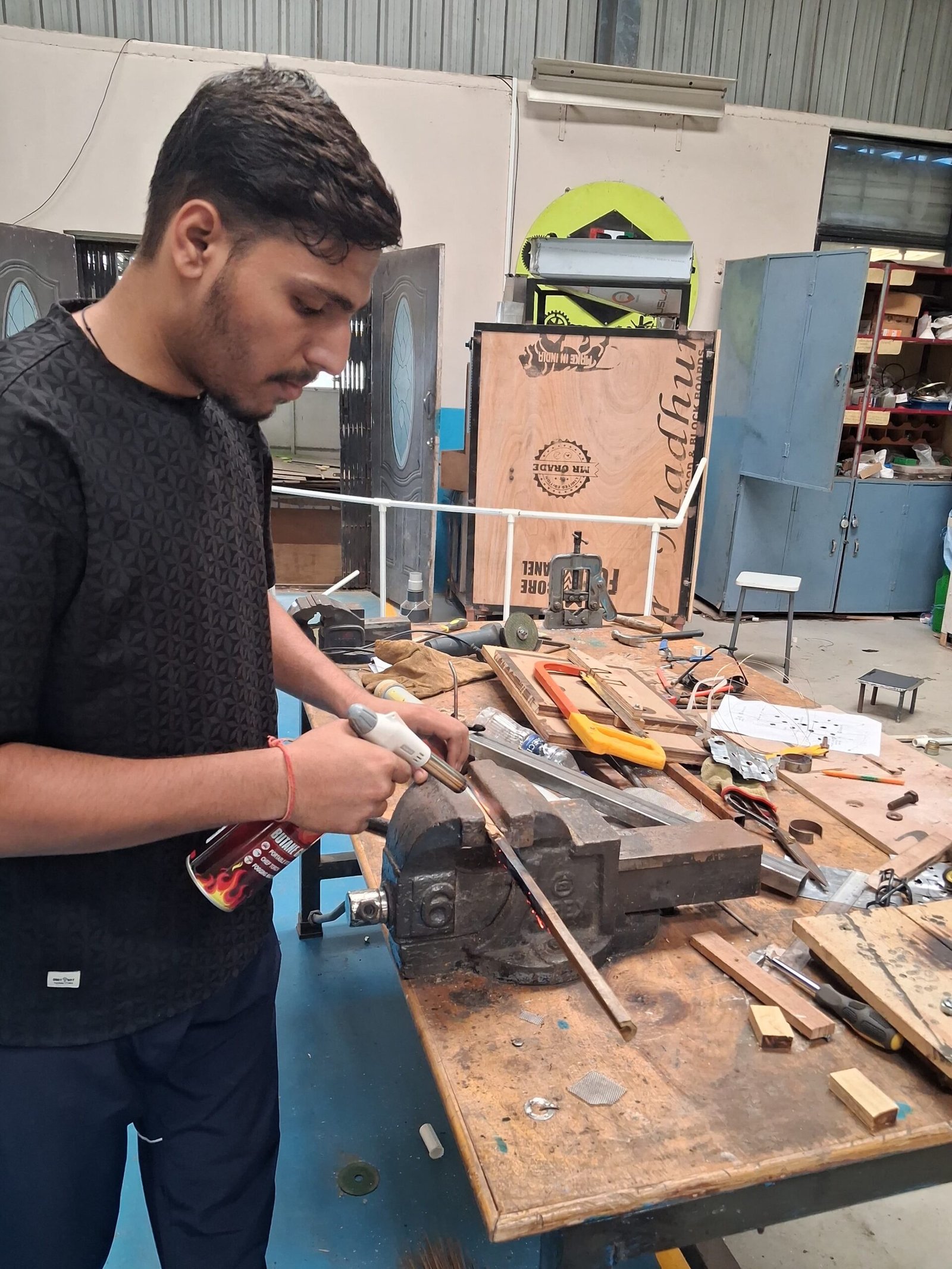
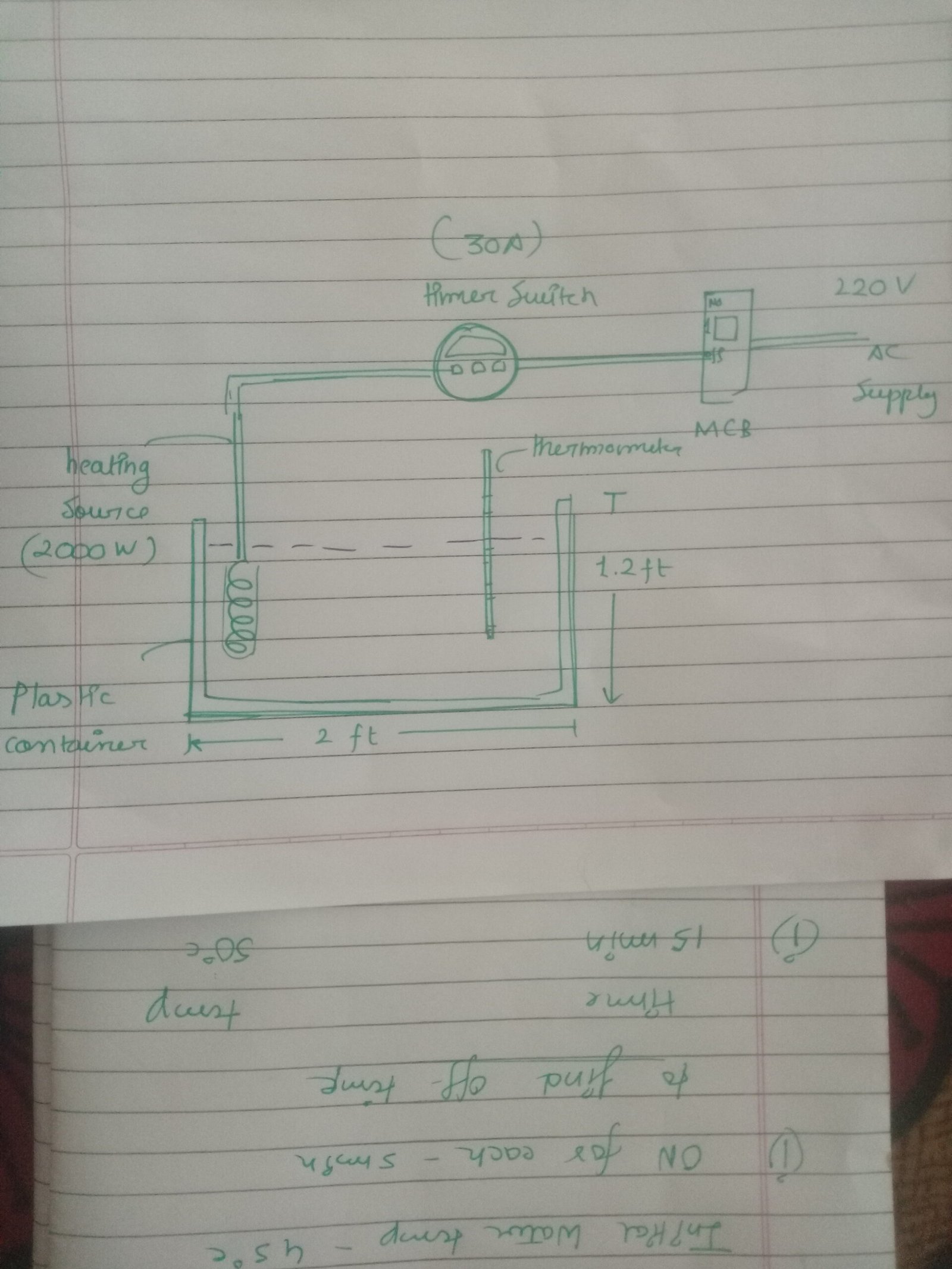
SETUP OF SOAKING SYSTEM
- are using a plastic container measuring 2ft *1.2ft* 1.2 ft to hold the water and the bamboo pieces.
- A powerful 2000W heating rod is placed inside to heat the water quickly.
- A timer switch is wired to the heating rod to automatically cut off the power, keeping the system safe and regulated.
HEATING AND COOLING CYCLE
-
Target Temperature Range: our goal is to keep the water between 60°C and 70°C for 12-24 hour, which is the ideal sweet spot for softening bamboo fibers without boiling them.
-
The Heating Phase: Once the water climbs to an initial 40°C–50°C, you run the 2000W heating rod for exactly 15 minutes.
-
The Cutoff: As soon as the water reaches your desired range (60°C–70°C), the timer switch cuts the power to prevent overheating.
-
The Resting Phase: You let the bamboo soak passively with the power off for 20 to 30 minutes. During this rest time, the water temperature naturally drops by 5°C to 10°C.
13/7/26-19/7/26
1. Changing the Heating Arrangement
To improve the environment inside the heating box, I updated the temperature control setup. I replaced the standard timer switch with an Automatic Cut-Off Timer Switch. This change allows the system to automatically maintain a consistent temperature between 60°C and 70°C inside the box.
2. Making the First Bamboo Hanger Sample
With the heating box ready, I started fabricating the first prototype hanger.
-
The Process: I began by soaking the bamboo. While it was soaking, I built the lower assembly. Once the soaking was complete, I moved on to the bending process and secured the shape using bolts and thin screws.
-
The Problem: During the bending and screwing phase, a crack developed in the bamboo.
3. Making the Second Sample
I attempted a second sample to see if the first issue was a one-off error.
-
The Process: I followed the exact same procedure as the first sample — soaking, assembling the lower part, bending, and fastening.
-
The Problem: Unfortunately, even more cracks developed during this attempt. I have identified that the cracking is caused by the strip thickness of the bamboo being too thick for this bending radius.
4. Making the Third Sample
To solve the cracking issues from the first two attempts, I adjusted my technique for the third prototype.
-
The Process: Instead of driving the screws directly into the wood, I used a drill machine to pre-drill a proper hole into the bamboo first.
-
The Result: Creating this pilot hole removed the outward pressure caused by the screws, allowing me to secure the hanger together cleanly without any cracking.