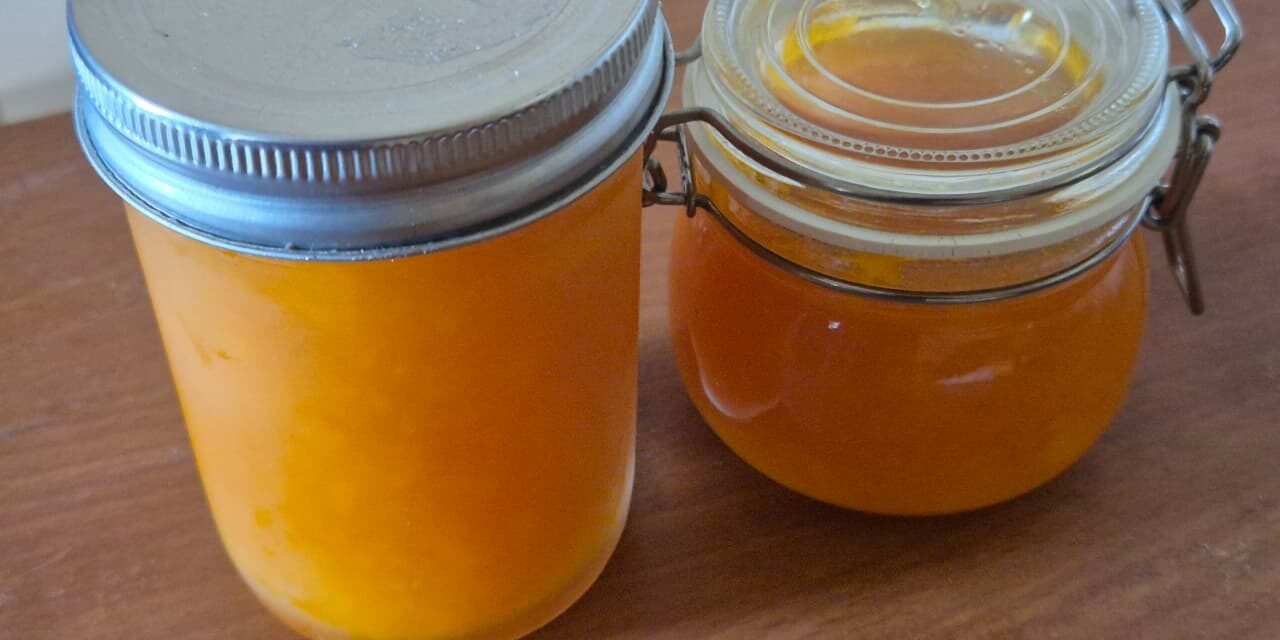
Mango jam : balancing innovation and health
introduction
Every great food processing begins with a vision. When we set out to create our latest batch of artisanal Mango Jam, our goals stretched far beyond mere taste. We wanted to merge sustainability, texture engineering, and modern market trends into a single jar.
However, as any food scientist or agricultural engineer will tell you, the journey from raw concept to finished product is rarely a straight line. Here is the story of how our mango jam project evolved from a green energy experiment into a highly targeted, health-conscious product launch.
The Sustainable Dream vs. Practical Realities
Our initial production roadmap carried a bold, eco-conscious objective: processing our fresh mango harvest using 100% renewable energy. We researched solar collectors and gasifier setups to heat our boiling containers, aiming for a completely carbon-neutral process.
However, practical application introduced immediate technical bottlenecks. During initial testing and discussion we struggled with temperature consistency. Mango pulp is highly sensitive; it requires steady, precise heat to evaporate moisture without scorching the natural sugars or muting the vibrant fruit aromatics. Because we couldn’t guarantee absolute thermal stability with our current renewable setup, we transitioned to LPG (Liquefied Petroleum Gas).
While moving away from renewable energy was a tough decision, it was necessary to guarantee the uniform heat flux required for absolute product safety, color preservation, and quality control.
Two Methods: Jelly vs. Health
(22 may 2026)
With our heating source standardized, we turned our attention to recipe formulation. We researched various approaches and isolated two fascinating, contrasting methods to test:
The Pectin Method : This traditional framework relies on adding external pectin to establish a fast, stable, and rigid gel matrix. Because mangoes are naturally low-to-medium in pectin, this method guarantees a beautiful, glossy, jelly-like texture. However, it requires a high concentration of sugar to trigger the pectin cross-linking, resulting in a very sweet, traditional jam.
The Low-Sugar Method : This approach bypasses heavy gelling agents and massive sugar loads, relying instead on a slow, natural reduction to concentrate the mango’s intrinsic fruit solids. The resulting jam is deeply fruit-forward, rich, and highly spreadable. Crucially, it unlocks a powerful marketing angle: it positions the jam as a health-conscious alternative, perfectly targeting modern wellness-oriented customers.
Method Difference
| Parameter | Pectin | Low sugar |
| 1)Sugar content | medium to high | low |
| 2)Pectin use | Commercial pectin | Natural Pectin |
| 3)Taste | Sweeter | More natural |
| 4)Texture | Firm gel | Softer |
| 5)Cooking time | shorter | medium |
| 6)Shelf life | longer | shorter |
| 7)Calories | higher | lower |
| 8)Gel formation | Easy and stable | More difficult |
| 9) Cost | slightly higher | medium to high |
| 10) Risk of spoilage | Lower | Higher |
Final disition
(24 may 2026)
Faced with two distinct paths, we sat down for a critical technical review with Dixit Sir. His industry and academic guidance brought immediate clarity to our strategy.
Instead of guessing what would work best, we decided to run a structured trial. We prepared two pilot batches—one using the Pectin method and one using the Low-Sugar method—to evaluate their chemical stability, shelf-life, and sensory profiles.
The results were definitive. The low-sugar batch was the clear winner, boasting an authentic, robust flavor profile that tasted like pure, fresh mangoes rather than a hyper-sweet confection. Recognizing its strong alignment with modern healthy-eating trends, Dixit Sir gave us the green light to scale up production using the Healthy Low-Sugar Method.
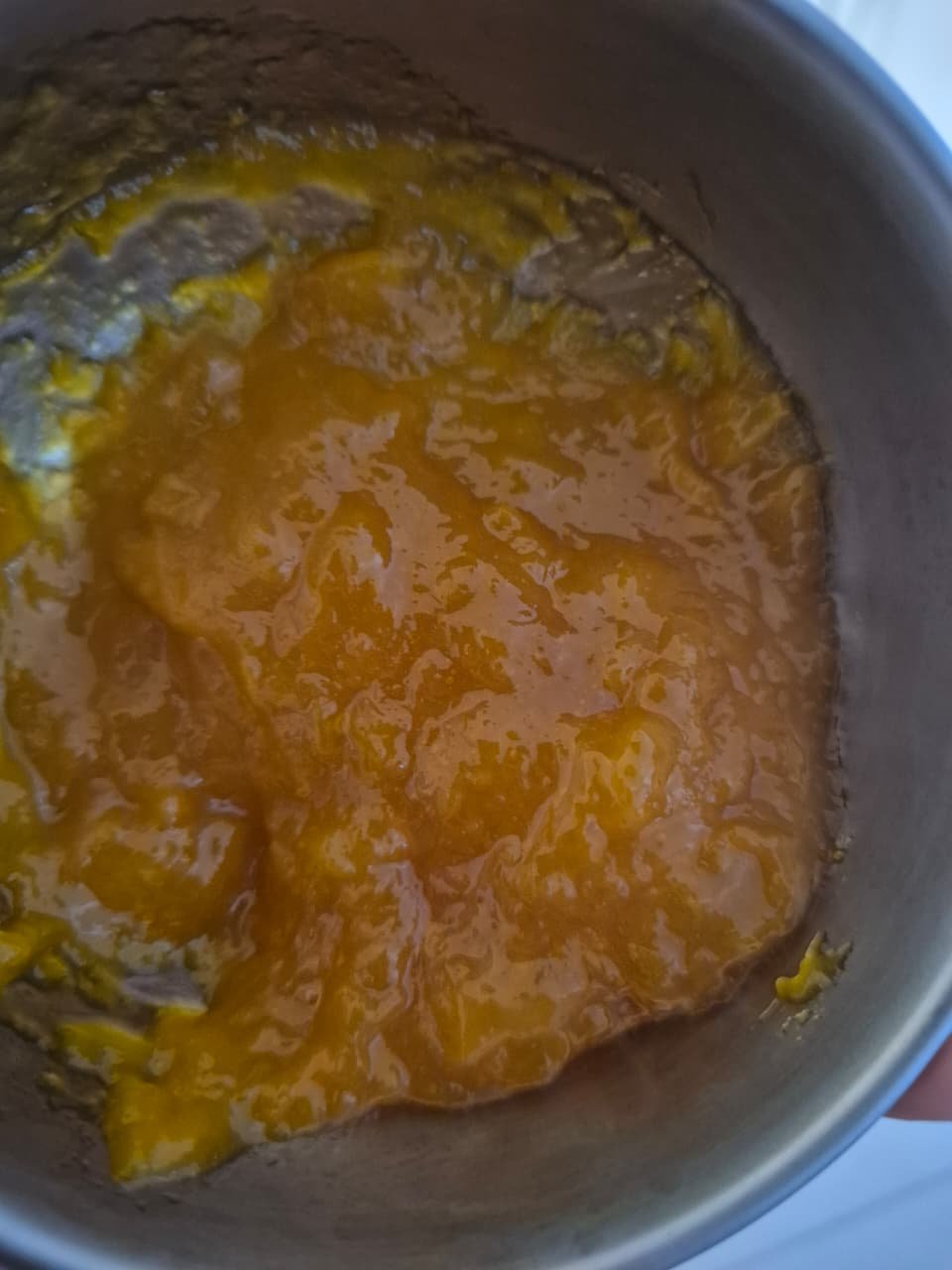
The Final Production Metrics
Following our successful trial, we initiated full-scale processing. We successfully formulated and sealed three commercial batches, yielding exactly 40 containers per batch (a total of 120 premium jars!).
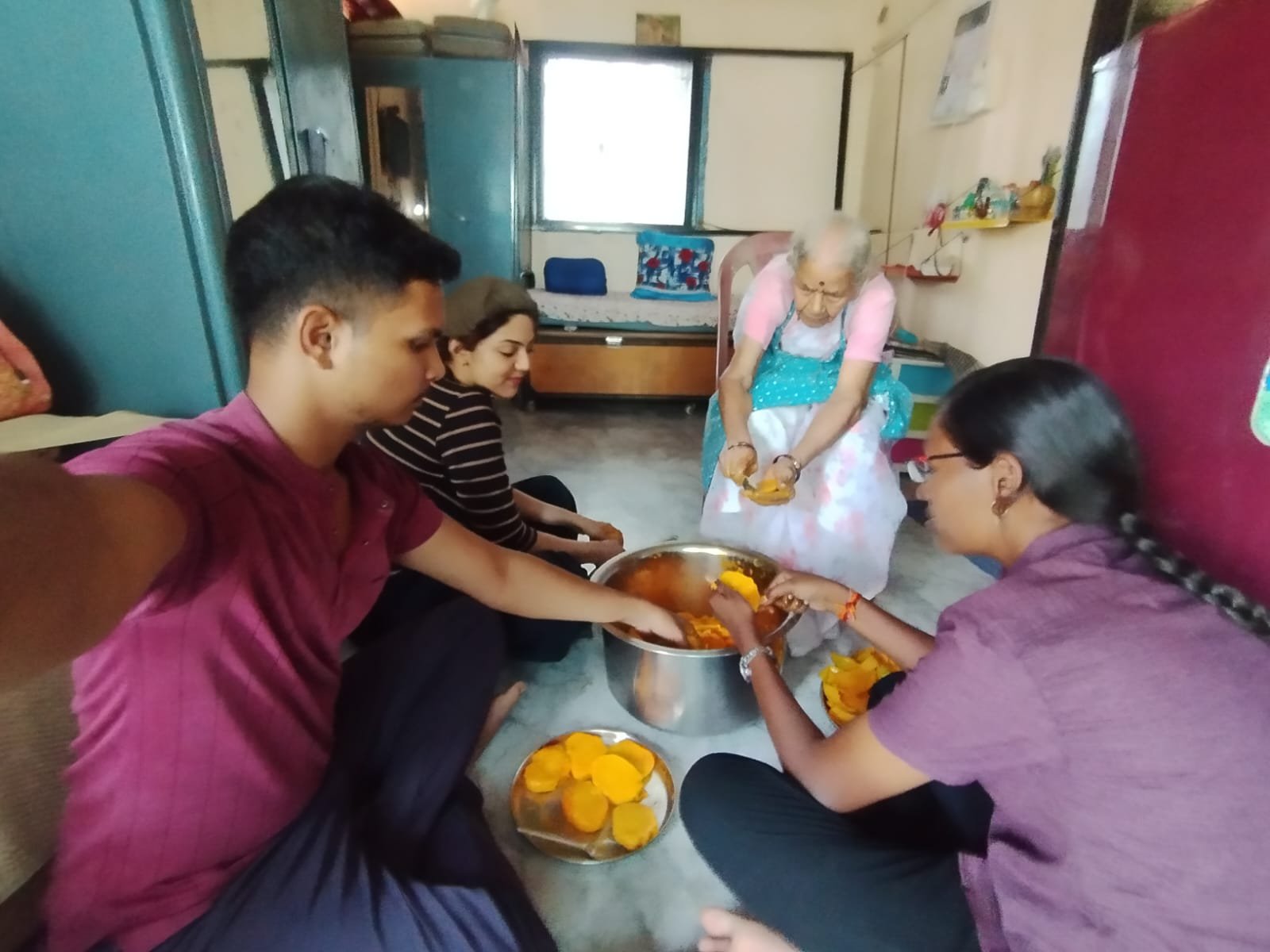
Healthy Low-Sugar Mango Jam
(26 may 2026)
Ingredient Proportions (By Total Batch Weight)
Alphonso Mango Pulp: 72.5%
Refined Sugar: 27.0%
Citric Acid: 0.20%
Guar Gum: 0.10%
Warm Water (to dissolve citric acid): 0.20% – 0.50%
Step-by-Step Production Process
Step 1: Sanitation & Hygiene Setup
Thoroughly clean and sanitize all surfaces, the heavy-bottom production vessel, and your stainless steel stirring paddle.
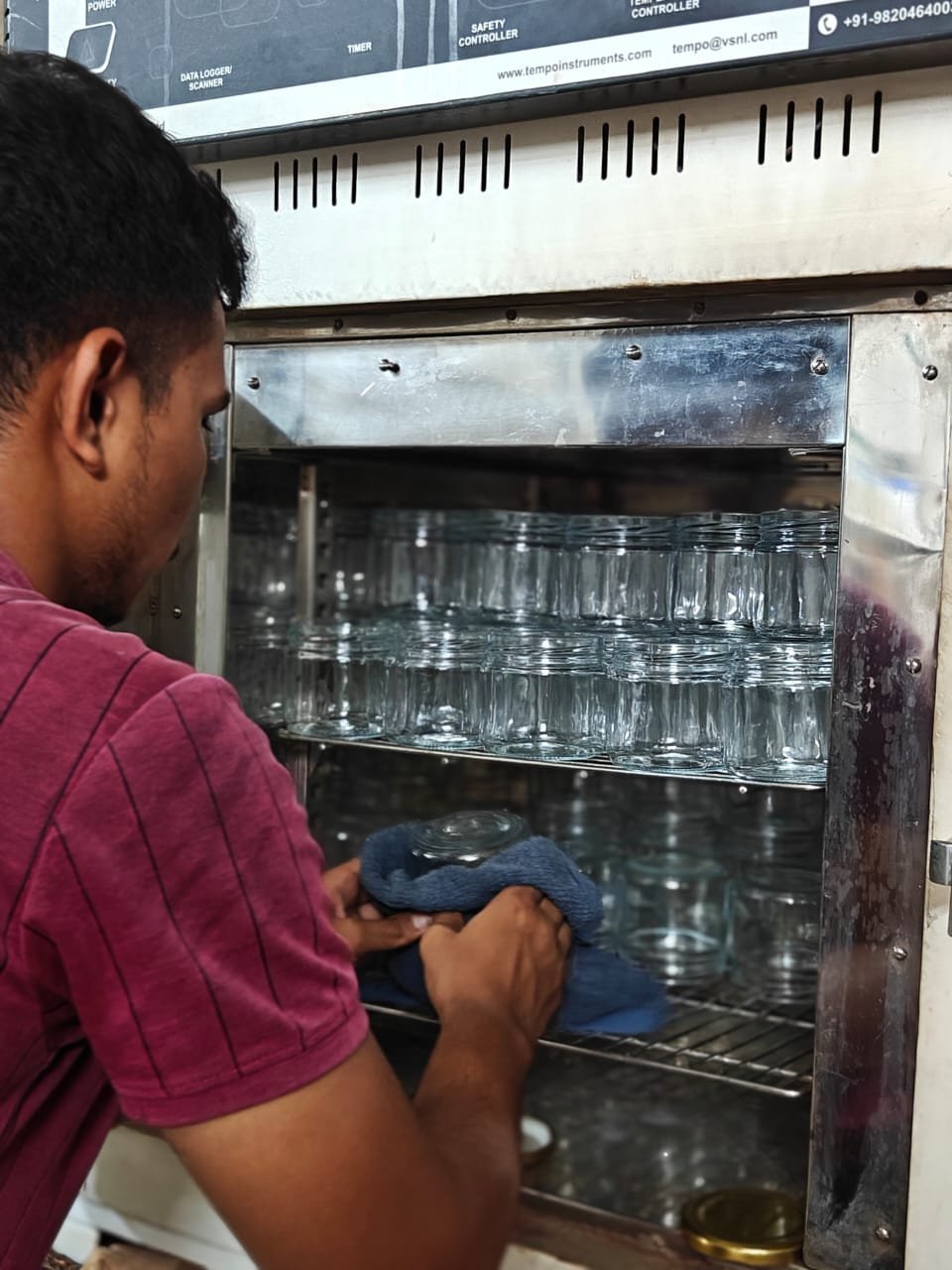
Ensure all jars and lids are completely sterilized and dry before beginning. It should be set on 180C for 40 mins Keep the filling station completely free of standing water.
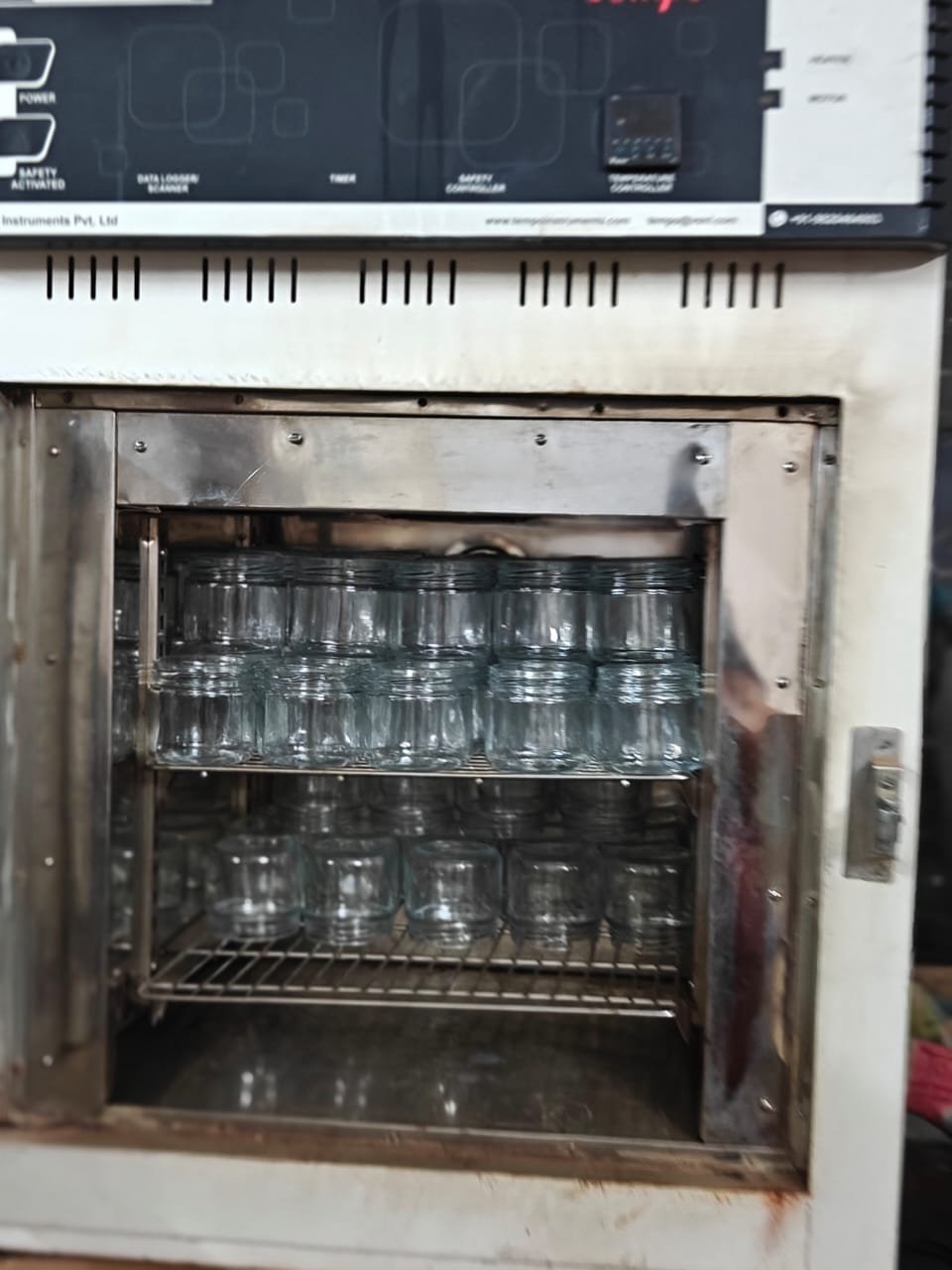
Step 2: Critical Ingredient Pre-Mixing and brix test
A. Guar Gum Premix (Do not skip): Never add guar gum directly to the pulp or it will clump. Separate 5% to 10% of your recipe’s sugar (e.g., 2 to 3 kg out of a 27 kg sugar allocation) and mix it thoroughly with all of the guar gum powder until it is completely and evenly dispersed.
B. Citric Acid Solution: In a separate container, fully dissolve the citric acid into the warm boiled water. Set this solution aside; do not add it at the beginning. C. brix test : with the help of refractometer, run the brix test by which got the sugar range of the mango pulp
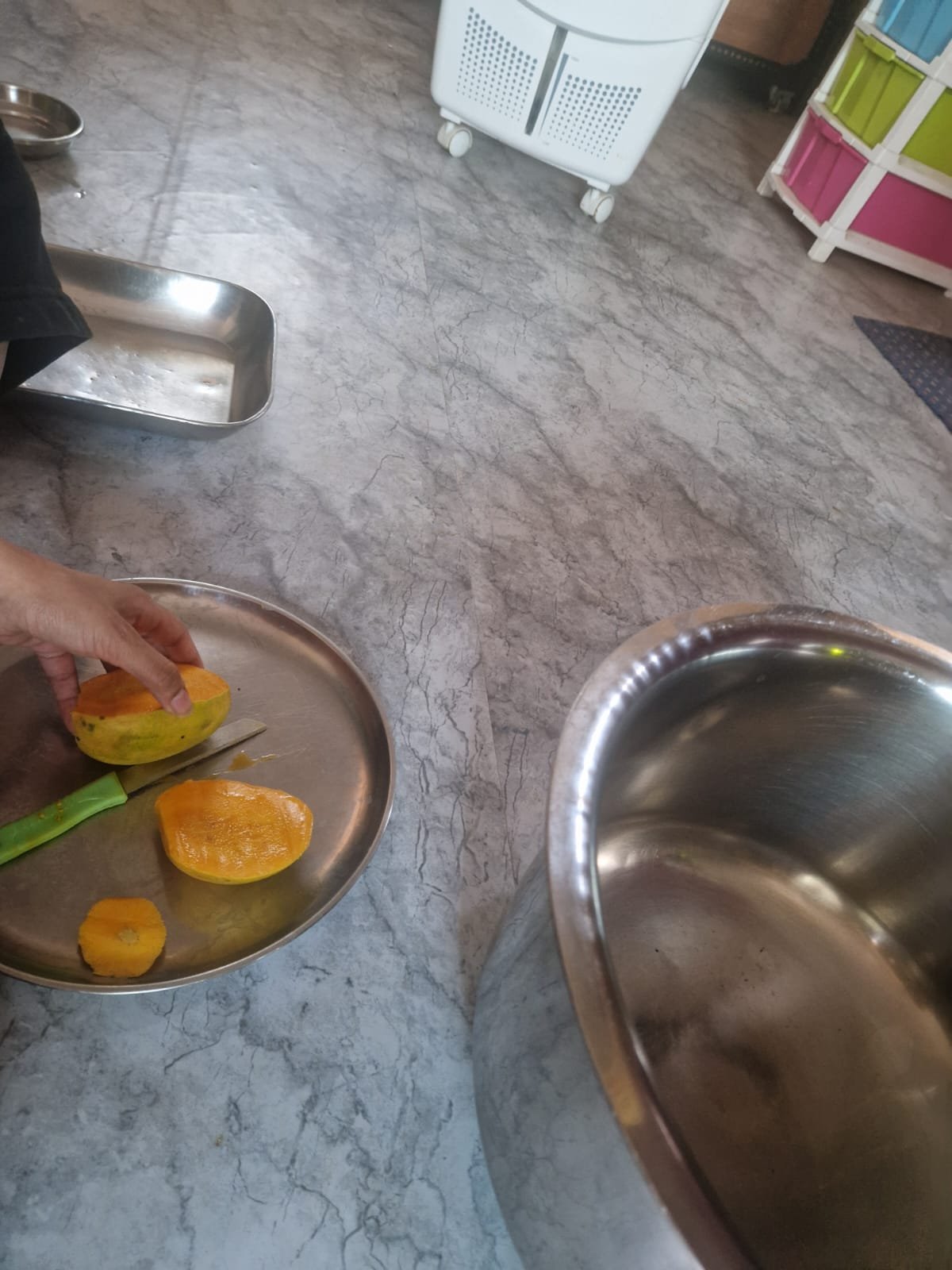
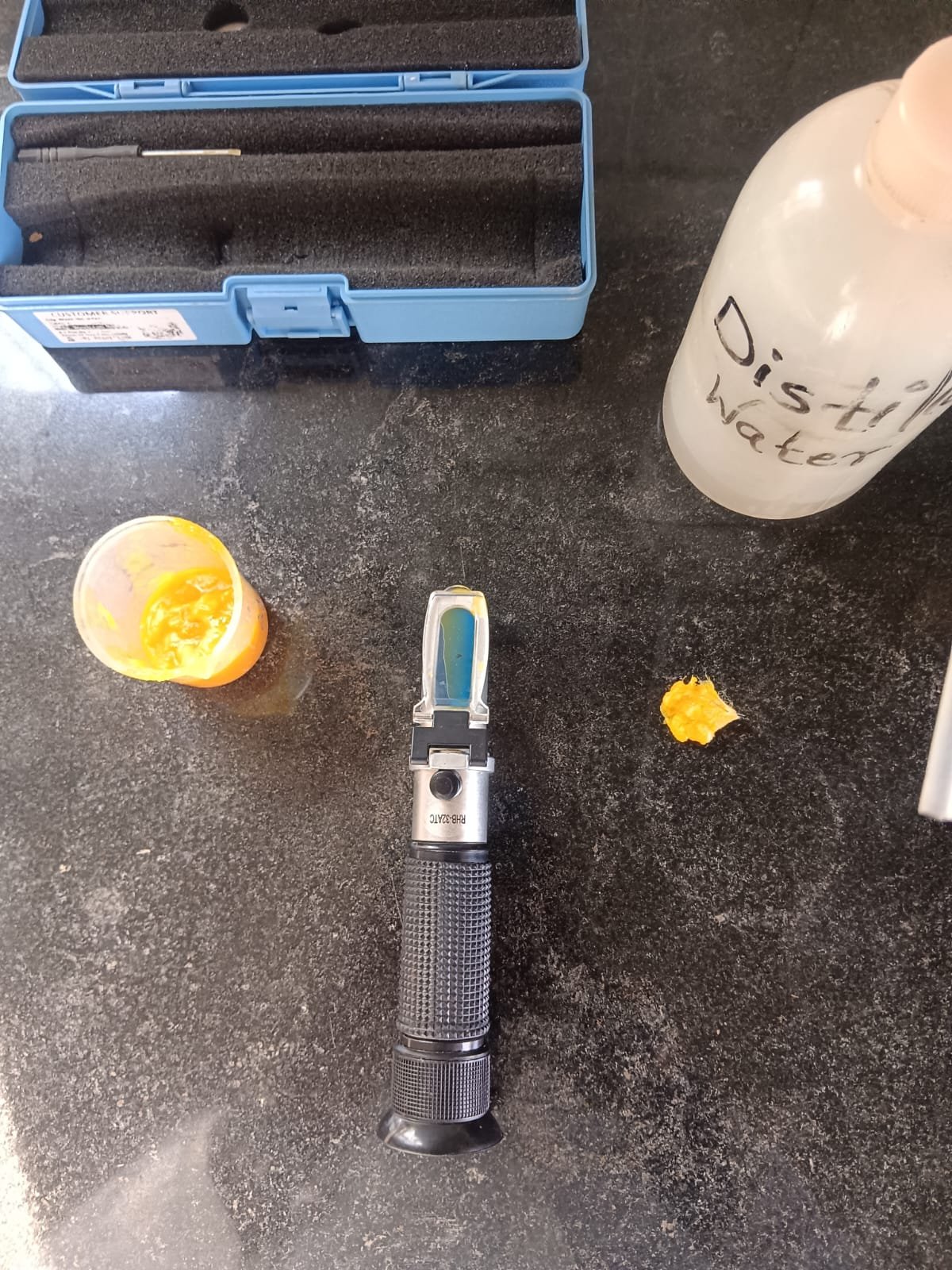
Step 3: Initial Cooking Stage
Add the entire volume of mango pulp (72.5%) and the remaining sugar (the sugar left over after creating your guar gum premix) directly into your cooking vessel.
Apply medium heat to warm the mixture evenly, dissolve the sugar, and avoid scorching.
Stir continuously or intermittently for 8 to 20 minutes. Do not time this rigidly; judge visually. Look for an evenly heated, steaming mixture where the sugar is completely dissolved with no aggressive boiling or caramelization.
Step 4: Integrating the Guar Gum
When the mixture is hot and moving well (warmed to a near-simmer), slowly sprinkle your guar gum + sugar premix into the vessel.
Gradually add the premix over 2 to 5 minutes while stirring continuously—do not dump it all in at once.
Continue mixing and hold the heat for 3 to 5 minutes. You will notice a slight increase in body, a smoother texture, and improved viscosity, though it will still look looser than the final preserve
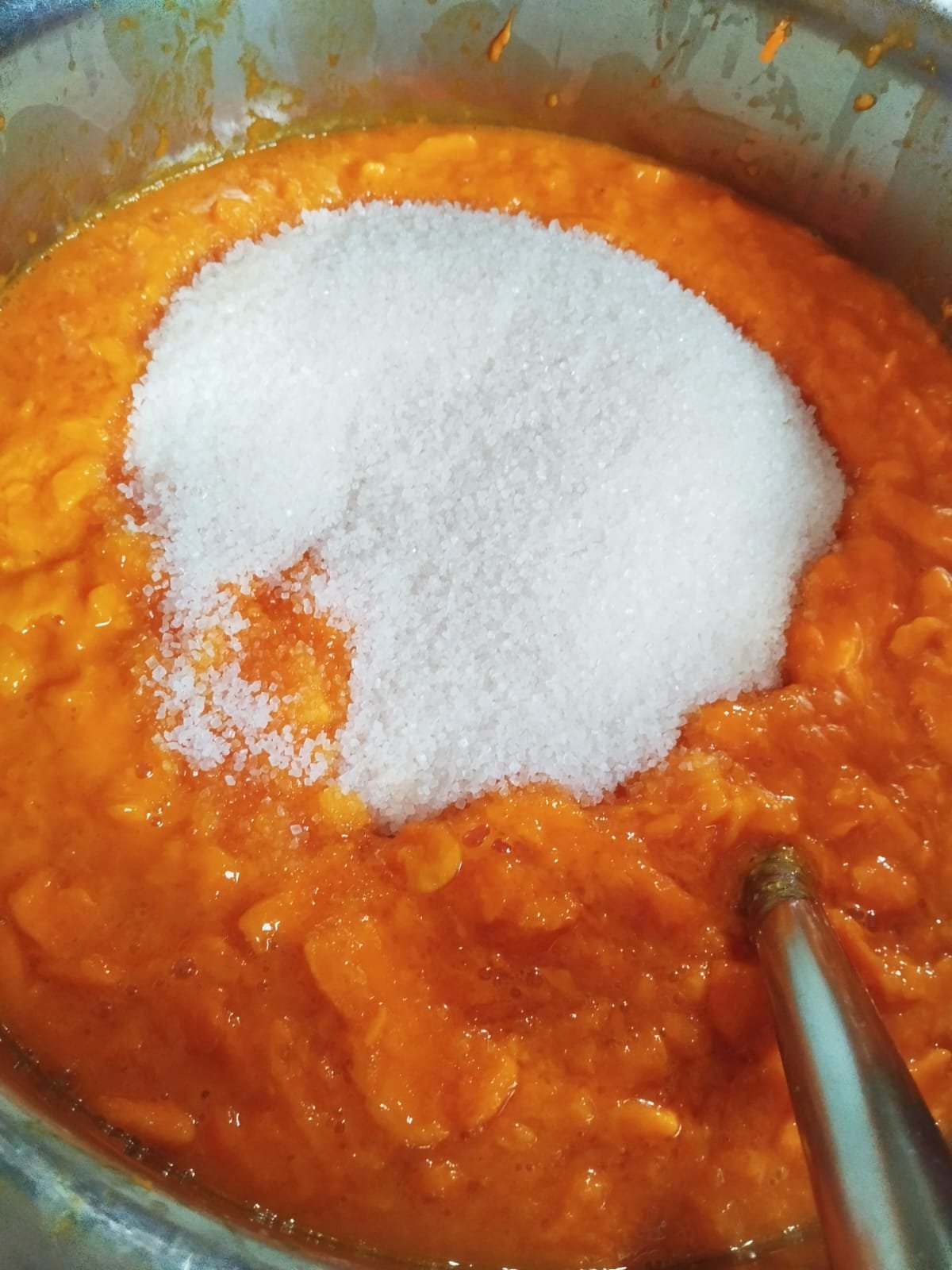
Step 5: Simmering & Concentration
Bring the mixture to a gentle simmer characterized by steady, medium bubbling across the surface. Avoid a hard rolling boil or violent splashing.
Cook and stir for 15 to 40 minutes depending on your batch size and vessel width. Do not rely solely on the clock; look for the target endpoint indicators
Step 6: Checking Endpoint Indicators
Stop cooking when the batch hits these three markers simultaneously:
Visual: The surface becomes glossy, the bubbles grow thicker and slower, the mixture flows heavily off the paddle, and a trail is briefly visible after stirring.
Temperature: A food thermometer registers a target temperature of 82°C-86°C
Spoon/Plate Test: A small sample dropped onto a cold plate should mound softly and spread thickly without running watery
Step 7: Adding Citric Acid
When the preserve is nearly finished and the heat is about to be turned off, pour in the prepared dissolved citric acid solution and mix it thoroughly into the batch.
Cook for only 1 to 2 minutes after adding the acid. Keeping this step brief preserves the fresh mango flavor and improves your overall acidity control
Step 8: Hot Filling & Capping
Immediately transfer the hot preserve to your filling station.
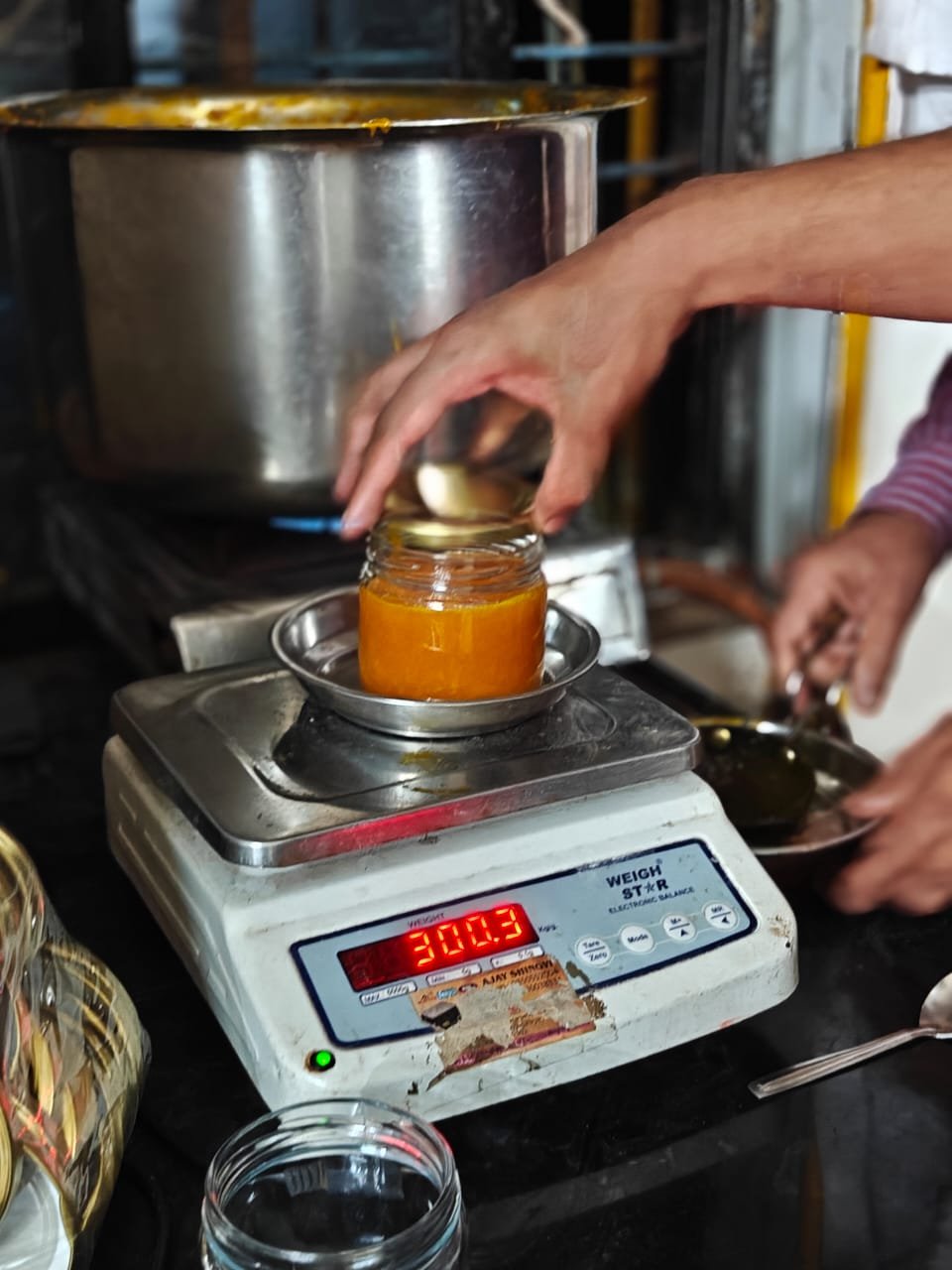
Fill the sterilized jars while the product is hot—maintaining a recommended fill temperature of 85°C+.
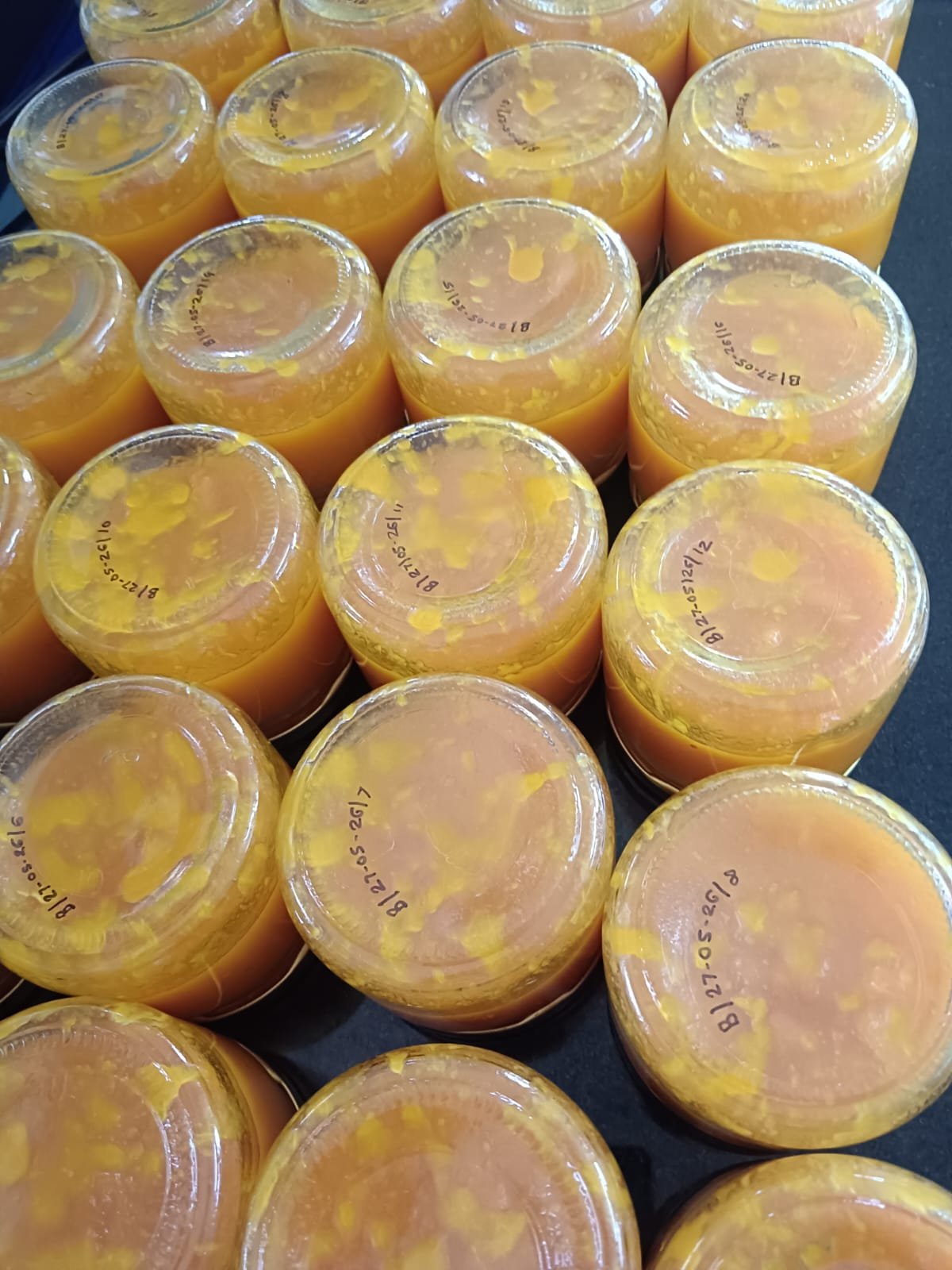
Leave a headspace of approximately 5mm at the top of the jar, wipe the rims completely clean, and immediately cap tightly. Optionally, invert the jars for 30–60 seconds before standing them upright.
Step 9: Cooling & Stabilization
Allow the filled jars to cool completely undisturbed for 8 to 24 hours. The low-sugar gel texture will fully stabilize overnight. After that leble the containers according to the batches
Conclusion:-
After preparing the mango jam using a low-sugar method, the main concern was its shelf life under room-temperature storage. The jam was prepared using Alphonso mango pulp, sugar, citric acid, and guar gum, followed by cooking, and hot filling into sanitized glass jars. However, the batch lasted approximately six weeks, raising questions about its long-term stability at room temperature (around 25–28°C).
Based on this observation, I feel that the low sugar content, final concentration and storage conditions may have contributed to the limited shelf life. However, the exact cause of spoilage cannot be confirmed without further testing. In the next stage, I’ll plan to focus on measuring the final pH and °Brix, monitoring the processing conditions, and understanding the effect of storage conditions on the product. These observations will help identify the possible reasons for spoilage and guide further improvements in the formulation and processing method.
The mango jam was branded and marketed under the name “Laal Mati” and successfully sold. The product received positive feedback from customers, indicating good acceptance in the market. This demonstrates the product’s potential for further marketing and commercial development under the Laal Mati brand.