(Walkley & Black – Rapid Titration Method)
Date: 2/01/2026
Principle
Soil organic carbon is oxidized by potassium dichromate (K₂Cr₂O₇) in the presence of concentrated sulphuric acid (H₂SO₄).The excess (unreacted) dichromate is titrated against ferrous ammonium sulphate (FAS) using diphenylamine indicator.The amount of dichromate reduced is proportional to the organic carbon present in the soil.
Requirements
Chemicals :
- 1 N Potassium dichromate (K₂Cr₂O₇)
- Concentrated sulphuric acid (H₂SO₄)
- 0.5 N Ferrous ammonium
- sulphate(FAS)Diphenylamine indicator
- Distilled water
Preparation of Solutions
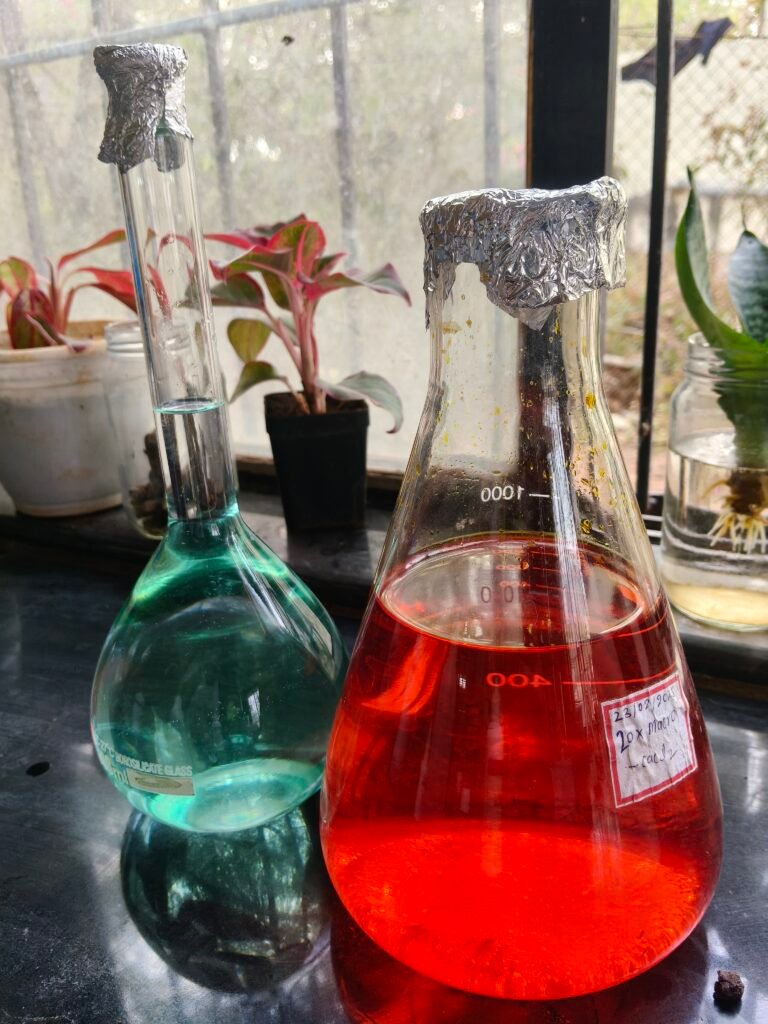
1) Preparation of 1 N Potassium Dichromate (K₂Cr₂O₇)
Equivalent weight of K₂Cr₂O₇ = 49 gFor 1 N, 1 litre
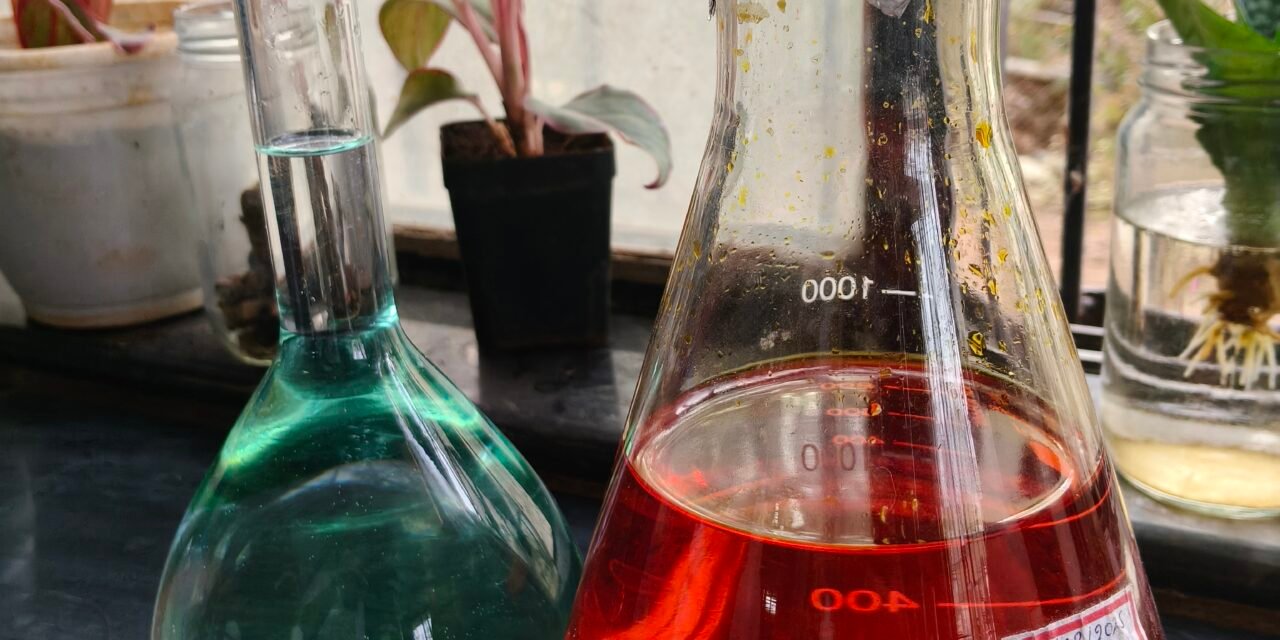
2) Preparation of 0.5 N Ferrous Ammonium Sulphate (FAS)
Equivalent weight of FAS = 392 g For 500 ml: 98 gm
Apparatus
- Burette
- Pipette (10 ml)
- Conical flask (500 ml)
- Electronic balance
- Sieve (0.5 mm)
Procedure
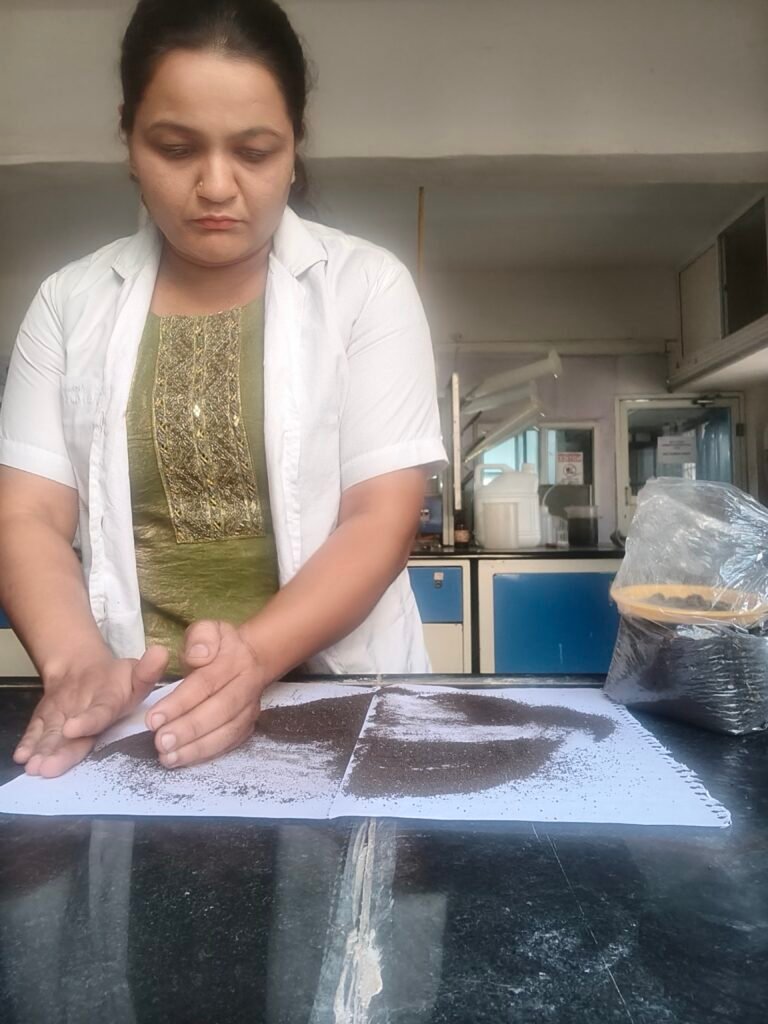
- Take 1 g of air-dried, sieved soil in a 500 ml conical flask.
- Add 10 ml of 1 N K₂Cr₂O₇ solution.
- Add 20 ml concentrated H₂SO₄ carefully and swirl gently.
- Allow the mixture to stand for 30 minutes.
- Add 200 ml distilled water.
- Add 2–3 drops of diphenylamine indicator.
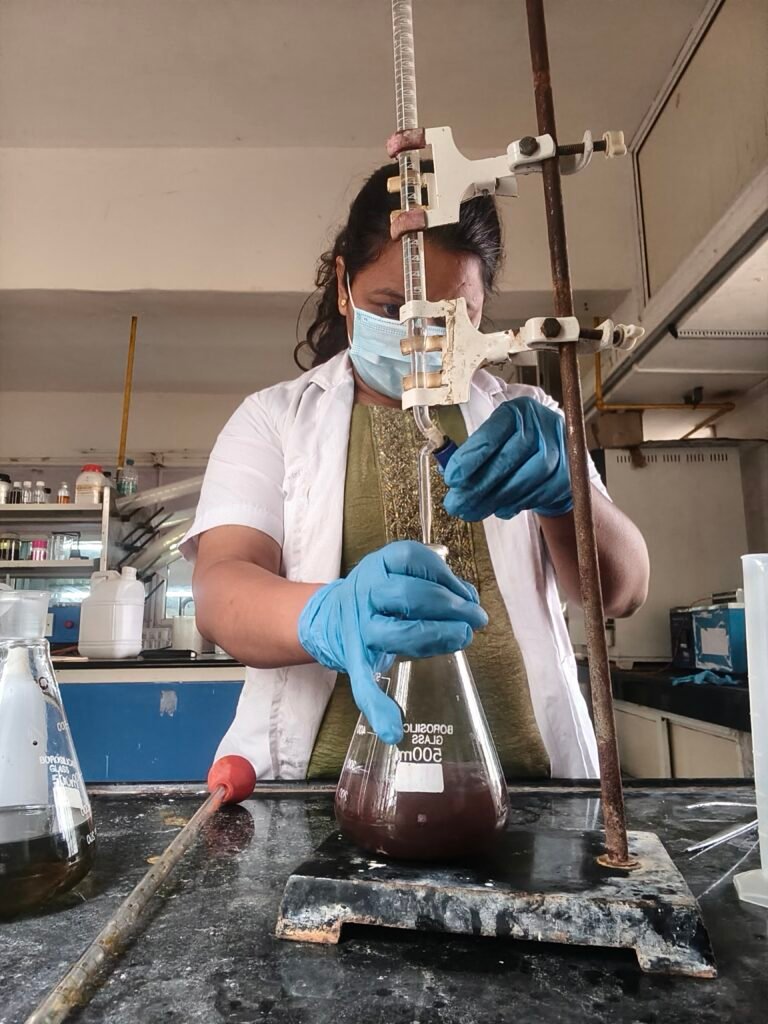
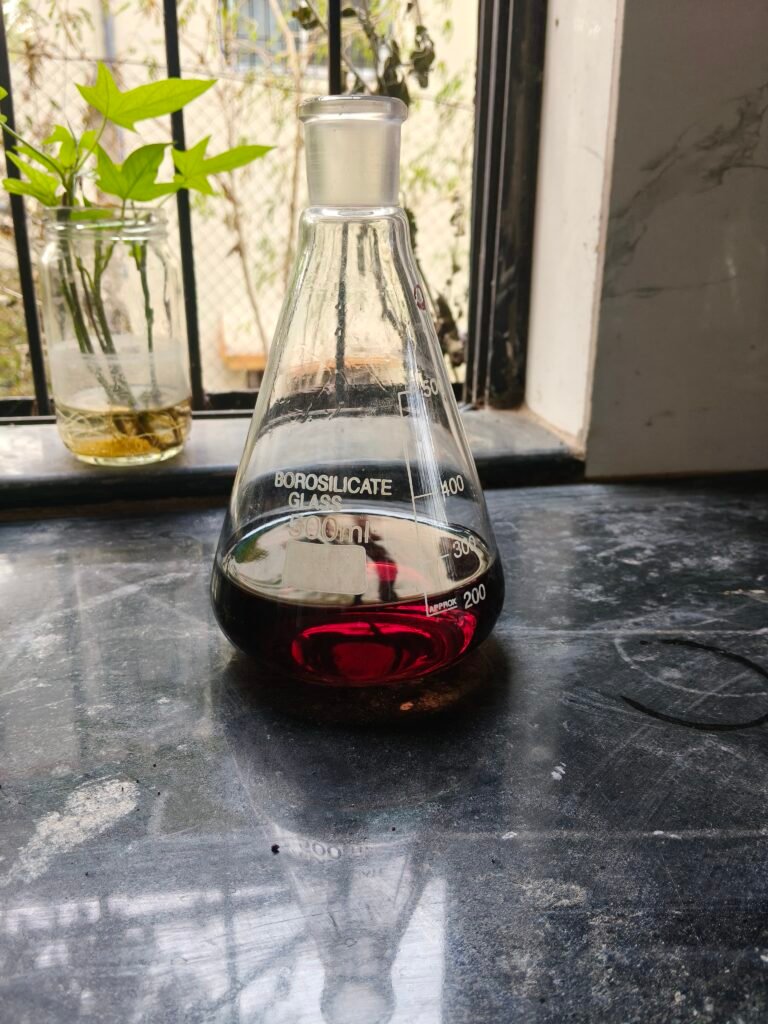
- Titrate with 0.5 N FAS until the colour changes from violet to green.
- (Ferroin indicator colour change: blue-green → wine red / reddish brown)
- Run a blank titration without soil.
Calculation :
Organic Carbon = (B-S)× N×0.003×1.33×100/Wt.Of Soil
Where,
B = Volume of FAS used in blank (ml)
S = Volume of FAS used in sample (ml)
N = Normality of FAS 0.5 N
- 0.003 = Carbon equivalent (gm)
- 1.33 = Correction Factor
- Blank Reading (B) = 26.1ml
- Sample Reading = 23.8 ml
- Weight Of Soil = 1 gm
Organic Carbon = (B-S)× N×0.003×1.33×100/Wt.Of Soil
= (26.1- 23.8)×0.5×0.003×1.33×100/1
=2.3×0.5×0.003×1.33×100/1
=1.15×0.003×1.33×100/1
=0.00345×1.33×100/1
=0.0045885×100/1
=0.458/1
=0.458%
Conclusion (Organic Carbon)
The given soil sample contains 0.458% organic carbon. Since this value is below 0.5%, the soil is classified as having low organic carbon content.
Low organic carbon indicates reduced soil fertility, lower microbial activity, poor soil structure, and limited availability of nutrients to plants. Such soil may also have a lower water-holding capacity.
Therefore, to improve soil health and fertility, the application of farmyard manure, compost, vermicompost, green manuring, and incorporation of crop residues is recommended. These practices will help increase the organic carbon content and improve sustainable crop productivity.
Based on the laboratory analysis, the organic carbon status of the soil can be concluded as follows:
- Low organic carbon (< 0.5%) indicates poor soil fertility, low microbial activity, and reduced nutrient availability. Such soils require the addition of organic manures, compost, crop residues, or green manuring.
- Medium organic carbon (0.5–0.75%) reflects moderate soil fertility and satisfactory physical and biological properties.
- High organic carbon (> 0.75%) signifies good soil health with better nutrient supply, improved soil structure, and higher productivity.