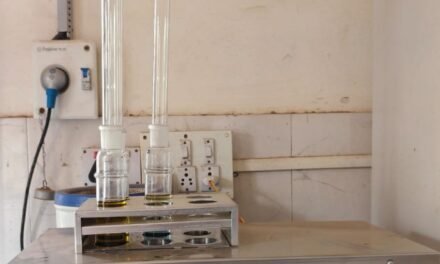
Introduction: Black Soldier Fly (BSF) larvae are widely known for their high protein and fat content, making them valuable for animal feed and other industrial uses. Along with protein extraction, the oil from BSF larvae has potential uses in biodiesel production, cosmetics, and as a nutrient supplement for poultry and aquaculture. This project focuses on extracting and purifying oil from BSF larvae using a distillation process to make it more usable and valuable.
Background-BSF farming is gaining popularity as an eco-friendly way to manage organic waste. The larvae feed on organic waste and convert it into protein and fat. While many projects focus on protein extraction, BSF larva oil is often underutilized or sold without proper processing. Distillation can help improve the purity, shelf life, and quality of the oil, making it suitable for multiple industries. This project builds on the concept of sustainable waste management and resource utilization.
1/1/2026
- Used dried BSF larvae for oil extraction trials.
- Mixed 1 kg dried larvae with 1 L hexane for fat extraction.
- Mix for 5 min for a proper mixture.
- After 5 Min of soaking, the total weight increases from 1 kg to 1.1kg of larvae with 650ml of hexane recovery from soaking.
- Press the soaked BSF larvae in the Hydraulic press machine in the presence of Dixit sir, Prasad, and Yashwant sir.
- On the first Drying of the Soaked larvae of 600g in a hydraulic press
- Monitored smell, bubbling, and mass change to assess solvent removal.
Conclusion of First Trial – The pressure required to extract oil from BSF larvae by a hydraulic pressing machine is 63kg/cm2
Observations:
- Hexane evaporation started clearly near the operating temperature.
- Oil separation was visible after sufficient heating time.
- Complete hexane removal still needs confirmation through constant weight and absence of solvent odor.
Challenges / Issues:
- Difficulty in confirming total hexane evaporation without analytical tools.
- Risk of overheating oil if the temperature is increased further.
Learning / Insight:
- Proper drying of larvae is critical for efficient oil extraction.
- Temperature control is essential to balance evaporation and oil quality.
Next Plan:
- Continue monitoring until constant mass is achieved.
- Standardize drying and extraction parameters (time, temperature).
- Record oil yield for comparison with future trials.
Experiment 2 – comparison of the Soxhlet-hexane method and the pressing method for high oil extraction.
A. By the Soxhet-Henxane method- (10-12/4/26)
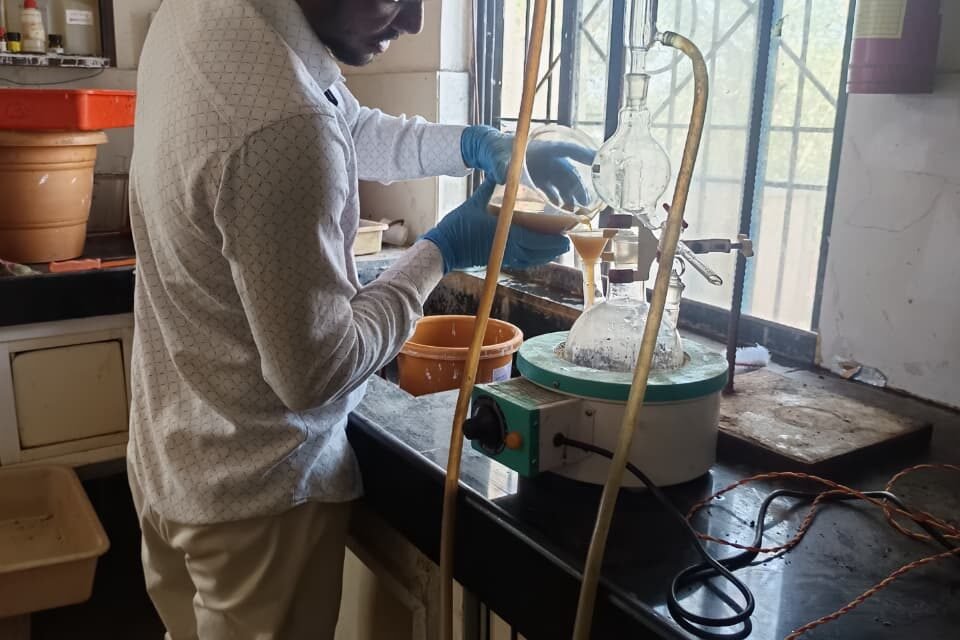
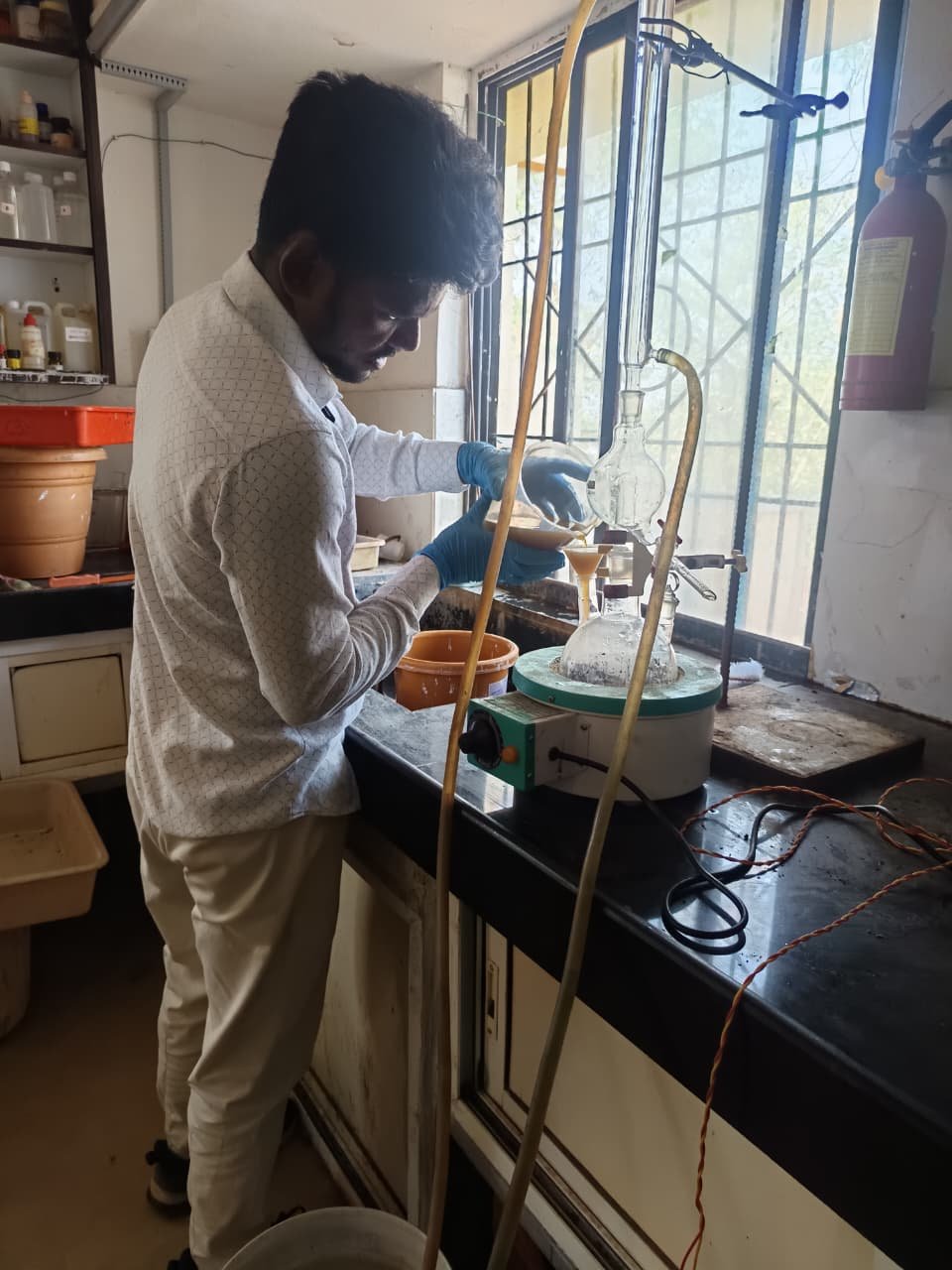
- Prepare a Soxhlet unit. Attach the Soxhlet in the middle with a round-bottom flask at the bottom and a condenser at the top.
- Dip one small stone or marble(chinimati) in the bottom flask to prevent excessive heat.
- Prepare a filter paper to place at the bottom of the Soxhlet to prevent BSF larvae immersion in it.
- Add 50g of BSF larvae to the Soxhlet and pour 250ml of hexane into the Soxhlet.
- Tighten the connection of the Soxhlet, bottom flask, and condenser.
- Start the condenser for cooling the system.
- Start to heat for 2 hours.
- After two hours, disassemble the Soxhlet system and get the oil with hexane. Now it is ready for the next stage of steam distillation.
- As we don’t have a reflux divider, I place the oil in an open space for the evaporation of hexane.
- After 30 minutes, I place the oil in sunlight for the remaining removal of hexane for 1hour
- With this method, hexane evaporate is major rate, and the remaining hexane is removed in the oven for 20 minutes.
- After 20 minutes, the only remaining substance was oil, which constituted 10g(10ml) of weight.
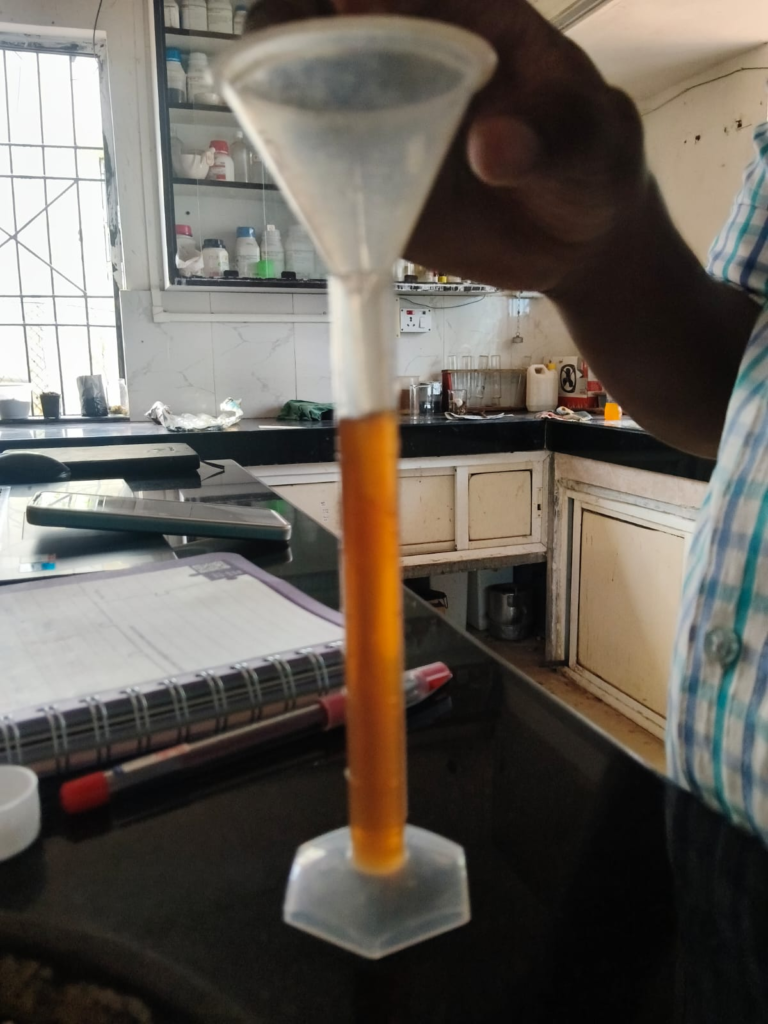
Conclusion of the Soxhet-Henxane method- The oil extraction by the Soxhet-Henxane method is 10g from 50g of BSF larvae, i.e., 20% extraction.
Experiment 2 – comparison of the Soxhlet-hexane method and the pressing method for high oil extraction.
B. By the pressing Method (13/4/26)
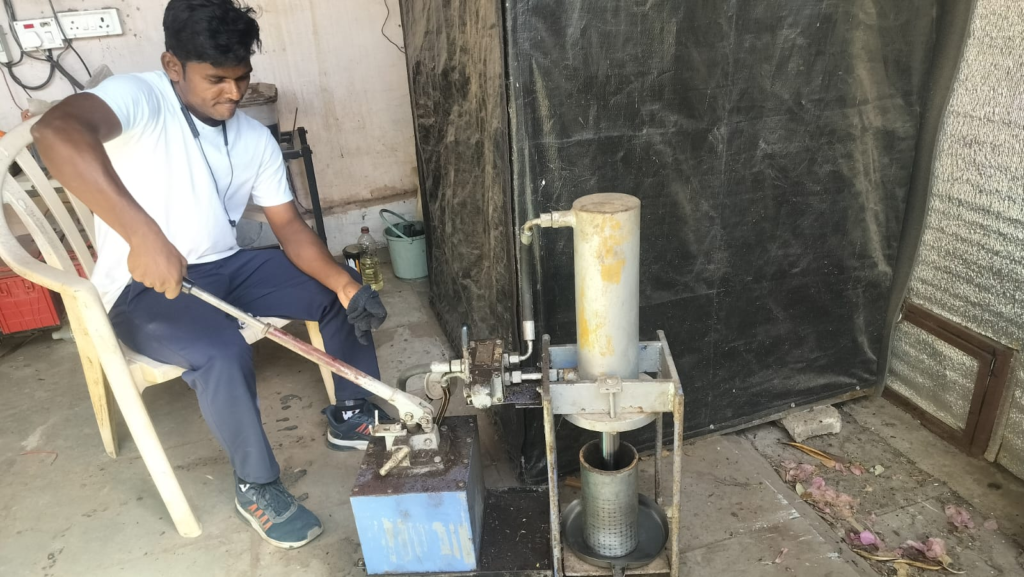
- Heat 500g of BSF larvae for one hour at 950 °C.
- Prepare the Hydraulic pressing machine, and place the heated BSF larvae in it.
- Press the hydraulic machine for 63-80kg/cm2.
- Collect all BSF oil from the bottom collector in a beaker.
- The oil extracted by the pressing machine is 91g (100ml) from 500g of BSF larvae.
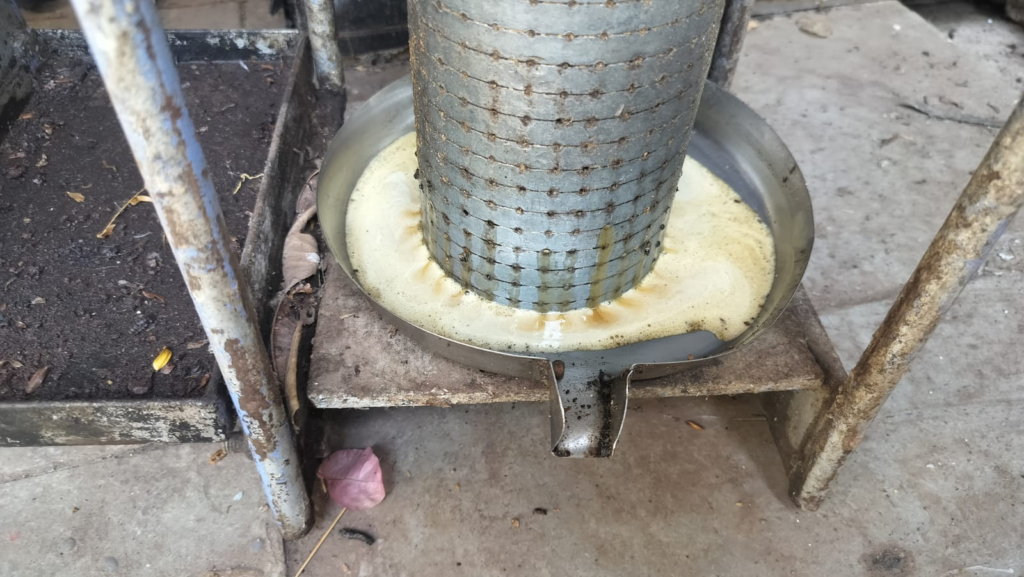
Conclusion of the pressing Method – The oil extraction by the pressing Method is 91g from 500g of BSF larvae, i.e., 18% extraction.
Conclusion of Experiment 2- By comparing the Soxhlet hexane method with 20% oil extraction with the hydraulic pressing method with 18% oil extraction, it is quite evident that the pressing method stands out as there is reducing number of steps of oil extraction. The second main procedure of comparison is the time to get oil extracted by the method, which is good in the pressing method.